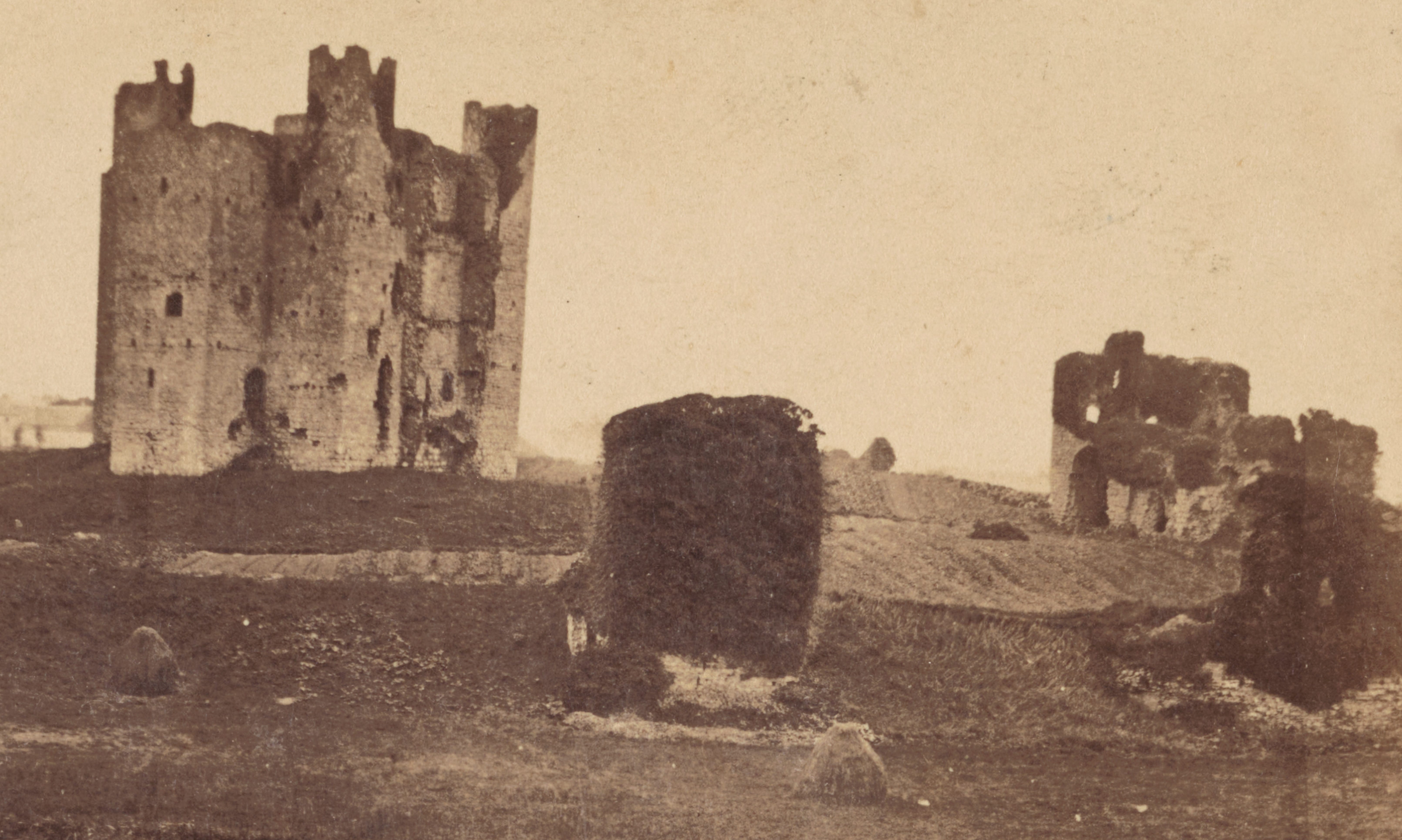
It was a bad line from the start, that much was obvious.
We had been good about setting the raft square into the rapids, but this approach looked bad, this looked dangerous. Expletives started rising.
There’s a huge gap in my memory. But I do remember that at the bottom, our raft started taking in hundreds of gallons per second from the falls. Everyone was gone and my side rising up, up, up, out of the water. I slid backwards, head-first, into the drink.
I swirled around down there for a good long time. My life jacket finally brought me up, but that’s when I learned we had only just started. I managed to be nearest to the raft, which had now flipped entirely upside down.
Our guide stood on top of it now. He unwrapped the cable from his waist, clipped it to the base of the boat, then looked at me. “Help me pull in the others,” he said. Help you pull in the others? The raft is flipped and no one’s in it! He jumped off the raft while tethered to it, using his weight to flip the raft and right it.
He climbed that same cable to log-roll himself in and then didn’t so much pull as threw me in behind him. It was now just the two of us in a raft that seats eight, and we were leaving the rapids for greater falls that he warned us would probably take us out if we couldn’t get to the cove in time. There was no swimming for it; we needed the oars. So, there was work we had to do.
Pro tip: don’t ever pull anyone into a raft with your arms. The angle is awkward and they’re entirely too heavy. What you do instead is grab on to their life vest, set your elbows into your chest and then do your best to fall backwards. Your leverage is what will pull them out. I did this with Mike first. He floundered in the boat a bit, so I raised myself and saw my roommate on the other side of the raft. I got him in, too. Then I got Jared, then Stephen.
We were way late getting to the shore, but proved to be safe enough.
On the beach, no one said anything. We pulled the raft up and out of the water but kept silent. On the portage trip down, Jared started screaming at Stephen, his little brother. It was his way of letting Stephen know he was terrified for him.
Our guide finally broke the ice. “Y’all look a little gun-shy, eh? But you ain’t gun-shy, are ye?” He was smiling. He did it on purpose, y’see. And we all knew he did it on purpose because he told us he was going to, right before we approached the rapids. When he did, he was smiling like Gornemant.
This was not an initiation, although I suppose it could have been. It remained demoted as an orchestrated crisis because I didn’t know the steps to initiation. No one told me the steps. Not my parents, not my grandparents. Almost none of us know the steps anymore.
In School of Lost Borders parlance, the first step is what they call Severance. There’s something that nudges you off the well-trod road into town and gets you bushwhackin’ it through the wilds. This could be a formalized thing with a vision quest group, or someone could simply walk into your living room and quietly say, “I’m pregnant.” Either way, you’ve left the road.
Next comes crossing the Threshold. You’re going to do or experience something that brings the whole of you—body, psyche, mind, spirit, soul, whatever you’ve got—out into some kind of in-between. You’re no longer with the revelers at Tara anymore; you’re out there in the lone dark, cooly holding that spear tip up to your forehead. Prepare as you might, remember what Iron Mike said: “everyone’s got a plan until they’ve been hit.” You’re going to be in over your head, you won’t know for how long and it’s going to be gnarly.
If initiation or rites of passage are talked about at all, these two tend to monopolize the conversation. A lot of bragging goes on about Severance and Thresholds via dry fasts and pilgrimages, or retreats and missionary work if that’s more your crowd. But believe it or not, these two are the easy part.
I must admit that the rafting trip went differently for me after the rapids disaster. Before the trip, before I started college and before I even left high school, I was the group screw-up. Well, that’s not the right terminology. “You were a screw-off,” my high school physics teacher told my parents and me. “You were all, ‘hey, man, I’m here I guess, I don’t have to take any of this seriously.’” He was exactly right. I wasn’t a great athlete, I did decent on exams, but who cares about those? In social settings, I never had much to offer, except it seemed I could come up with jokes better than most. This fit, because it happened to be all I wanted to do. So, before my physics teacher laid into me, I had already considered “screw-off” my professional title.
Some of the laughter was at my expense, but so what? I never took it seriously; it was all in service to the joke, whatever it was. But the folks around me sure took it seriously. No one really respected me much.
I saw a change in this after the raft flipped over. Screw-off or no, I single-handedly pulled half our group back in the boat and everyone knew it. This wrapped a kind of Teflon around me. Some who were blind to it started to use me as collateral for jokes again, but the blows didn’t land, either with me or anyone else.
Unfortunately, it ended there. What I didn’t do was Reintegrate. I didn’t take the lesson home with me, and I didn’t share it with anyone. After the rafting trip, things went back to how they were.
Used to be, the hardest step in an initiation was the doing of the thing. Now, it’s figuring out how to share what you’ve learned with a culture that doesn’t want to hear it. Words of soul and spirit fall on deaf ears in a culture obsessed with work and entertainment.
But they need to hear it, and you need to share it. It’s part of the great exchange: that which has value should never be withheld or hoarded. When they are, both sides wither. If you don’t figure out how to share, your initiation remains a temporary crisis. You’ll stay in exactly in the same pit you thought your hardship pulled you out of.
On the other hand, an interesting thing happens if you do reintegrate. People start to believe you.
It’s all well and good to be impressed by culture’s bad boys, but we’ll listen to Danny Trejo ten times out of ten because he lived what Joni Mitchell called “Both Sides Now.” The same is true of Jocko Willink, Oprah Winfrey, Louis Zamperini, Aretha Franklin and countless others. What the gurus and thought leaders don’t understand is that charisma comes from walking the road you’re describing for far longer than would be considered decent or necessary. Everything else is persona.
Fionn teaches us a lot here about returning gracefully; what matters and what’s worth discarding. But let me for a moment share another example; one I think Fionn would well understand.
It’s been nearly a thousand years since St. Francis walked among us, and he still remains the most popular saint after Mary. Not a bad position to maintain, considering the ten thousand others we have to choose from. His religious order enjoys hundreds of thousands of followers, and with a population of about 28 thousand, Assisi receives millions of visitors per year. (I’m sure the Pizzeria da Andrea is amazing, but I’m pretty sure the crowd is mostly gathered around the basilica.)
Ever wonder about his persistence? It ain’t his marketing. He doesn’t really do that.
As a kid, Francis was a rich kid who joined a local war with knightly delusions leading him to his destiny. That’s right, the Brown-Robed Monk is also a war veteran. After the fighting, he had capture, captivity and illness to look forward to. He also kissed lepers, publicly renounced his father and took up the wandering beggar lifestyle, stirring his begged-for food into a paste to choke it down. He lived off scraps, wore scraps, and committed himself to hanging with birds and repairing abandoned churches. He was the living embodiment of Joni’s folk ballad.
After all of these experiences, what was his leadership seminar takeaway, his “one big idea” for his TED talk? It wasn’t to find your Why, adopt a growth mindset, prioritize slow living or take up Deep Work. Not because those are bad advice, but because they’re implicit in what he states in his writings a dozen times: “Blessed is the servant.”
Say what you want about Father Francis, but he got the exchange absolutely right.