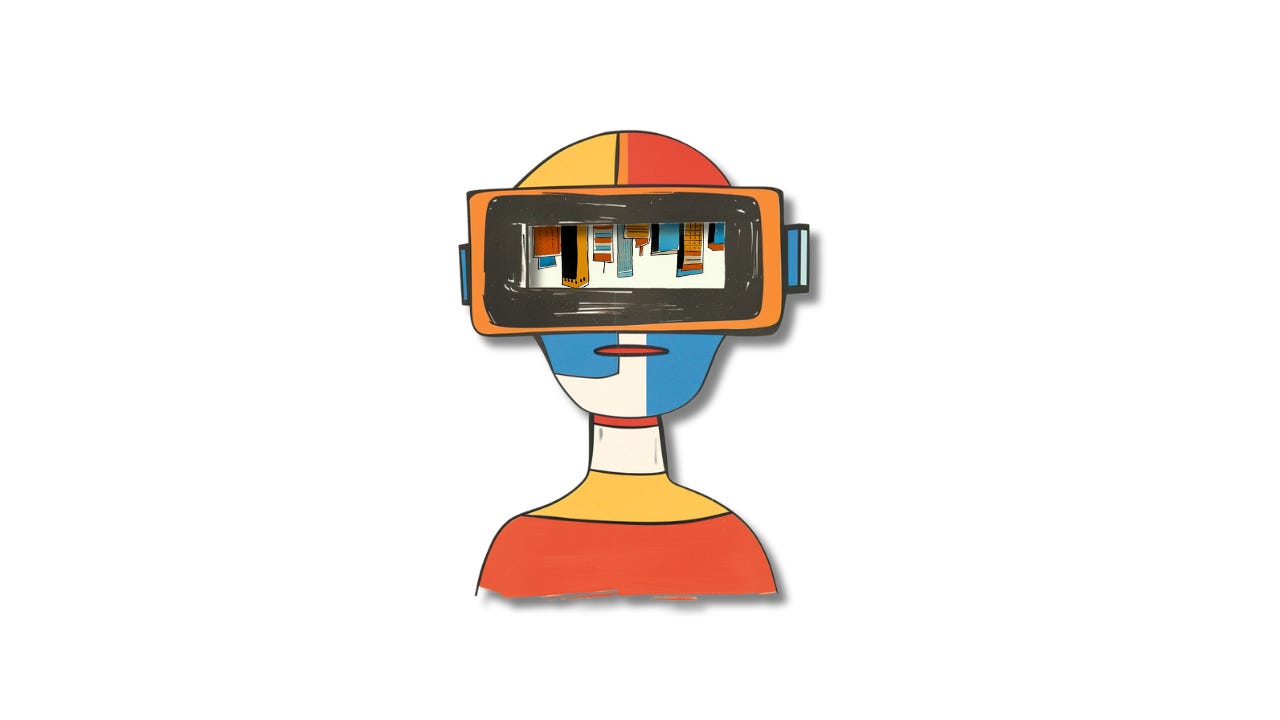
We move through the world assuming our senses are in sync. Sight, sound, touch—they usually agree. But flip just one of them, and the whole system starts to wobble. That’s exactly what happens with prism goggles.
This week, I revisit some classic experiments with inverting goggles. How does the brain adapt to conflicting signals? Does it rebuild an internal representation—or just adjust its predictions?
What are we really doing when we say we’re seeing?