“The strongest men I know aren’t loud, reactive, or constantly proving something. They’re calm. And that calm creates safety. People watch what you tolerate, how you handle pressure, how you respond when you’re tired or frustrated. That’s the real mentorship. Masculinity that lasts isn’t built in moments of intensity—it’s built in repetition, consistency, and the willingness to be accountable even when no one is applauding.”
~ Frederic Poag ~
Masculinity In Review
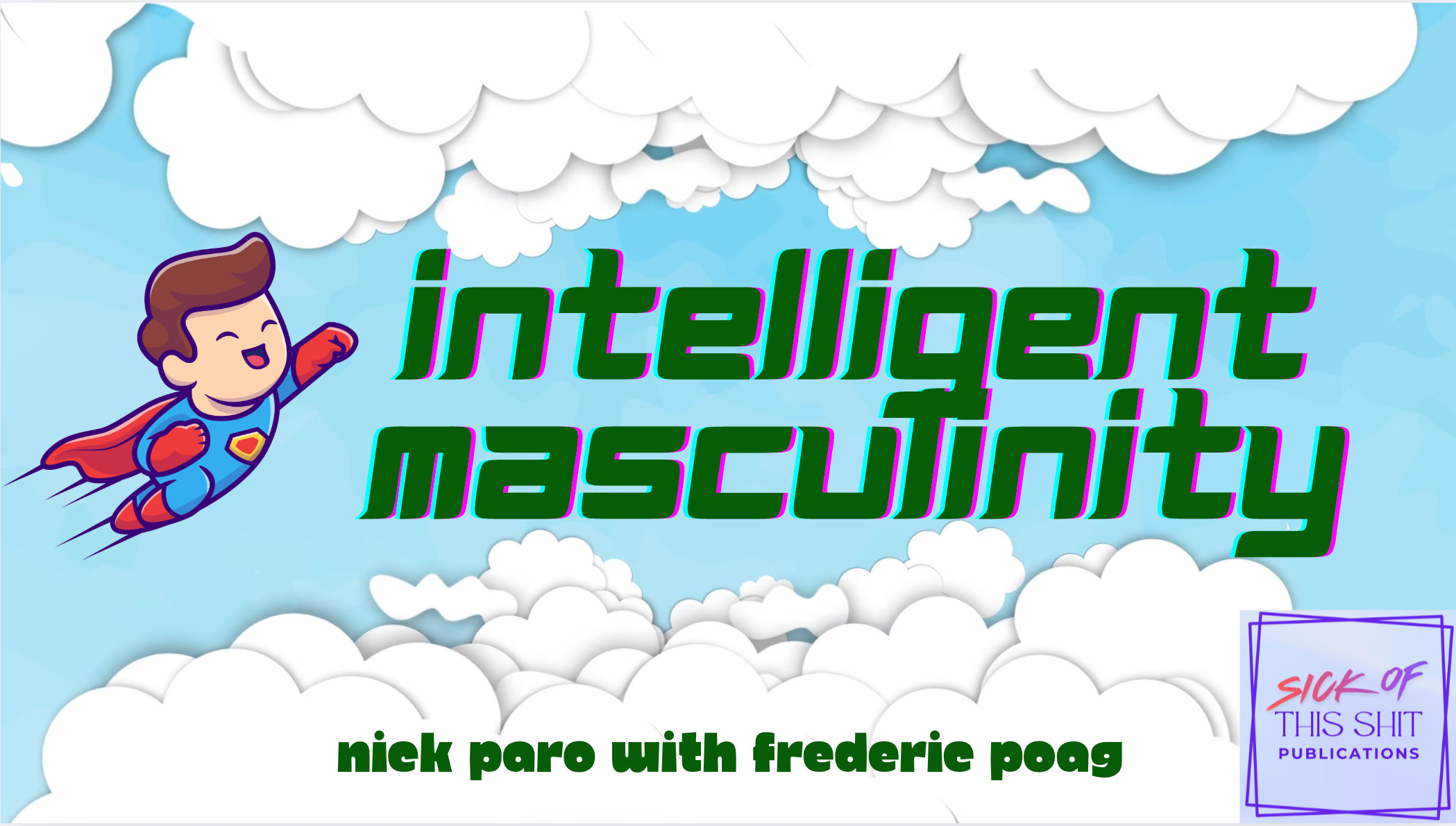
In this seventh discussion of Intelligent Masculinity, Frederic Poag and I explore masculinity through the lens of stewardship rather than self-expression. Through reflections on emotional regulation, community responsibility, mentorship, and generational continuity, the conversation builds on the overall theme that masculinity is something sustained over time — not proven in singular moments. Fred argued that intelligent masculinity is calm, accountable, and oriented toward leaving people and systems better than you found them.
One of the most important contributions from today’s discussion is Fred’s rejection of masculinity as a project of self-expression — centering his view of masculinity through a lens of stoicism — while breaking down the myths of identity performance, emotional release, and public signaling. Fred frames masculinity as stewardship — the obligation to care for people, spaces, and systems that will outlast you. Quietly dismantling a modern masculine trap: the idea that being “authentic” means unfiltered expression. Frederic argues instead that maturity requires containment, not repression — knowing what to express, when, and for what purpose.
A major through-line of our discussion is Fred’s emphasis on emotional regulation. Not emotional suppression, not emotional dumping — regulation. Fred is very explicit when reminding us that unchecked emotion — especially anger — does not make men honest, it makes them unreliable. Intelligent masculinity demands that men learn to process and evaluate our emotions internally before it is externalized onto partners, coworkers, or communities. Fred’s assessment builds directly on the prior conversations — Dr. Eric Lullove teaches patience and Evan Fields offers direction — adding a sense of containment and calibration where emotion becomes information, not instruction.
Frederic repeatedly returns to the idea of calm — not as temperament, but as earned stability. In this framing, calm is not passivity or disengagement; instead, it is the ability to remain present under pressure, to de-escalate rather than dominate, and to create safety instead of spectacle. This is masculinity that does not need to announce itself — calm men do not need to prove strength because they produce stability around them.
Another defining aspect of our discussion is Fred’s focus on mentorship as the responsibility to model behavior worth copying. Men cannot demand emotional maturity, accountability, or discipline from others if they refuse to embody it themselves. This aligns perfectly with the series’ recurring emphasis on modeling over messaging. The knowledge that masculinity is contagious — for better or worse.
Fred offers direct, harsh critiques on reaction-based masculinity. When men define themselves primarily in opposition —to politics, culture, other men — they become reactive rather than principled. Fred advocates for masculinity rooted in values that do not require an enemy, a masculinity that does not feed on conflict, does not require constant validation, and does not collapse when attention fades. It is built to last because it is not built against something, it is built for something.
One of the more sobering insights of the conversation is Fred’s insistence that accountability is not seasonal and being a good man in moments of clarity is easy. Intelligent masculinity is proven in repetition, in fatigue, in boredom, and often through long stretches without recognition. This whole conversation with Fred reinforces the series’ long-view approach: masculinity is not a breakthrough — it is a maintenance discipline.
Actions You Can Take
Sign the Petitions:
* Demand Congress Subpoena Key Figures on the Epstein Case
* Investigate Presidential Use of the Autopen for Pardons and Executive Actions
* Mandate that ICE agents show their face and identification
Submit questions and artwork for Nick and Walter to respond to and showcase on Notes of the Week:
* Sick of this Shit Community Comment Form
Support Ukraine:
Call your public servants on important issues:
Join the efforts to unmask law enforcement:
Learn empathy forward, human centered, experiment based Leadership & Growth Courses for Higher Ed & Non-Profit Professionals:
Thank you The Opinionated Ogre, Courtney 🇨🇦, Denise Palesch, Sylvia Rivers, Bluesin’ Bob, and many others for tuning into my live video with Frederic Poag and Banner & Backbone Media! Join me for my next live video in the app.
Nick’s Notes
I’m Nick Paro, and I’m sick of the shit going on. So, I’m using poetry, podcasting, and lives to discuss the intersections of chronic illness and mental wellbeing, masculinity, veteran’s issues, politics, and so much more. I am only able to have these conversations, bring visibility to my communities, and fill the void through your support — this is a publication where engagement is encouraged, creativity is a cornerstone, and transparency is key — please consider becoming a paid subscriber today and grow the community!
~Nick Paro
Join the uncensored media at the 1A Collective
Support as a paid subscriber however you can — to help get you started, here are a few discounted options for you
A special thank you to those who are a part of the Sickest of Them All
~ Soso | Millicent | Courtney 🇨🇦 | Eric Lullove | Terry mitchell | Carollynn | Julie Robuck | Mason/She/Her🩷💜💙 ~
For support, contact us at: info@sickofthisshitpublications.com