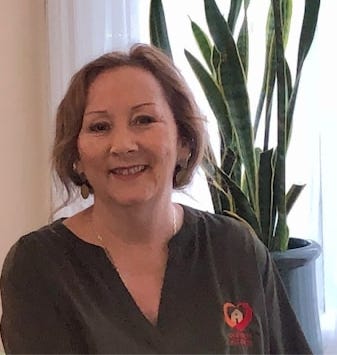
For most of my life, I wore a mask of self-assurance. Outwardly, I projected confidence, competence, and control. But on the inside, I was governed by fear, uncertainty, and doubt - a toxic trio I’ve come to call the FUD Factor.
Ironically, I built a successful career in journalism - a profession that often thrives on fuelling the very fear and uncertainty I was drowning in. I learned to deliver the news with poise, even as my inner world crumbled under the weight of unprocessed trauma and progressive addiction.
Red Roof Recovery is a reader-supported publication. To receive new posts and support my work, consider becoming a free or paid subscriber.
Shakespeare wrote, “All the world’s a stage, and all the men and women merely players.” That line captured my reality perfectly. I was playing a role. It was a role scripted by my culture, my family, my education, and even my religion. I knew how to perform, but I had no idea who I really was beneath the performance.
I was also - like so many - shaped by dysfunction. By the time I was 7, my parents had split multiple times. A reconciliation came only after my mother became pregnant again, although the paternity of my baby sister was uncertain. My mother, by then, was drinking daily and involved in an affair. My father, emotionally distant and stoic, offered little comfort as he processed his own pain.
My most vivid memories from that time are arguments, drinking, and instability. The only sliver of comfort came from my grandmother, whose presence offered occasional moments of sanity in an otherwise timultuous childhood.
At eleven years old, I discovered that a shot of vodka or gin from the liquor cabinet could transport me somewhere else - anywhere but here. From that moment on, substances became my way of managing emotional pain.
My addictions evolved over the years - weed and speed in the '80s, cocaine and pills in the '90s. I called it “coping.” I thought I was doing just fine. After all, I had a career, a car, a husband, and a house. It was easy to convince myself I wasn’t a person with an addiction. I wasn’t destitute, but I was definitely desperate. I was dragging myself through life, anesthetized and dissociated.
My first rehab stay came after a blackout I couldn’t ignore. I had moved to Mallorca, Spain - where brandy and wine were cheaper than bottled water. Bureaucracy delayed my immigration process, and I used that as permission to drink heavily every day. Eventually, I woke up one morning - hungover and foggy - and picked up a ringing phone.
“Hello, Tanya speaking,” I whispered into the receiver.
“Hi Tanya, it’s Anthony from Serenity House,” came the voice.
I had no idea who Anthony was. But as he gently reminded me, I had emailed him the night before asking for help. I had no memory of it.
Thousands of dollars later, I flew to Seville to check myself in to Serenity House. After 30 days in treatment, my husband and I took a short vacation to reconnect. Only then did he begin to understand how deeply I had been drowning in addiction during our 18-year marriage.
What followed were 8 more years of setbacks while attending 12-step meetings. I went to a lot of funerals for peers who never made it back from just one more relapse. I feared I might be next.
Eventually, I found SMART Recovery - a secular, evidence-based program rooted in cognitive and behavioural science. The practical tools of SMART helped me begin to respond to life rather than react to it. Since 2018, I’ve remained free from addictions.
My sobriety isn’t built on willpower alone. It’s built on a Recovery Recipe I call my Triple A Formula - a blend of self-awareness, self-protection, and self-acceptance.
AWARENESS
Everything begins with awareness. Until I could name what I was feeling, I was ruled by it. Once I learned to pause and notice my thoughts - especially the ones whispering, You’re not good enough, You’re not qualified, Who do you think you are? - I could begin to “Catch it, Check it, and Change it.”
I call this internal narrative the Itty-Bitty-Shitty Committee. And if you’ve ever been ambushed by your inner critic, you know how loud and convincing it can be.
AVOIDANCE
Avoiding people, places, and things that triggered my cravings wasn’t easy. But it was necessary. Building a safe recovery environment required persistent, uncomfortable change - one small, disciplined choice at a time. Peer support played a pivotal role in that journey. It gave me accountability, community, and the strength to build a foundation of resilience.
ACCEPTANCE
Not just acceptance, but unconditional acceptance. For myself, for others, and for life as it is. I had to stop trying to change the people and circumstances around me. The only thing I truly have control over is myself.
My new version of the Serenity Prayer is this:
“Grant me the serenity to accept the people I cannot change,the courage to change the one I can,and the wisdom to know… it’s me.”
What I’ve learned is this: beneath every addiction is a wound. Beneath every compulsion is a cry for connection. My healing didn’t begin the day I stopped using substances - it began the day I stopped abandoning myself.
Now, when anxiety or doubt arises, I don’t numb it - I meet it. I sit with it. I ask, What are you trying to tell me?
And slowly, with care, I’ve become not just sober… but self-assured.
May the force be with you and remember…
YOU are the force!
About the Author:
After 20+ years in broadcasting, Tanya MacIntyre decided to pack up negative news and progressive addictions. Her recovery kicked into high gear when she decided to stop being anonymous and started to write & speak openly about her challenges, and her success, in overcoming addictions. Tanya now helps others who want to build their own path to better mental health and create a life they won’t ever need to escape from!
DISCLAIMER: This content is not intended to constitute, or be a substitute for, medical diagnosis or treatment. Never disregard advice from your doctor, or delay in seeking it, because of something you have watched, read, or heard from anyone at Red Roof Recovery.
Red Roof Recovery is a reader-supported publication. To receive new posts and support my work, consider becoming a free or paid subscriber.