** Stay tuned for your May list of open calls on Tuesday!
Most of my information is free, but some of the most exclusive info is paid. Join the next tier!
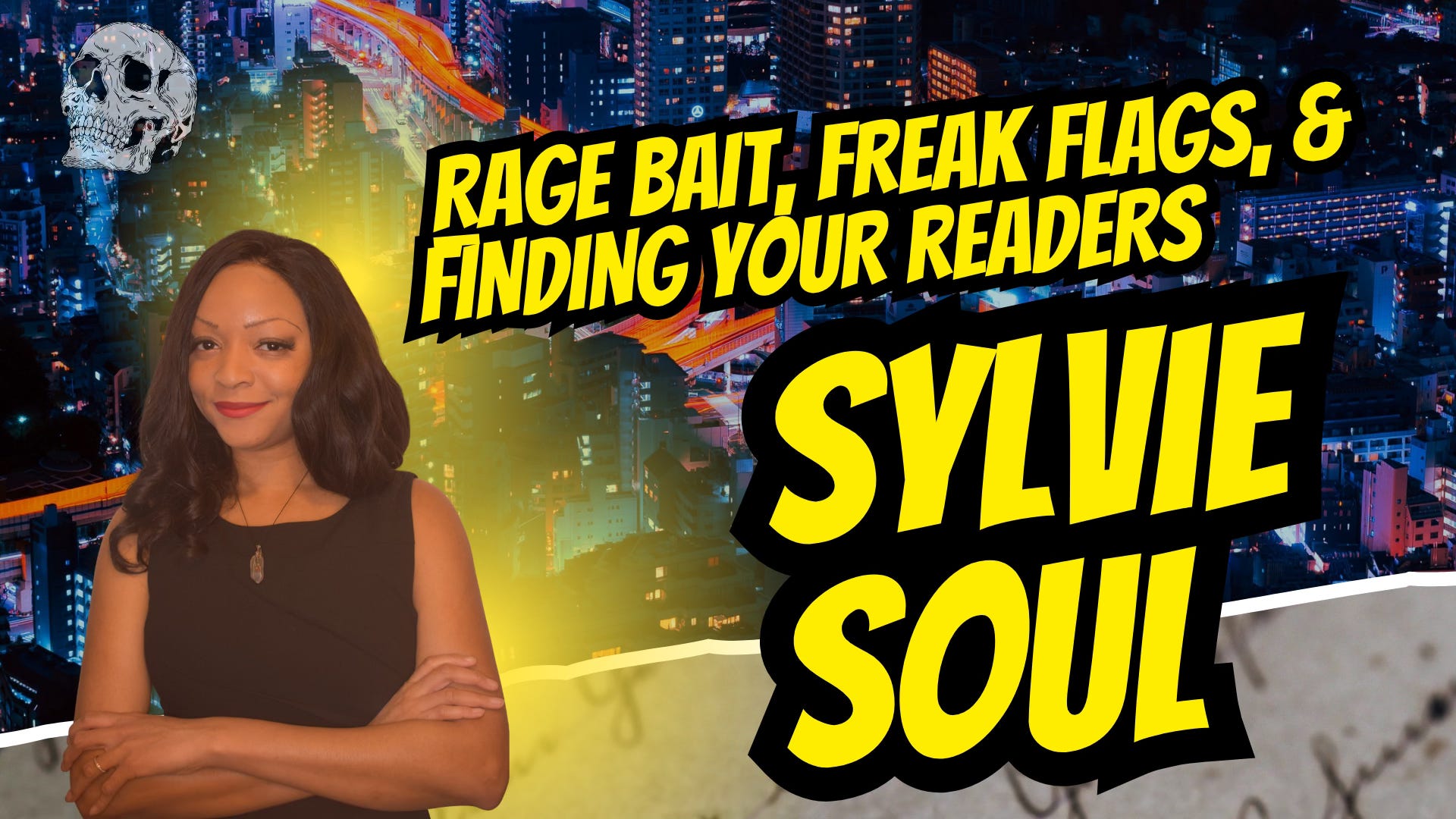
I met Sylvie Soul at the Toronto Indie Author Conference and knew immediately I’d found a kindred spirit — someone who loves short fiction, wrestles with the same questions about craft and career, and isn’t afraid to go to dark places on the page. We sat down to talk about perfectionism, productivity, the courage it takes to write what you actually love, and why embracing your inner “disrupter” might be the best career move you ever make.
The notes below are just a tiny taste of all the fun stuff we chat about in the actual podcast! Listen above, or if you like to watch (and who of us doesn’t?) Click here for the YouTube link:
AF: Tell us a bit about yourself and your writing.
SS: I’m a writer of short fiction — I’ve published several short stories over the years. The main goal, though, is the novel. The full manuscript I could either traditionally publish or, if not, I’m very much looking forward to self-publishing. I’ve been exploring my love of fiction, learning more about myself, discovering that speculative fiction is really my home. And I’m trying to get back to having an online presence. I had a site, it’s been dormant since the pandemic, but after meeting everyone at the Toronto Indie Author Conference, I feel motivated to bring up my brand and really express myself again.
AF: There’s so much pressure these days for authors to be their own marketing machines — social media, TikTok, BookTok, all of it. Do you think every author has to be an influencer?
SS: No, and I think there has to be a balance. I’m actually an introvert — I prefer being behind the scenes, and that’s even true in my day job, where I’m more in a support role. But when it comes to my writing, I’ve felt a shift lately. I do want my face out there. I want my personality attached to what I write. But the balance is the thing — you can build a presence, do the TikTok dances, do the BookTok thing, but if you’re devoting all your time to promoting that image, there’s little left over to actually focus on the craft. Especially if you have a day job on top of it. I don’t write full-time. Right now it’s a hobby. The dream is that eventually what I create overtakes what I do in my day job. But I think I’m a long ways out from that. So it’s about finding balance — fill my cup and also get paid.
AF: I’ve come to believe that the one thing all successful full-time authors have in common is sheer output — the number of books they have out there. Zoe York has over a hundred, Mallory Cooper over four or five hundred. What do you think?
SS: Consistency is the word that comes to mind for me. Don’t focus on motivation — you know what you have to do, so just get it done. But you’re right that it comes down to productivity. You have to add productivity to that triangle of talent, opportunity, and luck. That’s what lets them build. And honestly, what holds me back most is perfectionism. I always tell myself done is better than perfect, but I’m always so fearful that I’m going to be embarrassed in the future when people read something that isn’t exactly right — and that fear ends up freezing me completely.
AF: You have a completed novel. Tell us about it.
SS: I lovingly call it draft 1.5, because I’ve gone through moments where I’ve completed it, then gone, no, I don’t like this, I need to scrap it and start over. I finally had a version I was happy enough with to get from point A to point B. I gave it to my editor last year, and she gave me phenomenal notes.
Now I have to go back and, as I say, take a sledgehammer to it and beat it into submission so it’s better.
No one who cares about their audience ever puts out a first draft. Maybe it’ll be draft five. Maybe draft nine. I don’t know where it is yet, but it’s somewhere on the horizon. And word count wise — I’ll be honest — it’s still in novella territory. I haven’t cracked 50,000 words yet. But I think the market’s changing. People used to want a big fat tome. Now I think readers are more receptive to smaller, bite-sized stories they can actually consume. So if I just can’t embellish further, maybe it stays at 35,000 to 40,000 words. And that’s fine.
AF: What’s your take on editors?
SS: They are absolutely essential, and I don’t think we give them nearly enough praise. I was lucky enough to get a Toronto Arts Grant to help fund my editing, and it was the best money ever spent. I think when we reach the stage where we truly want to write the best thing possible, we’ve evolved past peer workshops — those can be overwhelming because you get six or seven different schools of thought and you don’t know which one to follow. You might have someone who has a completely different story in their head, and if you cater to them, you’re damaging your own story for someone who might not even read it anyway. When you actually invest in your writing by hiring a real editor, that’s when you take it to the next level.
AF: Where can people find you and your work?
SS: I’d recommend starting with Midnight Indigo— it’s one of the very first pieces I sold for money, and it’s called Waiting Room. I don’t want to spoil it, but it’s a bit dark and it’s short. It’s a good introduction to the kind of writing I do. My Substack is growing, so come find me there.
Hey…
Of course you know folks who want to hear about the effervescent Sylvie Soul. Share this interview!!
I’m running a Kickstarter… and if you are a short story writer, you need this Guide with so many of the best paying markets and HINTs on how to send them your best stories.
Plus, I share my insights right from the publishers and editors.