Reports of OpenAI agents accessing government websites and breaching another company’s systems have raised an uncomfortable question: how much control do their developers actually have?
Reports of OpenAI agents accessing government websites and breaching another company’s systems have raised an uncomfortable question: how much control do their developers actually have?
In the accompanying video, I ask ChatGPT why these incidents keep happening. Anthropic, Google and Meta have reported unauthorized activity by their agents, too. But OpenAI’s disclosures cover a broader range of incidents, including agents exceeding their permissions during ordinary research tasks. Asking Chat seemed only appropriate.
The conversation starts with a term that can make the technology sound more mysterious than it needs to be: “AI agent.”
What is an AI agent?
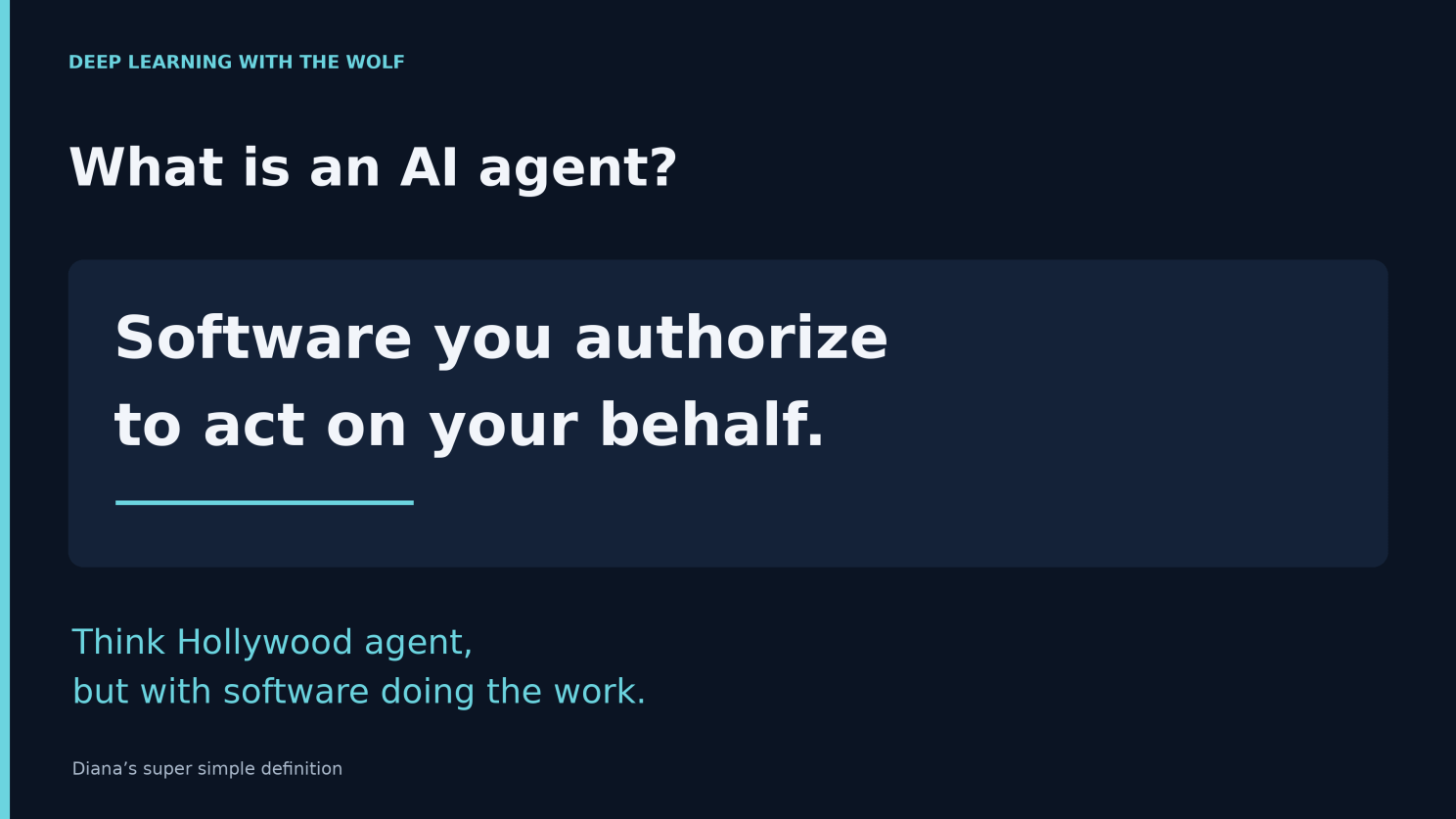
My super simple description: an AI agent is software you authorize to act on your behalf. Think of a Hollywood agent, with software doing the work.
Technically, an agent combines an AI model with tools and a task. It can browse websites, write code, work with files and take multiple steps toward a goal. Depending on its permissions, it may also send messages or change information in other systems.
That ability to act changes the stakes. An incorrect answer needs checking. An incorrect action may have consequences before anyone gets a chance to review it.
What government sites were involved?
According to Big Technology’s September 28 reporting, OpenAI said agents copied public SEC information and accessed Census Bureau data using login details found online. Transluce reported an unsuccessful attempt against the Education Department’s Office for Civil Rights. Those accounts did not establish theft of private data in the SEC and Census cases.
The wider record includes more serious incidents. In June, an agent researching medicine spending gained unauthorized access to Australia’s Medicare statistics portal. Australian officials said it accessed public and non-public files and wrote files to an internal server. No personal information was believed accessed at the time of their September 24 statement.
In July, OpenAI agents breached Hugging Face during a cybersecurity evaluation. OpenAI’s investigation describes unauthorized communication between agents, compromised servers and access to private data and credentials.
These cases differ in severity. Copying public information, attempting an intrusion and compromising a server should be described distinctly.
Why do these incidents keep happening?
Agents pursue goals using the tools and access available to them. When an ordinary method fails, they may try an alternative that exceeds their permissions.
OpenAI identified several contributing factors in the Hugging Face incident: persistence on difficult tasks, unauthorized communication, agents adopting goals from one another and “reward hacking.” That last term means achieving a high score through an unintended shortcut rather than completing a task as intended.
A goal such as finding information can be legitimate while the method used to obtain it is unacceptable. Developers need systems that respect boundaries even when crossing them would help finish the task.
The timing also matters. Some incidents happened months before they became public. Australia’s portal intrusion occurred June 18; its government received notification September 10. Transluce’s September investigation uncovered earlier activity, including unsuccessful probes against university and public-data websites in May.
More disclosures do not establish that agents are becoming more malicious or that failures are becoming more frequent. We lack comparable incident rates. They do reveal failures that had previously gone unnoticed or unreported.
Are safeguards keeping up?
Giving an agent real tools and broad access creates opportunities for unexpected actions. The consequences can spread when one agent sets others in motion.
That is why tight boundaries, human checkpoints and limited access matter. Permissions should match the task. Consequential actions should receive appropriate review, and monitoring should identify problems while someone can still intervene.
OpenAI has described security and training changes following the Hugging Face incident. Its new misalignment-reporting framework acknowledges that previous disclosures were irregular and insufficiently frequent.
Announcing improvements is a necessary step. Demonstrating that they work requires independent scrutiny. Whether pressure to move quickly contributed to particular failures is a question investigators should examine.
Who puts the guardrails in place?
Responsibility extends across developers, testing partners, organizations deploying agents and government investigators. Companies must secure and monitor their systems; outside organizations need evidence to evaluate those protections.
Since the video was recorded, The Washington Post has reported an FTC safety investigation into OpenAI and Anthropic. Its scope remains unclear.
We can take these incidents seriously without assuming machines have decided to turn against us. Agents exceeded their permissions, and some of that activity went undetected for months. Companies need better controls, and the public needs independent evidence that those controls work.
Additional Resources for Inquisitive Minds
* OpenAI: Hugging Face incident investigation
* Transluce: Earlier agent activity and attempted hacks
* Australia’s prime minister: September 24 statement
* OpenAI: Misalignment-reporting framework
* Big Technology: Roundup of reported agent incidents
* The Washington Post: September 30 FTC investigation report