BLOG PODS #26 - STEPHEN PORGES POLYVAGAL THERY
INTRODUCTION
Polyvagal Theory is a departure from the others we’ve covered in this series, in that it’s not a theory of human development, specifically.
I wanted to include it because I know, like me, many of you work with or care for kids who’ve suffered all sorts of traumatic experiences, such that their lives are now very difficult - not least by being blighted with behaviour that seems to make things worse.
In this context, I think the theory has something of real value to offer us by way of insight into the mechanics of why such kids take so long to feel safe. So here goes…
What is Polyvagal Theory?
Polyvagal theory, developed by Stephen Porges, explains how our nervous system regulates safety and survival responses. It focuses on how different parts of the autonomic nervous system react to threats.
The vagal pathways (nerves) are part of the autonomic nervous system, and "polyvagal" means that multiple pathways work to protect us. These pathways function automatically (i.e. without conscious thought) and help us identify threats or opportunities to feel safe. This constant, ongoing scanning or screening process is what Porges calls, "neuroception" (I think of this as our ‘spidey-sense’ but one that lies beneath conscious awareness).
When we feel unsafe, neuroception triggers defence mechanisms such as fight, flight or freeze responses.
Before we think about how the theory can help us, here’s a quick look at the three parts or vagal circuits of the nervous system that Porges suggests.
The Three Parts of the Autonomic Nervous System
1. Dorsal Vagal Circuit (Oldest System): Immobilisation/Life Threat
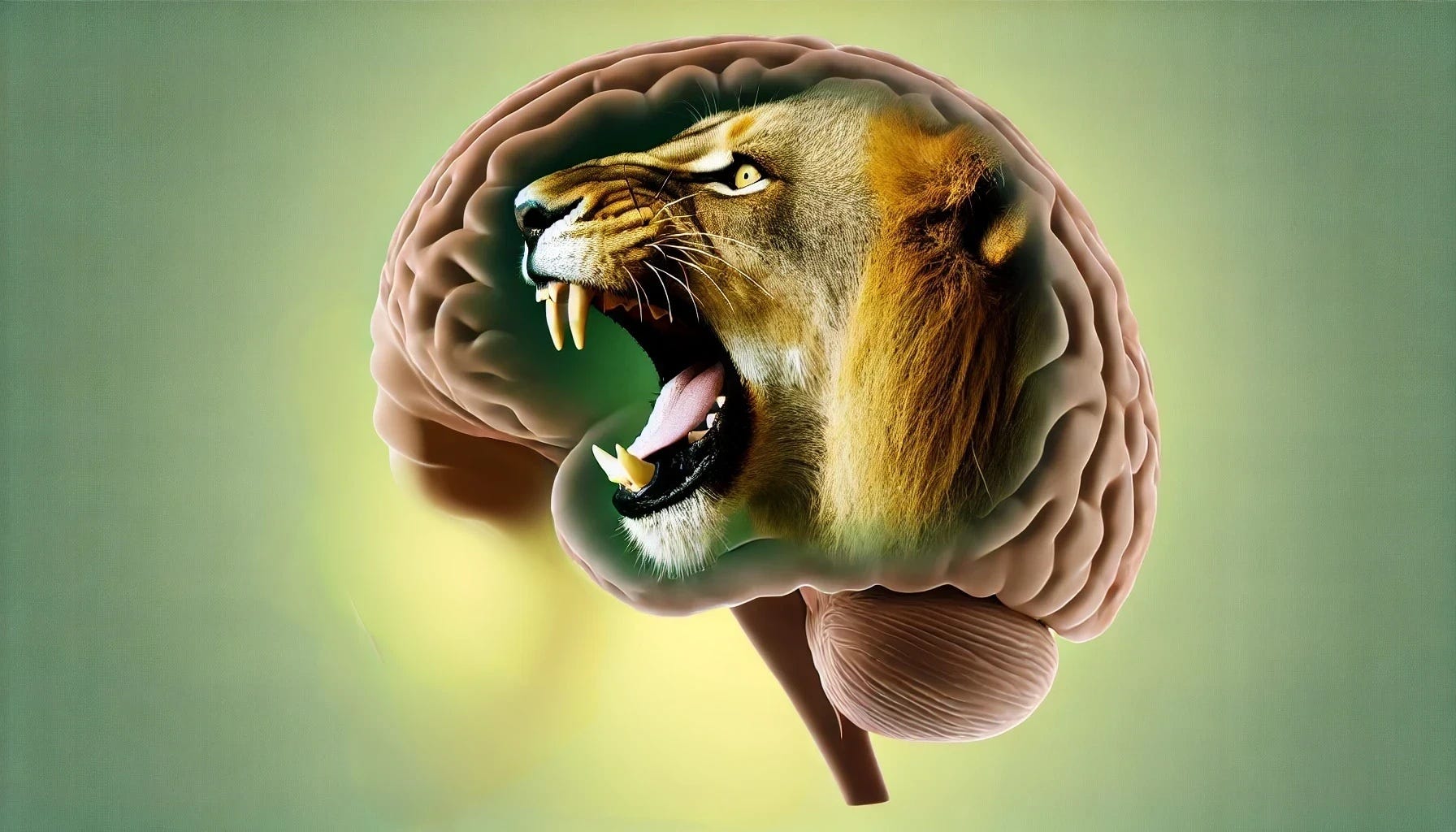
* This system developed over 500 million years ago and is often referred to as the reptilian part of the nervous system.
* In life-threatening danger, this system can cause a person to freeze, become immobile or dissociate (i.e. to mentally disconnect from the body).
* It's a survival mechanism that conserves energy, slows the heart rate and can sometimes lead to fainting and/or defecation.
2. Sympathetic Nervous System: Mobilisation/Danger
* This part of the nervous system prepares us for action in response to danger, causing the fight/flight response.
* When activated, the body mobilises energy to either defend itself or escape from the threat.
* For traumatised individuals, the system may misread situations, leading to overreactions where there may be no real threat.
3. Ventral Vagal Circuit (Newest System): Balance/Safety
* This system evolved about 200 million years ago and is responsible for seeking safety and forming social connections.
* It supports calm, connection and co-regulation, meaning we feel safer when we are with others we trust.
* This part of the nervous system helps prevent the fight, flight or freeze responses when we feel safe.
Understanding Trauma and Safety
For traumatised children, the brain and wider nervous system can become hyper-vigilant, as if it’s on a hair trigger, misinterpreting safe situations as if they were dangerous. This is why children may "act out" or behave in seemingly irrational ways, for example by massively over-reacting to situations that to us appear harmless or benign.
Before healing can occur, children must not only be safe but also feel safe. Feeling safe can take time, sometimes over a year or more even with intensive direct work; but this sense of security is crucial for their development and recovery.
Having a sense of what these different states are, what they feel like and exploring how to mediate them and bring about a calmer, safer state is a golden skill. I’m hoping that what comes next here will whet your appetite for learning more about this so you can add it to your arsenal of ideas and techniques as you work to help kids move out of their difficult histories and into a brighter future.
Practical Applications for Practitioners Working with Traumatised Children
As always in these posts, what follows is a very cursory coverage of this topic (to say the least). I’m not for a second suggesting it’s exhaustive or that anyone should ‘try stuff out’ on children; that would be ridiculous, not to say potentially damaging.
The thoughts below are to give us an idea of the kinds of things that might help, given the proper assessment and treatment planning processes being completed by suitably qualified people.
Here goes:
1. Dorsal Vagal Circuit - freeze/flop
The freeze/flop dorsal vagal response is sometimes referred to as ‘playing possum.’
Possums or Opossums (depending where in the world you are) react to extreme threat by entering a state where they appear to be dead. Breathing is shallow, the body is completely still and the heart rate slows to the point where prey animals think the possum is dead. Because most predators are evolutionarily programmed to avoid the dangers of rotting meat, they leave the possum alone.
This process of ‘thanatosis’ (or ‘tonic immobility’) is protective and fully automatic - the term ‘playing dead’ is misleading, though, as implies it’s a state induced deliberately, but it’s not.
In some people, the nervous system switches on a state of being frozen automatically; there is no thought or decision involved. While this is different to thanatosis, the appearance is similar - the person is immobile as the nervous system shuts down the body to conserve energy resources and avoid further harm.
How to help:
* Grounding techniques: Teach children simple grounding exercises like feeling their feet on the floor or focusing on their breath to help them reconnect with their bodies if they’re tuning out, feeling stressed or struggling with a sense of being unsafe.
* Sensory integration: Incorporate sensory activities like using weighted blankets or fidget toys to help children feel more present in their bodies. Talking to them about what they can feel ‘in their bodies’ can help them grow in awareness of how bodies work and respond to different situations.
* Rhythmic activities: Get kids involved in rhythmic activities like drumming, rapping, marching or singing to help regulate their nervous system. Bi-lateral exercises of any kind can be helpful in this way.
* Professional help: If a child is regularly dissociating or entering states of prolonged immobility, refer them in for some clinical help with understanding what’s going on and getting the right treatment.
2. Sympathetic Nervous System - fight/flight
This is the typical state we’re all familiar with, when our bodies and emotions respond to what going on around us and we find ourselves physically and emotionally activated. We might stiffen physically, want to move around a lot and feel angry; or we may feel depleted, hopeless and exhausted - and all points in between.
While we all may experience more extreme versions of this very occasionally, for the most part we know what’s going on and that what we’re feeling and experiencing is connected with some kind of trigger. We’ve also learned over the years to make sense of it all, take a minute and begin to allow the calming process to begin; many of us will have learned ways that particularly work fir us when we feel activated.
But for many children from traumatic backgrounds, they may not have enjoyed the attentive, consistent, empathic care of an attachment figure, m with all the developmental benefits this brings. A lack of co-regulation means they may not understand what’s happening with their body and emotions and have no clue how to begin calming again - some may not even have a sense that they will calm eventually.
How to help:
* Physical activities: Implement structured physical activities like yoga, dance, boxing or martial arts to help children release excess energy and learn body control. Personally, I credit my own martial arts training with helping me get a much better grip on self-regulation.
* Emotional regulation: Teach children to recognise their emotional states, teaach them labels for different states and provide tips, tools and techniques for self-regulation, such as tapping, mindful breathing or body-scanning (progressive muscle relaxation).
* Safe spaces: Create designated "calm down" or “relaxation” areas where children can retreat when feeling overwhelmed. These should be spaces where they can just ‘be’ and might usefully include gentle and calming sensory stimuli like mobiles, soft lighting, textured toys, blankets or a ball pit.
3. Ventral Vagal Circuit - calm/safe
According to polyvagal theory, this is the most highly evolved, advanced state of the nervous system with safety and social connectedness at the heart of it.
This is us working at our optimum, if you like: our heart rate as well as immune, digestive and respiratory systems are working at peak efficiency. We are free to focus on the task in hand and fully connect with those around us.
When we’re a threat response state and things are upset, unsettled and and/or on alert, this is the state we need to get back to. But like the other two vagal states already mentioned, this too is an automatic state that will not be induced as long as our neuroceptive spideysense senses danger.
When we feel safe, content, at ease and able to focus on and connect with others, we’re in a ventral vagal state. Knowing this state and what it feels like is also something to be learned, particularly by those whose bodies have been pitched off balance by traumatic experiences - they have to learn to recognise and take steps to return to ventral vagal safety.
How to help:
* Social engagement: Facilitate positive social interactions through group activities, emphasising cooperation rather than competition. Make sure the person you’re helping isn’t overwhelmed, though; too much social noise and chaos can trigger sympathetic or even dorsal vagal responses, so take it easy and progress slowly. Remind them to be aware of what their body and emotions are doing, so they can sense when things are de-escalating and returning to calm.
* Facial expression and emotion recognition: Help children learn to read facial expressions and body language to improve their social understanding and connection. Children who’ve grown up in threat and danger, or who have been neglected, may not read faces well. They may be prone to mis-reading concentration, for example, as someone being angry or being ‘off’ with them. Make a habit of labelling things out loud for kids like this and asking them to try and interpret the internal states of others; this kind of approach will help them consciously ‘know’ things that their autonomic nervous system is habitually interpreting.
* Co-regulation exercises: Teach caregivers and children techniques for co-regulation, such as mirroring each other's breathing or engaging in gentle eye contact. Point out the physical aspects of emotional responses (tight jaw, stomach turning over, feeling tense, jittery or shaky, the impulse to run or fight or smash things). Make a point of this also when things are good, when all is calm and when they’re a rest, having fun or enjoying someone’s company.
* Deepening the calm, safe state: Helping children learn techniques of deeper relaxation and body calmness can not only help them recognise and enjoy being calm, it can help them rest, wind down after effort or agitation and even induce sleep.
If you want to read more on how to use the principles of polyvagal theory in direct work, I can strongly recommend Deb Dana’s book, The Polyvagal Theory in Therapy - this is both an excellent overview of the theory itself (for non-neuroscientists like me!) and has some brilliant explanations and suggestions about how to incorporate the theory into clinical practice.
The standout lesson from the book for me was twofold:
* Grasp the theory: Learn the theory so you have a framework in which to understand the way the autonomic nervous system works and what this might look like in children.
* Mapping the 3 states: There has massive value in helping children to understand their own nervous systems, get familiar with what each vagal state feels like and learn techniques to can help them move more effectively between states.
FINAL THOUGHTS
My recent foray into theory in general, and polyvagal theory in particular, has been a refreshing and enjoyable time. It’s really got my brain juices going not just, as I anticipated, because I love a deep dive into something I don’t yet fully understand (new knowledge always excites me!), but because of the rich vein of practice ideas it’s stirred up for me.
The ideas listed above are a mere drop in the ocean from someone who’s not a specialist, a medic or a psychotherapist. So imagine the wealth of stuff you might uncover if you start reading yourself!
Understanding how our bodies automatically get wired to respond to perceived danger is what this theory is all about. Even a fairly cursory grasp of the basics outlined here can really help us to help kids to understand themselves a little more. That means they’re one step nearer to recovery. And that is what all this is about.
See you in the next one.
More information:
* BOOK: Clinical Applications of the Polyvagal Theory: The Emergence of Polyvagal-Informed Therapies, edited by Stephen W. Porges and Deb Dana (link)
* BOOK: The Pocket Guide to the Polyvagal Theory: The Transformative Power of Feeling Safe" by Stephen Porges (link)
* BOOK: The Polyvagal Theory in Therapy by Deb Dana (link)
* PAPER: A review of thanatosis (death feigning) as an anti-predator behaviour (link)
Subscribe & Follow?
* You can join Jonny’s mailing list here. Your information is safe and you can unsubscribe anytime very easily.
* If you want these posts sent straight to your inbox, click the blue subscribe button below.
* You can also “Like” this site on Facebook and connect with me on LinkedIn.
(NB: My Pinterest account has been hacked and is now permanently offline)
©️ Jonny Matthew 2024