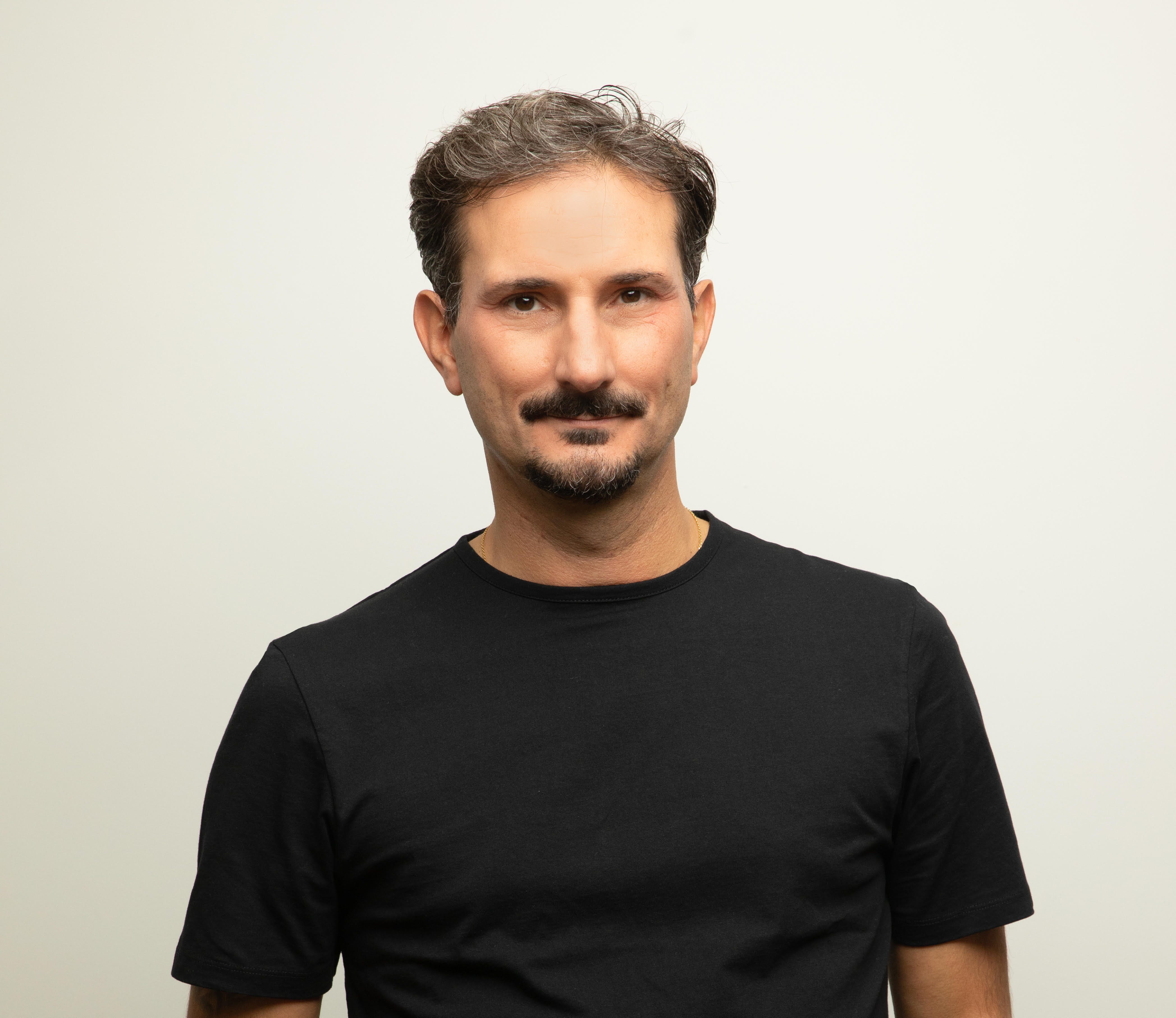
This conversation is part of a series of interviews with various brothers and teachers, including many fellow writers, all of which are part of the body of work surrounding my book-length memoir An Ordinary Disaster—one man's proof that we can all learn to listen to ourselves, and to act upon the inner voice of our self, our sanity and our soul.
Today I'm talking with Fernando Desouches, Managing Director of the New Macho strategic division at London-based brand marketing agency BBD Perfect Storm, whose mission is to help brands grow through positive gender narratives. Along the way Fernando led a radical repositioning of Unilever's Axe brand and has worked with many other global brands to help them stay relevant, dispel negative cliches and redefine how they approach and understand masculinity.
It took me a minute to remember how I came across Fernando's name, but it was originally from a blog post that Loic Le Meur did with Michael Katz about meditation and lucid dreaming. I looked up Michael's name and came across a podcast interview that he did, and then from looking through other episodes of that show, I came across Fernando's name…and now he's on the show here. Fernando's accent can be pretty tricky to understand, so in this case, I have provided the full transcript of our interview below.
It is well worth the slight extra effort in listening, as Fernando is working at the cutting edge of masculinity, identity, and gender—and he kind of blew my mind with what's going on today in the world of brands, advertising and marketing, and how some brands are taking the lead in moving towards a more sustainable relationship with customers, and in helping to inspire people to come into better relationship with themselves.
As you listen, you might scan the questions at the bottom of the show notes or at least consider just one, which is: what does identity mean to you in the context of gender? And where do you think cultural constructs like masculinity and femininity are headed? I'd love to hear from you, and you can subscribe, recommend, share, and comment right at the bottom of this page or in whatever app you're listening with.
Fernando is doing important work and bringing the conversation around evolving masculinity into the very powerful realm of advertising and marketing. He's someone whose work I respect, who is speaking up with his own voice as a new man and who I want to get to know more deeply, all of which is why I've invited him to be with us here today.
Transcript
Bowen Dwelle: Fernando, so great to have you with me. So really first question. How did you come to be doing this? What inspired you as a marketing person, a brand strategist, to bring this point of view about the new man and involving masculinity into your work?
Fernando Desouches: Yeah it's interesting. So it is like when you can join the dots from the past , like Steve Jobs said. I work 18 years in a [00:04:00] company called Unilever. Quite famous, big company. Just was certain deputy I realized later that I work most of the time either in brands that talked to men or brands that then I launch a men part.
The Axe Effect
Fernando Desouches: So I worked for Man plus Care three years , and then nine years for Axe. But also I worked for Suave and launched Suave Men in Argentina . What got me the attention is something that happens in parallel. That is my middle age crisis at the moment.
My assignment was to reposition the Axe campaign, the campaign idea what the brand stand for. In the past, the brand was super clear. It has a promise that was called the Axe Effect when you wear the fragrance and then you get as many women as possible. But then we realized that this wasn't working with the same direction anymore, and this was the year 2013. So we did a deep research to understand where men were across the globe in 10 countries. We talked to 3,500 guys. And in the output, we got for that study, there was [00:05:00] a slide that I really engaged to really resonated with me that saysmen are performing their masculinity and not live it.
Bowen Dwelle: Yes.
Fernando Desouches: And I said, I see this all around. We don't need to go to China or in the States. It was all across the globe. But also I was seeing in Iran, I said, Yeah, that is true. So men are performing who they are, not their masculinity. I said, something is very weird, and we need to do something about it. And this is how that changed the brand. And we went for a place that would transform how the brand communicate with men.
From Conquering to Connection
Fernando Desouches: That was through attraction in a very singular way. So attract as many women and as you can and as a conquering game, you conquer women. And we move that to a connection game where we invite men or we show men that their most attract serve is when they are who they are.
And they need to embrace that. And we will give a set of product to hands that, and we have proof of that. We test it also, we ask women are men. And it was very clear. We ask guys, Okay, what do you think [00:06:00] that makes you more attractive in the eyes of women? And they would tell us be muscular or be fit , show off wealth and behave in a manly way. But when we ask women what they like most about men, They told us men that are confident being who they are, and they make the them laugh, have humor.
Bowen Dwelle: Yeah.
Fernando Desouches: So it was very clear and I need to change that.
Bowen Dwelle: this is the Axe body spray, right? That's what you're talking about - you said it wasn't working anymore, and I just want to clarify. And not that the acts body spray wasn't working anymore, as if it ever worked in the first place, but that the message wasn't working with men anymore.
I remember this from, this interview that you did with Mickey Ferre, that you talked about changing the operating principle of this campaign from an attraction game to a connection game, and I just thought that expression was so beautiful.
Fernando Desouches: Yeah. The way we say it is move from a conquering game to a connection game.
Bowen Dwelle: Yes. Thank you.
Between Equals
Fernando Desouches: And we've continued, it was a connection game between equals. Its [00:07:00] regarding the gender, so everything in the same level. And the interesting part is that is not only a message that relax either the opposite sex or another gender, but your parent it relax, the person that is interesting in generating that.
Bowen Dwelle: Absolutely. As you said, it becomes a game, which can be a very positive thing, the game of life, a game between equals and a game not about conquering or about dominating or even winning. It reminds me of this concept from this book, The Courage to be Disliked, which talks about this concept of keeping relationships horizontal as opposed to relationships with verticality. It's very much the same thing. It's about equality.
Early Conditioning
Fernando Desouches: This was the beginning. So you asked me how it started, and I realized that after relaunching the brand, I said, There's a lot of work to do. When I started digging on what was happening and realized two major conditioning amongst other that men were having and young boys were the first conditioning when we are 6, 7, [00:08:00] 8 years old.
And what is being a man and that men don't cry and pull yourself together, that part, that boys absorb consciously and act accordingly to keep their parents happy and be part of the male cohort. And that with time, the parent that have is that this repression on certain behaviors and exacerbation of others make that, that the beginning is conscious, then become unconscious.
And when we are teenagers, young adults, we disconnect emotionally. We don't understand very well where we are. But the one that I found super interesting is the one that follows that the second big conditioning for me that was, okay, once we are young adults or teenagers and we aspire to be a successful man, how does it do look like?
And still today it's v…