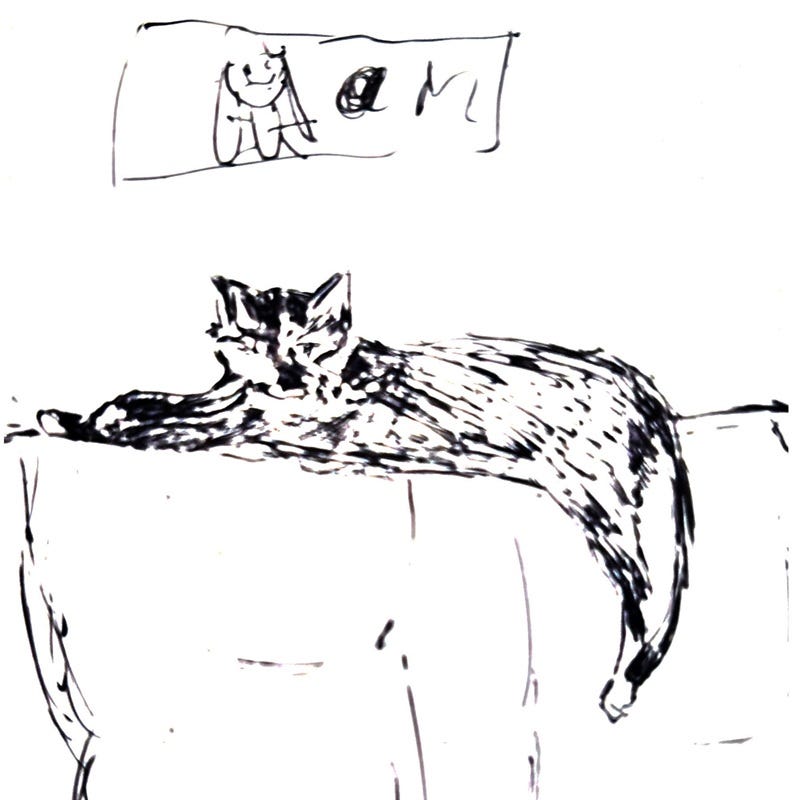
One of the biggest obstacles to self-governance is apathy, which could be described as simply the status of not caring. Despite how obvious it is that we should care about important things, I think that we can insidiously foster an overall attitude of carelessness when we make apathy towards anything a boasting matter. It brings to mind the trite meme of Julie Andrews twirling around the Austrian countryside with the caption “This is me not caring about football,” or whatever topic is trending at the moment. A rather ironic image, actually, considering Maria Von Trapp was a heroine because she was so caring and attentive in selfless ways.
Thanks for reading Republican Motherhood! Subscribe for free to receive new posts and support my work.
Sure, there are things we don’t care about, and don’t need to care about. I’ve never kept up with the Kardashians – but I’ve also never considered that something to warrant bragging. Announcing that you don’t know who won the Super Bowl, or don’t care that Taylor Swift and Travis Kelce are engaged, or don’t care whether your chicken eggs are cage free or free range, or don’t care how your iPhone is made, doesn’t mean you are accomplished. It just means you’re ignorant about some things that interest many other people.
It is certainly not necessary for you to care about everything. We are, after all, finite human beings with a limited capacity for attention. But if you genuinely don’t care about something, the least you can do is not feed the internet algorithm on that topic with a comment showing off your superior lack of interest. At worst, doing so only models callousness, especially for younger internet users, who then may become more comfortable adopting the same attitude towards other things.
This brings to mind Dr. Russell Kirk’s observation in his book The American Cause, under the aptly titled chapter, “Ignorance – A Dangerous Luxury.”
“When, in the Second World War, our troops landed in North Africa, the French were astonished at how politically naive American soldiers seemed. For most Frenchmen are passionately interested in political notions; while most Americans – like most English people – are not. This lack of interest in abstract politics is not always a harmful thing. One reason that the Americans, like the English, do not spend much time arguing over theories of politics is that for a very great while nearly all of us have been contented with our society and our form of government. We have not been revolutionaries since 1776 because we have felt that we have enjoyed as good a society as any people reasonably can hope for.”
(Yes, notice that even in the aftermath of civil war, the U.S. resumed normal operations and carried on!)Clearly, he was specifically speaking about apathy towards politics, and the double edged sword of the American experiment’s success: our constitutional republic has functioned well enough that average Americans often feel comfortable letting it run on autopilot.
Furthermore, over the past few generations many Americans absorbed the faulty notion that maintaining healthy relationships requires avoidance of discussing anything potentially controversial or uncomfortable, hence the idea that it is impolite to discuss politics and religion. But it’s not that politics and religion or many other subjects that are inherently impolite. Rather, many have lost the skill of talking about them politely.
When we prioritize our own feelings (or lack thereof) about a topic over any other value related to it, we support a culture of apathy in general, which feeds the cycle of ignorance and poor conversational skills that weaken self-governance.
In order to raise a citizenry that maintains its republic through self-governance, we need to develop a balanced, productive mindset in the way we relate to culture and politics. This is a series on cultivating self-governance which can be found at my educational compendium, RepublicanMotherhood.com.