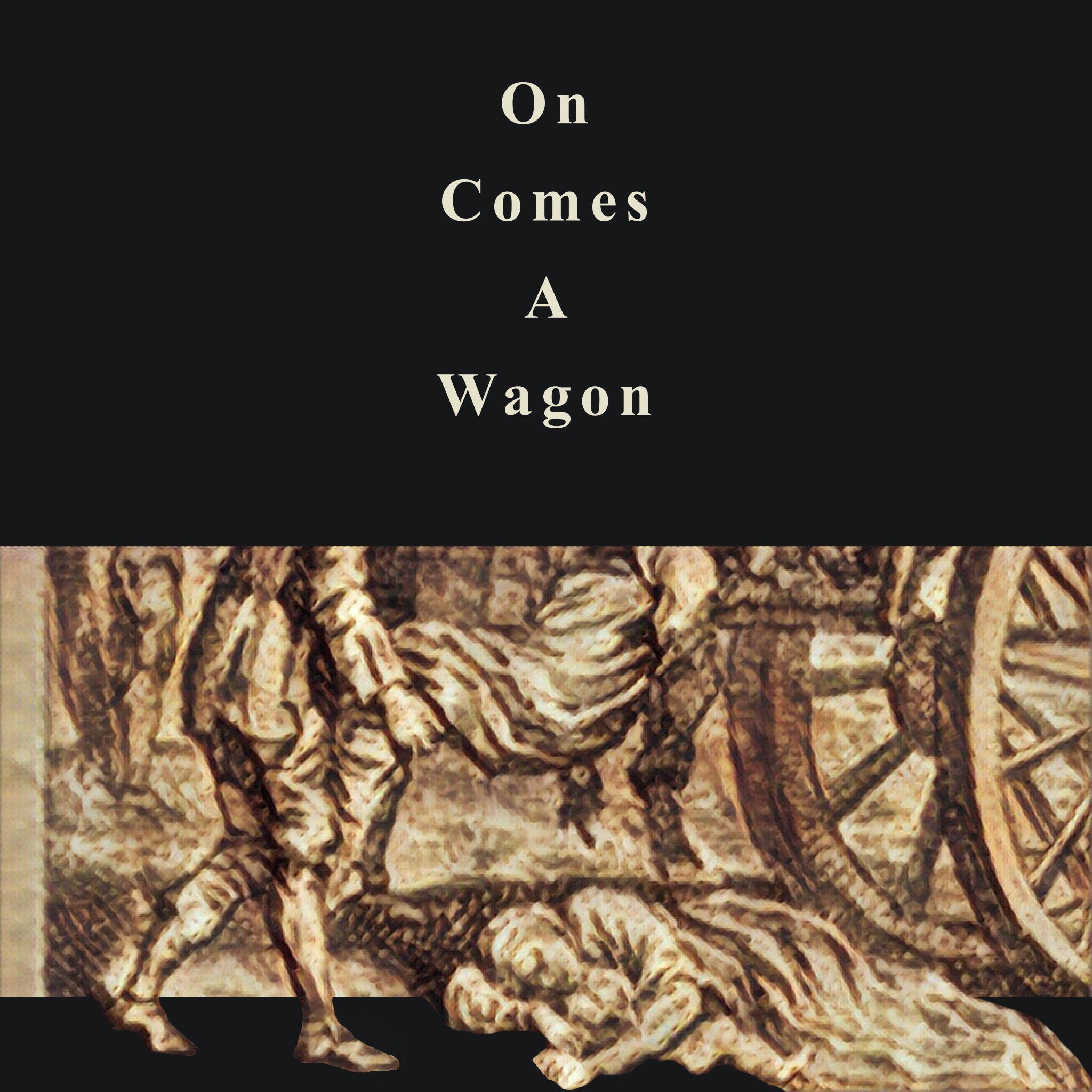
Brown puddles of mud and sewage pool in the grooves left by the wagons. They come so frequently now that the ruts are near an arms-length deep. There's a cart across the way, picking up somebody now. It's a late one, just shy of midday. The carts are only supposed to come at night, but there are just too many now. So many bodies. Elias peers through the front door, shamelessly. Shame is a thing long left in the past. Hard to maintain even a scrap of dignity when you fight rats for food and your neighbors are being carted off every night to Lord knows where. The pits most likely. As Elias watches, a rat crawls up to his boot and begins to gnaw loudly at the toe. When he looks down at the lean gray rodent, he imagines himself snatching it up and biting into it like a freshly cooked leg of mutton. His mouth begins to water until reality settles comfortably back in. Instead, Elias kicks feebly at the rat by his feet. It only staves off the chewing for a moment.
Elias talks to his wife, telling her what's happening in the world beyond their door. How the watchmen neglect the shut-up houses. She listens, or at least he hopes she does. She sits in a corner of the room, slumped against the wall, eyes staring off into nothingness. Elias tells her how each house has the red cross somewhere on their door with the words 'Lord have mercy upon us', indicating a presence of the distemper. A few have a white sheet, like the Hartlocke house, indicating the need of a dead cart. He looks back at her, but she doesn't seem to hear him. He watches as the body is carried out of the house and thrown unceremoniously onto the wagon. It bothered Elias the first time he saw it, but it doesn't anymore. Once the body is visible on the cart, Elias can tell that it's little Will, the youngest of the Hartlocke boys. He decides not to tell his wife this part. With a great deal of effort, the beasts of burden pull the wagon out of the mud and on down the road. There are undoubtedly more stops to be made. Elias rises shakily, and ambles back toward the kitchen. The rat abandons his boot for a more stationary target: the hem of his wife's dress.
Elias hisses at the rat and tries to drive it off by batting it with his hat, despite knowing it will be a momentary reprieve. He bends down and kisses his wife's head as he has done so many times. She doesn't reciprocate, merely staring at the floor with eyes devoid of all will. He notices that his shirt nearly slips off of his emaciated frame when he stoops down, but he finds it impossible to care. His exposed, pale shoulder bears sores and boils, much like his wife's. Elias tries to make a jest about finally losing the pounds her good cooking packed on, but it falls on deaf ears. He sits down heavily at the old wooden table, still rambling about food. There is a plate with hardened blue bread on it and a moldering apple. His wife stopped eating a few days ago, and despite his setting of her plate, he can't coax her to eat anything. He even tried feeding her once, but she left the food in her mouth unchewed. He laughs just slightly as he is reminded of something his father used to say, 'You can lead a horse to water, but you can't make it drink'.
Elias sits at the table, idly tracing patterns and grooves in the wood. He looks up at his wife and sees the rat has climbed into her lap and is gnawing on her stiffened fingers. Elias shouts and throws his hat at it, driving it away temporarily. He stares at the unmoving form of his wife, and continues talking to her. He speaks of all the things they will need to do once all of this has passed. How they'll have to restock the larder, buy more candles, and air out the bedroom. He looks at his wife again and sees one of the many flies land on her milk-white eye, then crawl across to her nose. He looks away in disgust, then feels the familiar burning of guilt and pain, threatening to drown him if he lets it. He stares off at nothing, much like the corpse of his wife, until finally he speaks again. He begins slowly, with halting words, saying that he ought to put out the white sheet. He breaks down sobbing then; dry, shoulder-heaving sobs.
Rising from the table, he shuffles his way to the bedroom and returns with a white sheet from their bed. Before he can think better of it, he reaches out the front door and drapes it over the candle holder mounted there. He leans back against the wall and slumps down to the floor across from his wife's body. Elias looks at her sallow face, seeing only the beauty that was there but has since ebbed away. He crawls his way over to her, in spite of the smell. He lays his head in her lap and holds her cold fingers in his own. He feels so very tired now, and a wave of peace envelops him as he shuts his eyes. Perhaps it is only his imagination, but he feels her fingers run through his hair, and he hears distantly the sound of an approaching wagon.