How can you track a migrating bird? For decades, the answer was with a leg band. When they were caught, birds were given little bracelets with tracking numbers. Then, if they were ever caught again, we could learn about where they’d been.
This was a great system for its time, but it also had lots of problems. The odds of a single bird being captured multiple times aren’t high, for one thing. For another, even a recaptured bird could only tell us where it was when it was banded and where it was now. We had no way of tracking its in-between points. Where did it stop? Where did it spend the most time? Did we encounter it at its southernmost or northernmost arrival, or only somewhere in between?
Enter Motus. This revolutionary new tracking system helps us find birds all along their journeys. It is teaching us so much about the routes birds take, their preferred stopping places, their tenacity and endurance, and more.
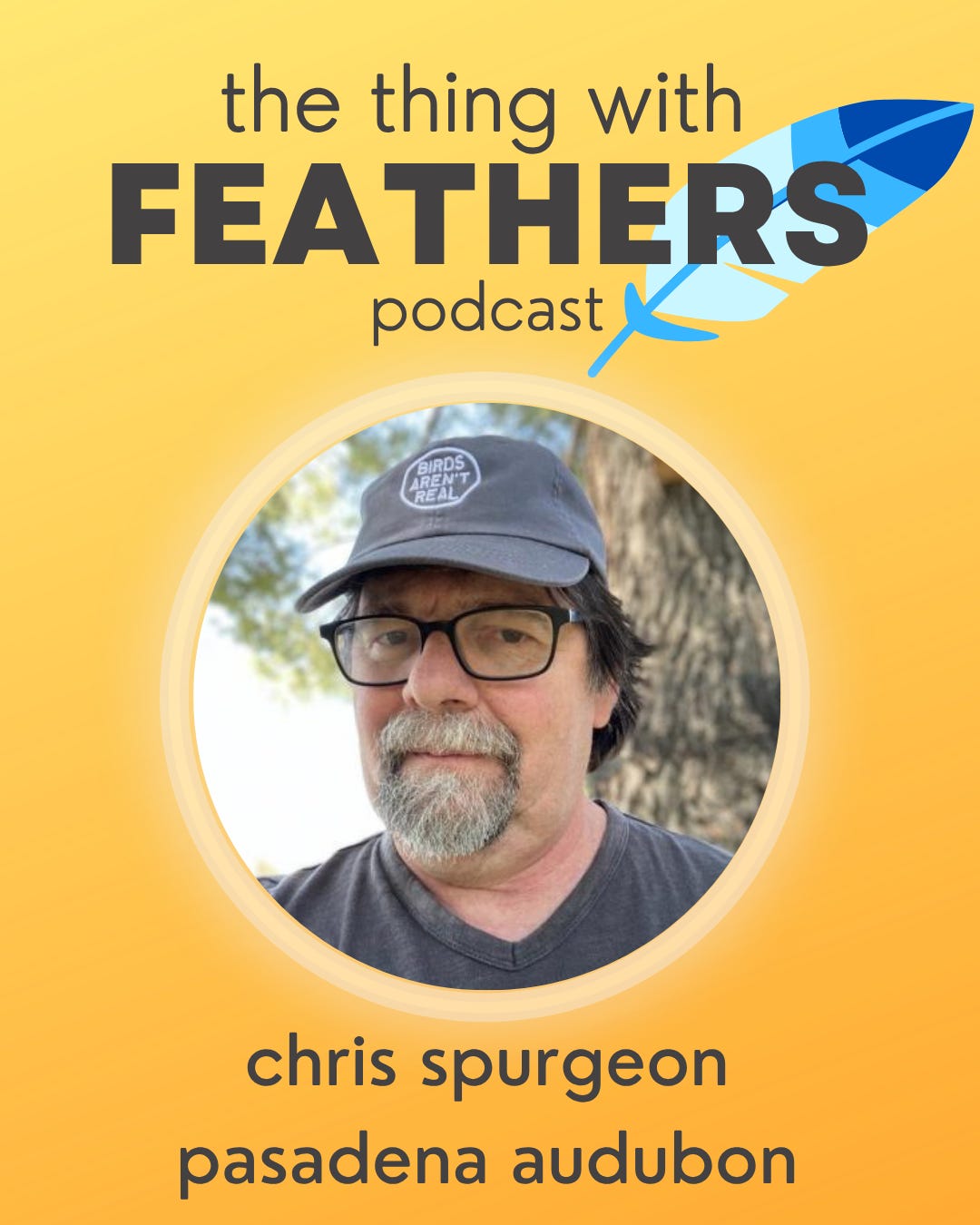
This week on the show we have the privilege of learning from Chris Spurgeon, board member of Pasadena Audubon and of the Southern Sierra Research Station. Chris is a fount of knowledge, a wealth of wisdom, and a passionate advocate for birds. I learned so much from him, and I know you will, too.
Other books mentioned in this week’s episode of the show:
David Sibley’s What It’s Like To Be A Bird
Scott Weidensaul’s A World On The Wing
And Scott’s new book, devoted to optimistic stories about conservation and birds, Return of the Oystercatcher