This one needed to be spoken, not just written.
For three days, I sat behind steel and concrete…but those walls taught me something the world never could.
This is the sound of my reflection from Cell HCA235…part testimony, part revelation, part call to remember that freedom begins inside.
Tales from the Theologian, Therapist, & Researcher is a reader-supported publication. To receive new posts and support my work, consider becoming a free or paid subscriber.
Langston Hughes said it best:
“Life for me ain’t been no crystal stair.”
No indeed, it wasn’t.
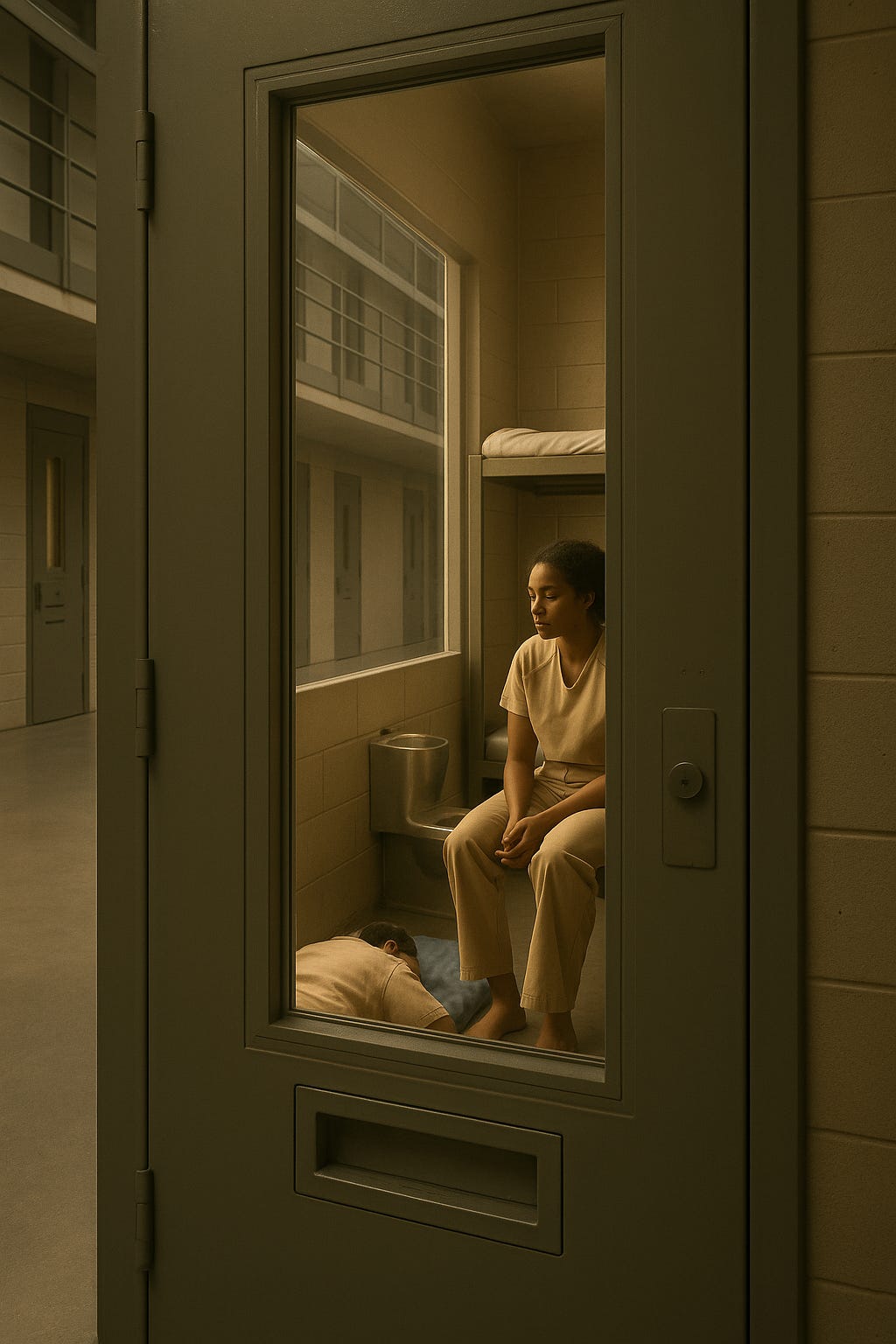
For three days, I lived inside a room that was less of a cell and more of a statement, a 150-square-foot concrete sermon on how society measures worth, repentance, and mercy. The room was built for one, but it held two: one bed made of steel and concrete and the other a pallet on the floor between the door and the toilet, two souls made of breath and regret, and one small trap door where the inmates yelled to one another about their lives and how that filtered truth was rationed out based on the mood of the officer on duty. The stairs were cold, echoing, and unforgiving…steel steps leading up to nowhere but repetition. You learned quickly that even walking was a kind of prayer: up for food, down for air, over for the brief 40 minutes when you could stretch, sit, or pretend to belong to the world again. There was no softness…not in the chairs, not in the beds, not in the voices that called your name by last. Everything was either cement, steel, or silence, but inside that hard space, something unexpected began to break open.
Forty Minutes of Humanity
Each day you were granted a few minutes, a ration of freedom, to walk, shower, watch a TV you could not hear without a radio, and maybe talk to someone with a tired smile. It was here, in those minutes, that I saw the brilliance of human spirit…the kind of strength that no policy or program could teach. I saw women share toothpaste, food packets, and songs whispered through vents. I saw laughter grow like grass between cracks. I saw dignity survive even in deprivation. It struck me that county jail doesn’t just hold bodies…it holds stories. And sometimes, it’s the story that refuses to die.
“Freedom is not the absence of walls; it’s the refusal to forget who you are within them.”
The Sound of the Stairs
The first night, I couldn’t sleep. The stairs creaked all night, a metallic symphony of footsteps, echoes, and distant murmurs. Every clang sounded like judgment. Every creak felt like a clock. But after the second night, I realized those sounds were also songs…rhythms of survival. The women called to each other in code, prayed in whispers, shared updates through vents. The stairs became their choir loft, their confessional, their telephone. Even behind bars, connection found a way. By the third day, I began to hear it differently. Not as chaos, but as chorus. Not as confinement, but as conversation.
A Sacred Interruption
I had resigned myself to staying, waiting for the system to decide my worth. But there were people on the outside, people who knew my name beyond my number, and they refused to let my story end there. They made calls, raised voices, pulled strings, and opened doors. And when that cell door opened, it was more than freedom, it was revelation. I realized then that incarceration is not just a legal sentence; it’s a societal mirror. The cell is what happens when compassion collapses under the weight of bureaucracy. It’s what happens when grace is rationed. But that day, grace walked in.
Reflections from Cell HCA235
If you’ve never sat in a cell, it’s easy to imagine that freedom is about movement. But it’s not. Freedom is about memory, remembering that you are more than the sum of your mistakes, more than the label the state gives you, more than the shame the system tries to tattoo on your soul. In that cement room, I met myself again. Not the public self, not the polished self, but the raw, unfiltered self that existed before titles, positions, and roles. I met the part of me that still believed in mercy, in grace, in G-d’s ability to dwell even in a place designed to strip away dignity. That’s when I learned the most radical form of faith: Not believing that God will get you out, but knowing that God is already in.
“Holiness is not a location, it’s the presence you carry, even in a place that was never meant to hold hope.”
A Brush Behind Bars
Those three days were not wasted. They were witness. I saw what the system fears most…people who still smile, still pray, still dream, still care for each other when everything around them says they shouldn’t. The brush behind bars wasn’t punishment, it was preparation. Preparation to speak truth to the cages we call justice. Preparation to remember that freedom is not a privilege, it’s a principle. Preparation to tell a story that too many people live but few can articulate without shame. So, I tell it now, not as tragedy, but as testimony. Because even in Cell HCA235, the Spirit was free.
“Sometimes, G-d places you in the smallest space to teach you the vastness of your own soul.”
If this story reaches you, sit with it.
Think of how many people are still behind those same bars, waiting to be remembered, waiting to be named.
And remember …holiness doesn’t leave when the door locks; it shows up when you realize your soul cannot be contained.
Thanks for reading Tales from the Theologian, Therapist, & Researcher! This post is public so feel free to share it.
🎙️ Show Notes: Cell HCA235 (A Brush Behind Bars)
Conversations with Tanya
“Sometimes G-d places you in the smallest space to teach you the vastness of your own soul.”
Episode Summary
In this deeply personal and powerful episode, Tanya Alkhaliq shares her lived reflection, “Cell HCA235 (A Brush Behind Bars),” a story born from three days behind steel and cement walls. What began as confinement became revelation...a meditation on freedom, identity, and the sacred resilience of the human spirit.
Tanya takes listeners into the emotional and spiritual texture of incarceration, exploring what it means to hold onto humanity in a place built to erase it. Through raw storytelling, she uncovers the hidden conversations about trauma, grace, and how the Spirit still moves even behind bars.
This episode reminds us that healing doesn’t begin after release; it begins with remembrance.
Featured Books Mentioned
📘 Fear: It’s Not an Option – A transparent and empowering guide to confronting internal barriers and learning to live courageously, especially in the face of systems that try to confine our purpose.
📗 Positive Daily Affirmations for BIPOC – A daily spiritual and mental health companion for those reclaiming joy, grounding, and sacred identity in a world that often erases nuance and pain.
Mental Health Conversation
Tanya’s mental health reflection centers on the trauma carried within incarceration...both by those imprisoned and by the families and communities affected. She discusses the importance of working with people, not on them, to heal the internalized shame, fear, and hypervigilance that often linger long after release.
Through this conversation, Tanya explores:
The psychological scars of confinement and control
The necessity of trauma-informed care for formerly incarcerated individuals
The power of community and consistent compassion in recovery
How faith, therapy, and self-reflection can coexist as healing partners
Her message is simple yet revolutionary: healing must walk hand-in-hand with humanity.
Key Quotes from the Episode
“Freedom isn’t the absence of bars; it’s the remembrance of self within them.”
“We cannot heal what we refuse to humanize.”
“Holiness isn’t about where you are; it’s about who you choose to remain in the midst of it.”
“Every system that cages the body also tries to silence the soul; but the soul was never theirs to keep.”
Connect & Continue the Conversation
🪶 Subscribe: tanyaalkhaliq.substack.com🎧 Listen to More Episodes: The Family Table Podcast📚 Follow Tanya’s Books & Projects: Fear: It’s Not an Option | Positive Daily Affirmations for BIPOC💬 Join the Conversation: Use #TheFamilyTableNC and #BrushBehindBars to share your reflections or stories of resilience.
o0