Pray
Read
Ecc 2:1-11.
Meditation
The truth is that we’re all on a search for happiness. Contentment, enjoyment, pleasure, joy, satisfaction. You can see it in the way that we try to avoid pain. You can see it in the way that we prioritise the things we want. Football fans in Melbourne dedicate their time and money to the sport because they enjoy it. Travellers save their money and spend their spare time holidaying because they enjoy it. Gym junkies search for self-worth and contentment in hours of exercise. Movie buffs lose themselves in the stories of the big screen, spending hours and hours of life searching for enjoyment. There are book-lovers, foodies, and workaholics. Everything under the sun.
As I’ve been thinking about this, I’ve come to believe that everything a person does falls into one of three categories: escaping the things they do not want in their lives, enabling the things they do want, and actually doing the things they want to do. The world is full of seekers, people searching and looking for joy and satisfaction.
You’ve probably noticed it in your own life. We have impulses and compulsions to pursue the things we want. We’re driven by deeper desires, both good and bad. And we fear and run away from the things we don’t want.
As we embark on the second segment in Solomon’s Labyrinth (i.e. Ecclesiastes Chapter 2), he leads us on an epic journey for satisfaction, and he arrives at a quite staggering conclusion. Solomon is going to be showing us the reality about finding satisfaction in the stuff of this world.
As we saw in previous studies, the world is broken. What is crooked cannot be made straight, and what is lacking cannot be counted. The next basic fact he shows us is that people want to be happy. Everyone is doing it. As Solomon sees this, he says to himself, “Well, if everyone is looking for satisfaction in the things of this life, I want to know, is there an answer to be found here? In all the things people chase after, can they ever meet our longing for joy? Is it possible to find true, full, and lasting happiness in this life?” That’s what the first part of chapter two is looking at: “I said in my heart, ‘Come now, I will test you with pleasure; enjoy yourself.’”
Solomon addresses this question head-on, and to put it bluntly, he tries everything. Every possible way of finding happiness in this world, Solomon searches it out by wisdom. Here we have the greatest king in the world, a man of unimaginable wealth, endowed with supernatural wisdom from God, with every possible resource at his disposal.
And what is his conclusion on whether we can be happy in this life? “I said in my heart, ‘Come now, I will test you with pleasure; enjoy yourself.’ But behold, this also was vanity.” In typical fashion, Solomon states his conclusion right at the start. He searched the world over, turned it upside down in his quest for lasting and full happiness, and came up empty. Everything passes away like a breath; you cannot hold on to any of it.
You could gain everything in the world, and within just a few short years, it would all be gone. This is why Solomon says of pleasure in verse two, “What use is it?” He is not saying there is no pleasure to be found. See verse ten, where he says, “My heart found pleasure in all my toil.” What he is saying is that it is quickly gone. You cannot keep it, it is not lasting, you cannot hold on to it.
This passage puts it starkly and really throws down the gauntlet to us, because it only takes a moment to realise that we do try to hold on to the pleasures of this world. Our hearts become deeply attached to the things of this life. We pursue them and make them a top priority. Solomon’s word of wisdom to us in this passage is simple: do not do it. It is a dead end in the labyrinth of life. That is what we will see here. If life is a labyrinth, if Ecclesiastes is a labyrinth, then what Solomon shows us here is a series of pathways that all end in dead ends. They will not take you to life’s meaning. In a materialistic age such as ours, this is a message we desperately need to hear.
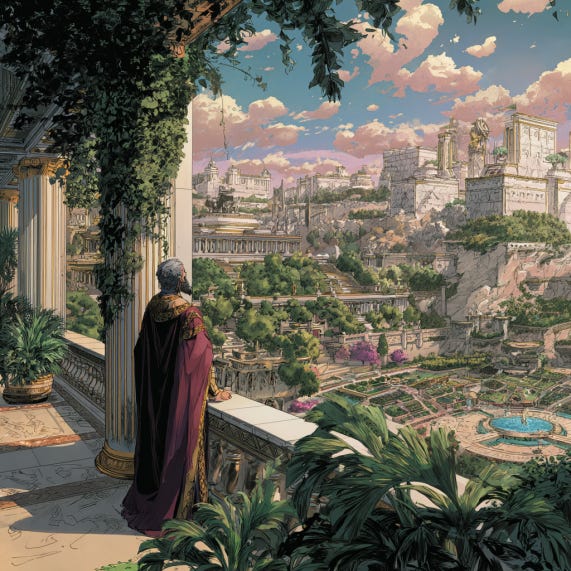
So let us ask the question plainly: Is there anything in all the world that could possibly satisfy you? Think about it. Imagine you were in Solomon’s position. You have all the money in the world, and you have the freedom and power to enjoy anything you want. The world is absolutely your oyster. That is what Solomon does in this text. He says in verse ten, “Whatever my eyes desired I did not keep from them.”
If you woke up tomorrow and could have anything you wanted, with no job to go to and no worries to take care of, what would you do? Chances are, whatever your answer is, it is on Solomon’s list. Because in this passage, Solomon does not hold back. He goes for everything. There was no good thing he denied himself, no experience, no pleasure, no source of potential joy. That’s what we’re going to be exploring over the next few studies. SDG.
Prayer of Confession & Consecration
O Lord, you are the fountain of true joy. I confess that I have sought happiness in the fleeting pleasures of this world rather than in You. My heart has chased shadows and called them light, holding tightly to what cannot last. Forgive me for loving Your gifts more than Your glory, for seeking my satisfaction in what perishes. Please teach me to see that every earthly delight points beyond itself to Your eternal goodness. Grant me grace to seek satisfaction in You alone, and to spend my days delighting in Your will and resting in Your love. In Jesus’ name I pray, Amen.