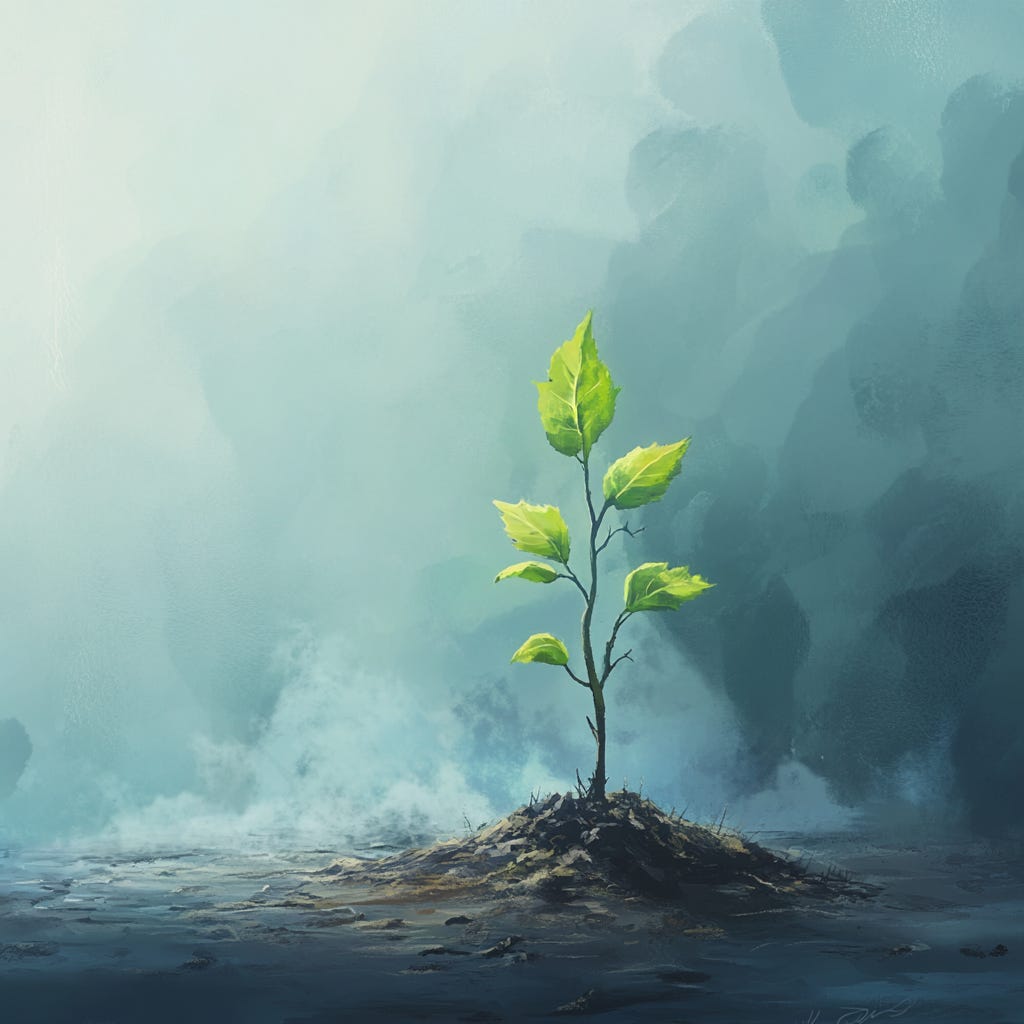
Prayer
Our Lord and our God,
our Heavenly Father,
we pray as we give our attention to your word now that you may open our eyes and
renew our minds and hearts.
Lord God, may your name be exalted and magnified to our vision as we turn our attention to your word.
Lord, be merciful to us and forgive us for our many sins, and lead us in your ways.
We pray in Jesus' name.
Amen.
Reading
Genesis 2:5-7.
“When no bush of the field was yet in the land and no small plant of the field had yet sprung up—for the Lord God had not caused it to rain on the land, and there was no man to work the ground, and a mist was going up from the land and was watering the whole face of the ground— then the Lord God formed the man of dust from the ground and breathed into his nostrils the breath of life, and the man became a living creature.”
Meditation
What are the most important things in your life? Now I want you to think seriously about that, don’t just give cliché answers to yourself. Really think – what are the things, in your heart of hearts, that you treasure the most in your life? Is it the work you do? It it the things you have? Is it the hopes that you’re looking forward to? Is it the people you love? Life is a gift. Life is precious. We are launching into the narrative of Eden in these studies, and the theme of life is very much front and centre here. We’ve already seen that God is the author of the story and of history, it is “his-story”, the story that he is telling, and it is the story in which we find ourselves to be characters, so to speak.
Now when we write our stories, our characters are just that: they are made up stories. They are reflections of ourselves. But in God’s story, he writes with living characters. People created in his image. Whereas we write on paper, he writes on pages of earth and stone, of flesh and blood. He writes with living words, and above all his story is about THE living word. Because as we see in scripture, God himself stepped in to the story. As the Word became flesh, and Jesus Christ, the Son of God, walked upon the earth. But at this point in our studies, we’re still at the very start of the story. So God is the author, but the question remains: what’s going to happen? That’s what we want to know in any story isn’t it? What’s going to happen?
In our previous studies of Genesis 1, we saw the overall goal of this story that God is telling: that God wants to fill the earth with his glory and presence. That’s the big picture. He wants the earth to be a place where He will dwell and His glory and excellence will shine. In Genesis 2 we begin the journey of finding out just out how this story will unfold, and where we will find our part to play as well. So, the scene has been set, the world has been made, but what happens next? It’s very simple: God starts filling the earth. That’s the first, and most basic thing that we see God doing in v5-7 as this story of history begins to unfold: God starts filling the earth.
Verse five, as we’ve previously noted, focuses not so much on what’s happening as it is on what’s missing. What’s missing in verse five? There’s no water so that the plants can grow, and there’s no man to work the earth. The ground is not yet productive because there’s no water and no worker, and so there’s a real lack here, a kind of emptiness. God responds to this emptiness by filling the earth with life.
You see, one of the most basic things about life, is life itself. It’s the basic thing about our planet. What would this place be without life? Life itself is thus at the heartbeat of God’s purposes for history. There’s a doctrine about God that theologians call “the aseity of God.” The aseity of God is really talking about God’s self-existence. It’s talking about the fact that God is life, and that he is and has life in and of himself. In fact – that’s what he is. God is life. Aseity is a latin word that basically means “from self.” So God’s aseity is talking about the life that he has from himself. When you start studying it in the scriptures, it becomes very obvious that this is a biblical doctrine. John 5:26 says that God “has life in himself”; Revelation 1:4 says that he’s the one who was, who is, and who is to come; Daniel 4:34 says that he lives forever. As God reveals his name to Moses, the covenant name by which he would be known, what is the name that he reveals? “I AM THAT I AM”. That names reveals God to be the self-existent one, the living one. Life. Everything is about life! Because God is life! As the first scene in history begins to unfold, that is where God starts: by filling the earth with life.
Be ye doers of the word…
There is a very basic application that flows out of this insight for us, and the application is this: promote life. In a sense, this is God’s most basic aim for history – to fill the world with life. And if that’s his basic aim, it ought also to be our basic aim. In every possible way, our over-arching goal in life should be to promote life. Now that’s much broader than just protecting the physical life of others, although that is incredibly important. God’s commandments reveal that we must not murder, and so we ought to uphold the value and sanctity of life. In particular today, that means that we should be passionately pro-life and anti-abortion. Abortion is diabolical and anti-God.
But promoting life is something that includes the whole of life as well. God wants to see life flourish on every level. He wants to see well kept gardens full of flowers and birds and bees and colour. He wants us to take care of the creatures that he has made and develop the world that he has created, which is why Proverbs 12:10 says: “Whoever is righteous has regard for the life of his beast, but the mercy of the wicked is cruel.” He wants us to take care of our health, and of the health of others. He wants each of us to flourish in our gifts and abilities, and to help one another to flourish as well. He wants you to develop your gifts and abilities in service to him and – above all – he wants us to come to Christ.
In this post-Eden fallen world, Christ is our life. In the garden of Eden God began to fill the earth with life. But upon rejecting God in Genesis 3, man entered into a state of death. In other words, sin sets itself in direct opposition to what God has planned. The wages of sin is death. And so it should come as no surprise that Christ came, and the gospel is now preached, so that we may have life again. Christ came so that what was freely given in Eden – life – could be restored. John’s gospel is very clear about this, as we read in John 20:30: “Now Jesus did many other signs in the presence of the disciples, which are not written in this book; but these are written so that you may believe that Jesus is the Christ, the Son of God, and that by believing you may have life in his name.” So Make it your aim in life to promote life, to see life in Christ flourish and grow. That’s why we share the gospel – that others may life. SDG.
Prayer of Confession & Consecration
Lord God on high, as I begin to understand a little more your purposes for creation, I also begin to see and understand a little more how little aligned I am with those purposes. I begin to feel and suspect that I am desperately out of touch. Do I promote life by sharing the gospel? Do I promote life by fleeing from my sin? O Lord, I see that I am least of all the saints, and that my understanding is like a bleary-eyed blindness. My situation is desperate, Lord, give me life according to your word! Lord, please fill me with your life, that my life – body and soul – may so overflow with your love and life that others may receive your life through me. Please help me Lord. Please help me to promote life, both physical and especially spiritual, to the glory of your name. I pray in Jesus’ name, Amen.