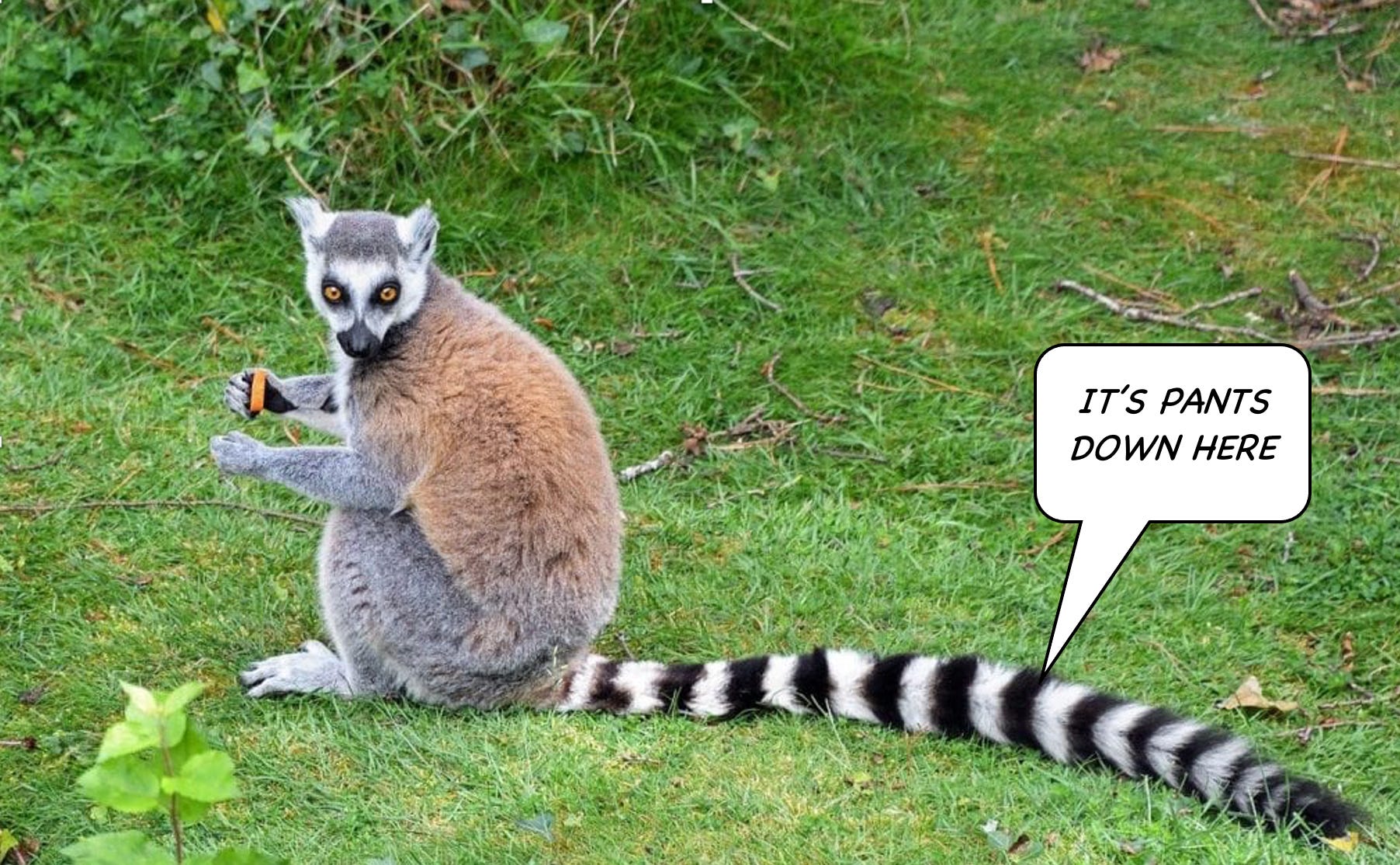
In 2006, Wired magazine’s editor Chris Anderson published The Long Tail: How Endless Choice is Creating Unlimited Demand.
Anderson’s was a hopeful reading of the information revolution: the sudden interconnectedness of everyone on the planet opened markets that, hitherto, would have been far too “niche” to for it to be worth anyone’s while to service. The internet changed those economics forever: at a stroke it was worthwhile to cater to every conceivable idiosyncrasy.
Communication being free and instantaneous, you could hang out your digital shingle and arcane aficionados from every corner of the planet would swarm joyously to you, and consume your esoteric wares.
Not only could that happen, said Anderson: by 2006 it already was happening:
What we’re now starting to see, as online retailers begin to capitalize on their extraordinary economic efficiencies, is the shape of a massive mountain of choice emerging where before there was just a peak.
When you dramatically lower the costs of connecting supply and demand, it changes not just the numbers, but the entire nature of the market. This is not just a quantitative change, but a qualitative one, too. Bringing niches within reach reveals latent demand for non-commercial content. Then, as demand shifts toward the niches, the economics of providing them improve further, and so on, creating a positive feedback loop that will transform entire industries—and the culture—for decades to come.
That’s the “long tail”. An almost infinite static, golden stream of opportunity in which the planet’s magnificent diversity of interests, preferences and proclivities could all, at last, be satisfied.
On getting knotted
I may have a great passion — I am making this up — for manga macramé: Angsty Japanese comics about the Persian artform of decoratively knotting bits of string.
Now, I accept that this is all a bit niche: but it is exactly the sort of demand that the long tail could finally satisfy.
For out there, somewhere amongst the eight billion netizens, is surely a band of fellow manga macramétravellers. Perhaps there were only ever a dozen of us, and as long as we were isolated — 12 macrame needles in a haystack of billions — it was never possible, let alone worthwhile, for stringish manga artisans to cater for our demand. It went unfulfilled.
All that, in Chris Anderson’s telling of the story, has now changed. The internet — this global permanent network — is the solution to my manga macramé problem, and the similar problem confronted by every minor craftsperson, in every niche, nook and cranny around the world.
Henceforth we will have a flourishing manga macramé subculture! It may grow!
But in its capacity to grow are there not the seeds of its own destruction?
Before coming to that, sceptics may ask: is this hypothetical diaspora of manga macramé fans realistic? Would that really happen?
It is a beguiling notion, but it goes a bit soft on close examination. Cultural preferences, for pastimes like manga macramé, are culturally grounded. They are product of our environment and the problems, opportunities and constraints it presents, one of which is isolation from other cultural imperatives. A passion for manga macramé would not form out of a clear blue sky.
One must first know about manga. It’s from Japan. And macramé. It’s from ancient Persia. In the same way Kalahari bushmen would not hanker after Coca-Cola, at least until they knew about it — this was the premise of the oddball comedy The Gods Must Be Crazy, in which a passing pilot tossed an empty Coke bottle out of a plane — it is hard to see how, without an internet or something like it, anyone could spontaneously contrive an interest in manga macramé at all, let alone a disparate bunch of unconnected people inhabiting isolated locations all around the globe. The hypothetical manga macramé scene would need the internet to even get started.
This, Anderson recognised. “Bringing niches within reach reveals latent demand for non-commercial content.”
Sure. But just as the internet would promise to set us free from the tyranny of The Man and his force-fed standardised, low-margin dreck, so will the internet be just the thing that might kill those niche communities off.
Because for all those wishful hypothetical expectations, twenty years on, Chris Anderson’s long tail hasn’t happened.
The boulevard of broken dreams
You might well ask: what the hell did happen?
As far as anyone can see, there is, today, less diversity in popular consumption than ever. Products are more generic. Art and literature seems more formulaic. There is less tolerance for nuance, heaven forfend plurality. Denominators are more common.
The world is tending to the monolithic, and where that’s not possible, a sort of polar-opposite duality.
The total pool of “content creators” — that ghastly neologism for artists, authors composers, manga macramists and so on — may be huge, but the portion of it that makes significant sales is not.
Across multiple markets in art, commerce, goods and services, a handful of suppliers controls, as near as dammit, everything. The long tail remains, but it is thin.
Just 1% of all artists account for roughly 80% of all streams on Spotify. Taylor Swift and Drake sweep the pool, while the millions of struggling unknowns harvest 3 pence a month.
Cinema is dominated by safe, formulaic blockbusters. Harry Potter. Star Wars. The Marvel Universe.
Down the long tail, there is an infinite tail of hobbyist YouTubers, but few of them make any money.
The same goes for business. A very small handful of monopolising tech companies control an extraordinary amount of global commerce. Scale is everything: the Sherman Act, that pioneering competition statute that in its day humbled the robber barons, laid low the Bells and nixed the railroad trusts, is absent without official leave. (Come back, Lina Khan!)
The internet, it turns out, has not diffused our infinitesimal indulgences into a smooth, variegated parabola of choice. If anything, it has done the opposite.
We should not entirely blame the machine: we have brought this about. Our own tastes have somehow converged. We have homogenised.
Contra the long tail: the fat head
Now, to be sure: there is colossally more tat available online than ever: This is not do deny there is a long tail of specialty, niche and, well, tat (look at what you are reading!). It is very long, but also very thin.
You can’t pay the rent with three pence a month. A handful of YouTubers monetise — Mr Beast pulls down a couple of million for every video — but the great multitude do not.
What went so wrong with Chris Anderson’s grand, beautiful vision?
He looked mainly at the supply end of the equation. When he thought about demand, he saw only the bullish case. He didn’t really consider the bear one.
Yes: digital tools and interconnectivity dramatically increase the scope for available products. I can at last sell my intersectional arcana to the ten people around the world who really, really want it.
But once we’re all interconnected, will they really still want it?
For at the same time interconnectivity unleashes supply, it also bludgeons demand.
We are social animals. We are imitators. Memetic infection — copying and sharing things we like; influencing each other — is arguably the fundamental engine of cultural development. We can only influence, or be influenced by, what we can see and hear.
Interconnectivity changes what we can see and hear. We can now see, more or less, everything. Algorithms, marketing techniques and natural human ways of behaving run over this “everything” to highlight salient parts. To catch our attention. To boil this infinity down to something we can reasonably comprehend. These techniques tends to concentrate and focus demand. They strike against infinitesimal variegation. They encourage a re-redistribution away from the farthest reaches of this cosmos of eccentric content and back tow…