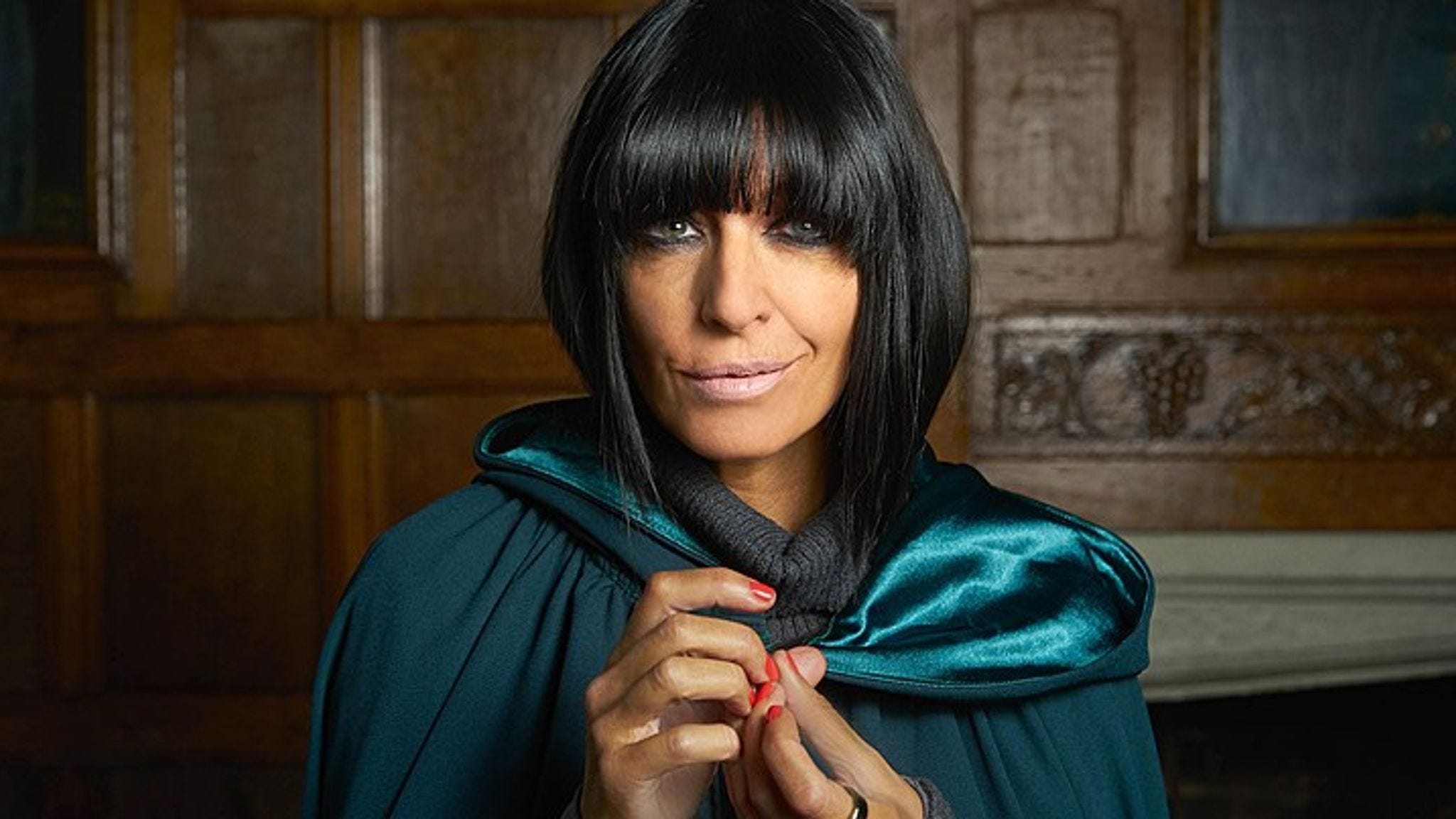
Reality TV competitions like the BBC’s Traitors offer valuable insights into group dynamics and decision making under situations of uncertainty.
Thanks for reading! This post is public so feel free to share it.
For those bewitched by the unravelling convictions of postmasters, LIBOR rate setters and antenatal nurses Traitors is a superb, but unsettling model. It shows how easily we — be we contestants, viewers, witnesses, prosecutors, judges, juries or poundshop Poirots — can be mistaken, even about very obvious things. How inevitably, where the facts and social dynamics before us are inchoate or contrived, or calculated to mislead, we will be misled. The same cognitive habits and heuristics, that serve us well as we navigate our ordinary worlds of straightforward surfaces and familiar social relationships, lead us astray when we are asked to play strange games of misdirection with unfamiliar participants.
These are “games” not in the senses of parlour games like bridge or chess or even poker, but language games: hermeneutic constructs built from artificial conditions and contradictory and only partially disclosed rules. Where players can reach their objectives only obliquely, while appearing to head in the opposite direction. There are some parlour games like this: Secret Hitler — great fun as long as you don’t mind being accused of fascism — has a similar dynamic.
There are other common situations like this in our lives. The workplace — often a nest of sharp-elbowed misdirections — is one. So is any political organisation: the clue is in the name. The criminal justice system is another.
Traitors is a fully-designed exercise in the wilful perpetration of injustice. Of the twenty-two initial contestants, three — according to the canonical rules — “deserve” to be banished. The others are pure in heart, if not in deed. But even that is a misdirection: all players in the game have the same object— to win it — and that, whether you are traitor or faithful, involves eliminating all the other players. The trick is to to be seen to do as little of the eliminating as possible. The winner is the best at misdirection.
How to play
For those living under a rock, the comatose and the deeply uninterested in popular culture, here are the principles of the game. Calling them “rules” is a bit of a stretch.
Twenty-two contestants convene at a neo-gothic castle near Inverness, hosted by Claudia Winkelman. Having bonded briefly, the players are sat around a round-table and blindfolded whereupon, theatrically, Winkelman assigns 3 of them the secret role of “traitor”. The remainder are the “faithful“.
The traitors will shortly meet in private, so have certain knowledge know who each other are and therefore, who are faithful. The faithful know neither. They only know their own status and, about that, to other faithful they are unreliable witnesses. This is a key information asymmetry. It gives traitors an enormous advantage.
For the faithful, their putative objective — we will come to why it isn’t their actual objective — is to identify and eliminate traitors. They have one opportunity each day to do that, during a banishment session convened at the round table where players debate who seems suspicious. At the conclusion of the roundtable debate players vote to eject one of their number, based on whatever meagre information presented to the table that best persuaded the congregation. But all participants, including the unknown traitors, participate in the roundtable. The odds are therefore somewhat stacked against faithfuls even in the use of their own most powerful weapon.
Each person who pleads her own case, or casts aspersions about another’s, is an unreliable witness. The roundtable is like a jury in every respect but one: “jurors” are players, guilty and innocent, and therefore also participants in, or witnesses to, the crimes alleged. Each has a stake in the outcome in a way a juror does not.
Given the paucity of information, players’ pet theories are inevitably bunk. This is obvious. Everyone can see it. I’ve lost count of the numbers of times I’ve heard people say, “it’s mad they all get het up because the elimination process is basically random.”
When, occasionally, they do stumble on the truth — an inspired aspect of the show is the confessional segments wherein individual players disclose their innermost suspicions to the audience —contestants usually trip over it. Being no surer of themselves than any other players, those who are onto something are usually talked out of action.
There is another elimination mechanism. The traitors, most days, confer in a secret conclave to agree upon the “murder” of a faithful. Murders take place unwitnessed and off-stage: the traitors leave no direct evidence: If the faithful want to catch a traitor, they must use their powers of deduction and inference on the strength of whatever weak circumstantial evidence they can find that give the traitors give away: tics, oral slips, guilty looks, conspiratorial behaviour — that kind of thing.
In the meantime the characters participate in “missions” where they must cooperate to add money to the prize pool. Here, traitors’ and faithfuls’ interests are aligned. This is in some ways clever, but in others, a weakness in the show’s format: it would be better if the traitors stood to benefit by jeopardising the faithfuls’ prize pool somehow. It might give faithful more concrete material to go on at the roundtable.
As it is, there is precious little: before and after the mission contestants have time to interact, air their suspicions and eke out information about each other but only from an inert “data set” that does not really contain any useful information. The game is carefully constructed to avoid traitors ever leaving unambiguous evidence of their identities, except by accident. As long as the traitors have been circumspect, there will no meaningful clues from which anyone could draw a sound conclusion.
In any case, at least one of the traitors is certain to survive to the “final five”— the rules are, literally, rigged as the game progresses to ensure this: television schedules, and not game dynamics, require it. But players should nonetheless factor it in: there will be traitors at the death. There must be. The game would not work without them.
A game of chance
What is fascinating is how players approach a situation in which they must make important decisions with almost no reliable information. Traitors is a show about deception, and it perpetrates its own deceptions on the players, in plain sight, from the outset. It tells them their objective is to identify and eject traitors. But it is not: traitors will in any case “respawn” if their numbers dwindle. Each player’s objective — traitor and faithful alike — is simply, and only, to survive. They should do nothing that jeopardises that objective, including displaying skill at identifying traitors, and thereby presenting an apparent threat. The best strategy is to keep your head down, keep your opinions to yourself, and say nothing unless spoken to. Be the zebra in the middle of the herd.
For Traitors is a game of ostensible, but not actual, strategy. It is, by contrast, a game of pure chance.
At the outset there is maximum uncertainty: players have nothing to go on but resting probabilities. These are easy enough to calculate: once their roles are nominated, each faithful should know there is a 3 in 21 chance — that’s 1 in 7, for the hard of mathematics — of any other player being a traitor.
And then the game commences. Of the 19 original innocenti, at least 15 must, by the rules of the game, be thrown under the bus. They will not all be murdered: more than half will be ejected by the faithful at the roundtable. Murder victims are necessarily faithful — the traitors cannot murder each other — but it is a necessary consequence of the game that most round-table ejectees will also be faithful. They are “murdered” too, only by a council comprising a large majority of faithful.
All that really differs between traitors and faithful, therefore, is their means of killing other players: traitors by murder, faithful by banishment. Presuming they don’t cheat, “traitors” are no less “deserving” of success than “faithful”.
For the thing is: as far as players have any control over outcomes, the elimination process isn’t just basically random: it’s completely random. Players, like viewers, must know this, yet they persist in believing they can anticipate and even influence outcomes — and, for the sake of watchability, just as well: if they did not, the show would not work. The game obliges players to willingly suspend their own disbelief. For all the good their uninformed machinations do them they would be better, and happier, were they to leave things to chance.
If faithful players can discipline themselves into thinking in terms of probabilities, they will note some reliable posterior information does emerge as the game goes on: as the roles of eliminated players are evealed — all murdered are ipso facto faithful, the banished declare their allegiance as they depart — so remaining faithful can update their “priors” somewhat, though, again, their information is incomplete. Faithful players’ odds systematically shorten — get worse — as the game progresses and contestants are whittled down. Elimination overweights the faithful, so as players disappear, the higher the probability that remaining competitors are traitors. By the time of the final five, at least one and probably two of the players must be traitors — that can be deduced from the fact of ongoing nightly murders. This means, for a given faithful, the “traitor ratio” amongst the remaining players increases over the game from about 14% to between 25% and 50%. That is an inevitable consequence of game play.
Most seem unaware of this. They must surely know it, at some level, but if they do, they don’t seem to care. For despite it, remaining players form strengthening bonds. Their sense of “ordeal camaraderie” is at least as strong as their willingness to suspect their comrades are traitors. Thanks to their improbable longevity surviving players, whatever their allegiance, have more in common with each other than any player has with a fallen comrade.
There is a good reason for this: when push comes to shove, individual faithful are no less incentivised to murder — or, by the end, guilty of it — than traitors. Traitors is a gave of push and shove. It is also a fantastic illustration of just how hard it is to make good decisions in times of uncertainty.
No killer facts
The game is carefully constructed so that the faithful are never presented with unambiguous evidence of treachery. It can happen, but only by a traitor’s unforced error. As long as the traitors are not careless, they can avoid leaving direct clues and the faithful must form suspicions based on inferences that are basically bunk.
This, as Traitors series across the world — there are editions in the US, Ireland, Australia and even little old New Zealand — has consistently illustrated, is incredibly difficult to get right, except by fluke. It’s little wonder: the faithful are (mostly!) perfect strangers to each other. They don’t know how each other behave in normal social situations, let alone times of social stress or the state of prolonged contrived deceit that Traitors forces them into.
Their suspicions are usually wildly wrong. Viewers, who know who the traitors are, find the faithfuls’ utter guilelessness at the same time mesmerising and exasperating. We howl at our televisions. We clutch our heads in exasperation. “How can you possibly miss it?!”
But this is a perfect example of hindsight bias. Of course it is obvious when you know who the traitors are. We are deceiving ourselves if we think we could do better.
The game environment is highly artificial: all players, not just traitors, are motivated to lie and disguise their true opinions in ways they ordinarily would not. A faithful who believes she is “onto” a traitor will keep her opinions from the traitor, but will readily share them with others — who may include the traitor’s confederates. This obligation to engage in duplicity leads even the faithful to spin and perpetuate dishonesties the same way traitors do. This is a neat design feature: the natural advantage the faithful would otherwise have, of having nothing to hide, is extinguished.
Some are better at this then others, but the cognitive load in trying to draw inferences from minimal available information often manifests in erratic behaviour, as faithful scrabble helplessly to get some purchase on who is who and what is what in the game.
This erratic behaviour is often mistaken as “traitorous” and those exhibiting it banished. Usually, it is quite the opposite: with their superior information and greater sense of jeopardy, traitors tend to have a much better “game plan” than faithful. They are generally more careful and rational because they do have a plan. This, ironically, tends to stave off suspicion! The faithful tend systematically to banish each other on dismal pretexts, while the traitors continue to get away with murder, literally, undetected and even unsuspected.
As the game unfolds players tend to form alliances. Across the Traitors’ regional franchises, the way they do this differs in a way that, amusingly, reinforces cultural stereotypes: the the Brits are self-effacing, charming, polite and deferential, especially at the beginning. They tend to eject players who are not polite. Irish are cheerfully idiomatic in their interactions. Australians, from the first morning, are brutal.
The British “celebrity” edition of Traitors, in 2025, was a nadir Britishness. Random British contestants are pretty bad at detecting traitors, but do they tend to get some. British celebrities, as you might expect from a bunch of luvvies, grovel disingenuously to each other at all times, in contrived mutual deference, and prove therefore quite useless when it comes to identifying traitors.
There are some learnings from this. An obvious one: in situations of epistemic uncertainty, when people you cannot trust are motivated to present a particular view of the world, we are really bad at figuring out who is telling the truth. Worse even than a choice at random.
This has real-world implications. Traitors might seem contrived, but it tracks the commonplace. For most of us, complex situations of factual uncertainty where conflicted agents spin facts to suit their own agendas, is an everyday experience. This is how parliament works. It is how the media works. It is how most workplaces work. And it is, explicitly how justice works: the “traitors’ dilemma” is exactly the scenario faced by a criminal jury. Who is faithful? Who is a traitor? Who is spinning? What is relevant? What is a red herring?
Like the faithful, jurors have limited information to go on. It may not be everything. It may be wrong. It may invite prejudicial inferences that are not justified.
Misconceptions
Traitors is so beguiling because it is based on a couple of misdirections. For one thing, the faithful are not the good guys: the “faithful” and “traitor” labels are a misdirection. There are no innocents in Traitors. The inevitable probabilities of the round table gives the lie to the idea that the “faithful” are really the good guys. Over a series there will be some 12 round tables. A banishment at each is compulsory. The dynamics of the game require contestants, faithful or not, to winnow themselves down to three finalists. The faithful have no power to save each other to avoid this.
This means the faithful must compete for survival against each other just as fiercely as they must against the unseen traitors. The traitors, conceivably, could all make it to the final. They have slightly more incentive to be collegiate than do the faithful, which is ironic.
Over the course of the game, the faithful typically eliminate more of their own than do the traitors. The familiar refrain, “I’m faithful, 100%” is not quite the ringing endorsement of probity its seems. Being faithful just means you intend to eliminate people in public, not private. The faithful is, in no sense, a “team”.
Unconscious bias?
In recent times, collated game statistics across five seasons of Traitors have prompted questions as to whether the collective decisions made in roundtables and the ”turret” reveal the unstated, even unconscious, prejudice?
Banishment data from early rounds invites the inference that there is mild bias against minorities and older players, who are often ejected first.
We should not be surprised at this. It does not prove prejudice. Firstly, in a novel situation of great uncertainty, informed decision making us impossible: literally there is no information. The players know the baseline probabilities — there’s a 1 in 7 chance of another player being a traitor, so a given contestant is, most likely, not a traitor. This is a dissonance though, because the players also know that three definitely are traitors.
A good Bayesian uses what information she can find to provisionally improve those odds. This is a subjective process, to which she will bring all her life experiences. A person who appears easy to trust has a marginal advantage. Here “in-groups” and “out-groups” might make a difference. We are all, instinctively, inclined to trust those with whom we are familiar — those our accumulated experience of the world tells us are likely to share our experiences, impressions and values — and those we form an interpersonal connection with.
These will often be people who most resemble us — by age, sex, cultural background, occupation, interests, geographic origin.
This is no kind of positive discrimination against those who don’t resemble us — they keep their base line odds — but a concession towards those who do.
Those common connection points are often cultural. Ethnic, religious and racial identities often follow cultural ones.
I can illustrate this with my own “minorityship”: though I live in the UK, I am from New Zealand. There are not many Kiwis in the UK — come to think of it, there aren’t that many in New Zealand either — but in the UK we make up about 0.1% of the population, though, like sand in a picnic rug we do tend to get everywhere.
Though my own connection with Aotearoa is slim — I’ve spent the vast majority of my life in London — should I encounter another New Zealander in the UK, we will quickly connect. We have shared experiences. We can make assumptions about how each other will think. We’re also likely to have been to school with each other’s cousins but that is a different story. The connection might not last — some kiwis are jerks — but all other things equal it is a good starting basis.
This is exactly what is happening on traitors. The great majority of contestants are under 45. The cast reflects the ethnic diversity of the UK, which is predominantly Caucasian, and geographic make up: there are always a couple of Welsh and Scottish but a majority from England. We should expect these people to instinctively bond with in-groups, the same way ex-pat New Zealanders do.
No surprise, the “bias” effect in the data wears off after a few days, by which time participants have got to know each other and have adjusted their perceptions based on actual evidence. We are natural Bayesians. We update our priors.
As the game wears on contestants get no better at picking traitors, however. They consistently allow obvious confirmation bias to override their better judgment. We are astounded at their credulity. We should let it tell us more about our own.
Complex system
Traitors is a perfect model of a complex system. Not only are their autonomous agents making uncontrollable decisions and stark, but shifting asymmetries in information, but the “rules” of the game are opaque and amorphous. Some are disclosed late, others are never disclosed and some change without warning or notice. Generally the rule changes are engineered to favour the traitors, but not always. Secret traitors are introduced. Players are unexpectedly ejected before the game starts, and then reintroduced, just as unexpectedly, later.
Players are therefore in a situation of uncertainty, not risk. Risks you can manage; uncertainty you cannot. The players’ efforts to manage uncertainty and work each other out are doomed not only to fail, but to sow seeds of doubt and resentment in other players. This rancour ossifies into factions, and hostile subgroups. Of course, the traitors merrily stir up this rancour. The net effect is that the faithful get even worse at guessing traitors than random.
Players may as well be in a lottery, where an elimination is drawn from the group, and a murder victim selected from the faithful, at random each day. If they all resigned themselves to that fate, they could relax, enjoy the game, enjoy each others’ company, and let fate’s cold hand decide, without blaming it on any player. This would completely spoil the spectacle for viewers, of course: who wants to watch a bunch of random strangers having a nice time in a Scottish castle?
We, and the networks, can therefore be grateful it never occurs to any of the participants that they have no control over the game. They carry on as if they can beat the game, and each other, with their cunning. Even after the Faithful have ejected eight of their own and just one traitor — even when players they profess to be convinced are lying repeatedly turn out not to be — it never occurs to anyone to abandon the psychodrama and just draw lots.
Traitors as a model for the workplace
Similar group dynamics exist in the workplace, especially where it comes to promotion and preferment.
If you can influence outcomes with certainty, it informs how you “play the game”: being political may pay off — forming and then tactically defecting on alliances, exaggerating your role on things you were involved with, and taking credit for things you were not — even if this destroys relationships with those whom you are outmanouevring — makes sense. It is — should be —management’s job to impose incentives and structures inside the system that discourage this kind of behaviour. Most management fails to.
For if you can’t influence outcomes — if the rules are shifting and unclear — if the decision-makers to whom you appeal are themselves subject to just the same game-playing and caprice, whose fortunes, like yours, may ebb and flow — then you cannot know whether your gamesmanship, like that of a “faithful” in a game of traitors — will pay off or sink you.
You are better to let the river take you where it will, building as you go enduring and healthy relationships around you. Being useful, agreeable and unthreatening is a sensible tactic for a safe but unspectacular career. Most people in professional services have long since figured that out.
The workplace is different from Traitors and Squid Games in an important respect: Traitors is a finite game; the workplace is an infinite one. There is no equivalent to Traitors’ known common general objective of elimination. There is no end-point at which a player wins. At work, the objective is just to keep playing. Relative advantages are often transient.
We think we know “the rules of the game”, but the game is complex, the rules are opaque, and they continually change with the continually changing market outside and internal organisations and priorities within. From where most of us sit, the “rules” — if there even are any — that govern our advancement may as well be random.
This is what propels the experimental finding from 2010 that organisations that promote people at random do no worse than those with extensive performance appraisal processes.
Curiously, “the rules being random” may be a better outcome either way, if it leads to staff prioritising cooperation, collaboration, informal relationships and trust over “playing the game”.
This Substack is reader-supported. To receive new posts and support my work, consider becoming a free or paid subscriber.