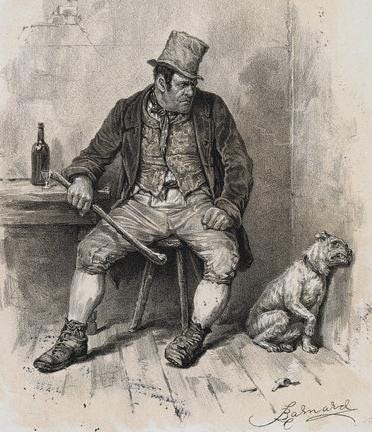
In his summing up, Mr Justice Goss instructed the jury that they did not need to be sure precisely how Ms. Letby murdered the infants, as long as they were sure she did:
“If you are sure that someone on the unit was deliberately harming a baby or babies you do not have to be sure of the precise harmful act or acts; in some instances there may have been more than one. To find the defendant guilty, however, you must be sure that she deliberately did some harmful act to the baby the subject of the count on the indictment and the act or acts were accompanied by the intent and, in the case of murder, were causative of death [...].”
Later, he said:
“In the case of each child, without necessarily having to determine the precise cause or causes of their death, and for which no natural or known cause was said to be apparent at the time, you must be sure that the act or acts of the defendant, whatever they were, caused the child’s death, in that it was more than a minimal cause. The defendant says that she did nothing inappropriate, let alone harmful to any child.”
Before I go on, a nitpick. Why must lawyers torture the language so? What did it ever do to them? When the judge says to the jury:
To find the defendant guilty, however, you must be sure that she deliberately did some harmful act to the baby the subject of the count on the indictment and the act or acts were accompanied by the intent and, in the case of murder, was causative of death.
What he means is:
To find the defendant guilty you must be sure she deliberately harmed the babies and, where charged with murder, murdered them.
The courts have been at pains to “demystify” the formal legalese of the criminal justice system — it binned the clear phrase “beyond reasonable doubt” in favour of vaguer “sure” some years ago — but reforming terminology is pointless as long as practitioners still speak like Mr. Tulkinghorn. Circumlocution was a feature of Ms. Letby’s trial.
Anyway.
Thanks for reading! This post is public so feel free to share it.
A standard direction
Mr Justice Goss’s direction was standard. He may have adapted it from a pre-prepared script used in similar cases. In principle, it is correct and, in certain cases, undoubtedly sensible: it helps the jury convict where, for other reasons, it does not doubt the defendant is guilty, but lacks precise detail about how she carried out the crime.
After all, without a body, a court could not otherwise convict for murder.
There are two parts to the direction. Mr. Justice Goss introduces them in the reverse of their logical order, which is as follows:
* You must be sure the defendant deliberately harmed the babies in a way she knew was likely to kill them.
* If, and only if, you are sure that, she did something intended to kill them, you need not be sure exactly what that thing was.
Of course, usually one becomes sure a defendant committed a crime by identifying precisely how she did it. But if no one witnessed murder and there is no body, for example, that will not be possible. Hence the direction.
There are cases where it might apply even where there is a body, but you have to be somewhat imaginative to contrive examples. With apologies to Charles Dickens, try this one:
The tragic case of Nancy and Bill
Imagine a murder trial where there is unimpeachable evidence from credible witnesses that Nancy met the following miserable end:
Nancy was alone in an empty room.
Bill entered with a cricket bat and a baseball bat and closed the door behind him.
Bill and Nancy were overheard arguing. Nancy shrieked, “No, Bill! Please don’t hit me!”
Bill replied, “You asked for it.”
Several audible thuds followed. Bill then left the room, covered in blood, slammed the door and stormed off.
Police discovered Nancy in the room, beaten to death. They recovered the charred remains of the bats from the fireplace.
There is no doubt Bill murdered Nancy. It doesn’t matter whether he used a cricket bat, a baseball bat or some other unknown implement: she was definitely murdered, and he definitely did it. There is no other possible explanation for her death. The jury should, of course, convict.
You can imagine the judge in Bill’s case directing the jury the same way Mr Justice Goss did:
If you are sure Bill deliberately beat Nancy to death, you do not have to be sure of the precise instrument or instruments; there may have been more than one. To find Bill guilty, however, you must be sure that he deliberately beat Nancy somehow, intended his act and thereby caused Nancy’s death.
We can see at once that this is sensible: it would be unthinkable for Bill to escape conviction simply because his jury, knowing full well he used some weapon, was unsure precisely which one.
Ms. Letby is not like Bill Sikes
Ms. Letby’s case is different. Here there is another possible explanation: the babies were all vulnerable infants in a neonatal intensive care unit. They might have collapsed without anyone trying to harm them.
Absent better evidence incriminating Ms. Letby, this is without question a reasonable doubt: if these babies weren’t at elevated risk of death by natural causes, they wouldn’t have been in an intensive care unit.
But Mr. Justice Goss judge put that important qualification on his direction in the second stage:
you must be sure that she deliberately did some harmful act to the baby [...] accompanied by the intent and, in the case of murder, [it] was causative of death.
What he did not say, but perhaps should have is,
If you are not sure that the defendant deliberately harmed the babies, you need not worry precisely what that act she did. You are not sure she did an act at all. In that case, you should acquit.
For, if there is an plausible innocent explanation that you cannot rule out, how can you be sure she did it? You need to rule out all possible innocent explanations. And how can you possibly rule out an open set of possibilities unless you know exactly what the defendant did?
There is a circularity here.
* If I am sure Ms. Letby murdered the babies, I do not need to know precisely how she did it.
* In this case there is a reasonable possibility the babies died of natural causes (including unknown unknowns).
* Therefore I am not sure Ms. Letby murdered the babies.
* To be sure Ms. Letby murdered the babies, I must rule out natural causes.
* Logically, I cannot rule out all unknown unknowns, i.e., natural causes, by elimination.
* The only practical way to rule out natural causes, is for the positive evidence that Ms. Letby murdered the babies be overwhelming.
* The positive evidence incriminating Ms. Letby is not overwhelming: she did not confess. The forensic evidence does not specifically implicate her. The implied correlation has been debunked.
* The only positive evidence that could rule out innocent causes of death would be direct evidence establishing the precise method of murder.
* Therefore, to be sure Ms. Letby murdered the babies, I do need to know precisely how she murdered the babies.
It is hard to frame hypotheticals here because the sort of evidence that usually makes juries certain a defendant is guilty is direct eye-witness evidence that they committed the crime, or circumstantial evidence so closely adjacent to the crime that there is no credible inference one could draw other than that the defendant is guilty.
The “Sherlock Holmes method” seemingly favoured by Dr. Evans makes for great fiction, but as it requires proving a negative — you cannot eliminate unknown unknowns by deduction — it does not work in real life. The way one disproves “unknowns” is by positively proving a “known”: a defendant with a gunshot wound to the head is most unlikely to have died of an asthma attack.
If there is clear evidence of murder, it is not difficult to infer the action that caused it: a gunshot wound implies a pulled trigger.
If there is not, then there must be doubt that it was that perpetrator. Bill and Nancy’s case is the unusual case justifying the direction.
But that direction, therefore, ought to have been unnecessary here. It seems misplaced. It seems apt to confuse a jury doubtlessly already brain-fried by ten months of baffling technical evidence, the circumlocutions of senior barristers, and a judge’s summing up that was as long as a Tolkien novel.
In Ms. Letby’s case, the victims’ “manner of collapse” did not, to the exclusion of anything else, imply malice. We know this definitively because every collapse that led to a formal medical examination, concluded — based on the best live, real-time evidence it could get — that the collapse had natural causes.
The Crown must definitively displace this presumption. The only way of doing that was by showing precisely how Ms. Letby is supposed to have caused the collapses.
Implausible coincidence as compelling evidence
The direct forensics do not seem directly to implicate Ms. Letby. Could there be some meta-evidence that could do so instead? As discussed elsewhere, the main — only, really — evidence the prosecution offered that implicating Ms. Letby personally was her commonality: the seemingly implausible coincidence that she, and only she, turned up like a bad penny at every collapse for which she was charged.
Once may be happenstance, twice coincidence, but by the time we get to the twenty-second occasion, we are surely past the point of even enemy action.
But this is not positive evidence, but probabilistic inference. Its credibility can only be assessed by a statistical analysis, and one was not carried out. The Crown Prosecution Service nixed a police line of inquiry into exactly that question.
The appeal
The defence appealed the Judge’s direction to the Court of Appeal, which gave its judgment on 2 July, 2024. It was not sympathetic.
Mr. Myers submitted that the jury should be directed that they could not convict the applicant of any count unless they were sure of how the baby concerned had been harmed. He argued that the counts on the indictment were specific to time and place; they were for the most part based on one or more alleged mechanisms of injury which had been the subject of detailed evidence; the case had been opened and the evidence adduced on the basis of those allegations as to the mechanism of injury; and the jury had to be sure of the requisite intention, and of causation, each of which required them to identify what had happened and when. He further argued that a direction which permitted the jury to convict without being sure of the specific harmful act or acts risked the jury wrongly convicting on the basis of the applicant’s presence alone, a risk which would be exacerbated by the anticipated direction as to cross-admissibility.
The judge did not accept those submissions, although he did amend his initial draft of his proposed direction.
In his submissions, on Ms. Letby’s behalf, Mr. Myers cited Angela Cannings’ case:
[as] the prosecution relied on witnesses who put forward specific causes of harm and rejected other explanations suggested by the defence, the jury should have been directed to decide whether they were sure that the prosecution had proved the specific mechanism of harm which had been alleged in relation to each individual child. He further reiterates that it was necessary for the jury to be sure of the precise mechanism by which harm was caused before they could be sure of the alleged intention, and before they could safely eliminate other possible explanations for a baby’s collapse or death, such as natural causes or sub-optimal care.
This is more or less exactly the argument I have set out above. Mr. Myers tied it, too, to the “unmistakeable signature” argument:
... the direction given by the judge gave rise to risks that the jury may wrongly treat the applicant’s presence on the unit at a particular time as sufficient in itself to establish her guilt [...]. He makes the further point that, in the light of the judge’s direction as to cross-admissibility, the jury, having reached a guilty verdict by differing factual routes, would then have been permitted to use that verdict as support for the prosecution case on other counts.
The jury might be tempted to think that Ms. Letby’s presence was all that was needed to convict: that they didn’t need to have any theory of how she committed the murders, as long as she was there.
The “judge’s direction as to cross-admissibility”, is a direction along the lines of the “signature” argument, that if you are satisfied there was malice, and you are satisfied that Ms. Letby committed one murder, you can apply that evidence to infer that she committed other murders too. It is frightfully convoluted and, ultimately, illogical direction that compounds the problem with this direction, but was rendered in such opaque language that the jury is not likely have understood it, much less remembered it.
The Crown’s barrister Mr. Johnson accepted that the Crown had to prove each of the legal ingredients of the offence, and cited cases in which the prosecution had done that without knowing the exact cause of murder: where no body was found, for example.
Mr. Johnson asserted a clear distinction between:
“… a matter which is (i) an ingredient of the offence; and (ii) a merely evidential – or ancillary – issue. It is common ground that on the latter there is no need for jury unanimity.”
In our Bill and Nancy case the “ingredient” of the offence is “causing Nancy’s death”, and the evidential or ancilliary issue was “was it by cricket bat, baseball bat, or some other blunt implement?”
To follow Mr Johnson’s common ground, as long as all 12 jurors were certain Bill caused Nancy’s death, it would not matter if 4 were sure he used the cricket bat, four were sure he used the baseball bat, and 4 were sure he used a truncheon concealed under his cloak. What matters is that all twelve were sure he murdered Nancy.
This is not a very plausible hypothetical. In reality, the twelve may have varying strengths of view about what implement Bill used, but would be open to persuasion that he used any or all of them. It doesn’t, as the direction has it, matter, as long as he definitely used at least one.
A prosecution who managed to convince different jurors, beyond reasonable doubt, that the same defendant had used positively different, mutually exclusive means of doing the same thing seems, to me, would have a bit of a philosophical problem: how can it be satisfactory for different jurors to be definitively certain about mutually exclusive accounts of the same transaction? In practice, it would never happen, of course — but, for that very reason, it is an especially absurd, and weak, reductio.
The verdict, in the Court of Appeal’s view, relied on other facts and circumstances, including the “confession post-it note”, Ms. Letby’s retention of “trophies” (though they were never once described that way during the trial) and
her presence at the time and place when most of the sudden collapses occurred, the fact that a number of the babies concerned suffered a catastrophic collapse only a very short time after their designated nurse had briefly left the room, and the fact that siblings suffered harm at or about the same time as each other.
But none of this weak circumstantial evidence, even if taken on its face, establishes even more likely than not, let alone beyond reasonable doubt, that Ms. Letby harmed any children.
The Court of Appeal was not persuaded. It found comfort, impliedly in the overwhelming probabilities of the case:
Mr Myers’ submissions do not persuade us that it was necessary, before the jury could exclude those other possibilities, that they must all agree on the precise act or acts which the applicant committed. The issue for them was whether the evidence as a whole drove them to the conclusion that the applicant, by a deliberate and unlawful act or acts, had inflicted harm which caused or contributed to the baby’s collapse or death.
But what was it about “the evidence as a whole”, weak as it was, that could possibly drive the jury to that conclusion beyond reasonable doubt other than the statistical unlikelihood of Ms. Letby’s constant presence?
It was not necessary for the prosecution to prove the precise manner in which she had acted. To impose such a burden on the prosecution would be wrong in law: as the single judge said, it would confuse proof of the relevant fact, that harm had been deliberately caused, with the evidential route (encompassing all of the circumstantial evidence, not merely the medical evidence) by which that fact could be proved. That may be illustrated by the reflection that, taken to its logical extreme, the defence submission would appear to mean that the jury would not have been entitled to convict if – in addition to the evidence adduced by the prosecution – the applicant had given evidence admitting that she had intentionally and unlawfully killed a baby, but declined to say how precisely she had done so.
But the Court’s reductio ad absurdum here does not follow. The defence submission requires that the jury is first satisfied beyond reasonable doubt that the defendant is guilty. In a case without direct evidence or a confession and with plausible innocent explanations for the allegations, it is hard to see how it could be, unless they were satisfied precisely how she did it.
The “relevant fact” — a generalised, abstract legal categorisation — and the “evidential route by which that ‘fact’ could be proved” — a concrete real-world transaction which satisfies the abstract legal categorisation — may be ontologically distinct but, if only one real-world action could satisfy the abstract legal categorisation, they are the same.
Here the abstract legal categorisation is “the collapses were not innocent”. In the abstract, that could generally be satisfied in an uncountable number of ways. But one (or more) out of that great infinity must be proven to the exclusion of the great infinity of competing innocent explanations. There are a very few “real-world transactions” that can achieve this: A body showing unequivocal signs of foul play. Direct, eye-witness evidence of foul play. A credible, but defiantly unspecific, confession of exactly the sort the Court of Appeal envisages in that passage. Each of these could categorically wipe out any hypothesis that the collapses were caused by any of the great infinity of innocent explanations. There were none.
This is to say: to be sure the collapses were not innocent, the jury must have positive grounds for believing they were criminal that are strong enough to rule out the otherwise unlimited class of innocent explanations.
Even if oddly under-specified, the defendant’s credible confession, to take the court’s example, is precisely such a positive ground. If she tells the Court that she intentionally and unlawfully murdered the victim, the jury can, from that moment, be certain. Her statement, by itself, falsifies every possible innocent explanation. If it is true, it cannot also be true that an innocent circumstance befell the victim. The jury can be sure. Part one of Mr. Justice Goss’s two-part logical test is satisfied.
How the defendant did the dirty deed it has copped to is now, in Mr Johnson’s phrase, an “ancillary” detail. It is not even part of the “evidential route by which that fact could be proved”. It is simply “colour”.
But the highly artificial scenario of a defendant at the same time full-bloodedly confessing, but refusing to disclose details — look, it could happen, I guess — is a unique scenario. Without it, the jury must have independent grounds for being sure that the defendant committed murder.
There must be a “Bill and Nancy” scenario: where there is no plausible way the victim could have died other than by the defendant’s hand.
That is not the case with Ms. Letby. The closest call seems to be the insulin immunoassay test but there are several reservations about this evidence. They do not completely rebut it, but they leave room for a good deal of doubt about it, and that is all they need to do: the immunoassays tested were explicitly labelled as not sufficiently accurate for forensic use. The immunoassay samples were not even re-tested with immunoassays, let alone being sent for more conclusive tests as was recommended. The readings they returned seemed on their face implausible, especially given that the children survived. It may be c-peptide readings in neonates tend to be lower than in adults. The “chain of custody” seems suspect: there is scope that one un-named twin was accidentally given insulin prescribed for his sibling.
At this remove, no one can prove any of these doubts, but nor — without compelling direct evidence — can they be disproven. All they need to do is represent a reasonable doubt. (There is an asymmetry of outcomes in the criminal burden of proof, by the way: the more plausible innocent alternative explanations there are, however mutually exclusive they may be, the more reasonable doubt there is. At the end of the day, all definitive explanations of how a crime went down — or did not go down — are mutually exclusive. Only one can be correct. We just can’t know which. This is the great, epistemic uncertainty of the world. We can only assign probabilities.)
To return to the logical premise underlying this judge’s direction:
* You must be sure the defendant deliberately harmed the babies in a way she knew was likely to kill them.
* If, and only if, you are sure that, she did something intended to kill them, you need not be sure exactly what that thing was.
The direction ought to get stuck at 1, because the only way of being sure that the defendant deliberately harmed the babies is to know the precise act she did to harm them. Knowledge of the precise act is what justifies the jury ruling out those alternative explanations.
The Court of Appeal’s judgment goes no further than that. It might be true that, in the abstract, the judge’s direction was correct as a general statement of law. But it would only come into play in certain limited circumstances. Since those circumstances did not prevail in Ms. Letby’s case the direction was, at best, irrelevant, and — especially given how it was articulated, with the important qualifying condition being left till the end — at worst potentially misleading for the jury.
They may have taken from it, “Oh: the Crown doesn’t need to prove what the defendant did for me to convict her.”
Discussing this with the good people of Twitter, one — Eruthmas — summed up more or less everything I have to say here as follows. This was fairly dispiriting, after all my effort — but all the same, it seems wrong to deprive you of it:
“This was a case where without proof of how she killed, there was no proof THAT she killed.”
This Substack is reader-supported. To receive new posts and support my work, consider becoming a free or paid subscriber.