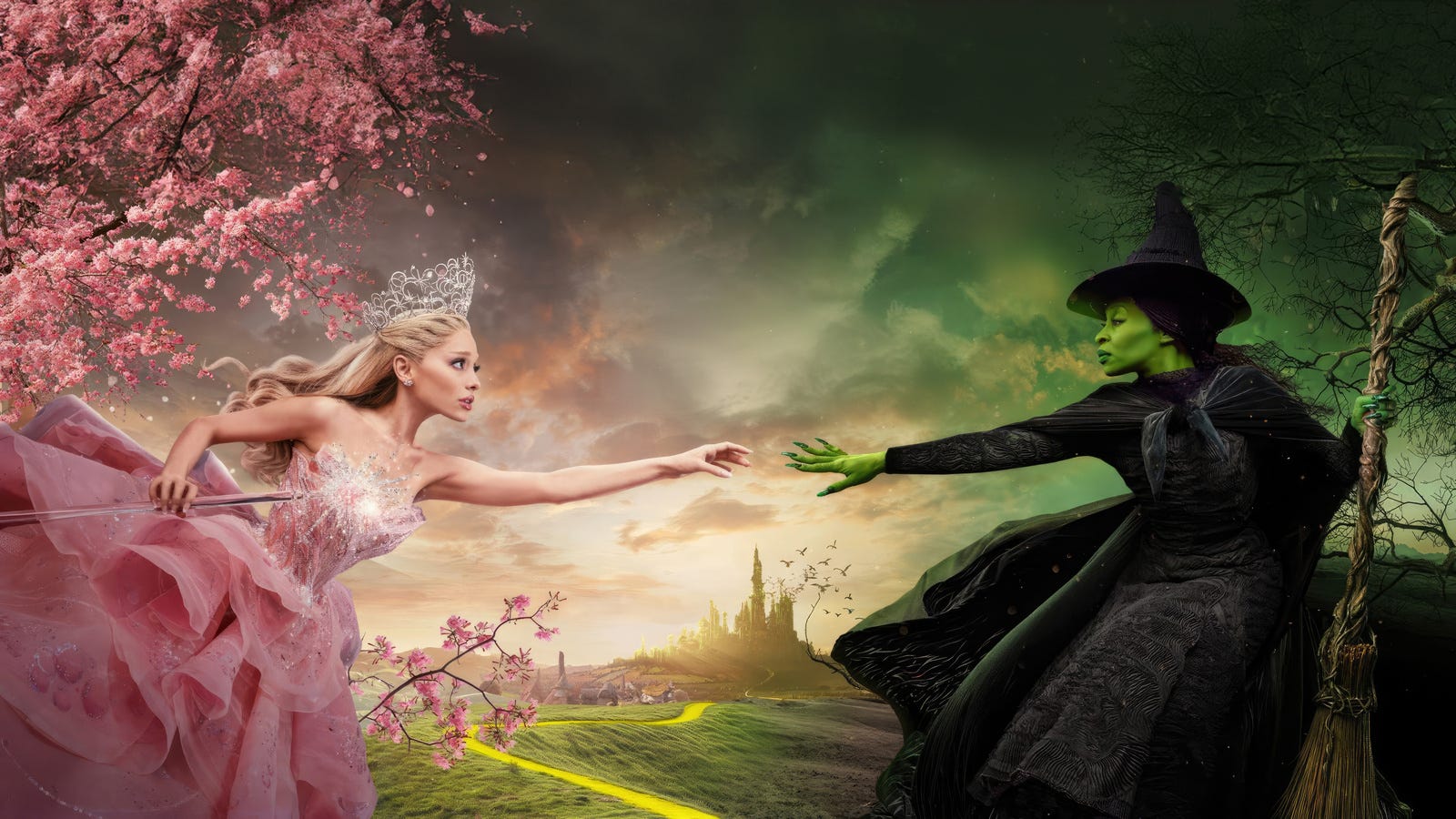
Wicked Part 1: The goddess-witch spectrum
contains spoilers
In this episode, I'll discuss the concept of my goddess-witch spectrum and how it can be applied to the characters of Elphaba and Glinda from Wicked. I'll also dive into the feminist undertones of this movie and what it can teach women about reconciling their own inner goddess-witch spectrum!
Resources:
Podcast Episode on Yonic Model of the Self
Buy me a Coffee - KoKi Account
Official Wicked Movie Website - wickedmovie.com.
References:
References:
Baum, L. F. (1900). The wonderful wizard of Oz. George M. Hill Company.
Ehrenreich, B., & English, D. (2010). Witches, midwives, & nurses: A history of women healers (2nd ed.). Feminist Press.
Gage, M. J. (1893). Woman, church, and state: A historical account of the status of woman through the Christian ages, with reminiscences of the matriarchate. C. H. Kerr.
Loehnen, E. (2023). On our best behavior: The seven deadly sins and the price women pay to be good. The Dial Press.
Maguire, G. (1995). Wicked: The life and times of the Wicked Witch of the West. ReganBooks.
Murdock, M. (1990). The Heroine’s Journey: Woman’s Quest for Wholeness. Shambhala/Shambhala Publications.
Qualls-Corbett, N. (1988). The Sacred Prostitute: Eternal Aspect of the Feminine (Studies in Jungian Psychology by Jungian Analysts). Inner City Books.
Robichaux, M. (2025). An introduction to yonic theory and the yonic model of the self. The Yonic Journal, 1(1), 1-87.
Wicked (J. M. Chu, Dir.). (2024). Universal Pictures.
Wicked: For Good (J. M. Chu, Dir.). (2025). Marc Platt Productions / Universal Pictures.
Wolf, N. (1991). The beauty myth: How images of beauty are used against women. W. Morrow.