[My publisher] was like, "We always publish our essay collections in this size and people like it, because they can throw it in their bag." And as much as that frustrated me, they were right and they are right. And there are all those types of signifiers that let you know whether a book will be literary or practical or nonfiction or fiction. And those things as consumers, we code them and register them.
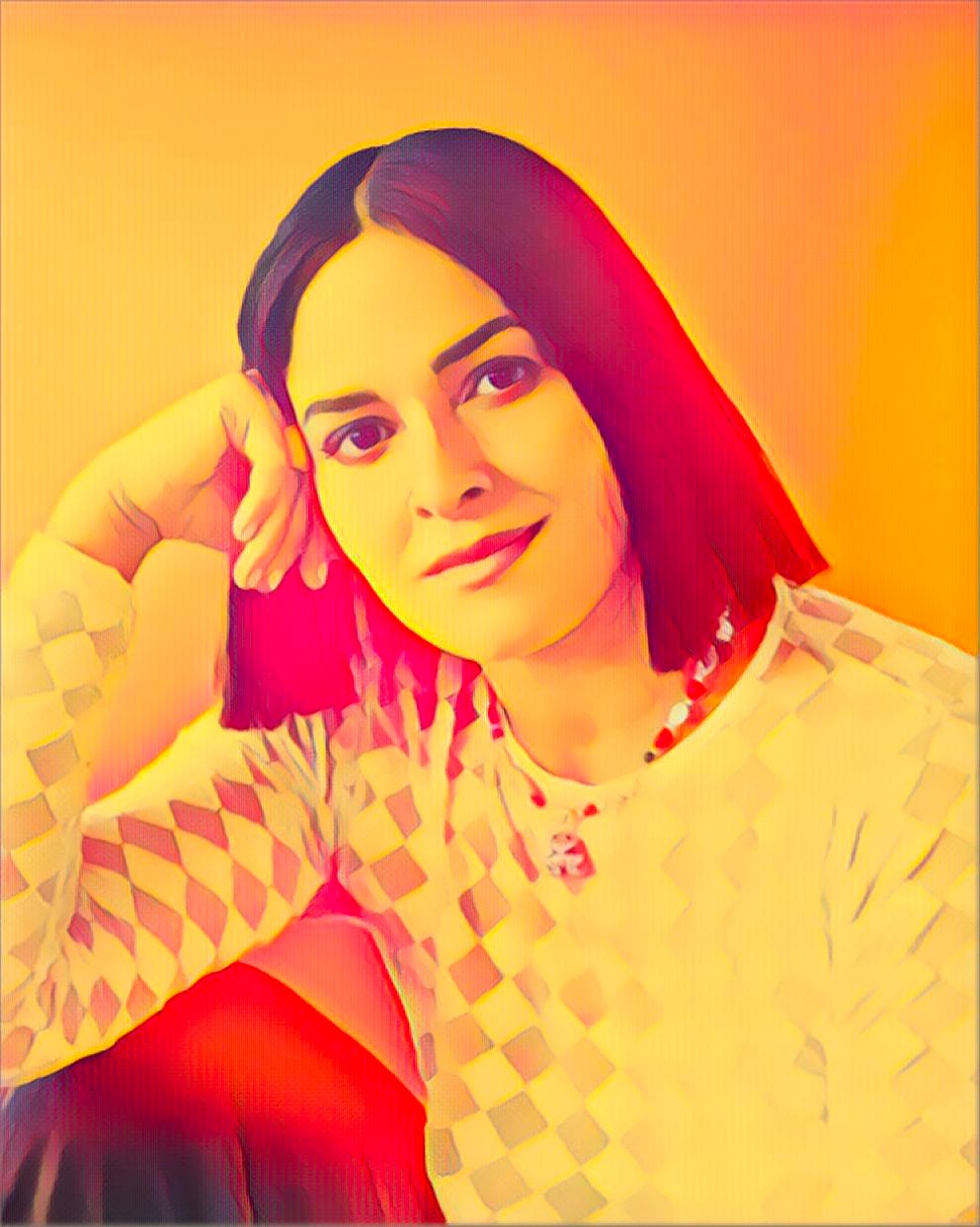
Jen Winston (she/they) is a writer and bisexual whose work focuses on dating, queerness, and the millennial condition. They are the author of the critically-acclaimed book, GREEDY: NOTES FROM A BISEXUAL WHO WANTS TOO MUCH, which was just named a finalist for the 2022 Lammy Awards from Lambda Literary. Paper Mag wrote that GREEDY is “at once relatable, laugh-out-loud funny, and refreshingly illuminating,” and BuzzFeed named it a Best LGBTQ+ book of 2021, calling it “more insightful about identity than any book this year.”
Jen currently lives in Brooklyn with their partner, dogs, and iPhone. You can follow Jen on Twitter, Instagram, and TikTok at @jenerous.
In this conversation Jen and I discuss book marketing, including:
-Working with a cover designer
-Hiring a publicist
-Designing a custom Instagram filter
-Creating influencer packages
-The differences Twitter, Instagram, and TikTok for marketing books
-Reaching out to your niche audience
TRANSCRIPT
Ben Guest:
Jen, thank you so much for coming on.
Jen Winston:
Yay. Thank you for having me. I'm excited to be here.
Ben Guest:
So the big overview question, what are the fundamentals of good marketing for a book?
Jen Winston:
Ooh, I'm glad you asked that. Well, I'm going to tell you what my day job is, because this is a very unique time when I'm not going to get in trouble for it, because I have given my two weeks and I'm between jobs. So currently I work at Meta during the day as a creative director, an associate creative director, focusing on things related to the meta. I just gave my two weeks, and in May, I will be joining Lyft as their creative director of social media. So I've been focused in the creative and marketing world for quite some time.
Jen Winston:
I'm normally not allowed to talk about that when I'm also like technically "Promoting my book," but what are they going to do? Fire me? They can't, because I'm leaving. So it's a very exciting time to be able to say that on a podcast, but I think what makes good book marketing and what makes good marketing in general is marketing that takes on the position of the person who's seeing the marketing and asks, what could this mean to people. And with book marketing, you want to make that you don't assume people already know everything about your book or anything about your book for that matter.
Jen Winston:
I think it's really important to have the premise of your book distill down into a very succinct sense or two, and marketing can also shape the core idea of your book. And in my case, that's really what happened. I thought about bisexuality. I had recently come out and I was still ashamed of it. I felt like it was this binary identity that I didn't really support. Like I was starting to learn more about gender and I was like, "There are lots of genders." This feels like an identity that supports men and women, and I don't really like that, but I've always identified with this word. And then I started reading about bi-theory, bisexual, and I learned that bisexuality actually challenges all these types of binaries, including gender. It just requires a bit of a reframing of the way we think about it.
Jen Winston:
And so I wanted to make sure that I was like, "That's what I want to write a book about now that I really believe in bisexuality," because it's been something that's been true for me for so long that I've been ashamed of essentially. And I was able to suss that out with the target audience and be like, "If I'm a bisexual who has never seen a piece of content like this, there are probably other bisexuals who have never seen a piece of content like this." And I looked on TikTok and there were 10 million uses of the hashtag bisexual. And so I was like, "Okay, that's an audience that I should speak to." Like, those people need to be seen and they need art created for them. And that's why I wanted to make sure I put the word bisexual in the title.
Jen Winston:
And I talked a lot throughout the process about how are we going to reach that audience. And it was always confusing because we were like, "Do we want to put it in this books for in section?" Which is like a lot of times books for straight white women typically. And then we could also put in the LGBTQ section where people might not see it. And I was really torn on that because I really think it speaks to a lot of the challenges the bisexual community faces. It's like, "Are we gay? Or are we straight?" And the reality is that like we are bisexual. We are none of the above at all of the above at the same time. And so it was really challenging to create something that spoke to that audience and found them where they were.
Jen Winston:
One thing that I also learned throughout the process is that the cover has so much to do with how the book finds its audience, because whether we realize it or not, books are brands. It signals to us based on design and in the literary world, there are certain books that we can see are going to be like, whether it will be a self help book, we can see whether something will likely be a memoir. That's why my publisher wanted my book to be a paperback book because if it were a hard cover, it would be less clear that it was a memoir. They're-
Ben Guest:
It's interesting.
Jen Winston:
Yeah. They were like, "We always publish our essay collections in this size and people like it, because they can throw it in their bag." And as much as that frustrated me, they were right and they are right.
Jen Winston:
And there are all those types of signifiers that let you know whether a book will be literary or practical or nonfiction or fiction. And those things as consumers, we code them and register them. And I knew that my publisher wasn't going to market my book as a literary book. And I know that it's a long pretentious cycle to get marketed as a literary book. You have to have an MFA and you have to have a... No offense to people getting their MFAs, Ben. And you have to have... Yeah, you have to have a lot of degrees and you have to have published in the New Yorker and the New York Times and you got to have all the bylines and I didn't have any of that because I've had to work a full time job and I could never afford to pay for an MFA program.
Jen Winston:
And I still wanted people to recognize that my book was quality writing and that it contained valuable information. And also that it experimented with form a little bit, because a lot of the essays in my book do experiment with form. Like one is written as a doctor's diagnosis or like a clinical study, another's written as a screenplay. Another is an email exchange. And then the whole thing is a blend of social theory and memoir. And I was really striving for that and I wanted to give it this high brow approach. And so my publisher had designed some covers that, when they sent me the covers, it firmly positioned it in the realm of chicklet. And I was like, "Oh, this answers the question of where we're going to position the book." Oops, sorry, hit the mic. "This answers the question of where they want to position the book. They want to position it toward straight women at target. That's what they want." And yeah, there was one cover with cherries wearing panties or something. It was like-
Ben Guest:
I still remember that from our first conversation.
Jen Winston:
Oh yeah.
Ben Guest:
It's so f*****g stupid.
Jen Winston:
Well, I will hand it to the designer because it's a really challenging design brief to all the earlier things I was saying. I didn't want a bisexual flag, but there's also not a lot you can do [inaudible 00:06:59] signal to this community. …