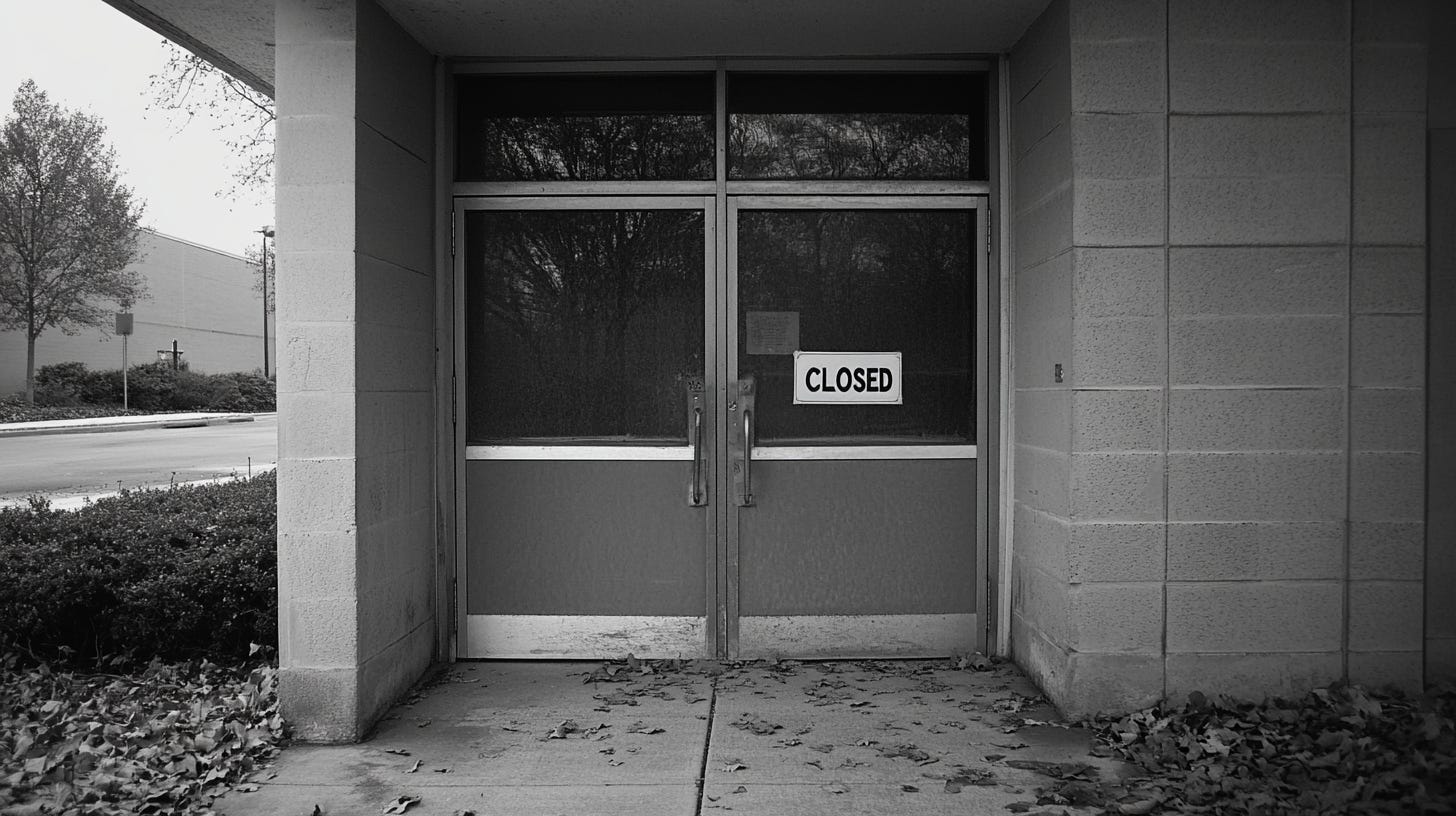
The floor was too clean.No prints, no scuff, no trace.
The docent, voice dry as ice,leads us through halls cooledby preservation, not grief.
Here:a sealed metal box — expired, unopened —still marked For Use in Emergencies.Beside it,a photo of a woman with two jobsand one warm coatshe gave away in April.
A child’s drawing:stick figures, orange suns,a cake with no center.No name. Just a smudgebeneath glass.
“This,” the docent says,“was what we called representation.”
An alcove.A brass scale under a dome.One side: a folded napkin,a souvenir coin,a miniature plane.The other:a cracked pill bottle,a sketch of an empty fridge.
She doesn’t explain.She adjusts her gloves.
Balance, they called it.It weighed exactly what was taken.Only one side had a label.
A laminated intake form.Marta’s name.Denied.File not found.
A grainy photo:she stands outside the clinic,checking her watch.A file folder pressed to her chest.No coat.
“Balance,” they told herwhen she asked why.
One label’s been corrected.Then crossed out again.
Another reads:Millions removed from careso the few remained untouched.Austerity, like gravity,pulls hardest on the smallest bones.
The final room flickers—not from power,but like a hallway lighttrying to outlast the building.
At the center:a gold-framed document,titled in cursive:The Big, Beautiful Bill.
Etched beneath:Signed by hands that never washed another’s body.Ink that turned food into filings, breath into collateral.It passed. So much passed with it.
The docent clears her throat.Wants to say more. Doesn’t.
“We didn’t burn it,” she says.“We archived it —kept it —so forgetting wouldn’t finishwhat silence had already starved.”
I paid for the bulbs.I lit the rooms they died in.I walked past Marta, twice.I looked away.Someone always had.
I carried the key.I knew what I’d sealed behind.And I still carry it.
Stories we keep. Silences we break. Subscribe for poems, essays, and reflections that remember what history tries to forget — and ask what we owe each other in the quiet afterward.