This week: Signs Go Up, a Poll Goes Missing, and Lawson Pulls From Both Edges
Here is the piece Evan wrote about Alex Lawson.
Fact check: Near the end of the episode Evan said something about fundraising in the last election that neither he nor I were fully certain about. I went digging and it turns out Evan was accurate. In 2022, Catherine McKenney published their list of donors over $100 on Oct. 10 and updated it before election day; Mark Sutcliffe declined to release his before the legal filing deadline in March 2023 (CBC, Oct. 11, 2022). McKenney ultimately raised about $543,000 from roughly 3,100 donors; Sutcliffe raised $537,824 from about 750, with more than half coming from ~250 maximum donations (CBC, April 2023).
Transcript
Brigitte Pellerin (00:02): Hi everyone. Hi Evan. Have you seen some signs, Evan?
Evan Potter (00:05): I have not seen any signs.
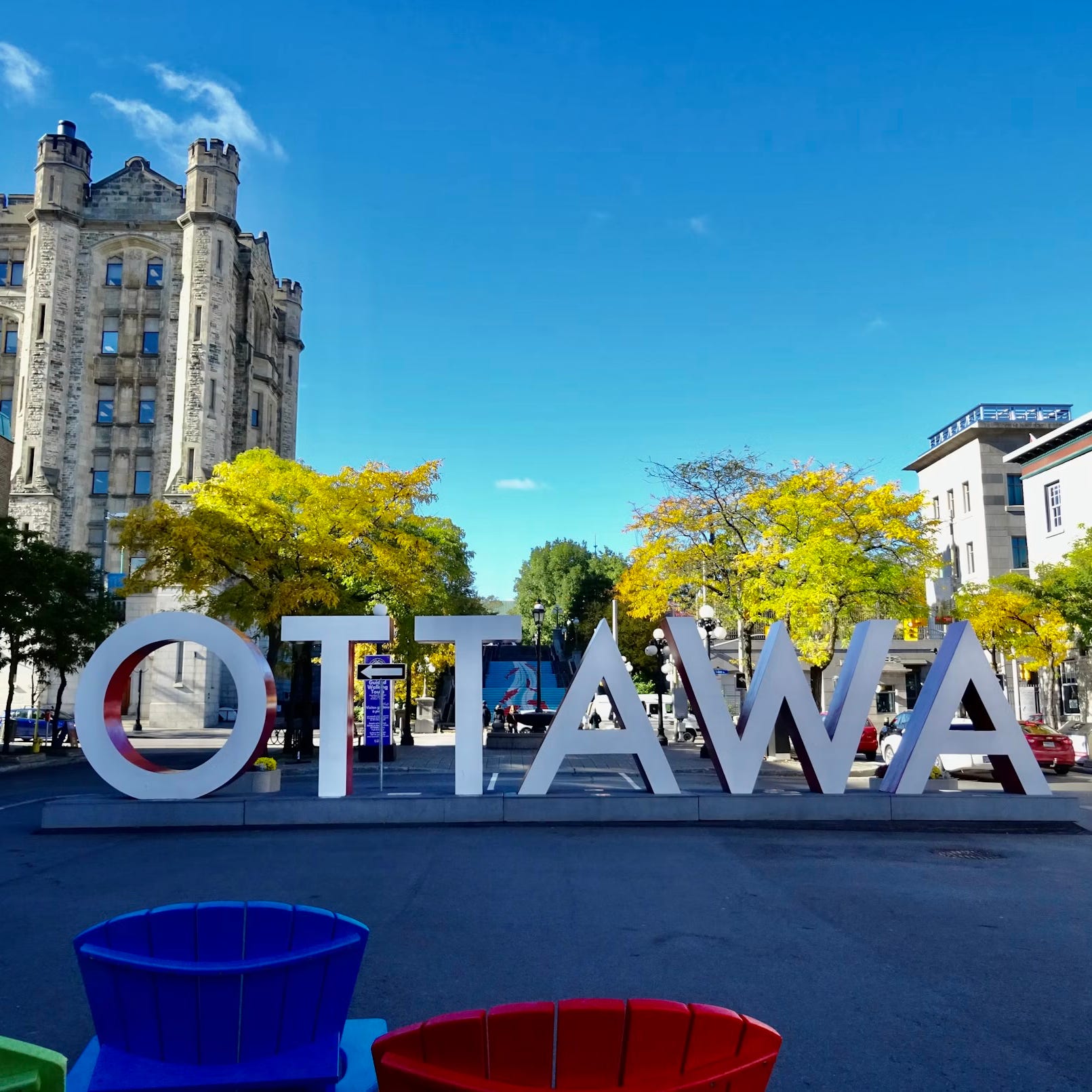
Brigitte Pellerin (00:07): As of midnight on Friday the 11th, crews and candidates were allowed to put up signs on private property, and on street corners and intersections.
I was out Thursday night playing late frisbee, and then there’s the obligatory beer after late frisbee. So I was coming home at about midnight from Kanata. I didn’t see anything out there — but by the time I got to my little Westboro neighbourhood, there was Joanne Chianello’s truck with her signs on it. They were hammering down signs at Byron and Island Park.
Evan Potter (00:47): A major intersection.
Brigitte Pellerin (00:49): A major intersection, in this little corner of the world. And it just goes to show that some people are out there early, fighting like they’re in second place — which I like to see.
Jeff Leiper also posted a picture of himself in front of a Kanata home, I think at about 12:30 last night.
Evan Potter (01:07): He was promising to be out there first, and he was, with a sign. I did a quick drive around the Glebe and Old Ottawa South. There may be some signs — I wasn’t doing a street-by-street sweep — but I didn’t see any. I don’t think there are any signs out yet.
(01:30) Interesting, in what we’ve said before feels like a dead election. We’re both, I think, concerned that there will be a lower turnout — which favours all incumbents, including the mayor. The challengers need a high turnout.
Brigitte Pellerin (01:55): And so does democracy. Come on, people. Go vote.
Evan Potter (02:19): One indicator of the energy of this electoral cycle is the degree to which you notice, or are aware, that there are signs.
There’s going to be a lot less incentive for many incumbent councillors — some of whom may as well be acclaimed, because they don’t have any real challengers. They have challengers on the books, but it won’t matter. So it’ll be interesting to see how much effort those incumbents make in the next five weeks. They might not be motivated to put out a lot of signs.
Brigitte Pellerin (02:48): It costs money to do that. So why would you spend money?
Evan Potter (02:51): It costs money and effort. And if they’re just going to cruise to another re-election, it’s hard to see why they’d go all out.
(03:01) Now, this goes to a topic I think we’ll come back to — not just today but in subsequent weeks — which is the lack of endorsements for the challengers.
Brigitte Pellerin (03:22): So far. I heard rumours we were going to see some endorsements earlier this week, but they didn’t come out.
Evan Potter (03:27): They didn’t happen. But here I’m going to link it to signage. Because if some of the current council members do not want to overtly support the challengers — and here I’m mostly thinking of Jeff Leiper — one way for them to support a challenge to Mayor Sutcliffe is to try to increase the vote share in their own wards. And one way to do that is for their teams to get the signs out, create some energy, try to increase the vote, and hopefully help their council colleague.
If we don’t see that extra effort — and having signs out there reflects that extra effort — then that sends a message about the relationship between challenger candidates like Jeff Leiper and his fellow council members.
Brigitte Pellerin (04:36): So I’m going to be driving around town to see about that, and we can report next week on what neighbourhoods have what.
Evan Potter (04:43): Let me take this one. I was thinking about how I’d put this to you today, and I thought about it this way.
Let’s say you and I are members of Ottawa council. We’ll take the personalities out of it — just pretend you and I are. We’ve known each other for two terms, eight years. We’ve mostly voted the same way, consistently. We may not be personal friends, but we respect each other and we’ve supported each other.
Now I decide to challenge the sitting mayor. I think it would be a fair expectation, for somebody like me, that other people on council with whom I have a similar worldview —
Brigitte Pellerin (05:36): Like me.
Evan Potter (05:37): Like you — would come, and if they couldn’t publicly endorse me, at least try to give me a helping hand by increasing the vote in their ward.
I think that would be a reasonable expectation. And if Jeff Leiper isn’t getting that, I have to say, that also sends a message.
Brigitte Pellerin (06:06): Are there other ways, other than signs, that would constitute helping? Maybe sharing volunteers, lists, things like that?
Evan Potter (06:13): Sharing volunteers, things like that, yeah.
Brigitte Pellerin (06:16): So we don’t know what may or may not be happening in the background. We’d love to hear about it.
Evan Potter (06:20): We don’t know. But we do know that nobody from council has endorsed Jeff Leiper — to my knowledge.
Brigitte Pellerin (06:32): No, you’re right. Not yet, anyway.
But he’s announced a surprise, right? I missed that announcement completely. What is this?
Evan Potter (06:38): He has announced a surprise. I don’t know what it is. Maybe it’s the big, beautiful idea I’ve been talking about for a year — that a candidate needs a big, beautiful idea. We’ll have to wait. Two weeks. End of September.
Brigitte Pellerin (07:01): Okay. What could it be?
Evan Potter (07:04): Actually, I have no idea.
Brigitte Pellerin (07:05): I’m stumped too. But the timing would be perfect.
Evan Potter (07:17): They probably had this in mind for a long time. And if he’s announcing it as a surprise, it better be big. It better be good.
Brigitte Pellerin (07:22): It better be good.
Mark Sutcliffe, meanwhile, is planning his official launch on the 16th — which is next week sometime.
Evan Potter (07:34): Next week sometime. And this will be, I think, an effort for him to show — I’m just picturing it now. If you and I were the strategists, it should be a major media event for his campaign.
Brigitte Pellerin (07:55): Made for TV.
Evan Potter (07:56): A made-for-TV moment. He should have all the people who are endorsing him — the name personalities — in front of him. A phalanx of people endorsing him who are recognized by the community. A full room of supporters. Lots of signs. I don’t know if there will be balloons. Maybe there will be balloons.
Brigitte Pellerin (08:19): Come on, let’s have balloons.
Evan Potter (08:21): But this will definitely be a made-for-local-Ottawa-TV moment. And the message is designed to tell you and the audience that it’s coming — his victory is inevitable.
Brigitte Pellerin (08:37): That’s the typical incumbent posture, right? You don’t let them see that you’re scared.
(08:45) Now — I’ve left my tinfoil in the drawer where I keep my cooking implements, and I don’t want to start saying things that sound like I believe in conspiracies. But the August numbers from the Liaison poll have not been released. And we’re recording this on September eleventh.
So we’re going to have the September numbers soon, I assume. And I have not seen an explanation as to why there was no release for August. So we’re left to speculate. I’ve asked around, I’ve asked other people — what do you think? What’s going on? And we all kind of land in a similar place.
Two possibilities I can think of. One is that there was a problem with the poll. Nobody’s perfect; pollsters can make mistakes, or discover errors after the fact. I’m not casting any shade on David Valentin and his firm — they’ve got a great record. But if there had been an issue with the methodology, or some other problem — I don’t do polling, so I don’t know where it could go wrong — but imagine it went wrong for reasons outside their control. It would make sense not to release that poll.
Evan Potter (10:13): Well, there are rogue polls and there are problems with polls. I think we can say with certainty that polling was done in August.
Brigitte Pellerin (10:22): Right. So it’s not released. So either something went wrong with the poll, or the numbers show something so unexpected that people thought: we can’t release this, because people will think we’ve made a mistake.
Evan Potter (10:36): I’m told all roads lead to the client. The client is Ottawa Compass / iPolitics. And I put in an email to the publisher-editor asking whether the polling data would be released. I did not receive a response.
So it just creates some speculation about why. Hopefully another name-brand pollster will step in in a couple of weeks to provide at least one other public poll.
(11:23) Because we’re all relying on only one public poll. The campaigns are doing their own internal polling, so they have their numbers. But the public and the commentators only have the benefit of one poll. It’s always better to have multiple public polls so you can average out the results.
Brigitte Pellerin (11:29): And it’s probably even better for the polling firms themselves to have other polls, and other people in the same field doing the same work — because then you can check yourself against the other guys, and everybody gets better that way.
Evan Potter (12:00): I don’t know if we’ll ever have an answer about the August poll. I mentioned in my column yesterday that there are rumours about results from internal polling that have Alex Lawson vying for second place with Jeff Leiper. But it would be better for the local media and for opinion commentators if we had access to the actual polling results.
Brigitte Pellerin (12:33): So you sat down with Alex Lawson — that was on the record, for an interview — and you wrote a very interesting piece about it, which we can link to.
I tweeted it, and I was going to poke you a little. I said I think you have a tiny bit of a blind spot, because you’re the data guy, unlike the feelings reader over here.
Evan Potter (12:57): Well — I’m the data interpretation guy. I’m not the data acquisition guy.
Brigitte Pellerin (13:01): Right. But in forming your opinions — and correct me if I’m wrong, I don’t want to put words in your mouth — I think you put a fair amount of weight on data and what it tells you, and then you form your opinions from that. Which is good and reasonable. We need that.
Evan Potter (13:21): I believe in gut checks that are then validated by data.
Brigitte Pellerin (13:29): Right. And I’m kind of the other way around. I observe how people react. I like to read the energy in a room.
We were in the same place earlier this week — we didn’t go together — at the Eva James Community Centre, for a candidates’ meeting. Not really a debate; a question-and-answer session.
And I’m always at the back of the room, observing the body language: how people approach a candidate, how they react when the candidate sticks their hand out to shake.
(14:00) And I am starting to think that the Alex Lawson campaign could have something of a reverse Bernie Sanders from 2016.
Evan Potter (14:17): Okay.
Brigitte Pellerin (14:18): Here’s what I mean, for those old enough to remember 2016. During the Democratic primary, Hillary Clinton won and became the presidential candidate, but Bernie Sanders was doing quite well. Most people know Bernie — you could call him almost far-ish left of the spectrum. He also had a surprising amount of support from young people, a lot of them young men, who — when Bernie was not the nominee — went and voted for Donald Trump. So you could call them more on the right. He pulled from both edges of the spectrum.
And here’s why I think this may apply to this particular candidate. Of the four likely candidates, there’s only one who speaks like a guy who would not mind dismantling the system as it is. And that’s Alex Lawson.
I’m trying to be very fair in how I say this, because he’s not a Donald Trump. He’s not an institutional vandal. But his posture, his messages — you look at his videos — he’s the guy who will say —
Evan Potter (15:42): He’s a disrupter.
Brigitte Pellerin (15:45): That’s a much better word. Thank you. There’s a problem.
And the solutions everyone’s been trying — homelessness, safety on the streets, needles on the sidewalks, paid parking, garbage — now I’m putting words in his mouth, but the vibe you get from him is that all the other guys are trying the same solutions that don’t work, and it’s time to think of something that might. And I think there’s a huge appetite for that. On the left as much as on the right.
(16:20) There are people on the left — and I’m almost done with my TED talk — who cannot stand Mark Sutcliffe, don’t want to vote for him, and look at Jeff Leiper or Neil and say: yeah, but it wouldn’t be different. And then they look at Alex Lawson and think: well, at least it would be different.
That’s the impression. And I think that’s more widespread than we’re seeing in the numbers. Not that we’re seeing numbers.
Evan Potter (16:46): I think that’s a fair critique of my commentary. But we don’t see the numbers, so we can’t tell. And we don’t have the focus groups to know what progressives are thinking about Jeff Leiper, or who their second choice would be. Is their second choice Neil, or is it in fact Alex Lawson?
You’re right — it would be very interesting to see these Bernie Sanders people line up behind Alex Lawson. I could definitely see that if he has a campaign on the ground in the eastern suburbs, which he says he does. He’d be reaching some of those people. And he also mentioned — I didn’t point it out in my column — that he’s doing very well in the urban core, downtown, as well.
Brigitte Pellerin (17:50): Better than he expected, I think. Or better than we expected, that’s for sure.
(17:55) And I’m prepared to say: I did not see that coming.
Evan Potter (18:00): So if he is polling between 25 and 29 percent, that may be an indicator that he has cross-appeal across the urban, rural and suburban divides in this city.
Brigitte Pellerin (18:15): And that would make Mark Sutcliffe panic. If I were running Mark Sutcliffe’s campaign, I’d be panicking if I saw that.
Evan Potter (18:22): Yes. And I’m sure they are. David Coletto must be seeing something.
Brigitte Pellerin (18:29): That’s his job. That’s what he does.
Speaking of terrible segues — let’s go straight into the next topic, because it’s a big one. The extension to the east of the LRT.
(18:42) We don’t have a date. And at this point I’ll give this to the general manager, Rick Leary: I think he’s learned from other people’s mistakes, or maybe he already knew. Always under-promise and over-deliver. It’s so much better than the alternative. So he’s not raising expectations — we hope it’s coming soon, but we’re not promising you anything.
Evan Potter (19:06): He will not. When I went to Rick Leary’s information event in Orléans a couple of weeks ago, one of the audience members kept pressing him about a date for when the line would open. Rick Leary was adamant. He would not be moved. He would not give a date. He said he would give council an update — and apparently that’s what he did yesterday. But he would not give a date.
Brigitte Pellerin (19:37): Which is an improvement.
We also heard in that same update that the situation with cancelled buses was improving. That’s good — mind you, it was in the basement, so there was nowhere to go but up. But yay.
The ridership is still very low compared to pre-pandemic levels. So people are not coming back.
Evan Potter (19:57): 66 percent.
Brigitte Pellerin (20:01): They’re not coming back to transit even with mandatory return to office. So that’s a problem.
(20:06) But the east line extension — people in Orléans, and I hear from folks who work downtown and live especially in the farther reaches, out by Tenth Line and — what’s the other one? Innes? I don’t venture that far, which is my problem, I guess.
But out in the farther reaches of Orléans, they used to have one big express bus, and now it’s being replaced by two or three different ones, so they have to make a couple of transfers to get downtown and back home, and it takes forever. So having access to the LRT — especially if it worked — would be a game changer. It would make their lives overwhelmingly better overnight.
(20:51) So if you’re Mark Sutcliffe, you want that to happen before October 26.
Evan Potter (20:59): We were talking about Jeff Leiper’s end-of-September surprise. This would be a beautiful October surprise for the mayor — if the line just happened to be publicly open before October 26.
Brigitte Pellerin (21:19): Do you remember when the Confederation Line opened in September 2019? Was it the 14th? I think I even remember the day, because I was the only one not covering it — I’d been sent to do something else.
You had those pictures of the mayor and all the VIPs, everyone smiling on the train and holding on to whatever they could, because we didn’t have the —
Evan Potter (21:44): The straps.
Brigitte Pellerin (21:45): The hand straps. Those were added later. So people were holding on to things and laughing and smiling, and it was all great. And then it went to hell real quick, because you couldn’t touch the doors, and then all kinds of things started to happen.
But if the Orléans extension opens and all you see is smiling faces of people on it — yeah, that would do it. Except he’s running out of runway to make this happen, because there needs to be testing, and then so many days without a failure before you get approval.
Evan Potter (22:16): There are numbers involved here.
Brigitte Pellerin (22:20): Math again.
Evan Potter (22:22): So I think the expectation is November.
Brigitte Pellerin (22:28): So — too late.
Evan Potter (22:29): Too late, I think.
Brigitte Pellerin (22:31): I’ve had my heart broken too many times. When they say it’s coming soon, I have trouble believing it. I’ll wait to see it before I really believe it.
I worry we’re going to have the reverse — as with line one. And even when line two opened, it was not as dramatic as line one. But do you remember the messages, when the mayor had to go on TV and ask people not to touch the doors?
Evan Potter (22:58): I remember that. Very embarrassing.
Brigitte Pellerin (23:01): Right. So if something like that were to happen again, we’re going to have a big problem. Never mind the election — this is a serious and significant issue.
(23:10) I want to touch briefly on something that wasn’t in our notes, because it links transit to the next issue. A lot of Mark Sutcliffe’s plan on transit involves uploading the LRT to the province — which, as far as we know, is being talked about. But I don’t see anybody from the province lining up at a microphone to say, yeah, we’re in. So who knows if it’s really going to happen.
And then Sutcliffe came out with a plan to come together and discuss the possibility of a framework towards ending homelessness. I’m exaggerating a little. But that is heavily dependent on other levels of government doing their part — more specifically the feds, in this case. And similarly, I’m not seeing any evidence — and tell me if I’m missing it — that people from the federal government are lining up at the microphones saying: yeah, Mark, we’re in.
Evan Potter (24:07): Brigitte, that goes back to your point. Isn’t this part of what you said — that the mayor is running against himself?
Brigitte Pellerin (24:14): He’s running against the incumbent. If only the guy in charge was doing the right things.
Evan Potter (24:19): Because these are all issues that, as critics would say, he’s had four years to address. You can’t keep re-announcing a plan on homelessness.
Brigitte Pellerin (24:30): Well, it worked for Justin Trudeau for a couple of mandates, I have to say.
Evan Potter (24:33): Okay, maybe it did.
Brigitte Pellerin (24:35): But it’s not okay. I think people are sick of this. The people who are engaged and informed, at least. I don’t know about low-information voters — and by low-information I don’t mean dumb people, I mean people who don’t pay a lot of attention to the issues, don’t remember all the details, and don’t watch our podcast. They should watch, because then they’d know.
But seriously, there are a lot of people who hear that and think: that rings a bell, Mr. Sutcliffe. I’ve heard you say this before.
Evan Potter (25:00): How many plans have we seen about public safety? How many plans about the reinvigoration of downtown? How many plans about the ByWard Market? How many about youth homelessness? It’s the same thing over and over — announcement after announcement of a plan. And then the election comes along, and suddenly all the issues you’ve been announcing plans for, you’re announcing again as part of your election platform. I think that’s what bothers people.
Brigitte Pellerin (25:36): Because it feels like we’re being manipulated a little. Like we’re too dumb to follow what’s going on, so — here’s a new shiny thing. It’s not a great feeling.
Relying on your electorate not being on top of things is not my strategy. I like to assume my readers and my viewers are very smart people.
Evan Potter (25:55): Brigitte, how do you think the mayor is feeling these days? What’s your read on Mark Sutcliffe in September 2026?
Brigitte Pellerin (26:02): I think he’s confident. And I think he’s mistaken.
Evan Potter (26:08): Why is he mistaken?
Brigitte Pellerin (26:09): Because he’s not seeing what we’re seeing — because people are hiding that from him.
Running a city is a very time-consuming job. He’s also got a family, and he’s very involved — he’s a family man. Plus he runs every day. He’s got a lot on his plate. And that’s not a criticism; that’s just the man as I know him. He’s not on Twitter. He’s not out there listening to people, because he doesn’t have the time. So he’s not seeing the signs that we’re seeing.
And I don’t think his people are communicating that to him. I think they are deliberately keeping him confident. And for my money, that’s a mistake. But we’ll see if I’m right or wrong when the votes come in.
Evan Potter (26:55): We will see. Hopefully we’ll see some numbers coming out.
Brigitte Pellerin (26:58): We only have a minute or so left. Anything in particular you’re looking for, other than Mark Sutcliffe’s launch next week?
Evan Potter (27:07): I’d like to get a sense of whether Alex has any more popular initiatives up his sleeve. He’s had the parking meters, garbage. I wonder what else he’s got.
Brigitte Pellerin (27:22): I’m going to put a suggestion in his ear, because I know he’s watching: release your list of donors.
Evan Potter (27:31): Okay.
Brigitte Pellerin (27:32): People are asking: is he funded by developers?
Evan Potter (27:38): That’s fair.
Brigitte Pellerin (27:39): He has said — I don’t know if it’s a promise-promise — that he would release his list and put it against the lobbyist registry. That’s not exactly the same as releasing your donors.
And I don’t mean everybody who gave you four or five hundred dollars. I mean anybody who gave the maximum, or over a certain amount that’s considered a large donation. I guess we all have a different number in mind for that. I don’t need to know everybody who gave 50 bucks. But anybody who’s given 750 dollars or more — yeah, I’d probably want to know about that.
And I think it would help him. Assuming, of course, that his list is full of normal people.
Evan Potter (28:25): That’s interesting. So Alex, if you’re watching, we look forward to hearing whether you’ll release your list.
As I recall, in 2022 Mark Sutcliffe did not release his list during the campaign, but Catherine McKenney did. I just remember that.
Brigitte Pellerin (28:42): I don’t remember that. We’ll have to check. I’ll put it in the show notes — I’ll go check.
Evan Potter (28:49): There was a promise to release. Were they released? They are public now — you can see who contributed to the campaigns.
Brigitte Pellerin (28:54): Yes. But it’s good to know before you vote, more than after.
Evan Potter (28:58): It’s good to know before you vote.
I’d also say that at last count, I think Leiper’s donations were close to $200,000. And just for comparative purposes: at the end of their campaign, Catherine McKenney was over $500,000 — and Catherine had collected more donations than Mark Sutcliffe four years ago.
Brigitte Pellerin (29:22): Interesting. More numbers to crunch. This is great.
So we’ll talk to each other next week. And in the meantime — let’s go count some signs.
Evan Potter (29:28): Absolutely. Let’s go count some signs. Bye.
Brigitte Pellerin (29:32): Bye.