Many of the columns and podcast episodes in Israel from the Inside have touched on the notion of the “new Jew,” Zionism’s drive not only to create a sovereign Jewish state, but its goal of fashioning a Jew very different from the (in early Zionists’ eyes) weak, passive, often victimized Jew of Europe.
Most people (myself included) argue that in creating the “new Jew,” Zionism has been extraordinarily successful. But “not so fast,” argued Professor Zeev Maghen, of Bar Ilan University, in a provocative, intentionally humorous, and entirely not PC blog in The Times of Israel. Entitled “Let’s get physical: Or why Jews should stop 'condemning violence in all its forms' (and start buffing up),”Maghen argues that Jews’ commitment to western values and its embrace of non-violence at all costs is causing Israeli Jews to cede the public space in Israel, and large swathes of Israel itself, to an Arab population that does not share that commitment to non-violence.
It’s a controversial thesis, one that will trouble many listeners, but Maghen raises issues that many Israelis discuss quietly, under their breath. What he has done is to surface the issue. Long-time listeners may recall that this issue of Israelis losing control of their own land has come up in previous podcasts we’ve done, such as those with Tahel Harris, a young Jewish mother who lived through the riots in Lod in May, 2021, with Yoel Zilberman, who founded “The New Guard,” and with Amichai Chikli, the MK who expressly accused Israeli governments of knowingly ceding the Negev and the Galilee to Israeli Arabs without pushing back.
If you share our desire to forge a community of people engaged in reasoned discussion and respectful disagreement when it comes to Israel, please subscribe today.
It’s a difficult and painful conversation to have, one that is almost impossible to conduct without running afoul of some of the West’s current mores about how discourse should be conducted. But Maghen raises issues critical to Israel’s future, precisely the kinds of issues Israel from the Inside is committed to discussing, easy or not, comfortable or not, consensus or not.
Our conversation with Professor Zeev Maghen is divided into two. In today’s episode (the link at the top will take you to it), he offers us his diagnosis of the problem, pointing to numerous examples. On Wednesday, we will post the second conversation with Professor Maghen’s prescription for how to address it. That post will be available to paid subscribers to Israel from the Inside.
With the holidays coming up and many of them falling on Mondays (our column day) and Yom Kippur on Wednesday (podcast day), here is the tentative schedule for Israel from the Inside for the weeks of the holidays:
In the course of many of the conversations that we've had as part of this podcast series, we've raised time and again this concept that is core to Zionism called the New Jew. Many people think of Zionism primarily as a political revolution. The idea was we're going to create a Jewish state. Herzl's book that lit the fires of Zionism, which was published in 1896, was called “The Jewish State”. Statehood was for not all, but for most Zionists, always a major agenda of what the Zionist revolution was going to be about. But statehood was really only part of the story. Part of what the early Zionists and later Zionists as well wanted to do was not only to create a sovereign Jewish state, they actually wanted to change the Jew. They called it a new Jew. They were not at all hedgy about how distraught they were about what had become to the Jews of Eastern Europe. This is long before the Holocaust, but this image of Jews always looking over their shoulders at best and being attacked at worst, and having relatively little ability to defend themselves, led to a kind of an explosion of a sense. Herzl said that we need to live in a place where we're not going to be pressured to assimilate. We need to live in a place where we're not going to experience antisemitism. Max Nordau spoke about muscular Jews. Haim Nachman Bialik, in his poem “The City of Slaughter”, has a very painful scene in which he describes this horrible program and a graphic rape scene which we won't go into, and the men are hiding behind casks as their wives and their daughters are being abused in the most horrible way. This is a theme that runs through lots of Zionist thought and even contemporary Israeli thought. When you hear every year on Yom HaShoah from the prime minister, it doesn't matter who the prime minister is, left or right, male or female, makes no difference. The prime minister always says something on Yom HaShoah like if we had been a state, then that wouldn't have happened. And there is a sense that there's a kind of a new Jew who protects herself or himself, takes care of Jews in other places, which we've seen recently in Ukraine and so forth. Now, if yes, most people, has the New Jew idea been successful? Obviously, nothing is completely successful, but most people, I think, Israel and non-Israeli alike would say, yes, I mean, you look at those black and white pictures of the survivors of the programs, and that's not what Jews look like today, even after, God forbid, when there's an attack on the streets of Tel Aviv. What you see on the street is lots of armed young people, men and women, and the border police and other units going out there to hunt down the person who did this. In other words, we couldn't prevent every single death from occurring, but there's a sense that Jewish blood is not cheap anymore and you're going to pay a price. And there's a very different reaction, obviously, here in Israel than there was in Europe. So many people think that in lots of ways, the new Jew has been very successful. The new Jew is culturally creative in ways that would have been unimaginable just six, seven, eight decades ago. I always think when I walk into an Israeli bookstore, and I see hundreds of linear feet of books in a language that just over 100 years ago, nobody spoke, nobody really spoke that language. And everybody in the world who spoke that language could have fit into one of the hotels in Tel Aviv today. Not an exaggeration. In other words, we've transformed the Jews in many different kinds of ways. But I came across a piece in The Times of Israel written by my friend and colleague Zeev Maghen, who we're going to introduce in just a second, who argues in a very provocative, and I think compelling, disturbing way, that the idea of the new Jew is not nearly as successful and whole as we ought to imagine. And he points to several dimensions of Israeli society which suggests that this new Jew who's fearless and takes care of herself or himself is not quite as ubiquitous as we might think. So, I asked Professor Maghen to join me in conversation today to talk about his piece. If you print out his piece in The Times of Israel, you're going to need 35 sides of a page. So, it's a long piece. We're going to distill it into a conversation, which might be easier for some people. But I do urge you to read the piece if you have the time, because he writes brilliantly and it's very worth to read.
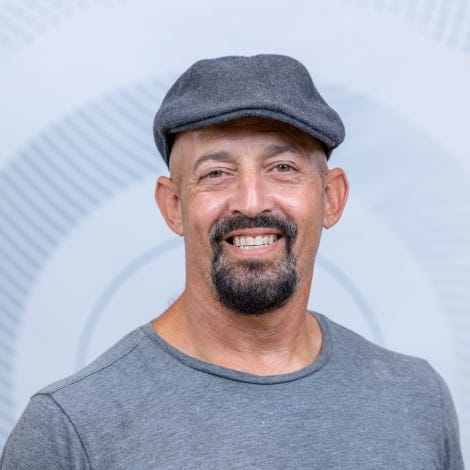
Zeev Maghen is the author of a very well-known popular book in English called “John Lennon and the Jews: A Philosophical Rampage”. That's his title, published by Toby Press in 2015. He's also the author of several academic books. He speaks Arabic, Hebrew, Persian, Russian and English. He is a Professor of Arabic Literature and Islamic History and Chairman of the Department of Middle Eastern Studies at Bar Ilan University. He also serves as a senior fellow at Shalem College, where I work. And he was really the creator and founder of our Arabic language program at Shalem, which is, I say this objectively without question, the best Arabic language program in the country. And he is also a fellow at the Begin Sadat Center for Strategic Studies. So, a hi…