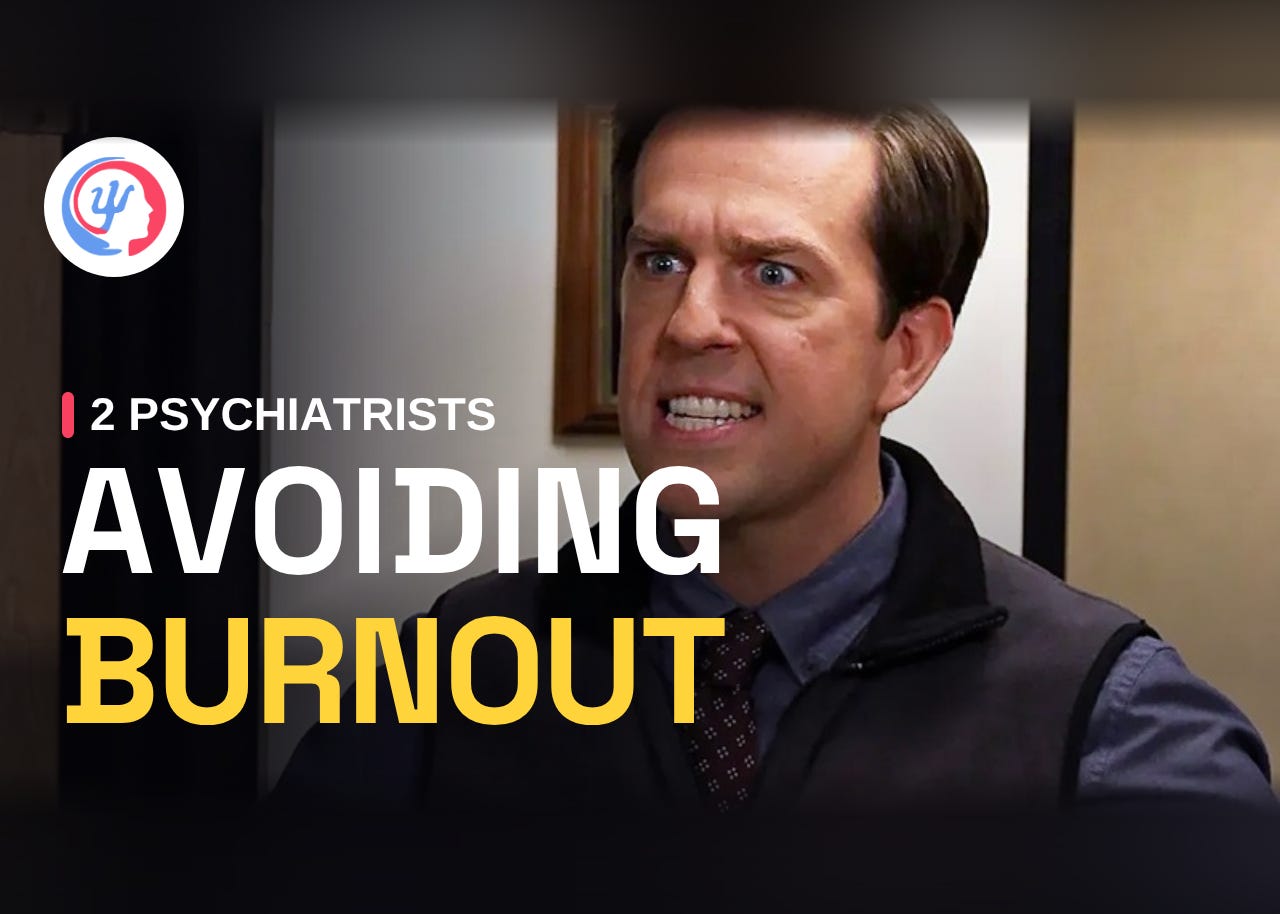
In this episode, Dr. Fu and Dr. Malzberg share practical systems for time protection: start on time, end on time, finish documentation inside the visit, and use tools like AI scribes and quiet typing gear. They also lay out clear messaging rules so emails, texts, and forms do not become off-the-clock clinical care, plus the value of emergency slots. The deeper work is emotional: process the job with mentors or supervision, know your limits, and build a real life outside medicine so you can stay effective for the long game.
What we cover
* Why outpatient psychiatry is wearing, why small daily decisions add up, and the line that burnout may not be your fault but is your responsibility to address.
* Time protection: starting and ending on time, finishing the note, recommendations, resources and prescriptions inside the booked slot, using AI scribes or documenting in session, quiet keyboards and a task list cleared each day.
* Keeping care inside appointments: forms, medication questions and non-emergency problems wait for a visit, protected emergency slots in private practice, and a short, consistent style for emails and texts.
* Why a predictable frame helps both patients and clinicians, drawing on the contrast between kind and wicked learning environments, and why clinicians should stay within standards of practice and not bend rules for what seems like a good cause.
* The emotional side of the work: finding safe people, containment, supervision and mentorship, and scheduling a short, capped time for venting.
* Perspective and recovery: knowing what you cannot change, having a life outside work, protecting vacations, recognizing burnout as something like an adjustment disorder, and options when changes at work are not enough.
Clinical takeaways
* Treat the whole visit slot as the encounter. Talk, write the note, send resources and handle prescriptions before the next patient, and neither start early nor run late.
* Set expectations at intake: for example, an hour for the intake and 20 minutes for follow-ups. A reminder five minutes before the end lets a patient in the middle of something heated hear the limit coming.
* One host uses an AI scribe and the other documents in session. Either way, be open with patients that you are writing, and use a silent keyboard and mouse.
* Reserve open slots for urgent needs so an emergency does not push you into the evening. One host keeps two protected 30-minute blocks, and both prefer a staff member as the first stop for messages.
* Burnout can look like an adjustment disorder: fatigue, irritability, detachment and negative thinking about work. If you feel the same after more than five days off, consider a larger change.
* Know the limits of your role. Do not oversell what a medication can do, and accept that some suffering cannot be changed. One host schedules a weekly activity alone, with one person and with a group, though he notes there is no research behind it.
Read the full transcript
The complete transcript of this episode is on psycho.farm: Tips to Avoid Burnout in Psychiatry (Outpatient, mostly).
Related episodes
* Probably The Most Important Topic in Psychiatry: Therapeutic Alliance and Frame
* Psychiatric Technique for Diagnostic Interviewing and Therapy: 6 Mantras Every Clinician Should Know
For education only. Not medical advice.