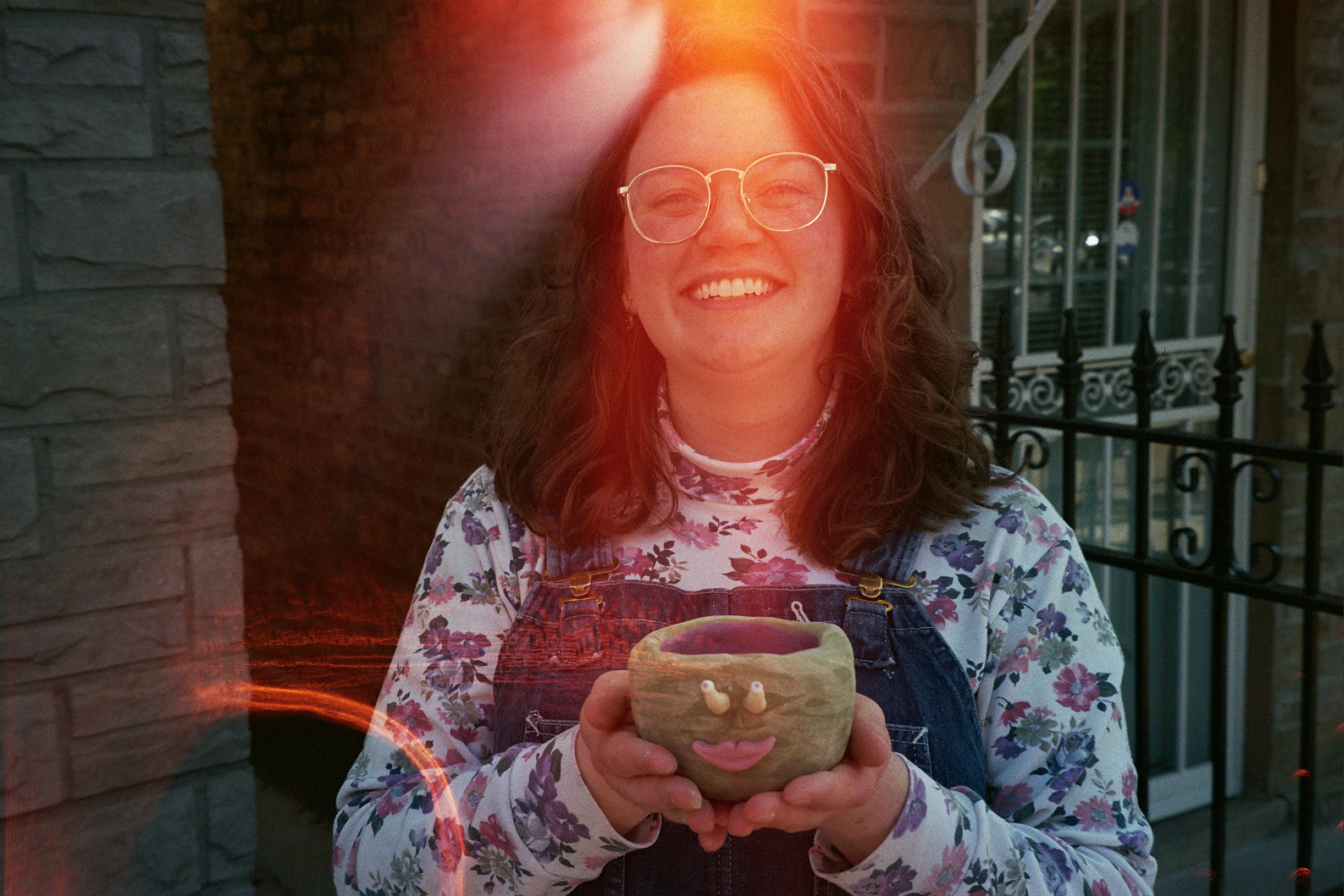
Everyone please welcome Liz J to A Broadway Body: Continued Conversations! Liz and I were a part of the same university program, so we’ve known each other for quite some time now. I was so excited to bring Liz in for a conversation about body image.
Liz pulled back the curtain on being raised in a musical theatre world and discussed how the beauty and body standards of Broadway impacted her as a teen and into adulthood. She talks about her relationship to dance, body modifications, and bodily agency. This was such an impactful conversation for me to be a part of, and I cannot wait for you to hear it!
In our conversation, we discuss…
* When Liz first started using the phrase “A Broadway Body”
* Richard Simmons Tapes - seeing people in different sizes of bodies dancing for fun
* The impact of the wild ideologies preached to us in musical theatre
* Pursuing what body modifications work for you and respecting others’ bodily agency
* Our thoughts on plastic surgery, aging, body modifications
* Art about the beauty standards, overconsumption, body image, and more
Resources Liz speaks on in our conversation:
* Books:
* Films:
“ I’m thinking about just the experience of the contrast of being a high schooler with a BFA problems Twitter account to then being a college student getting a BFA, I guess I don’t necessarily want to rehash all the wild feedback that a lot of us got in our program, but a lot of us were getting wild feedback that reinforced these ideas that you need to look a certain way to perform and you need to look a certain way to be even worthy of being seen on stage. I didn’t realize that I was thinking about things in those terms until after college.”
- Liz J
Megan Gill: Hi, Liz!
Liz J: Hey, Megan!
Megan Gill: I’m so excited that you’re here today and that we get to chat!
Liz J: Oh, I’m so excited to be here. Yeah, thanks for having me!
Megan Gill: Absolutely! Do you wanna just start by introducing yourself and a little bit about the work that you do in the world?
Liz J: Sure, so I’m Liz J. So Megan and I went to college together. We were in the musical theater world.
Megan Gill: We were.
Liz J: So I have that background and I still very much consider myself a creative person and do a lot of creative work, but I’m not really doing it for money. And I kind of like that setup right now. I have a normal-person job working at a law firm. So I’m mostly making trainings for new attorneys, and it’s a really great job in a lot of ways. And I still am able to be creative.
For example, I’m working on a training right now that I get to design puppets for it. That’s crazy. In what world are puppets at a law firm. But I have a really cool team that I work with, and I feel they see what I’m interested in and take interest in the things that I’m interested in and are very open-minded about what my role can look like. Yeah, I just am lucky to work with people who are also creative.
So, outside job-job, I also do puppetry and I make solo music and I’m in a choir and I make visual art and I write, and I wrote a musical with one of my best friends. Yeah.
Megan Gill: Whoa. Tell me more if you can.
Liz J: I mean it’s a really silly and campy musical, and we wrote the first draft in 2019, which is kind of wild to say because that is now a long time ago. But yeah, we had performance dates set for 2020, and then 2020 happened. So obviously we had to take a step back. And yeah, we weren’t sure when it would be a good time to do an in-person show again. So we kind of put it aside for a while. And then last year we brought it back up and we started working on it again, and we started working on it with Garrett Welch he’s helping us arrange the music, so…
Megan Gill: Cool.
Liz J: Hopefully gonna be producing it soon. It’s been a long journey, but that’s okay.
Megan Gill: Totally okay. This is so exciting, and I’m so excited to hear that you’ve stuck with it this long.
Liz J: Yeah, yeah. I mean, it’s not been consistent this whole time. we’ve kind of put it to the side for good chunks of time, but I think that’s also been good for it, you know? We can live life, do other creative projects, and then we kept wanting to revisit it, which I think says something the fact that we wanted to complete this project.
Megan Gill: Yeah. Agreed. I think that’s beautiful and lovely. It’s had time to breathe. It’s ready.
Liz J: Yeah, word. Exactly.
Megan Gill: Yeah. Okay, cool. I love that. Thanks for sharing all of that stuff. So yeah, we had crossover years at the same college program together. We weren’t in the same year, but whatever. It doesn’t matter because we were still in a lot of the same classes and we were still performing together and in dance together and probably even in scene study at some point. Yeah.
Liz J: Shows, yeah.
Megan Gill: Yes. Shows together, all of that good stuff. So that’s how we met. That’s our origin story. And I think that we met at this time where I was in a very different place in terms of relationship to my body. So I’m curious to hear a bit of your body image story and how your evolution as an actor and a creative and just a human being in general has influenced that.
Liz J: Yeah, so I mean, like I think a lot of young performers, I got bit by the bug early and was really, really passionate about it and really striving, I guess might be the word. I basically from the first time I did a musical in middle school, I just really wanted to do whatever it took to keep doing that. Let’s see. I’m trying to think how exactly to really phrase this.
I really wanted to pursue musical theater really hard, and when I was in high school, I was in a bunch of dance classes and I felt I was kind of playing catch-up because I hadn’t been dancing my entire life. And I think a lot of girls who were raised in the nineties, got a lot of wild feedback about what it meant to – as you’re growing up, what you should look like and what kind of body you’re taught is desirable. So that’s the air we’re breathing, at that time. It was very much a present – it was just incredibly on my mind throughout high school and into college. Thinking about my body is part of this package.
It’s kind of stunning thinking about myself being a teenager, having these thoughts like, “Ooh, I am something to market.” But it really – the teachers that I listened to, their messaging really stuck with me that I was just very much thinking of myself as a commodity from this tender age.
And yeah, when I got to college, it was a lot of also similar messaging. Megan, I’m honestly, I’m thinking about just wild, wild shit that I thought in high school because I’m like it really was – I don’t wanna get on here and trauma dump. That’s not it. I’m not – I don’t wanna be like, “Here are all these crazy things that were said,” but I do wanna demonstrate, like, okay, it really was so present.
I had all these friends that I was doing theater with in high school, and we had a satirical Twitter account called “BFA Problems.” We were high schoolers. We were not pursuing a BFA, but it was like we had a Twitter account and the icon was a LaDuca and we were just tweeting all this stuff about, about literally saying the phrase “Broadway body” in Tweets as high schoolers, you know? I’m 15, and we were deep in it. And one of my other very good friends who also went on to go to college for musical theater, he and I would do P90X in the morning.
Megan Gill: In high school.
Liz J: We were 16! That’s wild. You know? And so, it was just on my mind from an early – it’s early. That is an early age. That’s kind of wild thinking about a teenager thinking of – yeah.
Megan Gill: Hyper-fixating on bodies in this way. Yeah, agreed.
Liz J: Yeah.
Megan Gill: Agreed because as kids we’re so active, and a lot of kids play a sport or maybe have an afterschool activity. And so we do these things and there’s a long time of your childhood where you don’t even think twice about how much you’re moving your body. And then there comes a point, and for me it was high school as well, where I realized, “Oh, you mean I can move my body in this certain type of way or this much, and it can then look potentially a different way than it does now? And I don’t what I look like right now because all these messages tell me I shouldn’t look what I look right now.” It’s that moment that forever changes you. And I feel when that moment happens so early, even in high school, when our brains are not developed yet, it really can mess with your psyche. Yeah.
Liz J: Yeah. Yeah. And I mean, it was it is pretty stunning. I don’t know. I’m just thinking about how I had a childhood doctor say, “Hey, your kid should play a sport.” And so, I started doing swim team, and that’s also a tough sport.
Megan Gill: I’m sorry, I’m smiling because I also did swim team in high school.
Liz J: Wait, yes! I remember this!
Megan Gill: So I feel you!
Liz J: Yeah. I keep saying it was just in the air, but it was I’m thinking about being on swim team and then later going to the dressing room at Hollister and Abercrombie and you know always having an idea of which size you are and wondering – literally talking to friends about what size jean they wear.
Megan Gill: This is stuff that’s very fascinating actually, because I think a lot of these high-school conversations that we – I think a lot of us had very, very similar conversations. Or for instance, just the fact that we were both on a swim team where not only are you in a bathing suit in front of spectators, your whole team, but also that’s where I realized, “Oh, I can lift weights and move my body this much and maybe lose some weight because society’s telling me that my body is not good the way it is, and I need to change it.” It’s all of these different facets of what you’re talking about I think are such a universal experience for so many young people.
Liz J: Yeah. Yeah. I mean, I’m also just thinking about the books that were out at that point, so many diet books, those were definitely in my house. The Atkins Diet. Skinny Bitch, that’s one wild title. But that book, thinking about also just what was considered plus-size back then is wild to me. Bridget Jones, that that’s a plus-size woman allegedly at that time, or Jennifer Hudson when she was on American Idol. There was so much discussion of her body and her weight. And looking at pictures, it’s really stunning. I guess it’s not about what the threshold is for what kind of body is considered a big body, but it’s that was just such an average woman.
I just read this book called Girl on Girl, and it talks a lot about how the nineties and the early aughts just really did girls and women dirty, in terms of representation of women and how we talked about bodies, how we talked about femininity, what that is, and yeah, reality TV also, the way that that played a big role in things. It was such a weird time. But I also feel like I’m preaching to the choir, you know? We all were surrounded by this wild media that had these really impossible standards. And no matter which way you swing on the pendulum, whether you’re considered culturally too large or considered too small, there really is no – what’s the fable? It’s too hot, it’s too cold…
Megan Gill: Ooh, Goldilocks!
Liz J: Yeah, it’s there really is no way to do everything right.
Megan Gill: Right, there’s no winning here.
Liz J: Yeah, and I feel so much of disordered eating ends up being – this is kind of a disjointed thought, but I’m thinking about just when I think of my relationship with disordered eating, it’s so much out of a desire to control, control my life, control my body. But ultimately it is not something that I have control over and there is no “right” body.
Megan Gill: There really isn’t. We are all truly so different and so unique in our own magical ways, but it’s just so devastating, I think, because we, instead of seeing the good in our physical bodies, a lot of times we can only see the bad things. And I know that I, too, for the longest time, and even still listen, one is never healed from this shit, but sometimes it’s really, really hard to see the good. And so, it’s so easy to just harp on the things we dislike and the ways that we think our body is letting us down or is doing us wrong or is betraying us. For instance, if the equation of, “Moving my body this much and eating this way equals I’m gonna look like that,” it’s like, no, it doesn’t work like that because our bodies are different and because, as you age, they evolve even more and grow in various ways.
But also I am curious – and it’s to the extent that you feel comfortable and to the extent that you wanna share, of course – how growing up in a time where all of these messages around you and your deep involvement in this BFA problems Twitter with all your theater friends affected you and your relationship to your body. Then, and then two-part question. I always ask the big questions, and my guests are like, “Whoa, there’s a lot going on here.”
Liz J: A lot to unpack here, yeah, yeah.
Megan Gill: I know! And then how that has evolved kind of as you’ve grown into who you are today, sort of.
Liz J: Okay. Yeah, so overall it has gone from this thing that really I was thinking about on a daily basis to something that is just way less present in my mind and is not – I think also just aging has given me an amount of perspective and realizing, “Oh, oh, wow, there really is so much more to be focused on than my appearance or the aesthetics of my body.” Like the function of my body is much more important to me, or just being an adult who works or experiencing grief and gaining appreciation for, “Oh, my body is relatively healthy and functional. I think all of those things have helped with the perspective and kind of decreasing the size of the body-image stuff in my brain.
But I think also being able to talk through a bunch of this stuff with people that we went to college with or people who also went to college for performance stuff, that has been so important in kind of deconstructing some of this stuff that really felt, at the time, truth. Really, I think about myself when I was a teenager into my early twenties. While I was in college in this program I was in this cult mindset of, “This is all correct, and if I do want to have success, then my body needs to look a certain way.” And also having a very narrow idea of what success looks like.
Megan Gill: Yeah.
Liz J: Yeah, I’m thinking about just the experience of the contrast of being a high schooler with a BFA problems Twitter account to then being a college student getting a BFA, I guess I don’t necessarily want to rehash all the wild feedback that a lot of us got in our program, but a lot of us were getting wild feedback that reinforced these ideas that you need to look a certain way to perform and you need to look a certain way to be even worthy of being seen on stage. I didn’t realize that I was thinking about things in those terms until after college.
I really love to dance, and I’m not talking about technical dance. I’m not talking about executing choreography. I love to dance. I love to go to a show and just move and have fun and dance, and for the longest time – well, not for the longest time, but basically I think until I was I don’t know, 26 or something – I’m 31 now for context, but, I really was thinking, “Oh, I don’t wanna go out dancing. No one wants to see me dance,” which now feels such a wild way to think about it. When I go out dancing, that is so much for myself, so much for the liberation of being out and also being out with other people and being with people I love and also with strangers and the freedom of moving my body. It is not an aesthetic experience. And when I’m watching other people who are fully dancing with their whole bodies, it’s like I am not looking at them with that kind of evaluating eye that I was looking at myself with when I was younger.
But yeah, I very much had these ideas that – I was more flexible with other people, but with myself, I had these very inflexible ideas about what I need to look to be worthy of – how I needed to meet whatever guidelines I had made up for myself to be worthy of performing. Which I just so don’t feel anymore. I think about myself it during those periods of my life and I’m oh honey, you don’t – the world is so much bigger than that, and there are so many more people.
Megan Gill: And almost when – just to jump in here, there’s so many things. Oh my gosh, so many things. But it’s when you are embodied and when you are dancing because you fucking love to dance and you just wanna move and vibe, that is when the magic happens and when the connection happens and when – this whole concept of living your life to the fullest, that’s the beauty. That’s when the beauty of that gets to really shine and isn’t that what life is about? And it’s just really heartbreaking to hear you say that. It just shakes me to my core because, sure, it’s this messaging that, well, yeah, you don’t inhabit a body that typically is onstage and therefore we’re gonna teach you this so heavily, teach you this ideal and shove it down your throat and feed you this messaging from when you’re 18 to 22, more or less. And therefore the fact that that gets – I mean, that’s what happens. It gets internalized and tied to our worth as a human being. You did not feel worthy of being onstage or you didn’t think that other people should have to look at you experiencing your joy in this incredible vessel that you have? That is really what pisses me off.
Liz J: Yeah. I mean, I’m being glib, but yeah, it’s a bummer. It’s just not right. I am hopeful that things are changing. I do feel a lot of hope when I look at people who are pursuing, I mean, I don’t know. Honestly, I cannot pretend to have my finger on the pulse of theater or musical theater right now. I, in so many ways, feel – I am just not as I used to be really glued to it. And I don’t have my finger on the pulse in that way now, but…
Megan Gill: That’s okay. I do not either.
Liz J: Yeah, but the flashes I see are like, oh, this is encouraging. It seems the way that people are talking about casting and type, it is changing.
Megan Gill: Yes.
Liz J: That gives me hope. Also, seeing younger people who are pursuing any kind of creative thing. People are talking about appearance and aesthetics in different ways. I mean, I will also say a caveat to that is I also see a lot of – you see 10 year olds who are Sephora children, you know?
So you really see quite a range of approaches too, and also capitalism is always going to be a big old force there that keeps us wanting – tries to encourage us to keep spending money on this pursuit that is kind of fruitless a lot of the time.
Yeah, there is a lot that gives me hope about future generations who are pursuing creative paths. And I also, I don’t know, I feel being a teacher in any kind of space, it’s a really kind of sacred occupation. It’s a really important role. And I think, people are getting a little more – I think it’s starting to become more clear, the impact that educators can have or anyone in any kind of authority role where they have say and input. I think people are becoming a little more aware of the words that you say, they matter and they can stick with a person. And so don’t mince your words.
Megan Gill: I know that I can very much relate to you in the aging process because I’m now 33 and being 10 years removed from our college program, I have a completely different relationship to my body than I did back then. And it is also interesting because I’m also not pursuing music theater and theater at the moment. I’m not deep in it. And so it’s interesting because we also kind of share that, and I’m like hmm, I wonder how much of an influence that has had on my ability to sit with some of these things and try to heal some of these wounded parts of myself and heal my relationship to my body and try to carry that forward.
Liz J: Hearing you talk about just the element of neither of us are deep in it the way that we were when we were 18 to 22, give or take, know I personally had to give myself some space from it. And I really trust on a deep level that I’m always going to be a creative person and always be able to do creative work. I just trust that, and I’m grateful that I do trust that because I don’t know that I had those beliefs when I was, you know, a fresh little teen. I think I was thinking about things in a little more of a binary of you’re pursuing the arts or you’re not. You’re performing professionally or you’re in a cubicle and it looks you’re in the movie Office Space and you hate your life.
And it’s actually there are so many nuances there, so many shades of what your work means to you and what the role your work plays – how your work plays into your life, and what you want from a job at that point and how identity gets tied up in it. So much of my identity was tied to being a performer. But it wasn’t tied to being creative.
Megan Gill: This is revolutionary because I think you’re touching on an experience that I, myself, also had in my own way, and I can pinpoint it for myself because I always say that, specifically when I was in college and high school and thereafter when I was deep in the thick of my tumultuous relationship to my body, with food and exercise, I was so disconnected from the art and the why I was even doing it in the first place. And now that I have worked to heal so much of my relationship to my body, I am freed up to be creative and to let the creativity that was always inside of me come out. This is so interesting, but it also makes so much sense to me, and I’ve never thought about it like this before.
Liz J: Yeah, I mean, in college, don’t get me wrong, I do feel there were a lot of opportunities to be creative and I still am not trying to say that I didn’t have any agency. I did kind of reach a point, a little bit after graduating college where I kind of felt like a puppet. I was kind of like I am saying lines, someone else wrote, I’m being directed by someone else. This is music. Someone else wrote, I’m in a costume someone else designed, the lighting is designed by someone else. I am in a lot of ways executing what other people have designed or written or created. Which is not – I think also I was just not in the greatest of head spaces to where I was all of this equals I’m a puppet. I did feel like, oh, I would to be a little bit – I’d to be maybe more in partnership with the creation process. And I’d to explore what it is I have to say. And I think that also was such a – moving to Chicago from Kansas was such a good thing for me because when I moved to Chicago, I moved here largely thinking, oh, I wanna do improv and sketch comedy. And I say that with a little bit of a shrug because I definitely do not do improv nowadays. But all that stuff is still with me. And I met a lot of my greatest friends and people that I still make stuff with through the comedy kind of world. But it was such a. Refreshing, I guess, adjustment, going from a musical theater program to being in improv and sketch comedy classes where the focus is on what you have to say and how you’re saying it and what you’re making, and I didn’t really feel that in the same way when I was just pursuing performing in musicals. It also felt incredibly foreign to me. I was like you’re asking me what my point of view is? I don’t have one.
Megan Gill: Yes, yes. That’s also a piece of the experience for me as well. So interesting. It’s liberating to come into your voice and to find like, yeah, sure. We’re using our voice when we’re saying other people’s words, but when you find your voice as a creative and tying that to who you are as a human and letting the human parts of yourself come out in said expression too, right?
Liz J: Yeah. I’m joking about ha, I didn’t have a point of view. And it’s like, well, I did, but I had to kind of dig in there and get a little more secure in myself and start. I had to cook, you know? I had to just grow up a little bit and get a little more secure in myself. And also talking about body stuff, get more comfortable in my own body and like myself more. Are you kidding? it’s very hard to make art if you don’t feel like – instead of saying royal you, I should just say It was hard for me to write anything when I felt very disconnected from myself and had very much been in this trying to please different teachers and these prescribed paths and plans, and it’s liberating but it was also scary to realize, oh, I have a lot more agency than I thought I did.
But yeah, also, I really feel like queerness has also helped and changed my relationship with my body. This is another way that Megan and I met, but when I went to college, I promptly got a girlfriend who was friends with Megan. We’re all still pals, rock and roll.
Megan Gill: Hey, Kate!
Liz J: Yeah, but it was oh, I just – generally speaking, dating women and seeing it’s seeing the parts of my body that I have been insecure about or felt whatever way about, kind of mirrored in another person that I care about and seeing, oh, that’s not a – I still like that about them. Or that’s not gross. That’s part of them. I love that because it’s part of them, it’s not this – I don’t know if that makes sense.
Megan Gill: No, that makes total sense.
Liz J: Thinking about, “Ooh, my stomach,” or whatever the heck thinking, ugh, this is something I wanna not have. But then it’s seeing that on another person and hearing them say, “I’m insecure about this,” or whatever. It’s like, oh, my god. I’m not even thinking about that.
Megan Gill: Yeah. I’m not even looking at that or taking that into account when I’m thinking about why I like you as the person I’m seeing, yeah.
Liz J: Yeah. And I also just think queerness, it’s got its own kind of world and ideas about – it’s not playing by the same kind of heterosexual rules of what is deemed attractive. It’s way more expansive than that. I think that also played a big part in me kind of repairing my relationship with my body, renegotiating it, how I feel about it and learning to like different parts of myself.
Also, getting tattooed. It might sound trite, but it has been amazing to kind of put other people’s art on my body, and I feel like I’m speaking about agency a lot, getting tattooed, I feel so much agency over my body when I’m deciding if I wanna get a new tattoo and what I want and where, and it feels great to be like I get to customize this weird little this meat suit I’ve got for the rest of my life. I get to design it and I love it. I love my arms. They’re covered in tattoos, and honestly, growing up I felt kind of neutral about my arms, and now I’m like, oh yeah, I’m gonna wear sleeveless stuff all the time. Yeah. So…
Megan Gill: Yeah. That’s really lovely. Both of those pieces I think are super important and I’m so glad that you touched on how they have influenced bringing you back into your body. And I love how you said you renegotiated the terms with your body too. That’s such a beautiful phrase. That’s a beautiful way to put it.
Liz J: Richard Simmons. Also, shout out Richard Simmons. He was my COVID guy. It felt very nice to be doing grapevines at home. When I was talking about oh until maybe 26, I was not really – these weird ideas about dancing. And then it was like doing Richard Simmons – also seeing all this body diversity in his old tapes. That was huge.
Megan Gill: Wait, cool. Were they YouTube or were they physical VHS vibes?
Liz J: Yeah, on YouTube, I just fell down this rabbit hole watching old Richard Simmons YouTube videos. I love him. I really do. I mean, okay, I can’t endorse everything. He would still say some weird thing about you know, melting fat or something, and I’d be okay, chill.
Megan Gill: Yeah. Can we not?
Liz J: But for the most part it was this really body positive cool thing where it’s all these people dancing, and they’re all shapes and sizes, and I think also just seeing people in different bodies dancing and dancing for fun also. Seeing them have pleasure and fun from dancing, that really changed things too.
Megan Gill: That’s really, really great and really important as well.
Liz J: I will say, this last year I read The Manicurist’s Daughter. It’s a really kind of stunning memoir that this woman writes about her mother. Her mother dies while getting a tummy tuck.
Megan Gill: Wow.
Liz J: Have you heard of this book?
Megan Gill: I have not, but I will be taking note of it.
Liz J: So I’ll be frank, especially during these really critical of my body periods of time, I had been like, “Maybe someday I’ll get a tummy tuck.” Anyway, zooming back out, reading this book, the author, she describes in so many ways, her relationship with her body and she’s also kind of trying to piece together based on the time she did spend with her mom, her mom’s relationship with her body, and I just shout out to The Manicurist’s Daughter. And it made me – I don’t want to be eating my words, but I just do not want to pursue – I don’t know. I’m not trying to, yeah, I don’t know. I’m like, “No, fuck no. I’m not ever gonna get a tummy tuck. I don’t want that.” I value my life too much.
Megan Gill: Yes to all of that. That’s huge. Yeah. I’m with you. I’m so with you. It’s these things that come up, whether it’s a piece of art or whether it’s just re-relating to the way we’re marketed to, or the beauty industry or whatever it is. And realizing and coming to terms with I don’t want to alter my body in that way. I know I’ve had my own version of that. I’m still pursuing film acting and commercial acting, right, in my own ways. But I’m like I don’t wanna get Botox because everyone’s doing it. And I wanna explore what it’s to have to sit with the discomfort of looking at the lines in my face as I age and working through those feelings. And again, I’m same as you. I don’t want to eat my words or speak too soon, but I really hope that I can stick with this just for the personal growth this, the self-growth that could be in that, that a lot of people wanna run from. And I don’t blame them for wanting to run from these feelings. It’s fucking terrifying.
Liz J: Oh, for sure. To be pretty I don’t know, harsh or blunt about it. The world is harder on women who age and show signs of aging, you know? And not just in the entertainment industry, I feel like just culturally, yeah, youth is a currency. I feel it’s a totally natural reaction to try and want to retain as much of that currency as you can.
So I grind my teeth, and my dentist suggested I get Masseter Botox, and on my temples. I was straight up grinding through my night guard, okay? And so they were like, “We really recommend this.” So I did it and it was $600 for this. It’s not covered by insurance. And they had said, “You’ll probably need to get it redone in I think they said maybe four to six months.” Because it’s temporary. You have to keep doing this. Eventually it can have the effect of – I don’t know. I feel I’m kind of talking out my ass because I am not an expert on Botox. And this is me relaying this conversation that was over a year ago. But I got the jaw Botox. I got the Botox and the temples from my dentist. And I was also kind of nervous that I would – that this would be the introduction to it, and then it would kind of – that barrier is now taken down and it’s like I feel comfortable doing it wherever. And it did help my teeth grinding my, a little bit, a little bit. But I’ll say, really not enough, truly not enough. And it’s $600 every six months. Those are flights. I don’t know. It is really tough, but it’s I think about – you know, I think spending that money in other ways, that feels like a decision that’s more aligned with how I wanna live right now, you know? I can’t guarantee that’s how I’m always going to feel. And also, you know, I also have a lot of friends who have gotten Botox or different injectables. You could also totally argue that me getting tattooed, that is body modification. And getting filler, that’s another kind of body modification.
Megan Gill: Yeah, that’s true. I think it’s whatever works for each individual person, and it’s not about shaming any one person for – which, again, historically with tattoos, I know that there has culturally been a lot of shame wrapped up in them in various social circles and various cultures, yada, yada. But yeah, we also have a lot of work to do as far as not shaming the people who do want to explore those things because it’s not your body, it’s theirs.
Liz J: Oh, yeah. I’m also just thinking about some of this stuff can also be very gender-affirming, and I’m absolutely not looking at folks that are doing it to feel more in line with how they want to present. I’m not looking at them thinking, “Ooh, no.” But it’s just I’m thinking about my own relationship with my face and my body.
And for me, I guess the choice that feels more in line with – I don’t know, I feel I’m making this a little convoluted, but just trying to say being able to – part of having agency over your body is you get to choose what you do and don’t do to alter it, and it’s something that we all have to – again, I feel I’m preaching to the choir, but it’s just like, yeah, that’s something we all have to figure out for ourselves. And I think the more time I spend with it, the more I’m like, okay, the way that I am going to – I think I want to try and just let this face wrinkle and sag, let it age and I will continue getting tattoos. I don’t know.
Megan Gill: Yeah, and that can evolve as you age too, right? It’s coming to terms with that within yourself, but then also coming to terms with that as far as letting other people do them. And then also coming to terms with the fact that this can change and evolve how it may at any point in time. It’s so, so, so nuanced. It’s really lovely and also difficult at times, and so interesting to talk about because it is different for every person, right?
Liz J: Yeah, okay, now we’ve got me thinking about film. The last couple years, I’ve really gotten into body horror and especially after watching The Substance.
Megan Gill: I have not seen it, but it is on my list and I think I’m just – and horror is a little – I need to watch it, Liz, but I’m scared.
Liz J: It’s a lot. It really is a lot. But anyway, I had seen that. And then also recently saw Dumplings directed by Fruit Chan. That was a movie that was made in Hong Kong, kind of a similar premise where she’s approaching middle age, she’s an actress, and she meets this woman who makes these dumplings that have this rejuvenating effect. And you know – yeah, you’re grimacing.
Megan Gill: I’m already ill. I’m already ill. It’s giving Sweeney Todd.
Liz J: Yeah. Yeah. I mean, no spoilers, but it’s very similar. Yeah. It’s kind of part of the same genre as The Substance. Helter Skelter is a Japanese movie that I also saw for the first time this year with really similar themes. And Ugly Stepsister, this Norwegian movie.
So I’m saying all of these, but I’m also kind of stunned that there aren’t more films that deal with the obsession of plastic surgery and aging and body modification. And I started making a list in Letterboxd of okay, here are all these movies that have to deal with this. And I’m like, all right, we’ve got The Substance, Ugly Stepsister, Death Becomes Her, Helter Skelter, Eyes Without a Face. I also have a lot of movies listed in there that I haven’t seen yet. But I’ve heard that they’re thematically in that kind of world.
But the fact that mainstream, big-budget films, kind of dealing with these themes we’re in the dozens, versus you think about how many films are about being like, “Oh, I’m still single in my thirties.” You’ve got so many movies about that. I don’t know. That was just the first thing I thought of. But yeah, I thought it was interesting that we really don’t have a ton of films that tackle this cultural capitalist – just how much money and effort and energy can be put into appearance, I suppose.
Megan Gill: Yeah. I’ll co-sign that through and through, because I feel The Substance was the first film I saw widely marketed at the level that it was with the cast that it had.
Liz J: Yeah. And as I’m saying this, I’m starting to kind of think, okay, maybe I am generalizing a little too much because I do think there are quite a few films that do deal with like, “Oh, I don’t feel I’m enough appearance-wise.” That is a theme that I see a lot of.
Megan Gill: Yes. But let’s call it out at the level that these films you just spoke about are calling it out. So, yeah, totally. There’s nuance there. There’s nuance there.
Liz J: I want to see more about the financial aspect, how predatory some of this can be. How consuming it can be. Consuming, consumption, just over-consumption. I wanna see more about that.
Megan Gill: Yes, absolutely. I’m with you on that. Okay. I have a final question for you before we wrap up, it’s funny because you kind of touched on it a little bit earlier, but I’m wondering what your favorite thing or things are about your body. They can be physical, non-physical, both physical and non-physical. Totally up to you, however you want to answer that.
Liz J: Well, yeah, I mean, I did already refer to all my tattoos. I really do love all my tattoos, and I love that I get to continue getting tattoos. I also got the supplies to start giving myself tattoos. I gave myself a really terrible stick and poke last year.
Megan Gill: I am obsessed with this.
Liz J: We’re gonna very slowly evolve there. But tattoos and also just I like that I feel very comfortable and grounded in my body these days. And I love that I can use it to bike. I’ve gotten into biking this year, and it’s so great to be able to bike from home from work. Now I’m into the, the music festivals, the dancing
Megan Gill: I love it.
Liz J: I’m so pleased with myself that I can dance comfortably and that I feel comfortable doing that and that I dance hard and I have fun dancing. I love that my body allows me to do that. And I love that my body houses everything. It houses my brain, it houses my voice, and to sing. That’s what allows me to do that. So I think I have a lot more gratitude for my body nowadays.
Megan Gill: That’s really, really beautiful and so special, and just the imagery of the fact that it houses your brain and your voice and your heart and everything about who you are and the things that you do. That made me emotional. That was lovely. Thank you for sharing that, Liz.
Liz J: Well, thanks for asking and thanks for having me!
Megan Gill: Of course! Thank you for having this conversation with me!
“ This is kind of a disjointed thought, but I’m thinking about just when I think of my relationship with disordered eating, it’s so much out of, you know, a desire to control - control my life, control my body. But ultimately, it is not something that I have control over, and there is no ‘right’ body.”
- Liz J
Liz is an artist, writer, and performer based in Chicago, IL. She grew up in Wichita, Kansas as a little musical theater freak, and has since branched out into puppetry, visual art, non-musical-theater-music, and has also co-written a musical that she’ll (hopefully!) co-produce in 2026.
Subscribe to the A Broadway Body: Continued Conversations newsletter + sign up for a paid plan to support me in creating more of this content for you ❤️🔥
A couple of notes to ensure this is a safe space for my guests to share their intimate and vulnerable body image stories in:
* It can be easy to feel alone on your journey of existing in a body. I welcome the connection and support of one another in this space through considerate and curious comments.
* These conversations are quite nuanced, complex, and oftentimes very vulnerable. Remember that everyone has their own body image story, and while someone else’s might look differently than yours, I encourage you to keep an open mind and stay empathetic.
* Thank you for being here. By sharing this type of content, my hope is to inspire personal reflection and cultural questioning. Thank you and supporting me in exploring the effects of our culture’s beauty norms and body standards on human beings existing in today’s world.
Do you have a friend, family member or peer who might love this too? I’d be honored if you could help me spread the word about my writing and body image conversations!
While I’m not a licensed therapist, registered dietician, or medical health professional and cannot speak to body image topics from a clinical, trauma-informed place, I am an expert of lived experience. I’m an academic of my own body, and I’m passionate about facilitating conversations with other humans about their relationships with their bodies. I believe it’s important to continue conversations about healthy body image in creative spaces as a means to heal individuals as well as the collective whole. But just know the information presented in this medium is not professional mental health advice or medical advice, and any questions or concerns you have should always be directed to your health providers.