We’ve reached a moment when growth no longer needs us.Machines now write, build, and decide.The question isn’t how fast progress can move—but what, and who, it’s moving for.
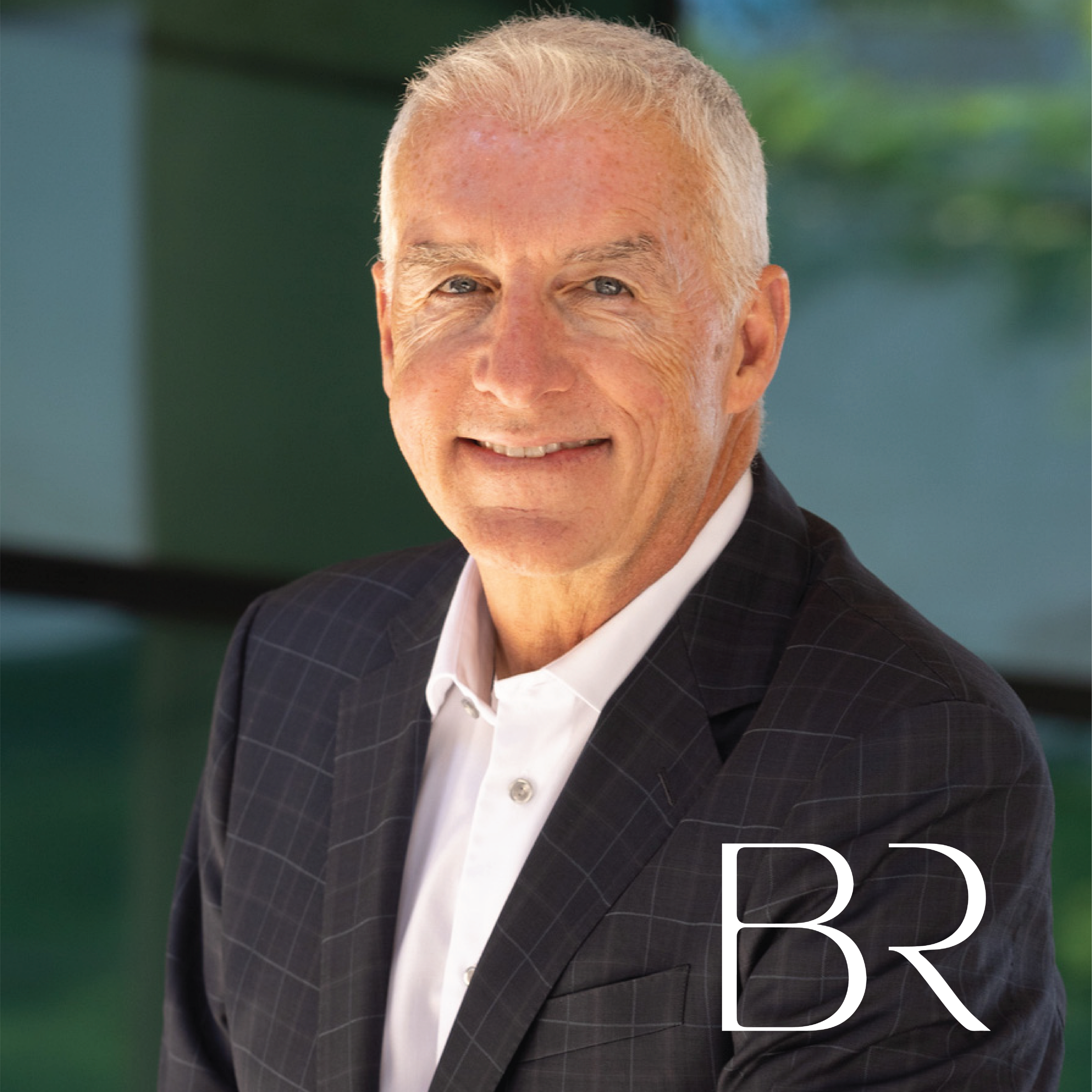
Welcome to The Social Architect,where we explore how to design a civilization worth automating.I’m Bill Ryan.
Some of you may have followed my last series, When Growth No Longer Needs Us.That series asked a difficult question:What happens when the engines of progress begin to run without us—when efficiency no longer serves humanity, but replaces it?
It ended with an idea I called The Human Renaissance—a vision for rebuilding a civilization that deserves the power it wields.
This new series begins right there.Because the future doesn’t just need builders.It needs builders who can think, feel, and care.It needs what I call the builder-philosopher—and the social architect.
In Part Seven of When Growth No Longer Needs Us, I wrote:
“The coming decade demands a new archetype of leadership: the builder-philosopher.”
The builder-philosopher stands at the intersection of craft and conscience.They’re not content to make something that works—they want to understand what it means.
Every algorithm teaches its users how to live.Every product carries a philosophy inside it,whether its creator admits it or not.
The technologist asks, can we build it?The entrepreneur asks, can we scale it?But the builder-philosopher asks, should we?
Think of Leonardo da Vinci, blending art and anatomy.Think of Brunelleschi, raising the dome of Florence with mathematics and faith intertwined.Think of Steve Jobs, whose obsession with design was really a meditation on the human interface itself.
Each fused function with meaning.Each understood that creation without reflection eventually becomes destruction.
So, what if building itself were a moral act?What if craftsmanship were also a form of citizenship—a way of declaring what kind of world we wish to inhabit?
If the builder-philosopher shapes the tangible—the tools, the systems, the spaces—then the social architect shapes the invisible.
They design for coherence.For trust.For belonging.Their materials aren’t wood, glass, or code—they’re the stories, incentives, and relationships that hold society together.
Jane Jacobs was a social architect.Her blueprints were streets and sidewalks,but her real design was for community.
Eleanor Roosevelt was a social architect, too.When she helped craft the Universal Declaration of Human Rights,she was designing the scaffolding of moral civilization.
And in the earliest days of the Internet—before the banner ads, before the data-mining—its founders built something extraordinary:a network based on openness and trust.
They were designing the architecture of connection.
Civilization, after all, is not a product to be scaled.It’s a home to be crafted.
The social architect understands that progress without cohesion is collapse in slow motion.Their task is to design the context—so that innovation, policy, and culture all move in harmony rather than conflict.
One builds systems that endure.The other ensures those systems deserve to endure.
The builder-philosopher operates at the product level—the social architect at the societal one—but they share a single purpose:to restore alignment between progress and purpose.
Imagine a company designing an AI platform.A builder-philosopher inside that company might ask:“What moral boundaries should we code into the system itself?”
Now imagine a government, or a coalition of nations,drafting the ethical frameworks that govern AI’s use.That’s the social architect at work—crafting the environment in which technology remains humane.
When these two archetypes collaborate—when conscience and design move in tandem—we begin to rebuild the trust that modern life has eroded.
Because in the end, both are guardians of coherence.Without coherence, even the most advanced civilization begins to fray.
The Industrial Revolution mechanized labor.The Digital Revolution mechanized knowledge.And now, the AI Revolution mechanizes thought.
But perhaps the next revolution isn’t mechanical at all.Perhaps it’s moral.
Automation is only as moral as the civilization it serves.If machines do more, humans must matter more.
We don’t need to fear automation.We need to deserve it.
Whether you build companies, cities, code, or culture—you are shaping the architecture of human life.The question is no longer, what can we build?The question is, what should endure?
In the coming essays, we’ll explore these ideas in practice—from ethics in AI to the design of cities,from education to economics.
Each episode will ask one simple question:How do we design systems that make us more human, not less?
If this conversation resonates with you,share the episode,join the dialogue on Substack,or simply reflect on this question tonight:What part of the human experience do you most want to preserve?
I’m Bill Ryan,and this is The Social Architect—where we ask not what we can automate,but what we must build to endure.
This Substack is reader-supported. To receive new posts and support my work, consider becoming a free or paid subscriber.