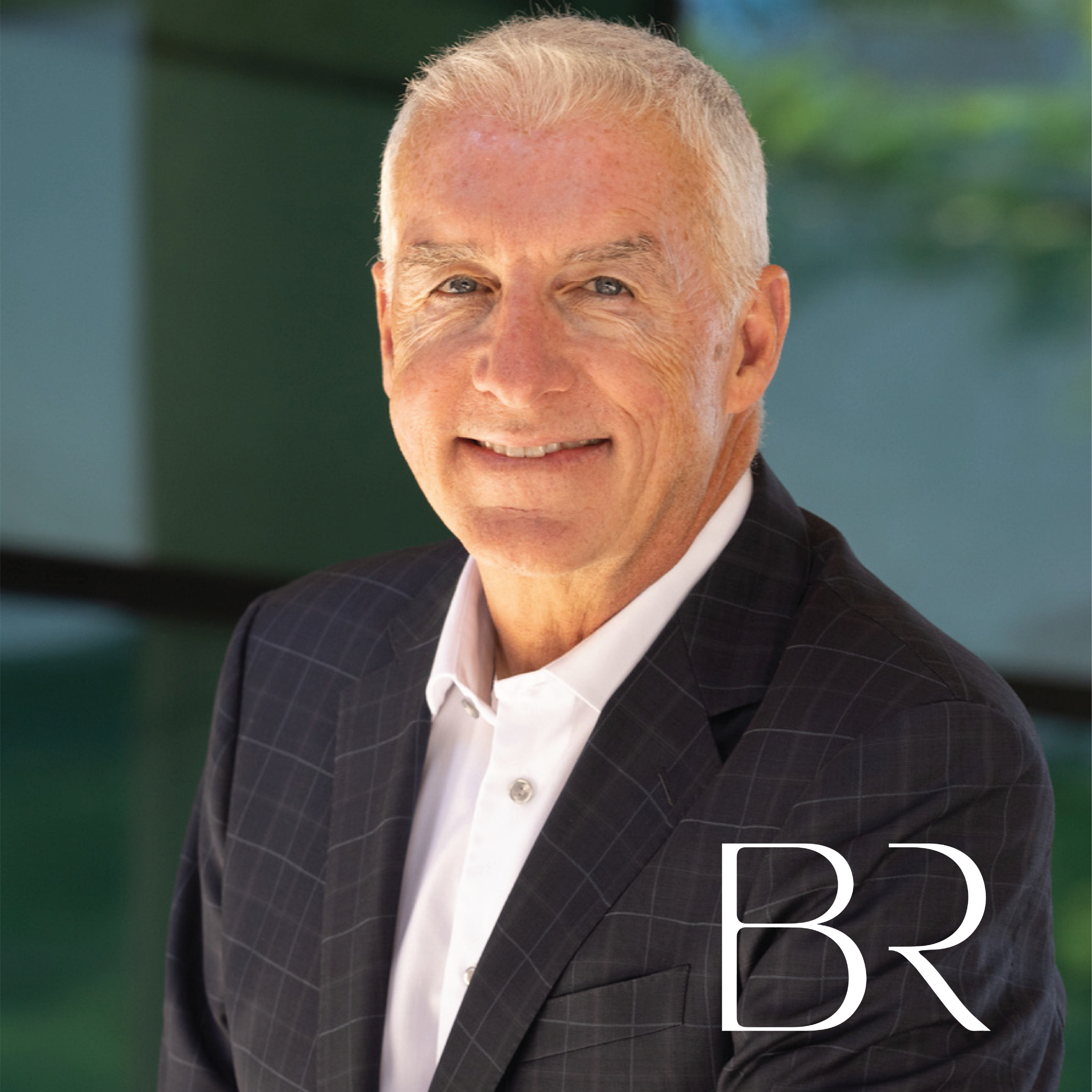
Series: The Social Architect — Designing the Human FutureHost: Bill Ryan
This episode is the moral hinge of the series — the load-bearing beam that supports everything that comes after.
FULL NARRATIVE SCRIPT
Trust is the quiet architecture that holds civilization together.
You can’t see it.But you feel it —every time it’s present…and especially every time it’s gone.
Today, we’re going to explore the structure underneath every society,every institution,every relationship.
Welcome to Episode Four of The Social Architect.
SEGMENT I — Trust Collapse Isn’t Loud
We often talk about trust as if it were a feeling.
But trust is not a feeling.It is infrastructure.
It is the load-bearing wall of every system we rely on.
And right now, that wall is cracking.
You can hear it in the way people speak about institutions.You can see it in our politics.You can feel it in our digital spaces — polarized, suspicious, brittle.
The irony is that we have more information than ever before…
…and yet believe less of it.
More connection…and less confidence.
More transparency in theory…and more opacity in practice.
But trust doesn’t collapse in headlines.Trust collapses in the gaps.
In every place where intention, infrastructure, and interpretation drift out of alignment.
In the mismatch between what is promised…and what is delivered.
A civilization can survive mistakes.It cannot survive cynicism.
Once people believe the system is rigged —they stop participating.
And when people stop participating —the system stops being a system at all.
SEGMENT II — The Physics of Trust
Trust has a structure — almost a physics.
And like any architecture, it relies on certain forces,balancing one another.
Transparency builds trust.Consistency sustains it.Integrity reinforces it.Betrayal fractures it.Silence accelerates its decay.
Let’s explore these forces.
Transparency — the visible logic of the system.
People don’t need to see everything.
They just need to understand enough to believe fairness is possible.
Digital systems fail here more than any other place.Black-box algorithms demand trustwithout earning it.
If I am to reveal myself to a system,the system must reveal itself to me.
That’s reciprocity —and reciprocity is the first beam of trust.
Consistency — trust as rhythm.
A bridge doesn’t earn trust by standing still.It earns trust by moving predictably under weight.
Institutions work the same way.
When a rule is enforced on Mondayand ignored on Tuesday,when leadership changes its values with the wind —the rhythm breaks.
And once the rhythm breaks, trust fractures.
Consistency doesn’t mean rigidity.
It means alignment over time.
Integrity — the unseen strength of the structure.
When transparency fails,and when consistency falters,integrity is the last defense.
Integrity means wholeness.That the parts fit honestly.
It cannot be faked.It cannot be spun.It is visible in the lived experience of people.
Integrity is the difference between a building that looks stable…and one that actually is.
SEGMENT III — When Integrity Fails
Every collapse — structural or civic —begins with a fracture in integrity.
You can reinforce a bridge with cables or signage,but if the steel is compromised,the structure eventually falls.
The same is true in human affairs.
When systems demand trustwithout honoring truth…
When leaders ask for loyaltywithout offering clarity…
When institutions speak of valuesthey do not embody…
People feel it.
Not intellectually —intuitively.
Because trust is emotional physics.And integrity is structural honesty.
When integrity fails,no communication strategy can compensate.
The only repair is renewal.
SEGMENT IV — Beauty as a Signal of Truth
There’s a surprising relationshipbetween trust…and beauty.
We instinctively trust a building that is well-crafted.
Why?
Because beauty signals coherence.
Beauty signals care.Beauty signals alignment between intention and execution.
A beautiful structure says:“This was made with attention.”“This was made with integrity.”
Beauty is not decoration.
It is evidence.
In physical design, we see it easily.But in systems design, we forget.
A system that is opaque, confusing, and extractivecreates mistrust by design.
A system that is legible, fair, and humanecreates trust by design.
Beauty, in this context,is moral clarity made visible.
SEGMENT V — Designing Trust for a Networked World
The anchors of trust that held civilization together for centuries —church, state, neighborhood, newspaper —no longer play the role they once did.
Meaning is now mediated through networks —decentralized, global, real-time.
So, trust must now be built differently.
A social architect designs for trustthrough three commitments:
First Commitment
1. Porous yet Principled Institutions
Systems must be open enough to adaptand firm enough to stand.
Porous at the edges —principled at the core.
This is a new architecture of governance.
The second Commitment
2. Legibility as a moral obligation
People should be able to understandthe systems they’re part of.
How does the platform decide?How does the policy work?Where does my data go?How is power distributed?
Legibility is fairness.Fairness is trust.
The third Commitment
3. Designing accountability into the structure
Not policing —architecture.
When accountability is visible,trust becomes possible.
When accountability is invisible,trust becomes impossible.
Trust is not nostalgia.
Trust is infrastructure.
It is what allows scale to coexist with meaning.Efficiency to coexist with empathy.Progress to coexist with conscience.
Without trust,nothing that follows has weight.
CLOSING REFLECTION
The test of any structureis not how tall it stands…
…it’s how long it holds.
And what holds itisn’t force —it’s faith.
Faith that the design is fair.Faith that the system is honest.Faith that intentions and outcomes still align.
Every great society is builton the invisible architecture of trust.
Every collapse beginswhen that architecture goes unattended.
Our work —as builders, leaders, citizens —is not to build faster.
It is to strengthen the foundations.
In our next episode, we explore Meaning as a Design Problem —and why a civilization that loses meaningeventually loses itself.
I’m Bill Ryan.
And this… is The Social Architect.
PREVIOUS EPISODE
This Substack is reader-supported. To receive new posts and support my work, consider becoming a free or paid subscriber.