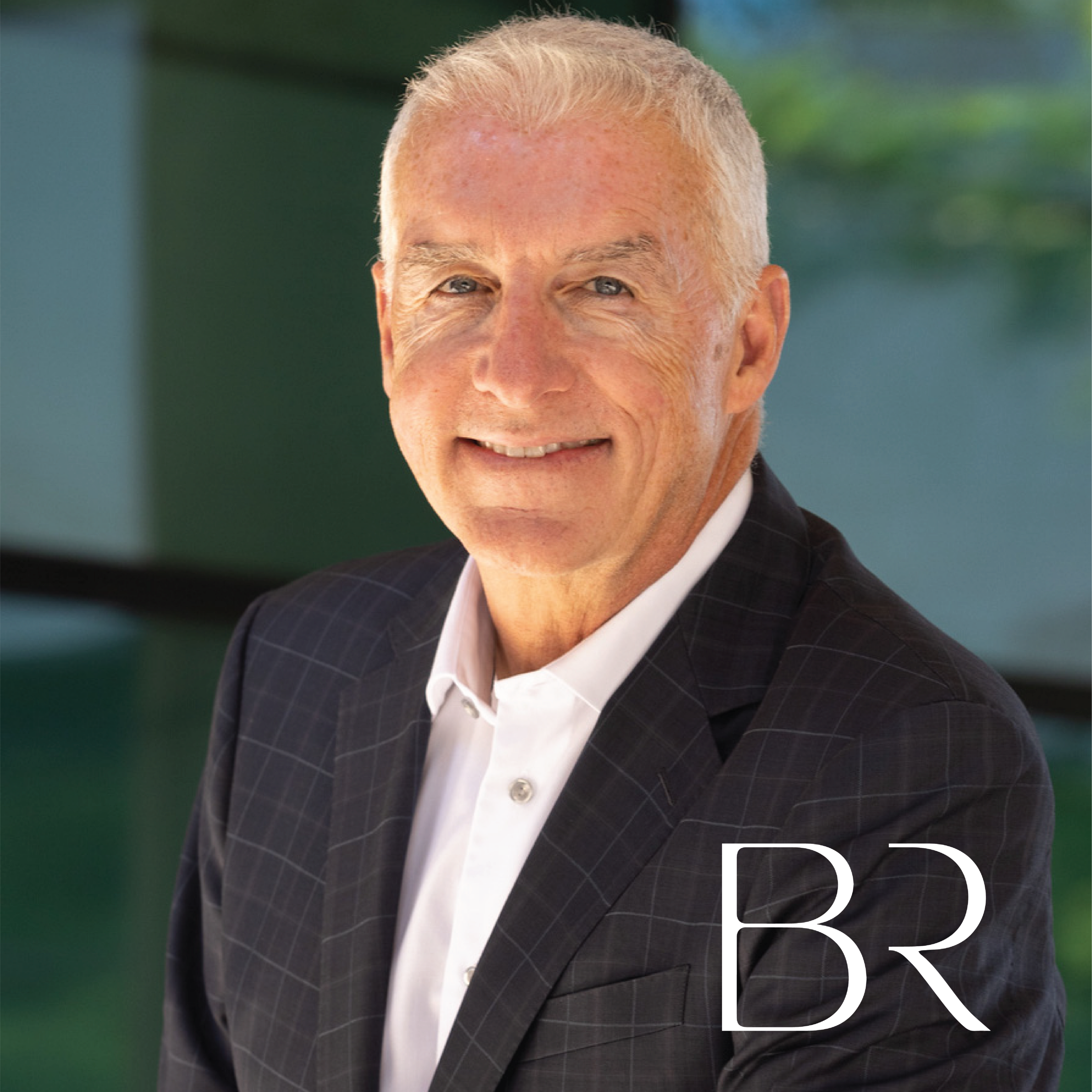
Series: The Social Architect — Designing the Human FutureHost: Bill Ryan
INTRODUCTION FOR FIRST-TIME LISTENERS
If you’re joining us for the first time, welcome.The Social Architect is a series about one idea:that the future isn’t something we wait for —it’s something we design.
We are living through a moment when technology is accelerating, institutions are aging, and our systems are evolving faster than the people inside them. Efficiency has soared, yet coherence has slipped. We have more capability than any generation before us… and less clarity about what all this capability is for.
This series explores that gap.
Here, we look at the world through the lens of the social architect — someone who works not only with structures, but with the invisible materials that hold society together:trust, meaning, belonging, intention, context, narrative.
Where the technologist asks What can we build?the social architect asks What should we build — and who does it serve?
Each episode examines a dimension of the human future as a design problem:How do we create systems that elevate rather than extract?How do we build institutions that reward contribution, not consumption?How do we craft environments — physical and digital — that make us more human, not less?
And today, we explore one of the most fragile and essential parts of that future: meaning — what it is, why it’s eroding, and how we can design it back into our lives, our work, and our culture.
If this is your first time here, you’re in the right place.
This series is an invitation —to slow down,to think more deeply,and to imagine a world built with wisdom rather than speed.
Welcome to The Social Architect.Let’s begin.
FULL NARRATIVE SCRIPT
We built machines to save time…
…and then filled that time with noise.
We optimized our systems…
…but in the process, we hollowed out our days.
Progress has solved for almost everything —except meaning.
Meaning does not scale.Meaning cannot be automated.Meaning is deeply, stubbornly human.
Today, we explore meaningnot as poetry…but as design.
Welcome to Episode Five of The Social Architect.
SEGMENT I — The Vacuum of Purpose
Every era produces its own kind of hunger.
Ours is not a hunger for resources.It is a hunger for resonance.
We live inside a world of abundance:
Abundance of information,abundance of convenience,abundance of access.
Yet for all this abundance,we feel a growing absence.
Absence of rootedness.Absence of presence.Absence of depth.
The Industrial Age separated workers from their craft.The Digital Age has separated humans from their experience.
Today, we can access anything…and belong nowhere.
Meaning is what reconnects us.
It turns repetition into rhythm.It turns action into contribution.It turns presence into purpose.
But meaning, unlike content,cannot be manufactured.
It must be invited.It must be cultivated.It must be designed for.
SEGMENT II — The Inefficiency of Meaning
Meaning is profoundly inefficient.
It cannot be optimized.It cannot be rushed.It does not respond to quarterly targets.
Meaning happens in the in-between spaces:
In pauses, not pushes.In attention, not urgency.In care, not consumption.
We built a world that treats reflection as downtime…and then wondered why we feel empty.
Meaning is the quiet resistance to acceleration.
It lives in:
· the conversation that deepens into understanding,
· the work done with intention rather than pressure,
· the ritual that grounds,
· the moment that asks you to notice instead of perform.
If trust is the structure of civilization…meaning is its interior light.
The social architect defends that light.
Not by escaping complexity,but by designing depth back into the world.
SEGMENT III — The Architecture of Meaning
Meaning has an architecture.It doesn’t appear on its own.It emerges where three elements converge:Attention.Intention.Belonging.If any one of these weakens, meaning thins.If all three align, meaning takes root.
Let’s explore them one by one.
1. Attention — what we choose to notice.
Design shapes attention.Interfaces, environments, and systems quietly decide what enters our awareness…and what vanishes from it.
When everything shouts, nothing is heard.When all stimulus competes for our focus, meaning gets drowned in the noise.
A meaningful system does the opposite:It gives attention back to the observer.It creates room for presence.It invites depth rather than exploiting impulse.
Attention is the doorway to meaning.And in a world engineered to fragment it, reclaiming attention becomes an act of design — and discernment.
2. Intention — why we create.
Every product, platform, institution, and relationship carries a motive.And people can feel that motive long before they can articulate it.
When motives drift from service to extraction, meaning dissolves.
Extraction is not just economic.It’s the moment intention shifts from giving to taking:taking value, taking attention, taking trust, taking advantage.
A brand that once cared now “monetizes.”A partner that once listened now leverages.A leader that once served now optimizes for self-interest.
When intention becomes extractive, the inner scaffolding that holds meaning together collapses.Because meaning rests on trust — and trust is a moral material.
The most resonant environments —cathedrals, gardens, communities —were built with a moral center.They were designed not merely to function,but to matter.
3. Belonging — who it’s for.
Meaning expands through participation.It grows when people feel they are part of something worth caring about —not merely consuming.
But the modern world has confused belonging with visibility.
Social platforms promised connection…and delivered audience.They replaced participation with performance.They convinced people that to be seen is to belong.
But belonging has never been about being seen.It has always been about being part of.About having a place where presence matters,and contribution shapes the whole.
And in that sense, yes — belonging has been corrupted.Reduced to metrics, signals, and algorithmic cues of approval.Flattened into a follower count.
True belonging asks something of you.False belonging only asks that you stay engaged.
A meaningful system becomes meaningfulonly when it becomes a home for contribution —a place where people don’t just appear,they help shape what the system becomes.
The Whole Structure
When attention, intention, and belonging align,a structure becomes more than useful —it becomes felt.
It gains emotional gravity.
It calls people toward it.
Meaning is the gravity in the architecture of life.
SEGMENT IV — The Crisis of Shallow Design
Modern design excels at clarity…
…but often fails at consequence.
It can make interfaces simple,while making lives hollow.
It can make systems frictionless,while removing the texture that gives life substance.
A frictionless life sounds idealuntil you realize:
Friction is how we feel contact.Contact is how we feel meaning.
When nothing requires effort,nothing retains value.
We have optimized awaymany of the ingredients of meaning.
Effort.Attention.Patience.Craft.Care.
But meaning is not in the stimulus.
Meaning is in the substance.
The question before us is simple:
How do we design for significance in a world optimized for stimulation?
SEGMENT V — Designing for Depth
To design for meaningis to design for depth.
Not solemnity.Not heaviness.
Depth.
Depth requires space —space for reflection, space for wonder, space for contradiction.
Depth requires participation —the ability to shape, not just consume.
Depth requires craftsmanship —the unseen layers of care that give form its resonance.
Meaning does not arrive through spectacle.
Meaning arrives through sincerity.
The social architect approaches systemsnot as puzzles to be solved…
…but as canvases for significance.
This is how we restore depth in a world that confuses novelty for importance.
SEGMENT VI — The Aesthetic of the Sacred
The sacred is anything treated with reverence.
It doesn’t need to be religious.
It can be a ritual,a space,a landscape,a piece of craft,a moment of silence.
To treat something as sacred is to protect it from optimization.
The sacred is the last un-automated space.
The social architect designs for the sacred by honoring the human need for depth,for stillness,for meaning.
When we restore the sacred,we restore scale to the soul.
CLOSING REFLECTION
In closing…
Meaning is not a luxury.
It is the software of civilization.
It organizes purpose.It sustains trust.It gives coherence to everything we build.
Without meaning,even the strongest architecture eventually empties out.
The work of the social architect is to design not just for function,but for understanding…
not just for speed,but for soul.
Progress without meaning is motion without memory.
Design without depth is structure without spirit.
Meaning is the light inside the architecture —the reason we build anything at all.
In the next episode, we explore Rehumanizing Work— and how the age of automation forces us to rediscover what human effort was always meant to be.
I’m Bill Ryan.
And this… is The Social Architect.
Previous Episode:
This Substack is reader-supported. To receive new posts and support my work, consider becoming a free or paid subscriber.