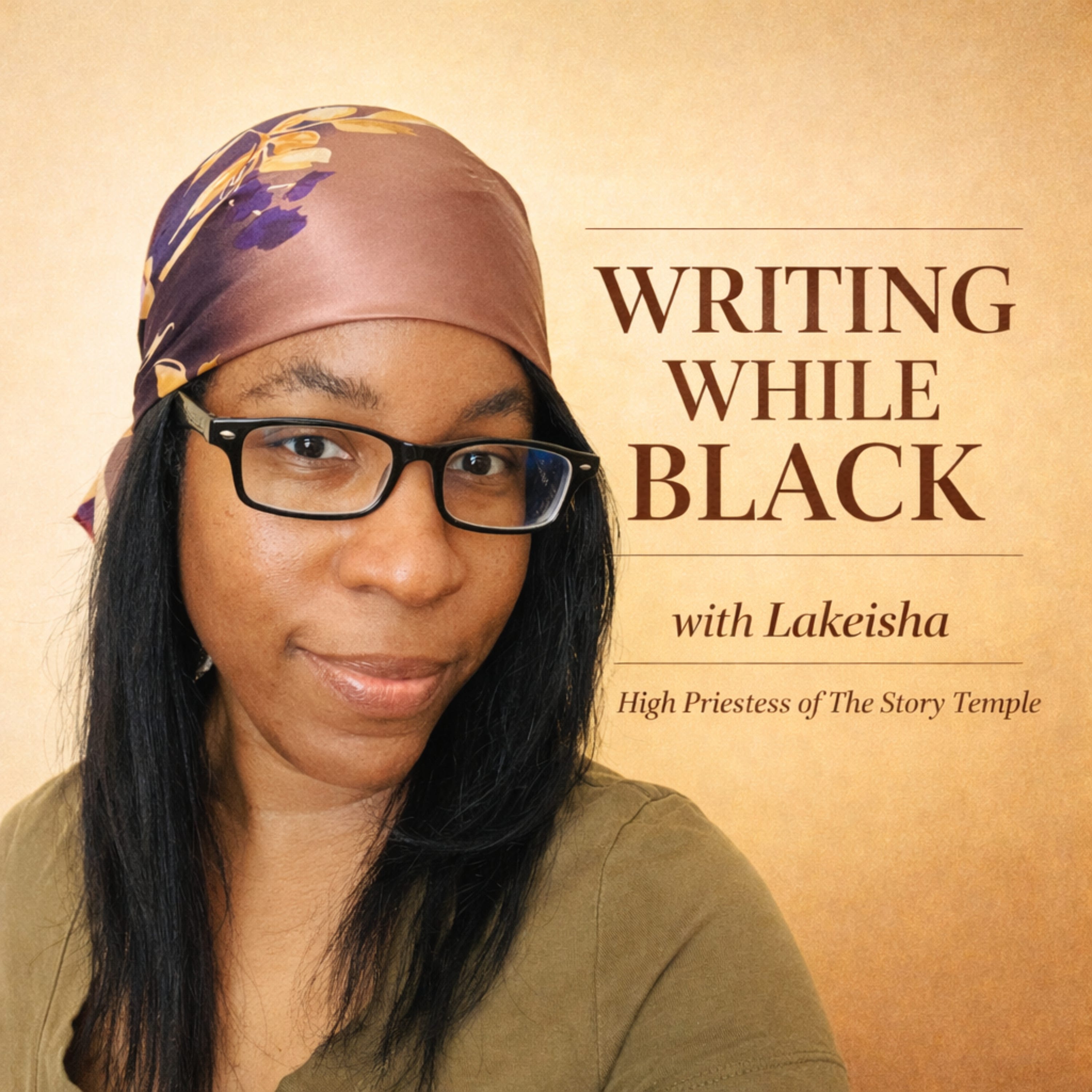
Is my craft off, or is this feedback just racism dressed up as writing advice?
You know the moment. When someone in your writing group says your character is “too angry” but you know – you absolutely know – that rage is the only honest response to what your character is experiencing. Or when they say your dialogue sounds “inconsistent” when you’re actually code-switching with precision. Or they say they can’t “relate” to your protag, and somehow that became your problem to fix.
And now you’re sitting there wondering: do I need to revise my craft, or do I need to protect my voice from people who don’t recognize what I’m doing?
That doubt? That’s the violence.
Writing While Black examines the moments where craft advice is actually racism. Where feedback that felt wrong, was actually wrong. Where you weren’t being too sensitive — you were being gaslit.
Every episode breaks down a specific pattern: the “neutral” craft advice that’s really white cultural defaults. The critique feedback that polices Black emotional expression. The industry standards that assume white readers are the only readers that matter.
We’re talking about:
* Code-switching as narrative mastery, not “inconsistent voice”
* AAVE as legitimate literary language with its own grammar rules
* Writing rage that’s complex and sustained, not “too angry”
* Strategic silence as resistance, not “withholding”
* Claiming your right to opacity without translating for white comfort
This isn’t therapy masquerading as writing advice. This is craft education that names what traditional writing education can’t teach because they don’t understand it.
After each episode, you should feel three things:
Seen. This thing you’ve been experiencing has a name. You’re not imagining it. You’re not being too sensitive. The feedback that didn’t sit right? There’s a reason for that.
Equipped. Language for what’s happening. Tools for protecting your voice while navigating hostile spaces. Craft techniques that honor your full truth instead of performing for white comfort.
Free. The shift when you realize your Blackness isn’t a problem to overcome — it’s the source of your power. When you stop writing for white approval, you discover what your real voice actually sounds like. When you write for Black readers first, you go deeper, faster, truer.
James Baldwin didn’t move to France just for the art scene. Zora Neale Hurston spent years defending her use of dialect. Toni Morrison fought editors who wanted her to explain more, make it easier, translate for white readers.
She said no.
Every Black writer who came before us navigated this same violence — the polite, professional insistence that our voices need fixing. We’re walking the path they cleared while refusing to perform the same exhaustion.
This podcast isn’t about making white readers, white writers or the very white publishing industry comfortable — cuz I can guarantee you it won’t. It’s not about proving we deserve to tell our stories. It’s not about explaining why racism is bad or defending the validity of Black experiences.
We’re past that. And for the record, we don’t need to prove s**t.
This is for Black writers who are tired of second-guessing their instincts. Who are ready to stop performing. Who want to write from full humanity without apology.
If you’re still trying to figure out how to make your work “accessible” to white readers who don’t want to do the work of understanding, this podcast will challenge you. If you’re ready to center Black readers and let everyone else catch up, welcome home.
Subscribe Now
New episodes drop every other week. We’re covering everything from the politics of silence to refusing respectability in your work. From trauma without spectacle to writing Black joy without justifying it.
Your voice doesn’t need fixing.
It needs freedom.
Subscribe to Writing While Black wherever you get your podcasts.