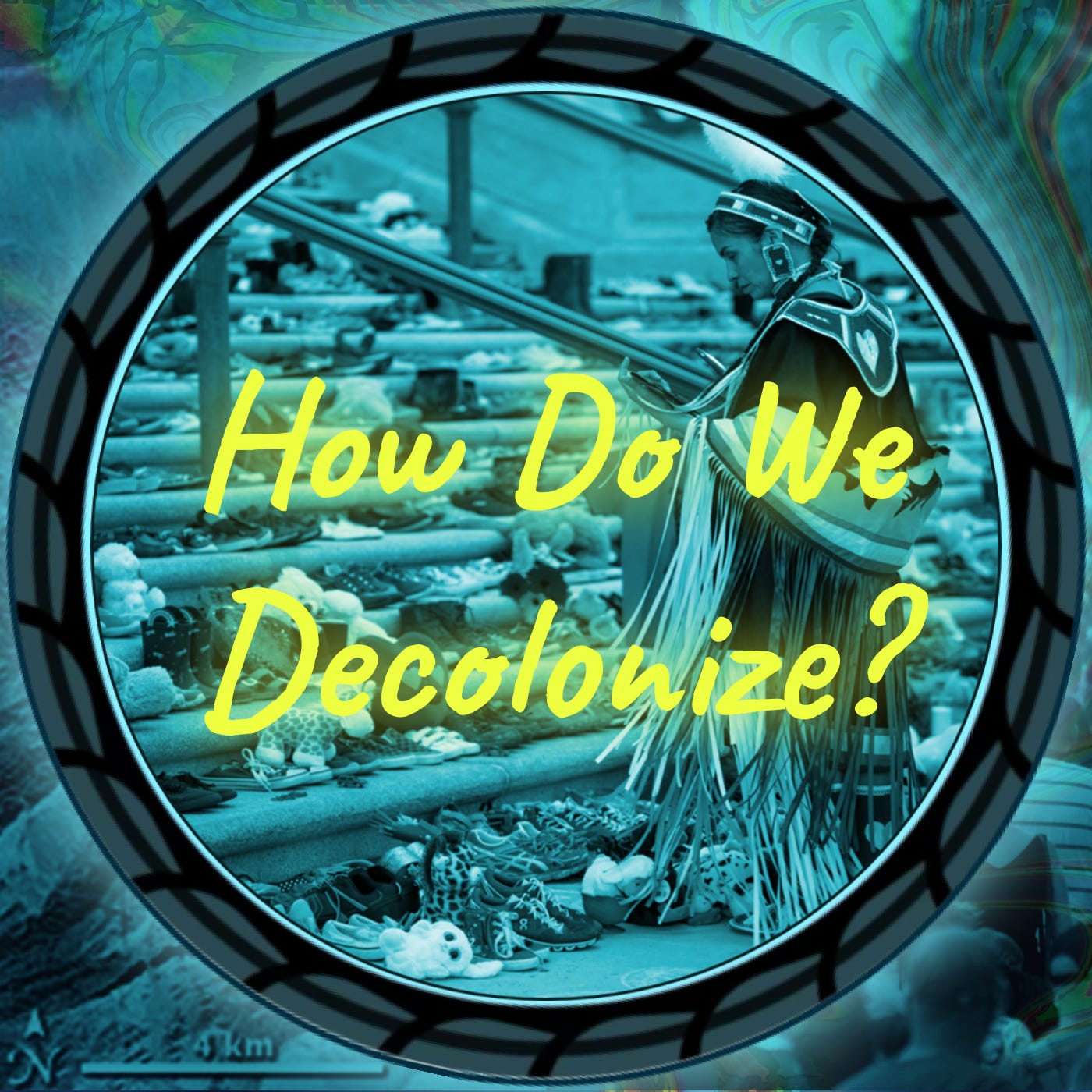
The discussion features guests Jules McCusker, Liz Fox, Gabrielle Weasel Head, and Tara Weaselhead Running Crane, who explore the concept of decolonization. They discuss the historical and ongoing impacts of colonization, the importance of reconnecting with indigenous culture, and the challenges of decolonization. The conversation highlights the need for love, understanding, and connection in overcoming the violence and disconnection caused by colonization. The guests share their personal and professional efforts towards decolonization, emphasizing the importance of education, cultural preservation, and community building. The episode underscores the significance of collective action and the power of storytelling in creating a more inclusive and understanding society.
Welcome and Introductions to Gabrielle, Lizabeth, Jules, and Tara
Alex:
Welcome to The Gravity Well Podcast with Alex and Jenny, Here, you break down heavy ideas with us to understand their complexities and connections. Our mission is to work through your dilemmas with you in conversation and process making our world a better place for all.
Jenny:
We acknowledge that we live on the traditional territories of treaties, 4, 6, 7, 8, and 10. The ancestral homelands of diverse First Nations, Inuit, and Metis Peoples whose ancestors have walked this land since time immemorial and whose histories, languages, and cultures continue to influence our vibrant communities. We pay respect to Indigenous people through our ethical relationship-building efforts. Our community agreement asks for genuine conversations, real hearts, open minds, and different perspectives in conflict. Let’s rely on our six W system and live participant feedback. What matters most is finding common ground.
Alex:
We dedicate this podcast to our children, nieces, nephews, grandchildren, and all future generations. The Gravity Well is on YouTube and streaming wherever you get your podcasts. Join us at thegravitywell.net.
Jenny:
Thank you all for being here. We have Jules McCusker, Liz Fox, Gabrielle Weasel Head, and, of course, Alex is back with us. I’m thrilled to say that we may have a couple of others join us today, but we’ll proceed for now and see how it lands. Just reintroduce everyone briefly and then I’ll give you feedback on the last conversation we had and then introduce today’s topic as well. And then we’ll just go in a circular fashion for everyone to weigh in. I’ll start with Jules. Jules is a creative director, writer, and Indigenous educator. Gabrielle Weasel Head is a professor at the MRU in indigenous studies and from the Kinai First Nation, Lizbeth Fox is working in many areas, one of which is to bring together three groups, the Wayfinders Group, the Natero, and the Blackfeet Eco Knowledge Groups.
There is a movie she is premiering we’re going to hear about. That’s where we’re at. Everybody knows Alex. We’ll let Alex do a little introduction for himself. I just want to reflect a little bit on the last conversation I had with the two of you, Jules and Gabrielle. One of the things that stuck with me is speaking about misrepresentation being a form of violence. I think something that I carried forward from that, and I read your article, Jules, and it’ll be a part of our blog posts when we launch the new website right away here. Finally, everybody can see what Alex and Andy have been working on. But anyway, I just wanted to say I had a conversation right after that one about greenwashing. We (us three) [spoke] about this a little bit in our meeting, about greenwashing and I realized that that is also a form of violence, being lied to, on a regular basis, in terms of the climate crisis, for example.
It goes, obviously being misrepresented as a person is probably the most severe form and I’ll let you guys speak better to that, but also of ideas. I think it’s just really interesting to now understand why I feel, let’s say angry or hurt or afraid when I hear those things that are wrong being said over and over again in our media. I just thought it was really interesting to see those two ideas come together in the same way, and I’ll let you both speak to that, as well. The other thing that you brought in, Gabrielle, was the lack of identity in Canadian culture today. I’m grateful that you brought forward this idea of “Who am I?” We’re doing a course as we’ve discussed with you offline in the new year with Brad Chapin and I. Actually, I have the book right here.
Jenny:
It’s “Self-Regulation Skillset”, and we’re going to be going through this over eight weeks and Gabrielle has offered to bring in some thoughts about “Who am I?” into that conversation. And Brad is graciously accepted and is thrilled to be bringing in those concepts as well. It’s just so nice to see these things come together in ways that empower us. And then the other thing you talked about when we were going through the courses next year was an Indigenous perspective on power. And Alex can weigh in on this, but I brought up this idea of the “Organising for Power” course with Alex, and he immediately said, “What are you talking about?” And yeah, collective power. I just want to make sure I’m making [that clear], it’s interesting how I’ll say a word and not even realize what the implications of what that can be.
Jenny:
Power can be good and bad depending on how it’s being wielded, if you will. I think that’s everything I wanted to say about that. I think I’m just going to offer a little bit about this conversation. Today we’re talking about decolonization. We’re going to do this in three rounds as we did last time. The first time we’re going to let everybody introduce themselves and then talk a little bit about colonization. I’m just going to define it for us. Alex and I are definitely really glad to be learners today. Just going to define, I read a definition today, colonization is “the action or process of settling among and establishing control over indigenous people of an area.” And the one thing I’ll add to that definition is it’s an ongoing process I would say. It’s something that obviously is continuing today, but even still, it’s actually growing for all of us as people come.
This is an ongoing discussion. I would say, I think the one thing, especially with the war in Palestine, I’ve really realized how much this impacts all of us and not just indigenous people that were colonized, but all of us are under this umbrella, if you will. And the last thing I’ll say is KJ, because I just tweaked my memory, is this idea of the Two Row Wampum. I definitely appreciate that we’re on two different paths and we’re coming together in our knowledge, and our perspectives are quite different and sometimes they can be potentially ignorant. I’m going to stop there. KJ, if you wouldn’t mind leading us off just with again, an introduction of yourself and a description of colonization, if you would.
Jules:
Oh, sure. Well, thank you for that. That was a fantastic intro to the show and the whole team group here. I really appreciate being a guest. Got a great lineup of people. Well, you started with the introduction, KJ, my friends call me Jules, and I’ve been a creative director for most of my career life, like 30 years almost now, working from everything from branding and advertising for beer companies to now almost a hundred percent devoted to indigenous projects over the last 15 years. And I’ve worked on everything from men’s healing to now really diving deeply into education and transformation, looking at specific things related to how we better inform our communities to grow into the next generation. That’s mostly my focus now. I think when we talk about decolonization or indigenization, it’s the top tier of concerns because I think we have a lot of different perspectives on that. But that would be my baseline for an introduction. I’m Dene from the Northwest Territories, a little community. I was disenfranchised when I was adopted out in Edmonton from a little community called For…