An AI Discussion of the editorial at https://williamlweaver.substack.com/p/the-nine-month-miracle
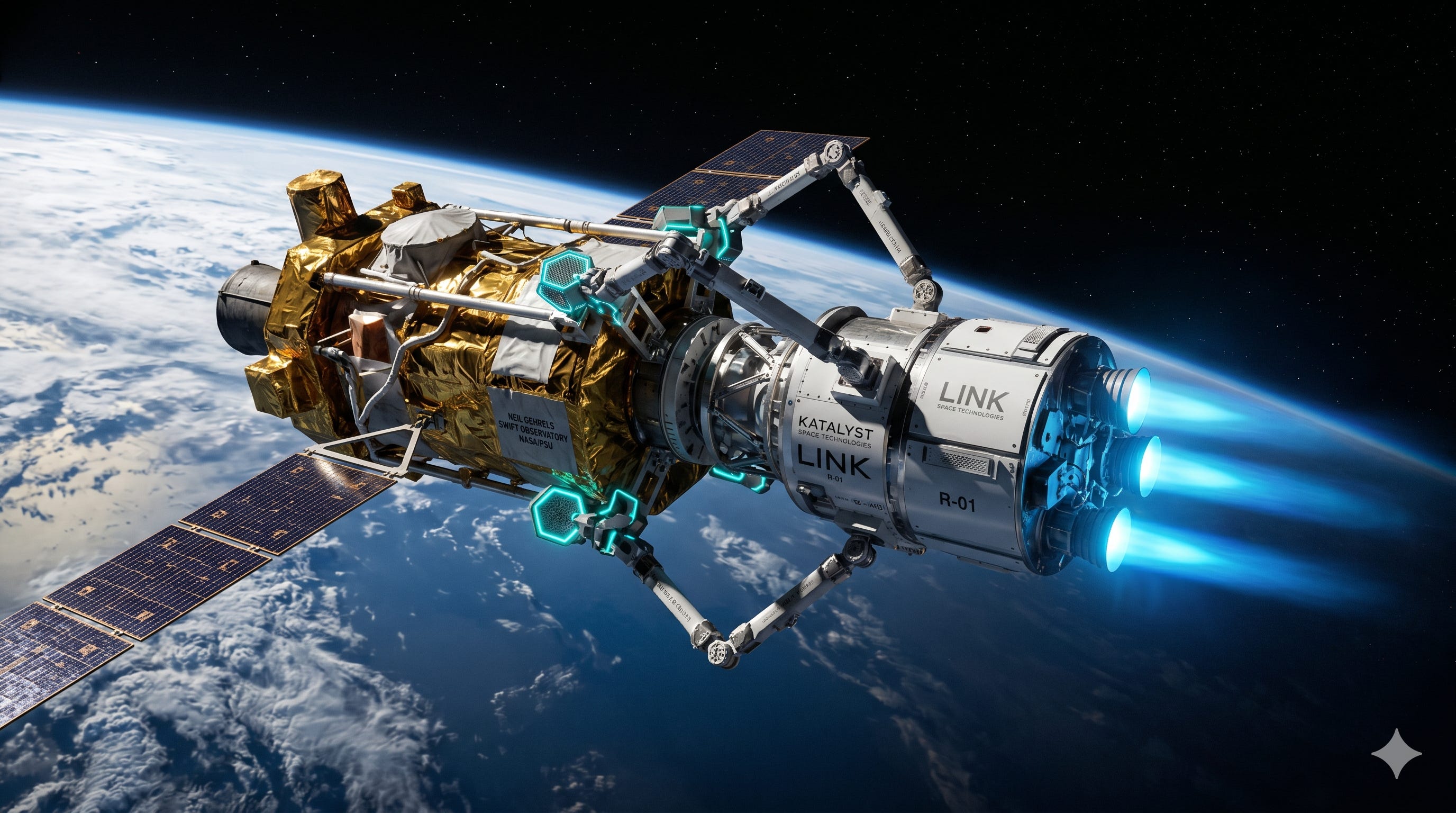
This editorial details the unprecedented nine-month rescue mission of NASA's Neil Gehrels Swift Observatory, an invaluable space telescope that faced premature, destructive atmospheric re-entry due to heightened solar-maximum atmospheric drag. Because Swift was entirely uncooperative and never designed for orbital servicing, the aerospace startup Katalyst Space Technologies was contracted to develop LINK—an autonomous robotic servicing spacecraft designed to grapple and boost the observatory.
To achieve a traditionally impossible nine-month timeline, the mission heavily integrated advanced AI-accelerated engineering pipelines, including:
Structural Generative Design to rapidly optimize lightweight, high-strength hardware components.
High-Fidelity Digital Twins combined with AI auto-coding to simulate millions of docking trajectories and streamline flight software development.
Rapid COTS Modeling to ensure seamless systemic compatibility before physical hardware integration.
Coupled with a strategic, human-led "drag-reduction campaign" by Penn State flight operators that bought the team critical extra months, the mission represents a profound shift toward "on-demand orbital servicing". Ultimately, the editorial emphasizes a pedagogical imperative for academia, arguing that modern STEM education must shift its focus from manual, localized calculation toward AI orchestration, validation, and holistic systems thinking.
#SpaceServicing #GenerativeDesign #SystemsThinking
#NewSpaceEra #AutonomousRendezvous