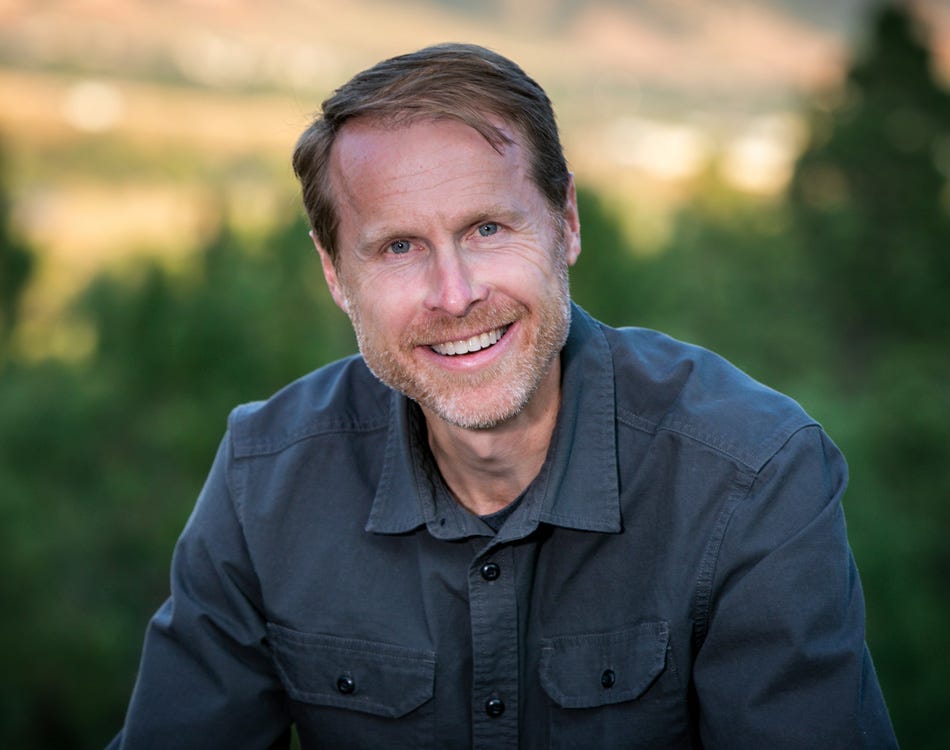
House Majority Leader Scott Odenbach and Senate President Pro Tempore Chris Karr, both members of South Dakota’s Property Tax Relief Task Force, join Dave Roetman to discuss the task force’s work ahead of the 2026 session. Karr describes property taxes as a complex web and says the task force produced about 24 proposals, including opt-out guardrails and ways to fund relief, while Odenbach points to spending growth that outpaced inflation. They discuss softer state revenues, federal funding and Medicaid expansion costs, recidivism after the prison vote, and data centers, including whether residential electricity customers can be protected. Both address the divide in the Republican Party, citing the school choice fight and the Reagan rule. Odenbach recalls his time as executive director of the Minnehaha County Republican Party, and both close with calls for civility.
Topics: property tax relief, Property Tax Relief Task Force, opt-outs, state budget, Medicaid expansion, prison and recidivism, data centers, Republican Party divide, school choice, Reagan rule, civility in politics
“It has been easier, I think, for leaders to just let it [property taxes] go and just increase spending 3% a year and not try to make any changes. But the outcry has gotten loud enough now from [many] people who are feeling like they are renting their houses from the government that is has provided the wind in the sails for this measure…” - Majority Leader Scott Odenbach
South Dakota’s property tax crusade eyes relief for seniors, veterans, homeowners; mandated spending cuts floated - link to Dakota Scout article
LRC link to bills authorizing the Prison in special session
Chris Karr for SD - link
Scott Odenbach - link
LRC Chris Karr - link with bills and committees
LRC Scott Odenbach - link to bills and committees
Full transcript
About this transcript: It was machine-transcribed in-house and then edited for readability. Filler words and false starts are removed, and the meaning is unchanged. Timestamps are approximate.
[00:00]
Dave Roetman: This is the Making Waves Podcast. My name is Dave Roetman. We’re here with Scott Odenbach and Chris Karr, Representative and Senator respectively. Welcome, gentlemen.
Chris Karr: Thank you. Good to be here. Great to be here.
Dave Roetman: You are both on the Property Tax Relief Task Force. Yeah. Well, let’s get right into it. Tell us about that. What’s going on?
Chris Karr: Well it was a task force that was created by a bill that was brought this year by the speaker and myself and it was to take a more comprehensive look at this property relief or property taxes I should say are Probably one of the most complex areas that we touch and it’s like a spider web and it reaches out and touches so many areas. The problem with the, I think the bills that we saw this session is they’re really one dimensional and you got to look at the whole picture.
What we did, and I think we looked at a lot of different pieces of property taxes, from the schools and how they’re funded, how they spend their dollars, to the counties, and then also the state and their role.
Scott Odenbach: Yeah, and I think it took guts, frankly, to try to even take on such a... Complex beast. Many people are cynical about the effort. It’s just been easier to use inertia and let taxes just keep on going up. But at some point, some leaders are going to have to step in and do what we did, continue what we did. To try to get our arms around this, simplify how property taxes are collected or whether they exist at all, that’s directly related to K-12 education spending, which is just a Byzantine formula for how that money is collected.
Then you throw in capital outlay, you throw in education spending. And there’s frankly probably few people in the state who understand it. It just has been easier I think for leaders to just let it go and just increase spending 3% or whatever a year and not try to has gotten loud enough now from many, many areas, many, many people who are feeling like they’re renting their houses from the government that it provided the wind in the sails for this measure that Chris and Speaker Hansen brought to pass and put this task force into action.
Chris Karr: Hold on, I think Scott brought up a really important thing here. That is, in order to, I do think you’re right that a lot of people that have been in our position have avoided some of these things. Let’s take the sales tax exemptions or property tax exemptions. We looked at those, but there’s been a whole summer studies dedicated to just those things and folks are afraid to touch them because it impacts so many different groups and of course it brings a lobbying against them and- and you know they engage voters then to also react against you and or replace you it it’s not for the meek to do something like this and take on this very complex issue that touches your education funding.
I mean that’s, a hard string that touches everybody’s pocketbooks and then all the economic forces in different sectors in our state. It impacts everything.
Dave Roetman: Do you think there’s going to be enough political will? Is there enough energy to get something done?
Chris Karr: That is, is the question. I don’t have a crystal ball, I guess. I think that there’s folks that want to do something. I think coalescing around an idea is going to be the hard part again here. What I like that we did... There was like 24 proposals, but only a few of those actually dealt with the revenue and finding the revenue to provide that relief. A lot of them were guardrails and different safety measures so that if we find the dollars and we put them into this tax relief mechanism, that relief is long-lasting and isn’t just diminished.
Because of spending that’s not checked, because of, valuations and other things, you’ve got to put limits out there. And so there was a bill on capital outlay, there was a bill on, a couple of things on, or proposals I should say, on the opt-outs. These are great safety measures to protect those dollars once they’re there.
Scott Odenbach: Well and I think it also goes back to first principles as republicans and you know we hear over and over you know people bring up oh I was there when Daugaard had [inaudible] that just, that old canard gets repeated over and over. [inaudible] see that again. Well, and it’s maybe needed again. I mean, I threw out some statistics that I had at LRC put together during our meeting a couple of days ago.
I said, put together how much government grew since 2020. And with K12, they did it since 2019.
[05:00]
And you see big growth. We had inflation, obviously, too, but you see numbers 35, 38, 39, 43 percent growth. In that time period with inflation of say 23 to 25 percent. K-12 education for example, we’re spending 777 million more per year than we were in 2019 but yet enrollment is essentially flat and the trends are still flat or going downward honestly. Like I said about first principles, Yes, it’s always easy to bring up, oh the cuts will be tough, it’s tough on these people, these state employees, but I get emails all the time representing Lawrence County and you know folks throughout the Black Hills know who I am and reach out to me.
Of people who are saying, I’ve lived here for decades and you know what, I’m gonna throw in the towel, I gotta sell my house. I didn’t do anything different, I’ve been in it 30 years. But there’s a flaw in our formula for how taxes are calculated and assessed and so your neighbor next to you. Buys a place for cash, moved in from California, it’s for double what, yours was ever worth, and now the assessor next year assesses yours upwards.
So we need to start looking, I think, as leaders, as legislators, we need to look out for the interests of those people who are paying those taxes, fix the flawed system, or replace it entirely.
Chris Karr: The other thing I’ll add to your question about whether or not we’ll actually be able to get something through, I think that’s why we support so many different proposals and some of them overlap so that there’s some options too. There was a couple different options regarding how you deal with opt-outs. There’s a few different ideas on where we get the revenue knowing that each of these are difficult. They’re prioritizing property tax relief over other items and other things that are very important to people and or services.
But we provided some options there so you gotta look at the package too. There’s some other areas where we tried to look at who needs the relief, who’s the most needy, so there’s a proposal regarding veterans, there’s a proposal regarding our elderly and disabled, those on fixed income 65 and older have been in their house. And we don’t want to tax them out of their house. That’s a separate issue. I think those are all good standalone ideas depending on whether or not we can get a big comprehensive plan and how much relief we get through that.
I don’t know. But we got to try and I think that’s the most important thing that in the scout alluded to that earlier of the lack of people trying I think they’re afraid because of the Politics and they’re worried about the politics. They’re worried about being reelected and things like that Yeah, and I think of one of our meetings at school.
Scott Odenbach: Minds, you know Kay from Piedmont comes in bringing up her oxygen bottle she’s 82 years old and testified that she had to basically go back to work in order to pay the rising property taxes and keep her home to sit there and listen to a lady like that and then worry about the politics for yourself who cares i think about the people like her or the guys that have four kids and get up every morning at five and go out and bust it And then we’re taking that much from them, from the most basic necessity of life, staying in your home.
We need to ignore the politics and try to craft a proposal that can get the votes to bring relief to those people.
Dave Roetman: What other issues or priorities do you think is going to come up in the upcoming legislative session?
Chris Karr: I think we touched on property tax relief and that’s going to be a big one for everybody. I think the dollars, the revenues are coming in a little soft. So right now they’re estimating about $50 million ongoing and maybe $100 million of one-time dollars. So go back to those ongoing dollars, keep an eye on what’s happening at the federal level. And so there’s a lack of federal dollars coming in which in some ways is good right the federal government’s checking itself we like that all tax dollars are belong to us and we want them well spent but we also have to acknowledge that we’re still a welfare state.
A good portion of our budget comes from federal dollars. So we need to plan accordingly and figure out how we’re going to pay for these things. The people of South Dakota also decided they wanted Medicaid expansion. Well, we have more people. Receiving Medicaid dollars. Our share of Medicaid is increased now, the way the FMAP works with the federal government, and we got to come up with the dollars to pay for it.
I think that’s going to be one of the big issues for us is the dollars and or maybe lack of. Is that what you see?
Scott Odenbach: Well I think maybe there will be some issues remaining. With the prison issue as far as the recidivism piece of that and the folks that are looking into that to try to find constructive ways to finally start to address that because part of my rationale for Voting for the prison was a two-step process, and we’re also going to really start digging into this recidivism because our rates are doubled out of Texas, we found out, as being on that committee over the summer.
[10:00]
And those are some shocking numbers. We’ve got to do better. So that’s going to be, I think, an important issue to start getting right to bring costs down long term. Try to keep people from coming in the first place. And those are deep-seated societal issues. If the family’s broken, that’s where it really starts. Our neighbors and friends and citizens down in Indian country in South Dakota comprise around 8% of the population, we learned, but around 40% of the prison population.
We know that we’ve got issues we’ve got to address in a better way there as well for the benefit of all those folks and all of South Dakota. That’s a big deal and I think just the continued issue of economic development and growth in South Dakota, it’s something that, maybe we’ll talk about it. There’s often talk about the divide in the Republican Party. But what is the government’s role in priming the pump, if you will, and fostering more economic development?
Where does the free market end and where should the government’s role be? We’ve had a lot of debates with the Future Fund. Chris was a leader in that the last couple of years and at least beginning to rein it in somewhat, having some reporting requirements. We’re going to be hearing more from the members on both sides of the issue on that issue of economic development.
Chris Karr: Well yeah, and finding some balance in South Dakota amongst the groups because there’s very different takes on what we should be engaging in for economic development. Speaking of that, the data centers pop into my mind, we’re going to have to be educating ourselves and I think just you know making sure that we whenever there’s a kind of a new to market type of industry or business and they want to come to South Dakota and you start talking about billions of dollars.
We need to make sure we’re well educated and we protect our resources and protect our people. I’m actually looking forward to learning more about the data centers, whether they would play a role in South Dakota. We want them to play a role in South Dakota or not.
Scott Odenbach: Can we wall off electrical usage of our residential customers, for example? As I’ve delved into this the last few years, I’ve seen this on the horizon, and I’ve had a lot of talks with folks in the electric utility industry. We’ve had lunches, we’ve met in the capital, they’ve come to Spearfish, and I’ve gone to the headquarters of Black Hills Energy. In Rapid City and listen to briefings. A lot of real smart guys, great company there.
But we need to make sure that I think as policy makers we understand if they’re going to come in here. I mean a lot of this, you take for example Mark Zuckerberg of Facebook has a big interest and has promised huge multi-hundred billion dollar investments year over year for the next decade. Well, I’d like to make sure that, maybe he sells his yacht before we ask for the taxpayers of the South Dakota to subsidize this.
And I want to make sure, you hear a lot about small nuclear power plants, for example, and that technology is vastly increased. Is there a role for that to play, where if these companies want to come in here, they can assure that they have their own source of power? And it doesn’t begin to draw down our grid and make our customers’ costs go up. And you can look at other states. Louisiana, there’s been some articles, they’ve embraced that big time, but you need to go and read the articles about what the experience of the people of Louisiana and a few of these other states has been.
The Wall Street Journal’s done some good reporting on it. We’re going to need to get smarter and make sure. We get this right.
Dave Roetman: So you brought up the divide in the Republican party. Would you like to elaborate on that?
Scott Odenbach: Well, sure. That’s a fun topic. I mean, it’s the making waves podcast after all. So we can make a few waves here. I don’t think that there’s for folks who are. In the capital or in the caucus, that’s not a secret. Maybe it is to the folks who are outside of the pure capital bubble. But the governor campaign is obviously playing into that too, in helping maybe further the divide at times.
And I think partly the divide is Because we’re too blessed, we’re too spoiled, if you will, as Republicans in South Dakota, it does one good to go talk to Republicans in states where they’re in the minority. Go talk to some Minnesota Republicans, for example. I mean, we don’t even have any Democrats left, so we fight amongst ourselves. And as I said earlier, I mean, this issue of economic development is a big one.
It’s a cause of the divide. I think maybe people on both sides of that feel like they’re righteous and they’re right and they’re the true Republicans. Some of the folks who want more economic development and involvement in government spending, they like to quote Ronald Reagan. And some of them were talking about his quotes quoting Reagan during our task force meeting the other day. And I said, I think it was Winston Churchill who said, trying to have growth in the midst of a high tax environment is like standing in a bucket and trying to pull yourself up by the handle.
And so I think that there are people in our caucus who have gone out and are working and we’re doing it just today.
[15:00]
As Chris is trying to have fundraisers and events to help the Republican Senate, and in my case the House at large, we’ve got a faction within the Senate, within the House, that are out there doing their own thing. And if you’d go back just a couple years ago when, air quotes, they were in charge, if we’d have done the same thing, there’d have been calls to throw us out of the caucus or that the world was going to end or whatever.
There’s cause for people to pause and reflect, I think a little bit as they go and just see what really are they trying to do.
Chris Karr: I’m going to say this and here’s what I’ve observed and I try to operate by is I decided to be a legislator and so that’s what I’m going to do. I’m going to be a legislator. Now I’m a senator and I’m the president of Pro Tem and that’s going to be my focus. If I wanted to be a political activist, then I shouldn’t probably be a legislator. But when you’re in the legislature, you’re making a decision to represent the people and to be a problem solver.
You can’t do that if you’re involved with everybody else’s races. If you’re getting involved with everybody else’s politics, I think you should focus on you, focus on the role that you got elected to play.
Dave Roetman: Representing your constituents. Representing your constituents.
Chris Karr: Yeah, so, you’re not going to hear me getting involved, for example, like, with the governor’s race or some of these other races, my focus is the Senate, make sure we have good process that we’re really proud of. I think, we can be on different sides of an issue, right? But to divide us, that’s a decision that people make. If you want to divide the Republican Party, you have to make that decision.
And people are making that decision. And Scott referenced that as well. Some of these activities, they don’t help build the coalition. They don’t help build the Republican Party and the chambers and the working relationship and the chambers and the morale. They divide it, and that’s a decision. We can disagree on issues, and that’s what we’re supposed to do and debate those. And my job is to make sure that we have a good process to do that, a process that we’re proud of.
We’re doing it to ourselves, and that’s the unfortunate part. I’ll just add one more thing. People forget about the Reagan rule, the 80-20 rule, and all of a sudden there’s one issue. I have people that have supported me that are good Republicans, but then one issue that they disagree with me, and then all of a sudden they want to find somebody else to fill my spot. And that’s their right and that’s their choice and it’s not just me it’s others you know this happens all the time and i tend to ask them i said you know hey do we agree on these things yeah we do do we agree on 90 percent yeah do we agree on 95 yeah 99 yeah i don’t know how what else you could want as far as representation and somebody agrees with you that 80-20 rule is a good rule.
But I think folks are taking it to a whole new level. I think there’s a lot of within that division and the different groups. There’s people that agree with us 99% of the time, but all of a sudden there’s one issue. And they’re allowing that to divide the Republican Party further. That is really, really unfortunate and frustrating. Well.
Dave Roetman: I have very strong opinions about a lot of issues, but I’m even more relaxed than Reagan. If somebody agrees with me 60% of the time, they’re my friend.
Scott Odenbach: Well, there’s plenty of fratricide on the right, as it were. I told someone today, I’m old enough to remember when wanting to lock up the bad guys and being for school choice was the conservative thing to do. And now, some of us who supported building this prison have been blasted ever since. And there’s a lot of armchair quarterbacking going on in that deal. I mean, I wish everybody could have spent the whole summer in the committee like we did.
Listen to who we listen to. See what we see. Tour that old prison. Hear the statistics about overcrowding. Listen to consultants in the construction industry who talk about what things cost to build new. Then try to make the decision over whether to try to add on to falling down existing things or build new I mean all those things were part of the debate and at the end of the day just speaking for me I mean I listen to also law enforcement folks that I trust like Sheriff Milstead and AG Jackley and guys who live in this world and but yet you know the constant blowback of on my right, on that, on school choice from last year.
I mean, I’ll stand by 10-20 all day long. I think it’s important for people that are angry about what happened with school choice. I think we restated it three different ways that unless you opt in, no one’s coming to run your curriculum or take over your program.
[20:00]
And we had a situation where we had the Governor, the Senate President, the Senate Majority Leader, the Speaker of the House, and the House Majority Leader co-sponsoring and on board for a bill that would have brought school choice to South Dakota and finally started to give parents control over where a lot of those dollars can flow, which if you take it full circle back to the debate over property taxes, K-12 spending is the big driver of that.
Until we get at the heart of that issue, as I said many times, it’s the spending. We’re not going to have that long term. Sustainable tax relief that Chris talked about at the beginning here today, and that goes right through K-12 spending and how we decide we’re going to do that as a state.
Chris Karr: Well, Scott brought up a great example of what I was talking about, the 99% of the time we agree, the school choice. As a perfect example of, and I don’t understand the strategy of individuals or groups that look at and agree with an idea or a concept, but then it’s absolutely their way or nothing. You know when i look at it and let’s say i didn’t agree with scott’s particular idea but i agree with him 99 i don’t look at him as the enemy i look at him a guy who’s basically wants the same things i do and there’s an opportunity for us to figure out how to get this done and work together to do that those competing philosophies on how you do your business to me one leads to a strategy that’s not going to work, that fails and you never ever get your problem solved or accomplish anything you want and the other leads to problem solving and coalition building and we solve problems for South Dakota.
Scott Odenbach: I mean and like on school choice there was a lot of good-hearted Well-intentioned, conservative activists, smart people who worked on that issue for a year, who, and if you look at the folks who came in and testified that day, it was, there was people out the door. And it was different home school groups, it was different private school groups, Catholic group, all kinds of great cross section of what you define as the conservative movement came in and supported that bill.
And yet you’ve got one faction now on the right that has been attacking those of us who supported that school choice issue. Incessantly ever since and it’s very similar to you know measures in Florida and measures in many other states that have done this and what we found is if we research this the more robust of a choice program you have in a state The more people have skin in the game and are invested in it and the more protections there actually are for those who are homeschooling and don’t want the government to go and control their curriculum.
We’ve had our kids as they grew up in Christian school. I was on the board of a Christian school for a while. We’d have done homeschooling. My wife teaches homeschoolers art. In our house now a couple days a week. Nobody has a greater heart than I do for ensuring that homeschoolers and private schoolers retain their autonomy to give a good tailored education to kids. It’s just one big example of how I think those of us on the conservative side of the ledger need to do better at working together to advance the causes we hold dear and we just as i said we don’t have democrats really in south dakota and so that some of these people ought to go to other states and see what you put up with there when you have true opposition to conservative principles.
Dave Roetman: Scott let’s talk a little bit about history. You used to be the executive director of the Minnehaha County Republican Party. Can you see changes in the way politics is being run now in the party as opposed to... When you were there.
Scott Odenbach: Yeah well that’s a throwback to some ancient history but yeah back in the mid 90s I did that and Bill Peterson was my boss, a guy many people know, his wife Sue is a senator that we serve with currently. But yeah there’s been a lot of changes obviously I remember I was the executive director here in the 96 presidential primary time period and we had an early primary so all those guys came, they went to Iowa and they came to Sioux Falls.
So I was just a young punk running a local county party here and we had Phil Gramm and Pat Buchanan and Alan Keyes and all those guys. Bob Dole came, John McCain came, the guys that were running then. When I became Majority Leader this past year, Bill Peterson was kind enough to, he wrote me a letter, I recall. As I read through the memo and the letter that he wrote, one thing that stood out is, years ago when we had more Democrats and more true opposition, one of the jobs, as it were, of the majority leader was to shepherd through the process the governor’s Republican plan.
You can think back to Bill Janklow or George Mickelson or whatever, and you know, we’ve come a long way now to where There isn’t necessarily consensus on whether the governor’s plan is the right plan or whether it should be, as we’ve talked before, one of the factions in the party’s plan. I think there’s no argument that it makes it harder to be the majority leader or the Senate President pro tem or whatever in the current environment.
[25:00]
It’s more difficult than an environment where we as Republicans had to stay united or the Democrat agenda might be the one that got advanced. I mean, there was a period. Back there in the early 90s, mid 90s, where I think even for a while the Democrats, maybe under Lars Herseth, controlled the South Dakota Senate. And there was a number of Democrats in Minnehaha County when I took over as executive director that time.
And so we had our work cut out for us at that time just to make sure Republicans got elected. What a concept, instead of, now, frankly, the primary is the whole ballgame. So, and I’ve gone in and I went in a couple years ago and Jamie Smith, when he was minority leader in the house, had a picture of JFK on the wall. And I pointed at that and I said, if the Democrats here, if you guys were more Like JFK, in a lot of your positions you’d have more than 11 members.
I don’t think South Dakota voters are buying the national agenda of going further left than they’ve done. Just by the numbers, it hasn’t served our Democrat colleagues very well, in my opinion.
Dave Roetman: I can tell you for a fact that’s true. I’ve talked to a lot of voters, knocked on a lot of doors, and there’s a lot of old school Democrats who are not with their Democratic agenda. No.
Scott Odenbach: And there’s issues that Democrats could be seizing on, and I’m not here to give them any advice, but you know, they’re just missing the boat totally by seizing upon a lot of these national issues, leftist-type issues that good old South Dakota, who’d be probably Blue Dog Democrat people, are Republicans now, because they’re not having any of that.
Dave Roetman: Gentlemen, this has been very informative. Do you have any final thoughts?
Chris Karr: I’ll kind of touch on something I was talking about and I just think people just got to take a breath and remember how to be civil and disagree in a civil way. You know we’re seeing that throughout society. We’re seeing that in the party. You’re seeing that nationally. There’s some old adage about you can judge a society on how they take care of the most vulnerable, right? But I also think, there’s a lot to be said about a society on how they handle disagreements.
And there’s so much anger and in lack of discussion in a civil way to have that discourse, I think it’s very troubling. I just ask everybody to take a breath and find your words. I think a lot of times people jump to anger because they can’t articulate their position, right? And they don’t know the facts either. They haven’t educated themselves on the issue. Get educated. Have a civil conversation. And don’t be afraid to reach out to individuals.
That’s the other thing I see. We have our cell phones out there. I have my email out there. You can contact me and talk about an issue. Talk to me. About the issue before you get angry and start ranting or raving and posting things. Come and be part of the discussion. Provide testimony at a hearing. Send an email. Talk to somebody that’s involved in the process. It’s easy to do.
Scott Odenbach: Yeah, I just piggyback on that. I mean, I think the source of a lot of the anger, though, frankly, is because we have seen during what I’ll call the Trump era, finally breaking the back of what otherwise had been probably about a 50-year leftist consensus, you could argue. And so the people who were very comfortable in that consensus are now very angry that there are some of us trying to begin to question it and say no perpetual government growth is not inevitable no you’re not calling boys girls and girls boys no i mean it’s It was time to stand up and say no to some of these things and have a different vision for how the country would be.
And that makes some of the people angry who were comfortable in that consensus. And so I think that’s important to remember. And I would say this as a final thought, also along with what Chris said, The folks who are angry, especially what’s on my heart and my head today as I sit here, some of the things we’ve seen from my friends on the right, really since the prison vote, it’s just important to remember, as Chris said, that for most of the things, we’re allies.
And to just try to keep that in mind and try to get all the facts and there was things thrown out that there’s corruption. The allegations that so much of the state is corrupt, so many of the people are corrupt, that’s a serious allegation. And I haven’t seen that. I don’t think people in peer are corrupt. I’m losing money. I mean, my law practice is pretty slow because I’m out here doing this stuff for this role that I have at this season in life.
And I don’t see that in peer. I see a lot of people are public servants. No one’s getting rich doing it. We have strong disagreements on the direction the state ought to go but I think folks need to be very careful with throwing out things like corruption and some of the stuff that we’ve heard because you frankly lose credibility with that.
[30:00]
I use the term thoughtful conservatives and that’s really my goal and my hope for those of us in the conservative movement in South Dakota is to frankly show the voters that we can be trusted with the levers of power. We can be trusted to govern South Dakota rightly and wisely and thoughtfully, and that needs to be our goal.
Dave Roetman: Gentlemen, thank you very much. Thanks Dave. Thank you. This has been the Making Waves Podcast. My name is Dave Roetman. We’ve been here with Chris Karr and Scott Odenbach.