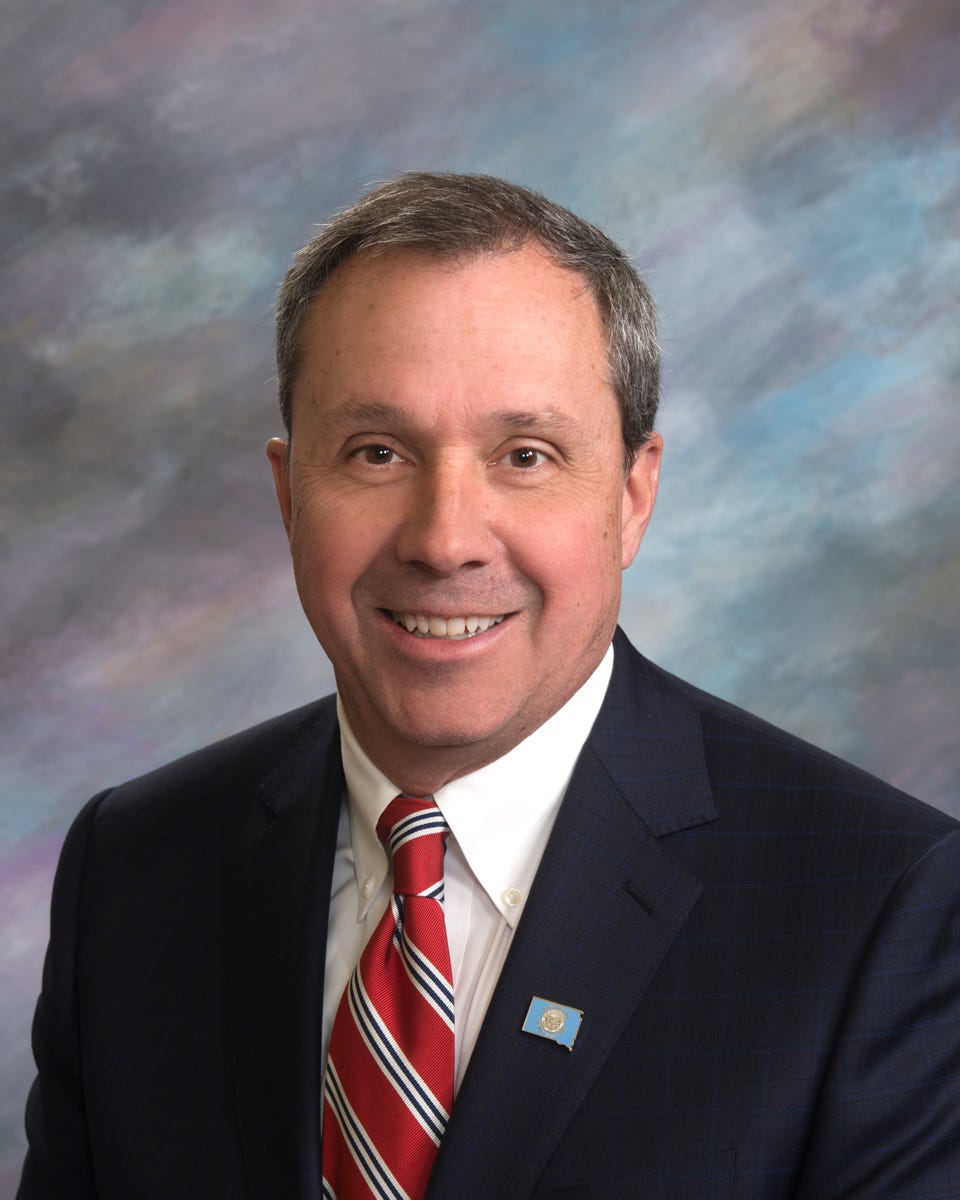
Representative Greg Jamison of South Dakota House District 12 joins Dave Roetman to discuss the recent prison vote in the special session and his work on property tax transparency. Jamison, who served on the prison reset task force, explains how concerns about spending, location and the number of beds shaped the vote, contrasting the final site with the earlier Southern Lincoln County proposal and a heated town hall in Worthing. He describes co-chairing a summer study on incarceration and re-entry with Senator Jensen, calls South Dakota’s recidivism picture a failure, and notes that Native Americans make up 40% of the prison population. On property taxes, he outlines a proposal to show taxpayers exactly where their money goes on their tax bills. He closes by discussing the move of city elections to June and whether to run for mayor again.
Topics: prison vote, special session, prison location, recidivism, re-entry programs, faith-based programs, Native American incarceration, property tax transparency, city elections, mayoral race
“Senator Jensen and I co-chaired a summer study. Essentially our Summer Study was ‘the initial incarceration re-entry analysis and comparison of relevant states’. We were on this discussion of recidivism, where to we sit, how does South Dakota do? And it is a terrible picture. We are not doing very well.” - Greg Jamison
Greg Jamison bills at the LRC (link)
Full transcript
About this transcript: It was machine-transcribed in-house and then edited for readability. Filler words and false starts are removed, and the meaning is unchanged. [?] marks a word or phrase we’re unsure of. Timestamps are approximate.
[00:00]
Dave Roetman: This is the Making Waves Podcast. My name is Dave Roetman. We’re here with Greg Jamison, District 12 House. Greg, welcome.
Greg Jamison: Welcome. Thank you. I appreciate it.
Dave Roetman: Absolutely. Well, there’s a lot to talk about. There’s the recent prison task force vote, the special session. Could you tell us a little bit about what your thoughts about the prison and the prison location?
Greg Jamison: Yeah, big deal, big vote, big topic of discussion for years and years in the making. So for me, my [inaudible] was on that task force reset committee. A lot of time, a lot of energy spent on that specifically. And we learned a lot along the way. I’ve become engulfed in prison discussions on all kinds of things. I’m on a summer study and then this new task force that the governor’s just doing, I’m on that task force too.
So it seems like all things are related to prisons. Inmates. So the vote though is interesting because there’s a lot of concerns about the spending, the location, how many prisoners, and all of that. And the location seemed to be one of the anchored items in this discussion that convinced people that they should vote for it. Reducing the amount down to 650 was another big issue and that was done a while ago but the location kind of came in at the last minute.
I had gone to one of the town hall meetings in Worthing and that was one of the locations getting in the circle of locations as a discussion point. We went to a gym that was full of angry people about the idea of it coming to their community and all the issues related to it. And this final location that we’ve selected and essentially purchased now for the prison doesn’t have that. There’s no gym full of angry neighbors.
And so the pathway to that created, for instance when we started this topic, it was down in Southern Lincoln County. And there was a lot of arguments about property rights and decisions about it and the way that Governor Noem had kind of unfolded that and we learned a lot. We don’t want to do that again. And we corrected some issues that were created, and the location just seemed to kind of be the final piece of the puzzle that made it work for a lot of legislators.
And today, when we’re here at the coffee shop, there’s not an angry mob of people saying, I can’t believe you’re putting that prison right there, right next to my house, or you’ve violated property rights or something like that. And so I think of all the pieces that was probably one of the bigger key pieces.
Dave Roetman: You mentioned being on the governor’s task force, on these task force with the legislature about prisons. Could you elaborate on that?
Greg Jamison: Right, part of the superheroes in this whole prison reset discussion was, we spend an enormous amount of time talking about the building itself, what it’s going to cost, how big should it be, where should it be. But most, and a lot of the public input that we received all wanted to talk about the rehabilitation programming for the inmates. And if we could solve that or fix that, we wouldn’t have to build a new prison, for instance.
Dave Roetman: I’ve heard a lot about that. People are very concerned about people being released and not being able to fit back into society, not having job skills and having recidivism rates that are very high.
Greg Jamison: Exactly. And so part of the deals that were made in the last minutes, I would tell you behind the scenes is that the governor and or somebody needs to address the ongoing programming approach to our existing prison system and to the new one. And so I had proposed a bill to hire a consultant to come in and do an evaluation of our existing system and give us ideas for the new one.
Well, and that kind of folded into discussion with the administration, and now they’ve put this task force together, which is great. The task force has far more resources and tools available to them than what I would do.
Dave Roetman: That’s a good political move. Very good so everybody’s buying. Yeah.
Greg Jamison: Yeah, and they figured it out, too, that a lot of legislators were like, wait a minute, you’re only talking about half of the issue. Half of the issue is the building, the other half is the programming for the people. What are you going to do there? I’m thankful that we’ve got this thing now set by the Governor and it’s really good. Our Senator Jensen and I had co-chaired a summer study and we were looking at the essentially our summer study was the initial incarceration re-entry analysis and comparison of relevant states.
And so we were kind of on this discussion of... And where do we sit? How does South Dakota do? And it is a terrible picture. We’re not doing very well. So we’re failing. So continuing this discussion along with the Governor’s Task Force is really going to be productive. Every legislator, I could bet you every legislator, every House member, Senate member, the administration are all on board with fixing what we’ve got going on.
[05:00]
Dave Roetman: In the long run, this will save us money. Well, that would be the hope.
Greg Jamison: Right? We stop that revolving door. Those individuals you and now maybe hopefully we can have a program that helps them, educates them, makes them more productive. One of the big key pieces of this direction we’re heading is trying to find faith-based programs to help these people. And so, one other interesting thing we have is that we have A fairly small population of Native Americans in our state, in all fairness. They make up 40% of our entire prison population, which kind of makes you wonder what’s going on.
This task force going forward is also going to specifically address Native Americans and how do we help them as a group.
Dave Roetman: Any other task forces that have been called or that you’re a part of?
Greg Jamison: Yeah, it’s been a busy summer. So the other task I’m on is the property tax task force. And we meet later at the end of the month here in Pierre, and it’s kind of our final meeting. So we’re wrapping up all of our ideas and discussions and proposals. And at the end of the day what we are tasked to do is present those ideas then to the executive board and to the legislature so then actions can be taken by the body if we’ll recommend it.
Like bringing bills. Like bringing bills, exactly. Asking for more money for this or that to dig deeper, but more than likely what you’ll see is a dozen or so bills come out of the committee and get proposed.
Dave Roetman: This has been an ongoing issue of property taxes in South Dakota. Yeah.
Greg Jamison: Yeah. And that’s been our struggle, honestly. Dave, the challenge has been, this topic has been discussed for decades. And we’re all on this task force trying to find a silver bullet to fix it. Because it would be great if you could come out of this and say, hey, I got it, I got it, I found it. Here’s our ticket. It just has been difficult, and without a new revenue source, it turns into how can we cut spending by these local governments who are taxing districts to lower our taxes, effectively.
Because each of them could be cut a small portion or, everybody’s got a little fat to trim. But in order to get to the number where we really would feel an impact, they’d have to cut their spending by half. And that means then that half of everything they’re spending is wasteful. That’s hard to determine and figure out. And so it’s been a challenge to find the best fix. I mean, there’ll be some ideas about a new tax.
There’ll be other ideas here and there, but it’s been a challenge.
Dave Roetman: Well, nobody wants an income tax. Right. Do you have any ideas for what you’d like to bring for a bill, maybe?
Greg Jamison: Yeah, so I’ve got about really six or so. They’re really tweaking current laws, so don’t look for a brand new law, essentially, except for... But what I’m after is building a lot of transparency in the process. What I learned during our public input discussions at these task force meetings was a lot of people don’t know where their property tax money is getting spent. They just know they don’t like it. It’s too much.
It’s too high. What I’ve been working on is building a transparency piece which will allow local taxing districts to build trust amongst the payers. So imagine you and I, our tax bill comes and we can figure out exactly where that money is getting spent.
Dave Roetman: That’s a really good point. You have school districts and you also have counties that are all getting, don’t miss, also take a little bit of the property taxes. So we don’t know where exactly it’s going.
Greg Jamison: Right, what they do is they tell you a total of each taxing and collecting. But where does it go after that? What does it pay for? The whole principle behind the property tax versus the sales tax is kind of a steady taxing level to pay for items that are operated either by the city, county, or school that are essential services. So imagine the sheriff department in the county relies on property taxes collected within the county to pay for the sheriff and it’s predictable generally and they can determine what is going to be in the future so they can plan for it and the idea of A sales tax approach, for instance, which may ebb and flow with the economy, property taxes level.
Now if you knew as a resident of the county that the dollars that you are getting taxed on, or paying, are paying for the sheriff, You might feel a little more confident that the county knows what they’re doing and what they’re spending their money on.
[10:00]
Same with the city, same with the school. So building some of that transparency would, I think, build trust in government and expectations that if I’m a taxpayer, I know where my money is getting spent. And if I don’t like it, I can go to that body and say, hey, I don’t appreciate you spending all this money on a sheriff, for instance. It’s just clear. Clearing that piece up is a part of some of my legislation.
So that would be on your tax bill.
Dave Roetman: Then you know exactly where it goes because there’s all kinds of complicated things or equalization boards that do a lot of work on how much to raise the levees.
Greg Jamison: Right so one of the proposals of a bill that I have is that the money that say let’s just say the city collects. The municipality collects a certain amount of money. They have to put it into a certain account that’s labeled property taxes. So in their budgeting process, it’s trackable. So you could then look at the city and say, well, where did you spend all your property tax dollars? In their budgeting system, it would be identified that they spent it on police officers.
They spent it on snow removal, road repair. And if you saw something like lifeguards at the pool, you might say, wait a minute, I don’t want to be paying that. I shouldn’t be paying that. But essentially the idea is that it’s transparent. You can see exactly where they’re spending it. And they have to track it in such a way that we can see it. And that should, hopefully, build confidence in what they’re doing with the money.
May I make a suggestion?
Dave Roetman: Yes, please. Opt-outs. Put those on there, too, so we know exactly what the opt-outs are and what your bill would have been with the opt-outs or without the opt-outs.
Greg Jamison: Right. So one of the other ideas, Dave, that I’m kind of energized about is, these QR codes are pretty popular these days. And so on your tax bill, requiring the county to include a QR code that then goes to the state’s central website essentially and from there you can enter your address and determine exactly on your address who’s taxing you and for what reasons and you can see it all. So hopefully that sequence will be a lot easier for people to get right to the bottom of it.
The state’s kind of already there, but so just some simple pieces like that I think are going to be... That’d be cheap and easy. Cheap and easy. It’s no silver bullet like a replacement fund to lower people’s property taxes, but I think if we can start with some clarity on what that money is getting spent for, then we can start to find maybe places it shouldn’t be.
Dave Roetman: I’ve said this many times, transparencies for government, privacies for individuals. So this is a great idea. What other bills do you are planning on bringing this next legislative session?
Greg Jamison: Yeah, there’s one specifically that I’m working on. It’s been a little bit of a challenge. It’s been proposed in the past. And it’s really probably a great example of local control. And so the concept is that if a municipality, county wants to raise money for projects within their community or county, that they can put to a vote of the public. Whether or not to increase a tax, essentially, put a tax on them.
So there’s language we’re working on. I kind of call it the perfect bill because the voters have to decide to allow the governing body to put the tax on them. They have to identify specific projects that they want to fund. And they have a certain window of time that they can do it. The city has to do it in. There’s an idea that I’m working through to bring that through into the legislature.
Dave Roetman: Well, I’m not necessarily opposed to something like that. I’m from Iowa and that’s what they do, is that they do a special assessments. But I do not like the idea of taxes going up with a special election, as long as it’s on the regular ballot. I think that’s fine. That’s right there. That’s a good point.
Greg Jamison: I hadn’t picked a time for these kinds of elections. They probably would have been, you’re right, a special. So that’s a good, that’s good. Just throwing that out there. No, see, I’m all ears and, in the past what’s been a problem is... The tax committee and the legislature when it comes to their committee they say geez this is just going to be an ongoing tax you’re going to vote for it and then you’ll just keep it there’s a sunset clause within this provision to stop that from happening And then that’s good kind of a cool-off period to a gap that has to occur so it can’t be a continuous tax but that’s a pretty good point because you know we just changed the law to require school boards cities to hold their elections on that June date or November date in order to not have a special election, in order to help improve voter turnout.
[15:00]
Right, voter participation.
Dave Roetman: People pay a lot more attention when it comes to the general election time as opposed to the middle of a month that they normally don’t vote. Exactly. Greg, do you have any final thoughts?
Greg Jamison: Final thoughts by Greg Jamison, yeah. Well first off, thank you for having me. It’s kind of fun to always talk with you about policies and politics. It’s an election cycle coming up. A lot of campaigns, a lot of people, you shoot [?] the governor, everybody, legislators, the mayor’s race, city council. It’s just full of campaigning and I’m trying to make a final decision in my own future. An interesting change that’s occurred for city elections is to have their election in June, which is going to be tremendously different than any time in the past.
It’s going to be an opportunity to have a high voter turnout. The school boards are going to have to be making their own changes as well. And so you’ll see a significant change in how those boards are elected, city council members and even the mayor. So I’m just kind of trying to encourage anybody else who’s thinking about running, in some sense, Charlie Kirk’s murder. Has inspired a lot of people to become involved and to pick up and take the torch and move forward.
There’s a lot of serious heavy things going on in our politics in our country. Shoot, you watch Fox News and it’s unrest everywhere. Where somebody’s arguing, senators arguing with representatives in the capitol building. There’s just a lot of unrest right now. But the work is important. It’s serious. The economy is soft, there’s going to be challenges ahead, but I just want to be encouraging to others to get involved, participate in it, because it’s worth it.
It really is, at the end of the day, it’s worth it. There’s so many great people you get to meet along the way. For me, it’s been so rewarding, all the legislators I’ve met across the state. And all the challenges I’ve seen and friends that made. It’s just been good. So I just hope people get involved and participate in this. It’s important. My own political future is a little up in the air right now.
I’ve been, I tell you, I’ve run for mayor twice and lost. The idea of considering that again is difficult. Personally it’s a heavy lift but there’s so much that needs to be done. There’s so much missing right now that we could be doing that we’re not and I feel like if I don’t get involved in that I’m leaving it not as well as I should and I can help and I can be a part of that so I’m really torn on this idea of running for mayor again.
I just can’t quit though. I mean maybe I haven’t gotten the message clear but.... I guess if I should run and lose, that’s just the way it is. Life goes on. But if I should win, I think there’s a great opportunity to do great things for the city and help. And so I’m just a little torn right there. So I look for some decisions to come shortly, but that’s my final thoughts.
Dave Roetman: Greg, that was inspiring. Wow. Thank you for being with us. Thank you. This has been the Making Waves podcast. My name is Dave Roetman. We’ve been here with Greg Jamison former city councilor and current legislature district 12 house.