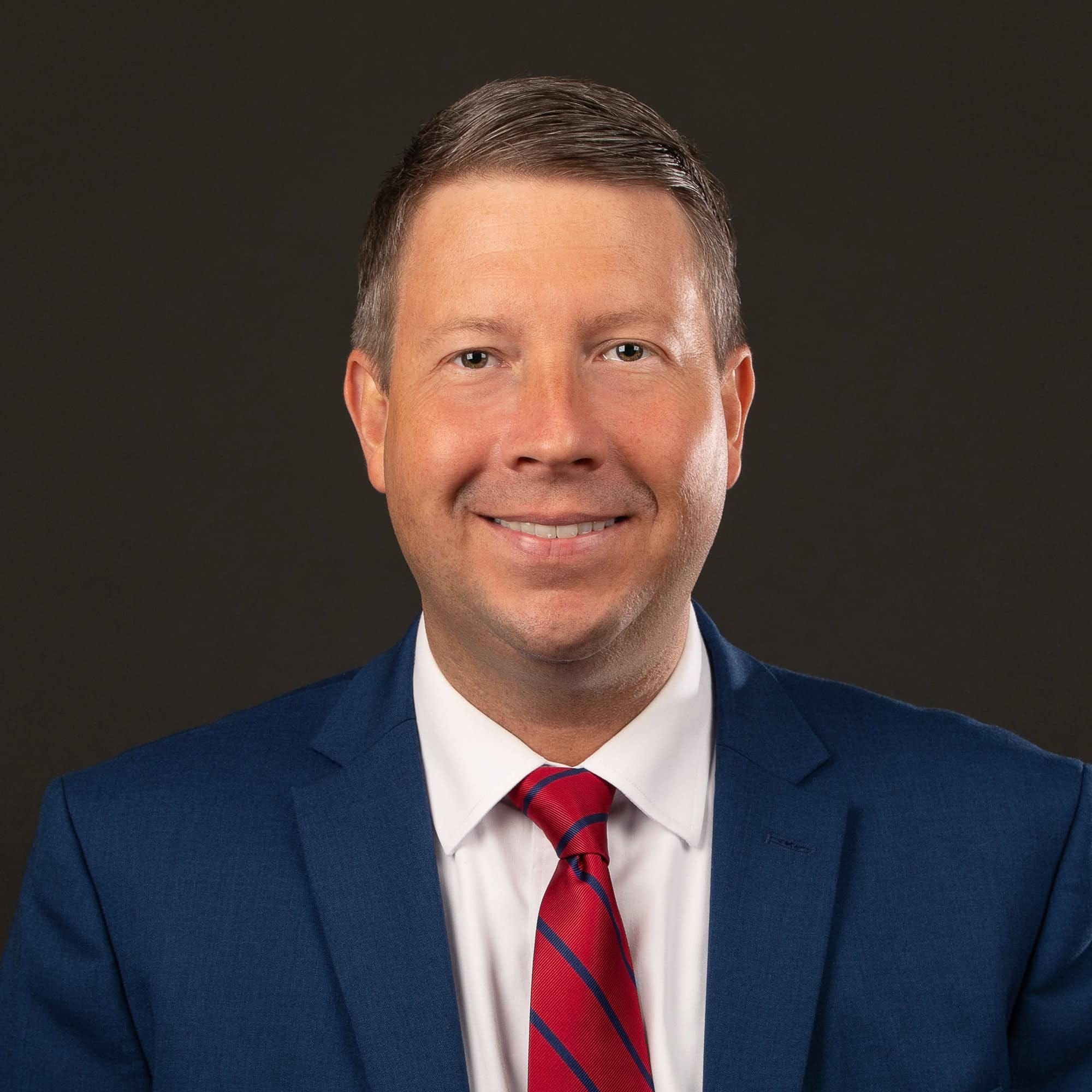
Jonathan Williams, President and Chief Economist of the American Legislative Exchange Council (ALEC), joins Dave Roetman from Washington, D.C., to explain what ALEC does. Williams describes ALEC, founded in 1973 by conservative state legislators, as a nonpartisan nonprofit devoted to limited government, free markets and federalism, offering more than 1,000 model policies and research for part-time legislators. He notes that South Dakota ranked 8th for economic outlook in the 2025 Rich States, Poor States report he co-authors with Art Laffer and Steve Moore, after ranking second about 20 years ago. He discusses ALEC’s truth in taxation model for property tax transparency, affordable and reliable energy, housing costs, deregulation under Governor Glenn Youngkin, and health care price transparency, and urges Americans to reread the founding documents during the nation’s 250th year.
Topics: ALEC, federalism, model legislation, Rich States Poor States, economic outlook rankings, property tax transparency, truth in taxation, energy policy, housing affordability, deregulation, health care price transparency, America 250
“What we are trying to do is really shine a light on who drives property taxes - and that is local government and their spending decisions, and then how do we address that from the state level to put the onus and the - not only transparency - but accountability on local elected officials to be honest with the taxpayers.” - Jonathan Williams
ALEC - American Legislative Exchange Council link.
Rich States, Poor States - South Dakota ranks 8th, falling from 2nd.
ALEC Essential Policy Solutions for 2026 - “One of our top tier solutions is our ALEC truth in taxation model policy around 'how do you bring real transparency to property taxes?’”- Jonathan Williams
Full transcript
About this transcript: It was machine-transcribed in-house and then edited for readability. Filler words and false starts are removed, and the meaning is unchanged. Timestamps are approximate.
[00:00]
Dave Roetman: This is the Making Waves Podcast. My name is Dave Roetman. We’re here with Jonathan Williams, President and Chief Economist of ALEC. Welcome.
Jonathan Williams: Well, thanks Dave. I appreciate the invitation and greetings here from Washington, D.C.
Dave Roetman: Well, thank you so much for being on. Let’s get right into it. Could you explain to me what ALEC is and what you do?
Jonathan Williams: Well, ALEC is a great organization. I’ve had the pleasure of working for now nearly 19 years, but ALEC has been around as an organization since 1973. So more than 50 years ago, it was founded by a small group of conservative state legislators, mostly from the Midwest, interestingly enough, at a hotel outside of Chicago’s O’Hare Airport. And the idea was that ALEC would be founded to come together with best practices and educational resources for America’s state legislators as an organization that would be devoted to really the guiding American principles of limited government, free markets, and federalism.
That not all good ideas ought to come from Washington, D.C., they ought to come from the states. And so that was really a revolutionary concept for an organization, a devoted conservative resource for America’s state legislators. Back when so many people were paying way too much attention to Washington, D.C., as they still are in my view, so much of the positive change that’s happening. Is happening at the state and the local level.
And of course, that’s ALEC’s bread and butter still to this day, 50 years later, providing those nonpartisan but conservative free market resources for America’s state legislators.
Dave Roetman: That seems to make a lot of sense to me because the United States is a federation. We have a federal form of government and it’s supposed to be the states that are sovereign and the federal government is supposed to bind us all but it’s supposed to be the laboratory of democracy at the state level.
Jonathan Williams: Well, that’s right. And it’s a great point that gets lost far too often. And you ask a man on the street interview, and this is a common frustration, not only for me, but many of our state legislators. If you put a microphone in somebody’s face, as Jesse Watters often does on Fox, and ask American from the street, what does federalism mean to you? People generally have this clueless expression on their face, or they’ll come back even worse with the idea that federalism means more federal control of something.
When of course when you read the founding documents in a year such as this with America celebrating our 250th birthday, I think it’s incumbent on all of us to go back and reread those founding documents, the Declaration, the Constitution. And then of course to the Bill of Rights of the Constitution gets directly to this point in the 10th Amendment, which was those things not given to the federal government should be reserved for the states and the people of the states.
And that of course is the founders idea of federalism. And the great Ronald Reagan reminds us often that the federal government did not create the state. The states created the federal government and if there’s one thing that we need to think just challenge people’s people. I think the clear answer to that is we need more decisions being made in the 50 state capitals and far fewer decisions being made here in Washington DC.
One of the big enemies of course we have in that fight is the mainstream media. The corporate media in DC and New York loves to just have this moment of the soap opera that they like to cover. They’re more interested in what Chuck Schumer or Donald Trump has for lunch on a given day than they are about the real issues that are making a difference in people’s lives that are changing every single day because of the actions of America’s state legislators.
Dave Roetman: State legislators oftentimes, and especially in South Dakota, because it’s not a full-time state legislature, they’re really citizen legislators. And oftentimes they don’t know what they’re getting into when they get into the legislative body. What kind of services, you mentioned a couple of them, you provide model legislation, you provide education, what kind of things does ALEC do specifically for the state legislators?
Jonathan Williams: Well, and that’s really why ALEC was founded is to provide those kind of resources for state legislators, whether it’s the model policy that we have more than 1000 pieces of model legislation on our website at ALEC.org that are available for not just legislators, but for concerned citizens looking for solutions to different challenges, maybe it’s property taxes, maybe it’s energy costs, maybe it’s health care costs, looking at affordability issues across the board.
[05:00]
That’s what ALEC was founded to do, is come up with these solutions on a non-partisan basis that are based in principle. And so certainly that’s one element. But then another great element is just the pure research and analysis and educational mission as an organization. We’re a non-partisan, non-profit organization. We’re a 501c3. And our mission is to educate. And one of the things that we can do is we have a small but mighty team covering 50 states.
We’ve got about 35 to 40 full-time staffers here in our Washington, D.C. Office. But every single day, we get calls from state legislators. And other concerned folks from around the country, just to ask us to provide background research on things. What are the best practices around what makes states grow? Why are some states gaining and some states losing? It’s a big question we answer every year at our annual report, Rich States, Poor States, that I co-author with Art Laffer and Steve Moore.
I know we can probably talk more about that as we go. That’s a great question. I was just giving a talk a few weeks ago out in Omaha, Nebraska, to a group of civic business leaders and legislators from that state, looking to figure out why is it that Nebraska is losing people to the other 49 states? Why are Americans voting with their feet away from Nebraska and going to other states? South Dakota has been an in-migration state, which is a very positive piece and not having a personal income tax and corporate income tax is a big reason why.
But those are just an example of the kind of questions we get asked to go into the research and analysis and find for state legislators. Another thing that commonly legislators will ask us, and you mentioned the legislators in Pierre being part-time, not having robust staff like a lot of Americans just think that members of Congress have these big staffs. State legislators must be the same way. That’s very much not the case as people in Pierre and other state capitals will tell you.
And so when legislators call us up, they’ll say, all right, I have an idea. Here’s a bill that a constituent brought an idea to me. I’m looking to solve this concern. How many other states have done this and start to do an analysis of what other states have passed that particular issue, what others considered, maybe what are some of the best practices, or what some of the issues that they’ve had, or they considered those issues in the past.
So we really like to see ourselves as a one-stop shop for any state legislator that cares about issues across the board, and especially those that come from a perspective that are free market, limited government, and federalism based.
Dave Roetman: You mentioned South Dakota being an in-migration state, and honestly, historically, my understanding is that’s unusual. Back in the day, a lot of people leave South Dakota for greener pastures. California used to be the Golden State, not so much anymore. But how does South Dakota now rank as far as economic freedom goes?
Jonathan Williams: Well, when you look at, first, the migration piece, migration tells you a lot is, for now, for nearly 20 years, I’ve been writing this rich states, poor states report. And, there’s lots of different ways to slice and dice, why some states are growing and how you use the metrics around to show growth versus lack of growth. One thing that’s really hard to escape, though, over a long period of time. If you’re a state that offers economic opportunity, if you’re a state that has jobs there for folks, at all levels, whether it’s, postgraduate level graduates or even just non-college graduates coming out looking for opportunities across the board, if states have economic opportunities, they’re going to be attracting more people.
And that’s one of the big things when you look at population. There’s different ways to slice and dice it. But what we look at is that net domestic migration piece, which takes out birth rates and death rates. It takes out international immigration and just focuses once Americans are here in the United States, where are they going from state to state? Just this last week. We saw the new U-Haul index come out from just the inbound and the outbound purchases of U-Hauls as they’re tracking it from state to state.
It’s another way of looking at what we look at. It’s very difficult over a long period of time for states that have a lack of economic opportunity to keep people in their state. California is a prime example. You mentioned the formerly Golden State was a boom state should be just bursting at the seams with opportunity and people looking to come in and yet they’re hemorrhaging people to other states when you look at the states that value economic freedom and then as a result have more economic opportunity like south dakota and other no income tax states they’re generally in migration states so when you look at the overall record for South Dakota, top 10 in economic outlook in rich states, poor states coming in at 8th in 2025.
So that’s a lot to celebrate being top 10 state.
[10:00]
But I think as you and I would agree, Dave, you can do better than that as being a no income tax state on personal and corporate. There’s lots of big things that you have going for you as a state and it should be mentioned. And looking back now nearly 20 years, South Dakota started out as the second best economic outlook state in the country back about 20 years ago. And so you can fall behind by standing still in some cases, because there’s a lot of states that are looking at the success stories of the no income tax states.
They’re looking to be more like that. And so it’s very easy to fall behind, even if you’re not doing anything wrong per se. Yeah, we can do better.
Dave Roetman: What projects are you working on? I understand that transparency in government is one of the major issues all over the country. What does that look like in South Dakota?
Jonathan Williams: Well, it sure is. Transparency in government, the affordability topics across the board, and kind of tying those two things together, you get, I think, as I travel to 50 states, I’m usually in about 30, 35 states a year. And now for the last couple of years, I ask legislators, what is the biggest problem that you’re hearing about from your constituents? Almost to a person. The number one issue we hear is the lack of affordability when it comes to housing and property taxes driving that lack of affordability.
You saw it in South Dakota. You and I met a number of weeks ago when we were talking about property tax solutions potentially for South Dakota when it comes to more transparency around what drives property taxes. I think that’s a key area that we’re going to be focusing on once again, and something that you may want to share in your show notes is our ALEC policy solutions for 2026, which we just released a few weeks ago.
One of our top tier solutions is our ALEC truth and taxation model policy around how do you bring real transparency to property taxes? Story of mine. You heard me tell it there when I was in Sioux Falls a number of weeks ago but here in Northern Virginia where I live we have a pretty liberal County in Fairfax County where I am. They were patting themselves on the back giving themselves pay increases this last year and saying we held the line on property taxes and we didn’t raise property taxes this year you should congratulate Well, fast forward a few weeks and I get my property tax bill in the mail and sure enough, I’m paying $700 more this year in property taxes than I was paying last year.
How does that work if they’re telling us that they didn’t raise property taxes? And this gets to the heart of the problem and why we need transparency to address the property tax issue is that there’s two very distinct parts to property taxes across the country. And one thing is really important to point out when it comes to property taxes is who’s driving property taxes. It’s not the state government that drives property taxes.
It’s local governments that drive property taxes based on their spending decisions. So where I am, they decided to spend a lot more money than they had before. And what their little sleight of hand was here in Fairfax County, which happens across counties, untold cities and counties across the country, is the two parts of property taxes are the rate essentially, and the assessment. And what happens is, is they were being partially true.
Give them probably more credit than they deserve that they didn’t raise our property tax rate based on our valuations but what they did was assessments went up throughout the county they didn’t reduce the rate and they pocketed the difference and just basically had a greedy government scenario where they wanted to get all that difference and then look at us straight in the face and pretty much lie to us and say they didn’t raise our property taxes.
Meanwhile, people are getting less and less take-home pay after they paid their property taxes. And so what we’re trying to do is really shine a light on who drives property taxes, and that’s local governments and their spending decisions, and then how do we address that from the state level to put the onus and the not only transparency but accountability on local elected officials to be honest with the taxpayers to say, what is driving those property tax burdens?
What is making housing unaffordable? And in the case of South Dakota, what is one of the biggest barriers for attracting even more residents to come into your state? And that is the cost of housing and property taxes.
Dave Roetman: Well, that’s a fair point. I know that my property taxes have skyrocketed in the past few years. And again, it’s the assessments that’s going up. I tell folks that maybe they should show up at the equalization board meeting if they want that to stop going up so much. But what other issues do you see statewide and statewide but nationwide at the state level?
Jonathan Williams: Well, I think there’s one of the other big issues that we just see every single day across the country is the need for more affordable, reliable energy. That’s something that is state by state, whether you’re talking about data centers and AI and the need for demand for especially electricity going through the in recent years to some of the more liberal states, frankly, that have put up barriers to energy, whether it’s following this radical ESG agenda to try to really have a choke point on new funding going to more reliable and affordable types of energy, like anything fossil fuel based or even kind of the left wing hatred of nuclear.
[15:00]
And. Or other things that could provide us with that affordable, reliable energy that we need. We have an entire task force here at ALEC devoted to energy, environment, and agriculture issues. And so tons of new ideas coming from ALEC on that perspective. But I think the basic level is that we must control costs. We have to increase supply. And you know, it’s not just a domestic concern. I think this is a really a national security challenge and a pacing challenge to our competitors in China and other places that you know, America does need that affordable, reliable energy and we need to be able to produce it here in the United States.
And whether that is meaning more oil and gas exploration, I know that administration. I’ve had a chance to meet with Secretary Wright and Secretary Burgum, of course, a North Dakota native himself, just north. But that is the approach is how can we radically expand the footprint of affordable, reliable energy as a nation? And that’s, a federal issue to some degree, but state policymakers have a lot that they can potentially do to remove barriers, whether they’re regulatory barriers, or to enhance and encourage more supply generation.
And so I think we have our hands full as a nation to really come and meet this challenge head on and make sure that we’re doing our best to really put our best foot forward on producing that reliable, affordable energy that we need.
Dave Roetman: Yeah, that’s a critical issue. People are... Spoiled that we’ve had really reliable energy for many, many years. And that’s not necessarily the case anymore. We have a very fragile infrastructure for our air energy. And not too long ago, we had that big brownout, started in Texas, and then it just folded up north. And a lot of that has to do with the backup power plants that are gone. Federal policy back in the Obama administration.
Hometown of Rock Rapids used to have a backup coal power plant. The idea was here is if they had some sort of power shortage or the ice storm took down the power lines again they would have a backup plant for the town. And the feds made them sell it and it was packed up and shipped to China and there’s no backup power plant in my hometown anymore. Thousands of small towns that happened to.
And so we saw the effect when you had that brownout several years ago? I think it’s a great point. I mean, it’s really started.
Jonathan Williams: With Operation Choke Point during the Obama administration, certainly then the ESG agenda where you had a confluence of some big corporate players like BlackRock and others that were putting pressure on investors to not invest in affordable, reliable energy sources. And you have the issue of the forced retirements of some of these coal and oil generation, even nuclear facilities that still had many years left of use. But then we’re being retired early, whether it was the pressure put on the companies and utilities to do that, or whether it was government regulation.
And now we’ve gotten to a place, Dave, though, that we’ve come full circle, where back home in my home state of Michigan, we’re putting the Palisades facility back online, which was a nuclear facility. It’s going to take them years to take it out of mothballs and put it online at the cost of I think a billion plus, but it’s still worthwhile because we need that affordable, reliable energy. Another great example, which is a real...
Head scratcher for many, but I think it was Microsoft decided to put one of the reactors back at Three Mile Island back online. Even after the failed design of its sister reactor there, the one that they have decided to put back online there at Three Mile Island has been, I think, deemed as being safe to do. Companies are going to that extent to put nuclear back online that had been taken offline.
I think it shows the scope of the issues that we really need to address.
Dave Roetman: Inexpensive, affordable energy is really important, especially for economic development, but also just for working class people. Really expensive energy hurts the poor the worst because they can’t get the jobs, they have more difficulty heating their homes. So it really is important for all of society, especially people with lower incomes, to have inexpensive and affordable energy.
Jonathan Williams: Well, no doubt. And same thing with property taxes. It hits people with fixed income some of the hardest. You hear these horror stories about widows being taxed out of their homes that they had been in for 50 or 60 years and they’re living on a fixed income and can’t keep up with these massive assessments that are being levied. So I mean, yeah, some of these big government policies and high taxes and regulatory issues being promoted by those that like to talk a good game of supporting the middle class or the poor, but we’re seeing the results being exactly the opposite of that.
[20:00]
Dave Roetman: Are there any other issues you’d like to discuss about nationwide, what’s happening at the state level?
Jonathan Williams: Well, we addressed housing with property taxes, but there’s some other pieces there. Even Massachusetts, there was a great piece in the Wall Street Journal this week. There’s an initiative to put a statewide rent control law into place if voters end up passing that this year in Massachusetts. That never works. Solution to a problem that makes the problem much worse and leads to more shortages and fewer housing availabilities for renters. It is kind of a moment of sanity.
There are otherwise very liberal Democrat governor there in Massachusetts came out and spoke against that initiative to say history teaches us that rent controlled doesn’t work. And so that was a nice bipartisan, I think, piece to say, hey, that’s one solution that shouldn’t be on the table. But what needs to be on the table and what the governor alluded to in Massachusetts is this is clearly a supply side shortage. We need more housing startups.
We need probably to reevaluate the zoning rules and regulations around existing housing to allow families to add on to housing more easily to allow for in-law suites or allow for expansion where needed where there’s more capacity. But also another thing a lot of people forget about is the issue of deregulation and how that can bring more housing affordability. One great example here in Virginia where our outgoing governor unfortunately is be replaced by a pretty progressive new governor here but Glenn Youngkin did a great job over the last four years and one of the I think crowning jewels of his four-year term is the way that he embraced deregulation and across the board really and he gave agencies a goal I think it was a 30% reduction in rules and regulation over that period of time.
And I think they hit that goal by the end of the Youngkin administration boosted by AI and looking for duplicative rules and regulations and just burden for some things that need to be reevaluated. And one thing is it relates to this housing cost issue that really did surprise me and probably will surprise your listeners as well. I think the average savings now on new housing start in Virginia is going to cost now on average $25,000 less in Virginia to build a new home because of that regulatory relief that was provided by Governor Youngkin.
That’s not something you think about a lot, but regulations do add a significant amount to the cost of new construction. And if we’re going to talk about That’s exactly something we need to talk about nationwide. So that’s a big area we’re going to be talking about. And then I think another area, which could end up being the number one issue going into the 2026 midterms, and that is health care costs, right?
You see a ton of discussion right now about the enhanced Obamacare subsidies. That’s a huge issues still ongoing here in Washington, D.C. You’ve got the discussions around what happens with Medicaid. That’s obviously a program that is shared between the federal government and mostly managed by the states, although paid for by the federal government. How do states navigate that and how do we make sure that we reevaluate health care broadly to make it more patient-centered?
I think that’s the key, is I think we have a real inflection point as a country. Clearly the system that we have under Obamacare, the so-called Affordable Care Act, is anything but affordable. It’s reduced the amount of doctors practicing. It’s forced us to change insurances. We’ve seen, those premiums skyrocket. So I think there’s an inflection point whether, the progressives get their way people like Mr. Mamdani in New York City and Bernie Sanders and AOC that would like to go full single payer government run health care.
So you can have your health care more akin to your visit to the DMV to get your driver’s license, versus a patient centric free market health care that really empowers people with price, the signals and allows them to economize and choose the best health care options for themselves. I think You know, essentially, whether it’s federally or at the state level, that’s a big issue. Clearly, it’s not going to be solved overnight, but it’s something that we are seeing more and more conservative legislators want to reevaluate the way that we provide health care in this country.
Dave Roetman: Both of those issues are important in South Dakota. The start-up homes in South Dakota, starter homes for young couples or single individuals, they’re almost unaffordable now. A lot of real estate agents I’ve talked to have mentioned that. How can we get more affordable homes for people just starting out and building in some equity? Otherwise, they’re stuck in apartments and not gaining any equity.
[25:00]
Major hospitals in South Dakota and we do need some sort of issue, deal with the issue of the affordability especially of insurance. It’s a major issue for everyone.
Jonathan Williams: Well two things based on that is on the housing piece something that really did surprise me when you go and look at it and it’s pretty much the case in a lot of the markets around the country is now when you look at your monthly payment which is obviously how most people think about the affordability of housing instead of the overall cost and what can you actually make work on a monthly budget as a family.
Now when you look at a lot of the areas around the country, the portion of that monthly payment that is taxes and insurance is more than the actual principal and interest of your mortgage. So that tells you where the cost drivers are in a lot of the places. And you know, homeowners insurance absolutely needs to come down. There’s lots of things that state lawmakers can do. To reduce the cost of that insurance.
I mean one of the things that they’ve just done I think effectively whether it’s homeowners insurance and the car insurance in Florida is because of tort reform and addressing the legal climate and the costs on litigation for instance that drives up insurance costs dramatically they’ve been able to begin to bring down insurance costs where Florida was out of control as you read there probably nationally in recent years and especially with hurricanes and some of the things that they have to deal with in Florida.
But because of the tort reforms enacted by the legislature and signed into law by Governor DeSantis, they’re beginning to see insurance costs not go up like the rest of the country but actually go down. So I think there’s something really important to be said of that issue set. The other thing on healthcare, back on that issue, one of the things that really does shock a lot of people, but anybody that has gone through medical procedures acutely realizes this, is there’s really not a market for healthcare for individuals.
Because when you go and get a service done, many times it’s the insurance that’s being billed instead of you having a skin in the game necessarily and paying directly for it. But the other thing that’s really challenging whether you’re in the hospital or you’re doing something outpatient is you have no idea what anything costs and if you’re going to do a testing diagnostic procedure with a CAT scan MRI or even an ultrasound You know chances are that the price in the hospital could be three or four or five or ten times higher than the price at a facility maybe a mile or two down the road, but unless people have the information and price signals, it’s very difficult for people to actually find the more efficient option to provide more affordable healthcare for themselves or their family.
So one of the things that we at ALEC have been working on, and it’s a great bipartisan success story where we’ve seen successes in Colorado and Virginia on the Democrat side. But also in Ohio and Oklahoma on the Republican side, is really having price transparency when it comes to healthcare prices and hospital prices. Hospitals fight this tooth and nail a lot of times. They don’t want to have that new requirement to put out prices, kind of as you would see on a menu at a restaurant or somewhere else.
But at the end of the day, when you look at and think about markets, it’s impossible to have a functioning market with something unless you have price signals, right? That’s kind of the basics of economics 101. And if we don’t give people the chance to take ownership over their own healthcare, I don’t think we’re going to have a chance at bringing more individualized health options for people. And we’re going to end up, unfortunately, if we don’t succeed at this, we’re going to go that single.
Payer route nationally that Bernie Sanders and AOC want to go. And I think when we look at how it’s played out in the UK or Canada or other countries that have gone down that route, that’s not something that we as Americans should certainly want to go. No, I don’t want the NHS or Canadian.
Dave Roetman: Healthcare system. Canadians come to the United States for their healthcare because they can’t get it there. Yeah. Yeah.
Jonathan Williams: Bingo, that’s right.
Dave Roetman: Well, this has been fascinating and thank you so much for sharing your insights on this. Do you have any final thoughts?
Jonathan Williams: Well, I think, we’ve got a remarkable opportunity to continue to make a difference, whether the mainstream media pays any attention to what’s happening at the state level or not, whether it’s economic freedom and states cutting taxes, removing regulations, whether it’s health care transparency, property taxes and housing costs, or just this really incredible moment that we all have to shine the spotlight on our American founding at 250 years as a country on July 4th 2026 we saw early celebrations of it here just this week at the Washington Monument here in Washington DC with what President Trump was able to do but I think you know taking this moment to really as a nation now read learn those basic lessons of, why was it that we were founded the way we were?
Why is our Constitution so unique and our Declaration so unique? What did they want that was different in America? And it was decentralized control was a key theme of that. And how do we make sure that we continue to educate not only our state policymakers are well versed in this, but concerns citizens all across the country of those things that make America great.
[30:00]
And one of those things is decisions should not all be made here in Washington, D.C. They need to continue to be made by the innovators, the laboratories of a democracy in the 50 states. If we don’t tell that message in this, I think, really moment of this year of 250, shame on us. But we at ALEC are going to continue to tell that story and we’re really excited to continue as an organization 53 plus years in now providing those resources for America’s state legislators.
Dave Roetman: Inspiring stuff.
Jonathan Williams: Thank you so much. Well, we think so, but thank you for the opportunity to talk about it today.
Dave Roetman: Thank you so much. This has been the Making Waves podcast. My name is Dave Roetman. We’ve been here with Jonathan Williams, president and chief economist of ALEC.