Do you recall learning Grammar? Maybe in third grade you learned that a complete sentence has a subject and verb. But by high school, you learned about those participles, subordinate clauses, sentence diagrams that stretched halfway across the page—and you thought you’d never graduate.
Over the last several weeks, I have been contemplating contentment in a similar way. Just when I think I have learned contentment, a new level comes my way and I realize I still have so much more to learn.
(Welcome back, dear reader — I took the month of May off from writing to focus my time on completing our Christian school’s yearbook. I had every intention of jumping right back in, but I have been struggling a bit with writer’s block. I’d like to thank a friend, Sarah Ortiz, for beginning her own Substack, and for her first post on contentment. She had no idea that topic has been the focus of my personal quiet time recently, and her post spurred me on. Iron sharpeneth iron, and I am thankful to finally have clarity on just what to share with you.)
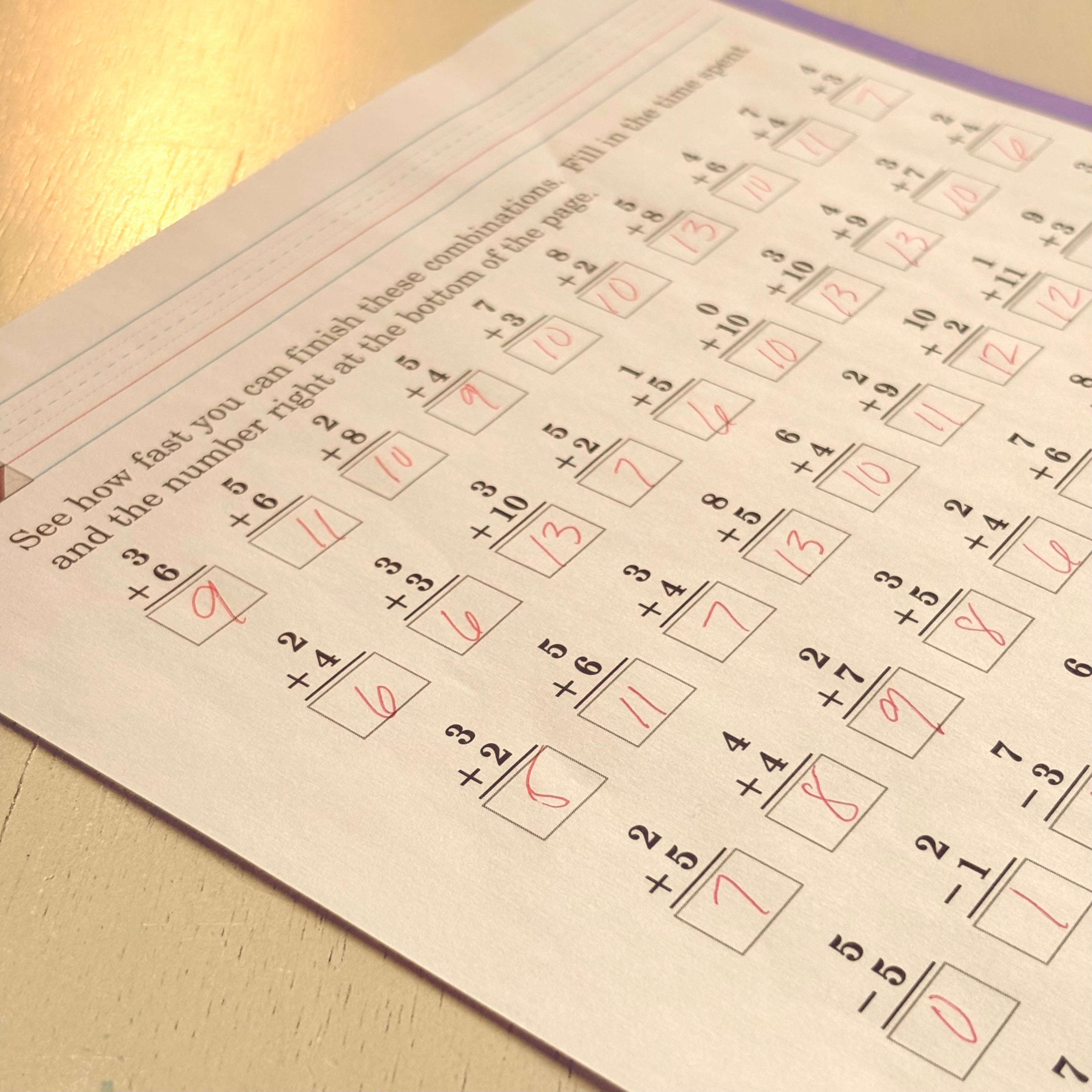
Some lessons that we learned in elementary school have stuck with us. Knowing that a sentence needs a subject and verb; learning that two plus two equals four; perhaps even most of the multiplication tables became so repetitive and familiar to us that we can recall them instantly.
But ask me a harder question...say, who was president after James Garfield...and I will have a more difficult time answering.
Not that I speak in respect of want: for I have learned, in whatsoever state I am, therewith to be content. —Philippians 4:11
I have often read that verse thinking that contentment was something that could be learned in the sense of mastery. At some point, won’t contentment become second nature to me, like two plus two? But as I have discovered, contentment has advanced courses.
Discontentment began not in poverty, but in paradise.
Eve was surrounded by good, abundant blessings. Every tree was good for fruit. She and Adam walked with God every day. So how then was the serpent able to pull her away?
Now the serpent was more subtil than any beast of the field which the LORD God had made. And he said unto the woman, Yea, hath God said, Ye shall not eat of every tree of the garden? — Genesis 3:1
I think it is instructive for us ladies to notice that the serpent, Satan, came to Eve first. The Bible says the serpent was subtil. By definition, he was elusive, hard to understand, clever, cunning, and crafty. And with one question, the first question in the Bible, he was able to focus Eve’s attention on the one thing that God had withheld. “Yea, hath God said...?”
Did God really say that?
And then, in verse 4:
And the serpent said unto the woman, Ye shall not surely die: For God doth know that in the day ye eat thereof, then your eyes shall be opened, and ye shall be as gods, knowing good and evil. — Genesis 3:4-5
Therein lies the trap that we are still susceptible to unto this day: God is holding back something good. With one question, one statement, the Devil was able to shift Eve’s attention away from her lush surroundings and on to one tree. How?
Do you ever read this passage and want to yell at Eve through the pages? Don’t do it! It’s not worth it! Stop and look at where you are! Go eat off of the hundreds of other delicious fruit trees!
The Psalmist says:
Bless the LORD, O my soul, and forget not all his benefits: — Psalm 103:2
In the Garden of Eden, Eve was certainly loaded with benefits. How could she forget or ignore her blessings?
As children, we learned those multiplication facts by reviewing and rehearsing them. Students review multiples of 3, 7, 8...they sing songs and chants and rehearse them constantly. Those facts are recalled over and over again throughout grade school and high school, and even into college. In time, daily review is not as necessary. That list of presidents, however, was one that I crammed in before the test and swiftly forgot. Beyond fourth grade, nobody asked me who the 19th president was and it fell out of my memory bank.
We have to remember and rehearse God’s goodness. The lesson isn’t ingrained in us yet, like our multiplication facts. Consider it Contentment 101.
What we rehearse becomes our focus.
What if, in Numbers 11, the children of Israel had recalled their cruel taskmasters and praised the Lord that they were free from the bondage of slavery? Instead, they longed for the leeks and the garlic of Egypt. They regarded the miraculous manna as “nothing.” (Numbers 11:6) They allowed their attention to rest on what was not there, just as Satan pulled Eve’s attention toward what she could not have.
Do we sometimes act like we have ‘nothing’? That God has not blessed us at all?
Instead of recognizing our present blessings, our focus can land on what we don’t have. We can become convinced that peace and happiness lie just around the corner, just out of reach. If only my life looked like this...if I could just get through this season...if I could just live there...have that job...I keep praying and God never answers...why is He keeping me from being happy? How quickly we can slide into accusing God, much like the serpent did!
Some truths aren’t as simple as two plus two. They don’t remain at the forefront of our minds. We have to refocus and remember. Contentment isn’t a test that we only need to pass once, but a lesson to learn our whole lives long. Daily thankfulness keeps our hearts tender to seeing God’s blessings and less likely to having our focus pulled away to only see what we do not have.
What blessings do we need to remember? What spiritual truths do we need to be reminded of this week?
But the Comforter, which is the Holy Ghost, whom the Father will send in my name, he shall teach you all things, and bring all things to your remembrance, whatsoever I have said unto you. — John 14:26