We need a level of consciousness we don't yet have to solve problems our current consciousness created. So where do we start?
We’ll be exploring that today in this episode.
Key Books from Said Dawlabani
Second Sapiens: The Rise of the Planetary Mind and the Future of Humanity.
Key References from Said:
Said’s MEMEnomics website.
Ken Wilber’s A Theory of Everything,
Ones Eric Brought up at the end:
You cannot plant a rainforest article I wrote at Medium.
Edward Said’s Orientalism.
TED Talk of Bernie Krause
TED Radio Hour Episode featuring Bernie Krause
Rob Dunn described in my conversation with him,
Robin Wall Kimmerer’s, The ServiceBerry
David Foster Wallace opened his famous commencement address
Matt Biggar names: Connected to Place.
John Kesler’s Integral Polarity Practice
Introduction
Welcome back to Negotiating Reality. I’m your host, Eric Hekler.
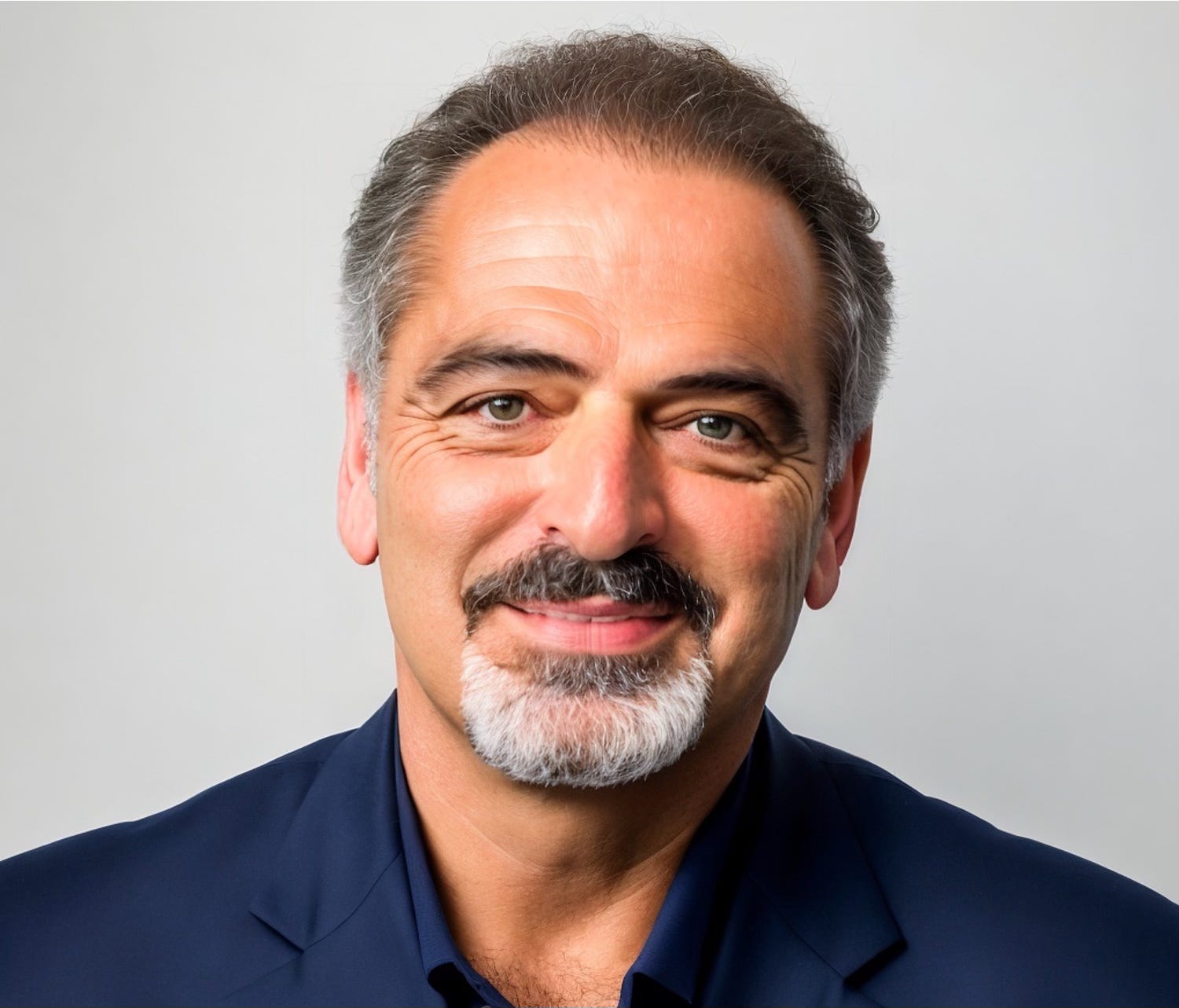
Today’s guest is Said Dawlabani, a human evolution theorist and a leading thinker on cultural evolution.
Twenty-five years ago, Said was a successful real estate developer and investment advisor — by his own description, “master of his own universe,” living the American dream. Then a divorce cracked that dream open and started to surface bigger questions about purpose and meaning.
He met his now-late wife, Elza, who was a human rights attorney and activist for Middle East peace. Through Elza, Said connected with Don Beck, a key developer of the model Spiral Dynamics.
For those unfamiliar, Don Beck built on the work of Clare Graves, a psychologist and contemporary of Maslow, who spent decades studying how human value systems evolve. Beck took Graves’ initial ideas and tried to simplify and make them more accessible through the framework of Spiral Dynamics. He then applied this model to contribute toward the transition from apartheid in South Africa.
Said became Beck’s close associate, and working with Elza, they founded the Center for Human Emergence of the Middle East, applying this framework to the intractable challenge of peace between Palestine and Israel — something we touch on in this conversation, though it deserves its own episode entirely.
Said’s first book, MEMEnomics (2013), took this cultural evolutionary and developmental lens to our financial systems and economics, particularly in the wake of the financial crisis, arguing that the unhealthy expression of “only money matters” was creating enormous problems.
But that’s not primarily what we discussed here. What we really talked about was his new book, Second Sapiens: The Rise of the Planetary Mind and the Future of Humanity.
In it, Said did something bold. Invited in part by Don Beck himself, he reimagined the entire Spiral Dynamics framework through the lens of our current planetary crisis. The key question: What kind of intelligence is required when you’re living in a moment when seven of the nine planetary boundaries have been crossed?
His answer became a fundamental reorientation. He moved from what he calls Promethean intelligence — the stuff of First Sapiens, our human ingenuity and capacity for science and technology — to Second Sapiens intelligence, grounded in Gaian intelligence, the wisdom of Earth and her living systems.
This conversation goes deep into that framework, exploring it from many angles. If you have an interest in Spiral Dynamics as a lens for understanding cultural evolution, this is for you. If you sense that our current systems are reaching their limits, if you’re drawn to developmental frameworks but wondering how to apply them in this existential moment, or if you’re looking for a map that honors both human potential and planetary boundaries — this conversation is for you.
I want to acknowledge: this is a rich, complex conversation. It’s the longest episode I’ve made. I also get into an extended reflection afterward, because there’s just so much here. But I think to properly respect the wisdom and insights Said is bringing, it takes the time. So rather than cutting it down, I wanted you to hear the whole thing. If you need to pause and come back in chunks, please do.
With that, let’s dive in.
The Interview
Full transcript is available from the video or audio files. Go there for to read through the actual interview.
Wilber’s A Theory of Everything,
Closing Reflection
Thank you, Said. What an amazing conversation.
I want to start and end this reflection with breath.
In our conversation, Said described the pair of opposites that govern existence — light and dark, expansion and contraction, action and reaction. I offered breath as a metaphor, one we’ve been using throughout this podcast since Episode 2, Life Breathes.
Breathing in is good. Oxygen. Life. But if you only breathe in, you create a problem. CO₂ builds up. You need to exhale. And the exhale isn’t the bad part — it’s the completion. It creates the polarity, the cycle, that makes the whole thing work.
Said lit up. He said, “That is the perfect example, Eric.”
What I want to explore in this reflection is how that pattern — that cycle, that harmonic — is a fractal. It repeats at every scale. And if we learn to see it, feel it, attune to it, it might be a key to understanding cultural evolution itself.
From Stages to Cycles
Said’s walkthrough of Spiral Dynamics was a master class — I won’t rehash it here, but I’d invite you to relisten. What I want to offer is something that stirred in me during our conversation and has been forming since. Call it a synthesis delusion binge if you will. I’ve shared an earlier version of these ideas with Said, and it resonated with him, which gives me some confidence this direction has legs. But I offer it as a hypothesis, not a conclusion — in the spirit of continuing dialogue.
Said mentioned that Graves himself used the metaphor of a symphony — different instruments representing different stages of development, coming together to create music. The beauty isn’t in one instrument alone, but in the instruments playing together.
This made me wonder: what if the primary frame isn’t stages but cycles?
When we talk about cultural evolution, we’re talking about our species’ superpower — the capacity to invent social realities. As I explored in Episode 4, this seems inherent to our biology: our capacity for creativity, communication, copying, collaboration, and compression. We construct shared concepts, beliefs, norms, stories, and rituals — the invisible architecture of our cultures.
The stages framing makes sense if you’re looking at things linearly — first this, then that. But what if we shift to cycles as the foundational orientation? Which is exactly what Said invited us to do by evoking the pair of opposites, and for which breath serves as an embodied anchor.
If we make that shift, a different word becomes more appropriate than “development.” That word is emergence.
Emergence, Not Development
I want to be explicit about this reframe, because I think it matters.
The concept of “development” carries with it an almost gravitational pull toward hierarchy — toward “higher” being “better.” Stage 7 is more developed than Stage 3. Integral consciousness transcends and includes what came before. And there is something true here — real differences in complexity and perspective-taking. I want to flag that I’ll return to this when thinking specifically about individual growth.
But here’s the hypothesis for cultural evolution: What if we replace the frame of development with the frame of emergence? And in doing so, honor everything the developmental lens illuminates while gaining something crucial that it misses?
Emergence gives us this: when conditions are right, new possibilities come into being that have properties beyond what the underlying systems alone could produce. Life emerged from physical and chemical processes — but life has properties that physics and chemistry alone don’t predict. Ecosystems emerged from the interplay of living organisms — but a rainforest has properties no single species possesses.
And here is the critical insight: these emergent possibilities are entirely dependent on the systems beneath them continuing to function. Life cannot exist without the physical conditions that support it. A rainforest cannot exist without the soil, the water cycles, the atmospheric conditions, the thousands of species interactions that sustain it.
You cannot plant a rainforest. It can only exist when the preconditions across physical, life, and ecological systems align. And if those preconditions are disrupted, the rainforest doesn’t just decline — it collapses. And you can’t simply bring it back.
I wrote about this years ago in a piece exploring a systems-centered creation story, and it was reimagined in Episode 2, Life Breathes. What Said’s work helped me see is how this logic applies to cultural evolution.
Here’s the move: human cultures are emergent phenomena, just like rainforests. They arise when certain conditions are met — when the underlying harmonics of social life are functioning well enough to support the emergence of more complex forms of organization. And just like rainforests, when cultures nurture only their most complex, most emergent expressions while neglecting the foundational cycles they depend upon, they set up the conditions for their own collapse.
This is where the frame of emergence does something “development” alone cannot. Development tells us to keep climbing. Emergence tells us that the higher you go, the more you need to understand, tend to, and attune to what’s beneath you.
Three Cultural Harmonics — A Hypothesis
With this shift from stages to cycles, from development to emergence, the six “stages” of what Said calls First Sapiens can be reframed as three polarities — three harmonics in dynamic tension. I offer these as a hypothesis, a starting point for dialogue and refinement, not a settled framework.
Kinship: the harmonic between individual survival and belonging. The breath between self-preservation and connection to others. Every culture must navigate this. Without individual survival instincts, we perish. Without bonds of belonging, we’re alone and vulnerable. The health of a culture depends on how well it holds this tension — not resolving it, but breathing with it.
Governance: the harmonic between dynamic leadership and stable institutions. The breath between the energy of individuals who step forward to lead and the structures that organize collective life across time. Too much of either and the system breaks — either into chaos or rigidity.
Stewardship: the harmonic between innovative creativity and collective care. The breath between the Promethean fire of human ingenuity and the responsibility to tend to the whole. Between the drive to create, build, and transform — and the wisdom to ask: does this serve life?
Each of these harmonics, when held in healthy tension, creates the conditions for the next to emerge. Kinship creates the foundation for Governance. Governance creates the foundation for Stewardship. And all three together create the conditions for something beyond them.
I want to name clearly: these three are a hypothesis about common functions that healthy cultures need. Whether these are exactly the right three, whether there are others, whether they should be carved differently — this is precisely the kind of question I hope can be explored through continued dialogue. Said and I have been exchanging ideas about this, and he’s been encouraging. But I’d love to see a broader conversation — perhaps even something like a humanity-wide science of cultural evolution — that examines what functional harmonics cultures need to be healthy, particularly including perspectives from non-Western traditions so we don’t fall into the old trap of Orientalism. What does a culture need to keep breathing?
Two Songs — Promethean and Gaian
This is where Said’s work opened something profound for me, particularly as he described it in this interview.
There’s another dimension beyond the three cultural harmonics. It’s not a higher stage. It’s not more emergence. It’s a different song.
Said grounds his framework in mythology: Prometheus and Gaia. Prometheus represents human ingenuity — the fire we stole from the gods, the forethought that gave us science, technology, modernity. Gaia represents the intelligence of Earth herself — 3.5 billion years of evolutionary wisdom encoded in every ecosystem, every organism, every cycle of water and carbon and nitrogen and breath.
In the framing I’ve been developing, the three cultural harmonics — Kinship, Governance, Stewardship — are all expressions of the Promethean song. They’re the harmonics of human social reality. They’re our anthrophony — the sounds we make, the cultures we construct, the shared meanings we create through our remarkable cognitive and social capacities.
But beneath all of this — always, always beneath it — is the Gaian song. The biophony. The harmonics of physical systems, life systems, and ecosystems that were playing for billions of years before humans arrived, and that must continue playing for any of our cultural creations to exist.
This brought me to the work of Bernie Krause, the soundscape ecologist. In a TED Talk I’ll link in the show notes, Krause distinguishes between the anthrophony — the sounds humans make — and the biophony — the soundscape of nature, the living world’s own music.
He tells a story that haunts me. At Mono Lake in California, thousands of spadefoot toads gather each spring to vocalize in synchronized choruses. They sing together, in pulsating synchronicity, as protection — when they’re all singing as one, predators can’t pick off individuals.
But U.S. Navy jets train over Mono Lake. And when a jet screams overhead, the chorus breaks. The toads fall out of sync. It takes them 45 minutes to regain their synchronicity. And during that time, Krause watched as coyotes and owls moved in and picked off the vulnerable ones.
The anthrophony — our Promethean noise — literally disrupted the biophony. It broke the song that kept them alive.
We’ve been like those jets. Flying over the living world, drowning out its music with our own noise, often without even knowing the music was there.
And here’s what’s both tragic and tender: in a follow-up interview on the TED Radio Hour, Krause described how humanity fell in love with our own voices — particularly once we created cathedrals. In those spaces, we’re enveloped in human-created, Promethean beauty. And as someone who loves singing in cathedrals and has had transcendent experiences there, I feel that. Our voices are beautiful.
But we fell so in love with our own song that we stopped hearing the larger song we’re part of. Matt Biggar, in my earlier conversation with him, put it this way: we’re now better at recognizing corporate logos than the native plants and species that share our place.
We built ever more complex and beautiful Promethean harmonics — and each layer drew our attention further up and further away from the Gaian harmonics that make all of it possible. The more emergent our cultures became, the more we needed to connect deeply to the foundations. And instead, we forgot them.
This is why collapse is predictable — not mysterious, not inevitable, but the natural consequence of cultures that stop listening to all the harmonics they depend upon.
Indigenous Cultures as Gaian-Attuned
This is where I want to make a speculative but important move.
What if Indigenous cultures — particularly those rooted in what Wahinkpe Topa (Four Arrows) and Darcia Narvaez call the Kinship Worldview — aren’t “earlier stages” of development, as some frameworks unfortunately imply?
Within the frame of emergence, here’s what I think we can see: these are cultures that may have developed all three harmonics — Kinship, Governance, Stewardship — but whose Promethean song was always nested within, and responsive to, the Gaian song. Their anthrophony was part of the larger music, not drowning it out.
Their human ingenuity — their technologies, their innovations, their social structures — were oriented by deep, sustained attunement to the living systems they were part of. The mutualisms that Rob Dunn described in my conversation with him, the deep reciprocal relationships that Robin Wall Kimmerer writes about so beautifully — these aren’t primitive practices from an earlier stage. They’re expressions of cultures that never forgot the foundational harmonics.
If that’s true, then Indigenous knowledge systems aren’t just “nice to include” in our conversations about the future. They may be precisely where we find models for what healthy cultural attunement looks like — cultures that kept listening to all the harmonics, cultures that held forms embodying not only kinship between humans but kinship with the living Earth.
This has been an underlying thread throughout Negotiating Reality. Said’s framework, combined with this shift from linearity to cycles as the foundation, helps make explicit why this matters so deeply.
The Water We Swim In and Learning to Listen
So if the path forward involves reattunement — learning to hear and tend all the harmonics, from the Gaian foundations through the Promethean expressions — then there are two complementary callings. One cultural. One individual.
The cultural calling is about changing the water we swim in.
David Foster Wallace opened his famous commencement address with a joke: two young fish are swimming along, and an older fish swims by and says, “Morning, boys, how’s the water?” And the two young fish look at each other and say, “What the hell is water?”
The water is the anthrophony. It’s the Promethean song that’s so pervasive, so constant, so loud, so deeply woven into our shared social reality that we don’t even notice it. It’s the concepts, the stories, the unexamined assumptions about progress and development and upward and more. It shapes what we pay attention to and what we don’t. And right now, for much of the modern world, that water — that song — is drowning out the Gaian music we desperately need to hear and attune to.
Changing the water means collectively shifting which harmonics our cultures are attuned to. And the fastest on-ramp may be exactly what Matt Biggar names: connect to place. The same wisdom Indigenous peoples have practiced for generations. Let go of the abstractions that have separated us from life, from relationship, from the living world. Stop being jets. Start listening to the synchronized frogs.
But there’s a second calling — an individual one — that’s equally essential.
This is about nurturing each person’s capacity to distinguish the cultural water from their own inner harmonics. To hear the difference between what the culture is singing and what your own conscience knows.
Here, the metaphor of the symphony returns in a different way. If cultural evolution is about the emergence and attunement of shared harmonics — the social realities that shape how a culture breathes — then individual growth is about something related but distinct. It’s about learning to listen to the symphony with discernment. Developing the capacity to hear each section — the Gaian harmonics, the Kinship harmonics, the Governance harmonics, the Stewardship harmonics, and the transcendent harmonics — and to notice when one is being drowned out. To cultivate a kind of inner ear for what is true, what is healthy, what serves life, even and particularly when the cultural water is pulling in a different direction, inviting us to fall in love with our own voices.
This is what John Kesler’s Integral Polarity Practice cultivates — an attunement to the transcendent that can anchor us when the cultural song around us is dissonant. It’s what contemplative traditions across the world have always pointed toward: the nurturing of conscience, of discernment, of the capacity to hear harmonics attuned to the transcendent, especially when the culture isn’t yet attuned to those deeper harmonics. Learning to attune, in each moment, to walking in sacred beauty — as John says — and cultivating the capacity to live into life, love, and light.
These two callings — the cultural and the individual — are mutually reinforcing. The more individuals develop discernment, the more they can contribute to shifting the cultural song. And the more the cultural song shifts toward attunement, the easier it becomes for individuals to hear what matters.
An Invitation to Breathe
So let me end where I began. With breath.
Breathe in. Feel the oxygen. The life force given to you by our brethren plants. Feel how it nurtures our Promethean fire — our capacity for building, creating, transforming.
And breathe out. Feel the release. The letting go. Our offering of carbon dioxide to our plant brethren — closing the cycle we are held in, as one, together.
This is the pattern. This is the fractal. Individual survival and belonging — breath. Dynamic leadership and stable institutions — breath. Creative genius and collective care — breath. Promethean cultural songs and Gaian synchronicity — breath.
We’ve been holding our breath for a long time. Breathing in, in, in. Accumulating. Growing. Expanding. Hoarding. And now we’re gasping.
The invitation is simple, and probably impossibly hard: let go of the need to keep expanding.
And maybe, as a first step, just... listen. Listen to the harmonics within yourself. Listen for the difference between the cultural song and what your conscience knows to be true. Listen for the biophony underneath the anthrophony. Listen for Gaia’s song, which has been playing for 3.5 billion years, waiting for us to remember we’re part of it.
If any of this resonates, please explore Said’s book, Second Sapiens. There was so much we didn’t cover — his analysis of economics and degrowth, his mapping of healthy and unhealthy expressions, his examination of AI. Check the show notes for all references.
And as always, I offer these reflections not as answers but as invitations. This is a hypothesis being developed in dialogue. If I’ve extended the synthesis too far, I genuinely want to know. That’s what this is about — negotiating reality together, finding our way forward together.
Thank you for listening.