There’s a haunting scene from Renaissance Florence that still speaks to our own time. On May 23, 1498, the Dominican friar Girolamo Savonarola stood on the gallows in the Piazza della Signoria. The Church that once praised him for his piety now condemned him as a heretic. The same city that once gathered to hear his sermons now gathered to watch him burn. As the flames rose, someone in the crowd shouted, “If you can work miracles, work one now!” and when the fire made his hand lift as if in blessing, the crowd panicked and scattered. It was as though conscience itself had momentarily reached out through the smoke to remind them what they had done.
Savonarola was no saint, and truthfully, I never cared for his brand of religion. His iconoclasm—his hatred of art, his denunciation of beauty, his censorship of the imagination—ran contrary to everything that makes faith human and culture alive. But beyond that, his fearless voice against corruption remains admirable. He stood before popes, princes, and merchants and told them that their greed was poisoning the soul of the city. He spoke against the rot he saw in both the Church and the state, and he paid with his life.
That story isn’t trapped in the fifteenth century. It repeats itself whenever power wraps itself in holiness and calls injustice divine. We are seeing it again now. When a government weaponizes fear—sending agents into our neighborhoods to raid homes, detain parents, and terrorize children—it claims to uphold the law but acts against love and mercy. And when Christian nationalists cheer it on, praying over the cruelty as if it were a holy cause, that isn’t faith. It is blasphemy. It is the spiritual corruption of a Church that has forgotten who it is supposed to serve.
Faith should be a check against tyranny, not its megaphone. The early followers of Jesus faced down empire by living compassion, not by aligning with it. They sheltered strangers, fed the hungry, and cared for prisoners. To follow that example today means to resist systems that strip dignity from immigrants, the poor, or anyone cast aside. It means confronting the state when it crushes the vulnerable, and confronting the Church when it blesses that cruelty in God’s name.
We can’t just oppose political corruption; we have to oppose spiritual corruption too. Because if the soul of a nation decays under the weight of fear and nationalism, no election or policy can save it. What will save it are people who remember that the fire of conscience still burns hotter than the bonfires of hate. People who, when told to stand aside, stand up instead.
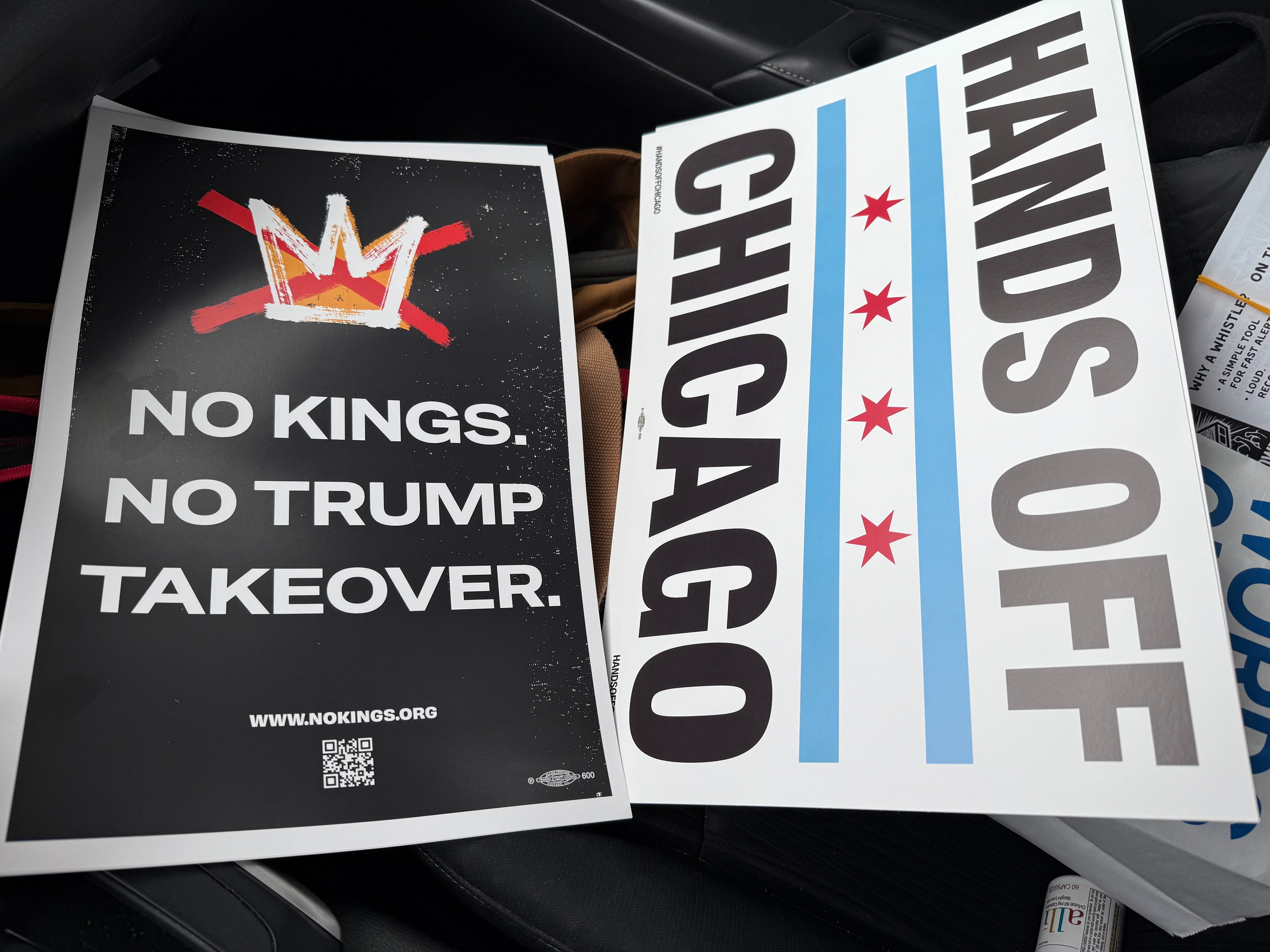
And this weekend, we can do exactly that. On No Kings Day this Saturday, when people will gather downtown to declare that no man, no ruler, no president stands above the people or above God, we can be Savonarola in our own way. Not by condemning art or beauty, but by speaking truth to power; not by burning books, but by igniting conscience. We can stand shoulder to shoulder and say that tyranny has no place here. We can say that our faith does not serve kings—it serves the poor, the hungry, and the displaced.
Savonarola’s hand may have lifted in the flames by accident, but maybe it was also a sign—a reminder that even in the face of death, faith can still move, still bless, still point toward a better way. And that’s what we are called to do now: to keep faith alive in a world that would rather burn it down, to walk into the streets on No Kings Day and say, with courage and clarity, that love is still stronger than fear, and conscience still burns brighter than any throne.