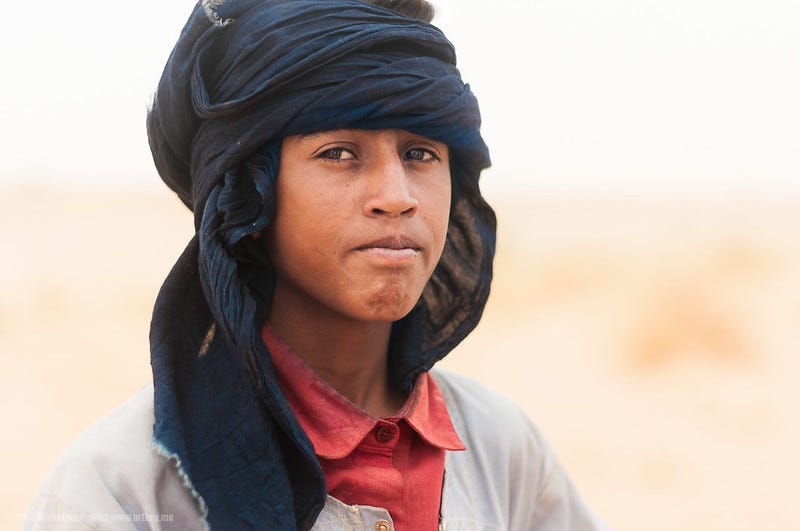
Last week, we started our analysis of Libyan writer Ibrahim al Koni’s “The Bleeding of the Stone.” We met Asouf, the young Tuareg man who is the book’s main character. We also encountered one of the major conflicts that drive the book’s plot: the sun’s eternal vendetta against the desert and the unfortunate creatures, humans among them, that call the desert home. That episode includes a reading and discussion of a folktale told by Asouf’s father. In that story, we heard how the people captured and preserved knowledge of the desert’s shifting patterns and the delicate balance of relationships it supports. Finally, we got some foreshadowing of events to unfold in the book. The Sun’s endless fury is not the only (or even the main) conflict in the story. That honor goes to the human conflicts.
In this episode of the Mythological Africans podcast, we will explore some of the human relationships in Ibrahim al Koni’s “The Bleeding of the Stone”. We also examine how these relationships are influenced by their encounter with the desert environment and expressed in oral traditions.
[Note: Episode contains spoilers!]
References
* “The Bleeding of the Stone” by Ibrahim al-Koni. Interlink Publishing Group Inc.
Can’t Get Enough?
* Tales from the Plateau of Rivers: Folklore of the Tassili n’Ajjer and Ahaggar Mountain Ranges
* Tuareg Tea-time: Sweet tea in a golden cup
Still Can’t Get Enough?
The Watkins Book of African Folklore (…or The Mythological Africans Book) is out!
The Watkins Book of African Folklore contains 50 stories, curated from North, South, East, West and Central Africa. The stories are grouped into three sections:
* Creation myths and foundation legends (including the foundation legend of the Tuareg!)
* Stories about human relationships and the cultural institutions they created
* Animal tales (with a twist…the folktales are about some of the most unlikely animals!)
I thoroughly enjoyed digging into the historical and cultural context out of which the stories, their themes, and protagonists emerge. There is something for everybody!
Mythological Africans is reader-supported. To receive new posts and support my work, consider becoming a free or paid subscriber.