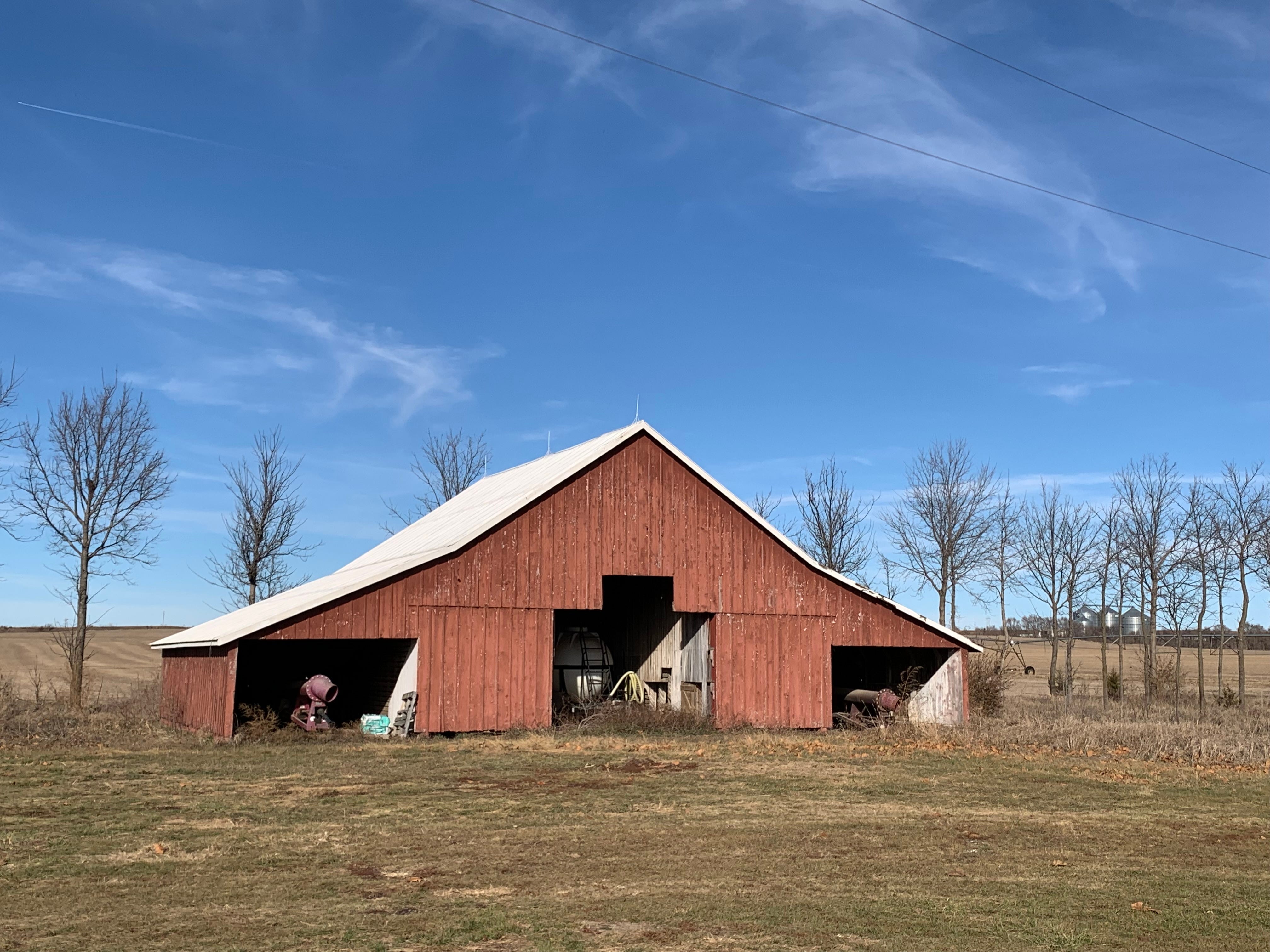
On November 7th, the Nebraska Journal on Advancing Justice published an article that I wrote about the history of Nemaha County, Nebraska, where my mother’s family has been farming for six generations. The article explores what local and family history reveal about America and how the future of family farmland in Nemaha County points towards bigger questions about the future of rural America. The article offers its research and storytelling as a model for truth-telling in America on our long, ongoing road to reconciling injustice.
The article was the result of 1.5 years of research. I wrote the first draft in the days between Juneteenth and July 4th, 2024, inspired by a quote I read in a book by civil rights leader Reverend William J. Barber II about how this period of days between Juneteenth and July 4th should be time when Americans dedicate themselves to the pursuit of true freedom for all. At first, I just shared the research with my family. But then a family member tipped me off that a journal at the University of Nebraska College of Law was accepting submissions of non-traditional scholarship. I sent a draft to the Nebraska Journal on Advancing Justice the day my maternal grandfather died, November 16th, 2024. We layed him to rest in Nemaha County shortly thereafter. The piece is dedicated to him.
I had no idea I was going to submit this research to a law journal when I wrote it and did not format it with legal scholarship in mind. In a profound vote of confidence about the eventual value of the piece, which I’m sincerely grateful for and humbled by, the editorial team at NJAJ worked with me for the entire year to make the research ready for a law journal. Law journals require a citation for (basically) every single sentence and the citation must specify a page number and sometimes even a specific paragraph. The work had well over 100 sources. As you can imagine, going back over the research to make it law-journal-ready was an arduous task.
However, I am glad that the work was pored over by a team of lawyers for the last year. In an age of misinformation, it feels significant that this work was picked through with such a fine-toothed comb. This is not a claim that the article therefore contains watertight, objective, and absolute truth. On the contrary, it is a comment the our methodology of assembling stories. We examined every single thread of information using the journal’s standards for evidentiary burden, asking, “does this story really exist in this source the way we’re telling it?” We changed the document many times to reflect new and deeper understandings. We collected photos of physical documents that only exist in local libraries or family archives. We laid out the map: “This story is documented here. This story is documented here.” You could retrace every single one of our steps if you wanted to.
The result is what I’ve been calling my “recreational dissertation.” It is a repository for a tremendous amount asking, seeking, thinking, reading, talking, digging, feeling, and writing. I am going to make other media with this material - media that is more conversational, accessible, and bite-sized. But as the research exists in it’s full form, it’s basically a short book. An audio book you can finish on a few commutes. A slim volume about hyperlocal history you’d find at an independent bookstore.
Frankly, I think the research itself is a good read. Yes, it’s dense, but at its core, it is just a lot of stories. A local legend who was fabled to rescue people on the Underground Railroad from drowning in the Missouri River? Secret hobo hieroglyphics? Meth moguls? A cameo appearance by Willie Nelson? This history isn’t exactly dry.
It is also important. One of the quotes that I include in the article is from a 1965 speech by Dr. Martin Luther King Jr. Dr. King said: “I fear I am integrating my people into a burning house. We are walking into a place that does not understand that this nation needs to be deeply concerned with the plight of the poor and disenfranchised.” In the article I refer to this speech to make the following point: if dominant/white society is a burning house, rural and small town America is where you can smell the smoke. I recently saw a video by a scholar named Dasia Sade in which she references this exact same speech from Dr. King. In her video she states: “The house is on fire, so my culture is water. Water and escape. Resistance or escape. That’s it. The people who understand the importance of our culture being water right now are who I am looking for. That’s where I’m at.” Same. Big same. That’s ultimately the goal of all of this work - building a culture of water in the midst of a burning house. If that goal speaks to you, I hope you consider spending some time with this article.
To read the full text, go to this link: https://digitalcommons.unl.edu/njaj/vol2/iss1/4/
Otherwise, sit back and listen to the full audio version attached to this Substack post and available on Spotify, YouTube, and Apple Podcasts.
With gratitude,
-L.R.