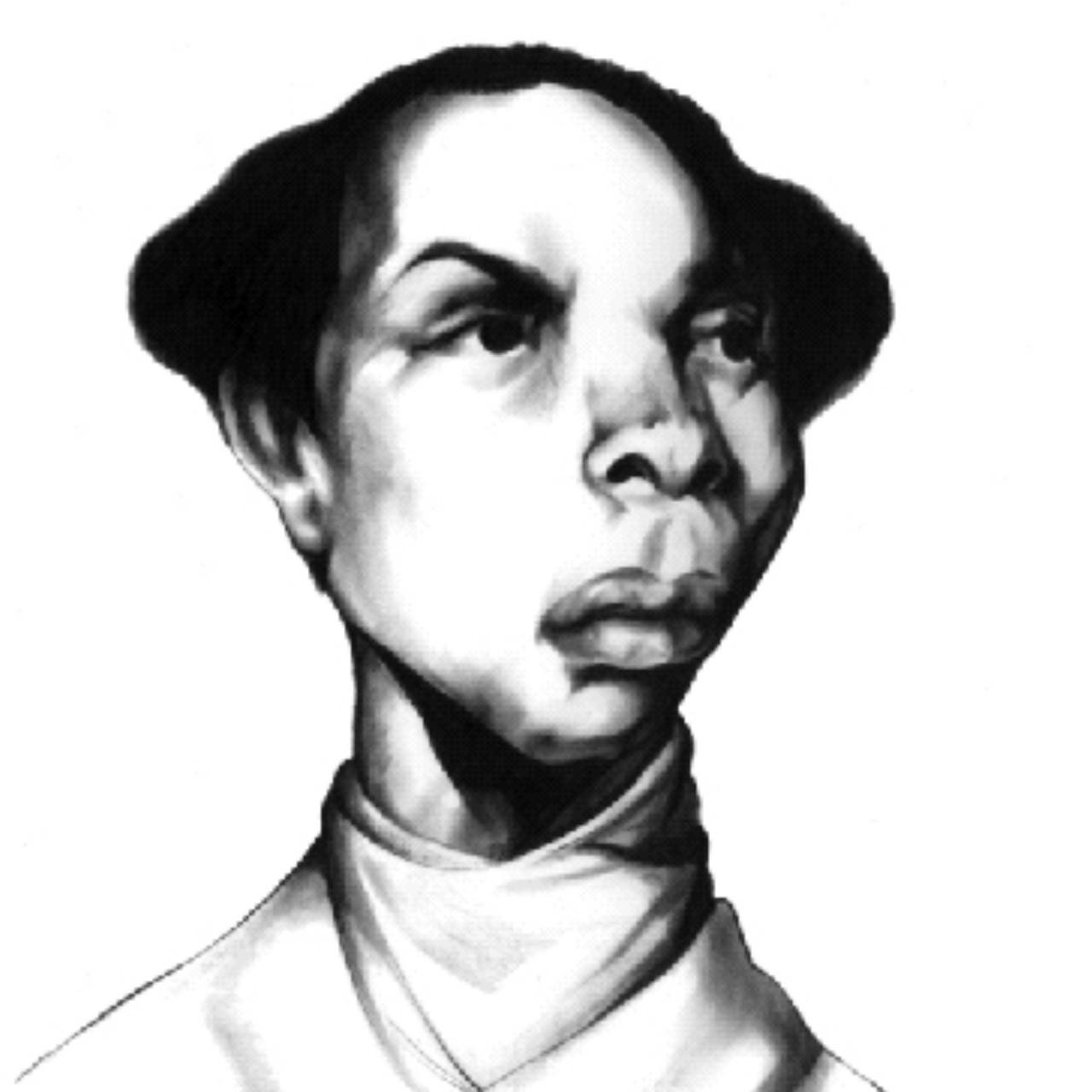
In the gathering storm before the French Revolution, a quiet English city is beset by intrigue, corruption and violence.
With help from his friend and researcher, Frank Barber – Dr Johnson’s former manservant and a manumitted slave, and from his watchman, Dudley Netherford, down at heel thief-taker Samuel Kinsman must untangle the threads of conspiracy, patronage and prejudice if he is to avoid humiliation, or worse, and save his family from the threats that confront them.
Please note:
© John Davies 2025
All rights reserved. No part of this publication may be reproduced, stored in a retrieval system, used to train AI systems, or transmitted in any form or by any means, electronic, mechanical, photocopying, recording or otherwise, without the prior written permission of John Davies and of the copyright holders of any quoted texts.
Epigraph
‘Morae pretium est scire’.
The reward of delay is knowledge
Tomb of Bishop Hackett, Lichfield Cathedral
Lich. n.s. [lice, Saxon.] A dead carcase; whence lichwake, the time or act of watching by the dead; lichgate, the gate through which the dead are carried to the grave; Lichfield, the field of the dead, a city in Staffordshire, so named from martyred christians. Salve magna parens.
A Dictionary of the English Language 1775 Samuel Johnson
Chapter 1
Lichfield, July 1758: Sarcophagus
Fettiplace Brougham hands his son Jeb a spade and watches him scrape the earth away from the hollow centre of the stone box.
Jeb is glad that huge piles of white cloud drift across the sky. Every so often they block out the sun and plunge the landscape below into cool and pleasing shade. He turns his head to look at his father through narrowed eyes. Small and wiry, Fettiplace lies on the grassy bank below the hedge, smoking his pipe.
Amidst the sounds of cattle in a nearby field and the dome of birdsong, the tinny jingling of a small bell is carried on the light breeze. Jeb stops his digging, listening. A small dog trots past along the track beside the field. Jeb takes off his coat and shirt, and puts them on the ground near his father, before picking up his spade again.
‘That’s it, lad,’ says Fettiplace, eyeing his son’s body. ‘Work away.’
The day before, Jeb discovered the stone tank half buried in one of the fields his father recently acquired near Wall, along the old corpse road that runs towards Watling Street and the Roman ruins.
‘Let’s dig it out then,’ said his father. ‘Might be worth a guinea or two.’ He grins. ‘Could be your birthday present, eh?’ Jeb will be twelve in two days’ time.
That morning, they returned to the site with the old dray horse and the hay wagon loaded with shovels and spades, pick axes and spikes, and block and tackle.
Fettiplace takes off his shirt too and picks up a spade. Father and son, smeared with sweat and clay, labour to release the stone box from the earth. It is some six feet in length, two feet deep.
‘A cistern perhaps?’ Fettiplace says, when Jeb questions what it might be. ‘Could be Roman. Not worth much. No carvings. I thought it would be prettier than it is.’
‘Prettier?’ asks Jeb.
‘Yes.’ His father squeezes the back of his son’s neck and let his hand glide down his back. Jeb tenses.
‘Prettier. You know, with decorations. Nymphs. Cherubs. That kind of thing.’
‘Imps?’ Jeb says, angling his head to look at his father through squinting eyes. ‘Devils?’
Fettiplace flicks his hand against his son’s face. His sharp nails scratch the skin, draw blood. Jeb snatches in his breath and rubs his cheek with his hand, then looks at the smear of blood on his fingers.
‘It’s just a trough,’ says his father.
Jeb scowls. ‘Looks like a coffin to me,’ he mutters.
Later, Fettiplace organises six men to help move the box. After much heaving and pulling with the block and tackle, it now stands on the ground in the yard of his house in Shaw Street.
‘A water trough for the horses,’ says Fettiplace, after thanking the men, but not paying them. ‘Or a container for your mother’s plants.’
‘Still looks like a coffin to me,’ says Jeb.
Thanks for reading The Reward of Delay! Subscribe for free to receive new posts and support my work.
Chapter 2
London, November 1784: The Fall
The February rain gusts across the river and the docked ships in the congested Upper Pool, pushed by a biting easterly. The figure scampers across the decks, moving swiftly, jumping with ease and precision. One of Mr Fielding’s men, Samuel Kinsman, follows but watches his step on the wet and slippery boards.
The figure stops and turns to look back, then turns again and runs on towards the black silhouette of the brig tied up beyond the lighters and wherries. The narrow masts and shrouds of the smaller boats clatter like saplings blown together in a woodland. Ships’ bells, near and distant, clang randomly and discordantly.
When the fugitive begins to climb the rope netting on the main mast of the brig, Kinsman looks up into the rain, steeling himself to overcome his fear of heights in the interests of justice. His aim is to apprehend the rascal he believes to be the leader of a gang of cargo pirates who raid the docked lighters for sugar and other produce. The criminal wields a short cutlass with deadly skill and has already wounded the Revenue officer who was ahead of Samuel when they first gave chase.
The figure climbs the mast, casting off its hooded cloak. There’s something familiar in its shape and the sway of its movement that goads him. Samuel pauses to watch, assessing his ability to catch up. But already the swimming in his brain has begun as the vertigo takes hold.
He struggles higher. His quarry has clambered onto the top yard and is walking out to starboard. Samuel looks down. He is higher than he has ever dared climb in his life before. The pool, its ships and boats veer up towards him in a giddy swirl. He murmurs a curse and freezes to the mast.
The criminal walks back towards him along the yard, then swings down beside him. Samuel gasps with shock and apprehension. His eyes flick to and fro across the woman’s face, sailcloth pale in the moonless dark. A matted lock of wet hair hangs down across her cheekbone.
‘Know thyself, my sweet,’ she says with a cruel smile, her face close to his, the familiar bloom of her breath in his nostrils. She raises a dagger towards his eyes.
He parries her arm away with his right hand, but his left arm loosens its hugged hold round the mast, slipping on the wet wood. She slashes towards him as he falls away from her. The blade stabs into his shoulder. He drops away backwards, making a spread eagle with his arms and legs.
‘Stay away from the other world.’
He hears her fading voice on the wind, as he flies away from her, falling through the rain and night.
Chapter 3
Shoreham, Sussex, March 1789: The Black Musketeer
Playing the part of a sailor down on his luck, Gondrin has watched the river mouth at Shoreham for four days and still the Little Owl hasn’t appeared.
He begins to doubt whether the information the tide surveyor has given him is reliable. He watches and waits, sometimes from the bridge across the river, sometimes from the shore, but most often from a window of the King’s Head that looks out across the harbour. On the second evening he has to avoid the gang pressing men for duty on the Hound, a Revenue cutter. On the third day, he thinks himself watched by two men who follow him along the shoreline.
‘Be very careful. There are so many factions seeking to undermine the king’s authority, to subvert our realm,’ the Maréchal, his old commander, warned him a month before, when giving him his present, private commission, albeit service on behalf of the king. ‘France must stand firm against all kinds of clandestine insurrectionists intent on undermining our way of life, corrupting our customs and traditions.’ He paused, looking Gondrin in the eye. ‘Heretics and atheists, Freemasons and libertines.’ He spat the words out as if they had a foul taste in his mouth. ‘Republicans. Memb…