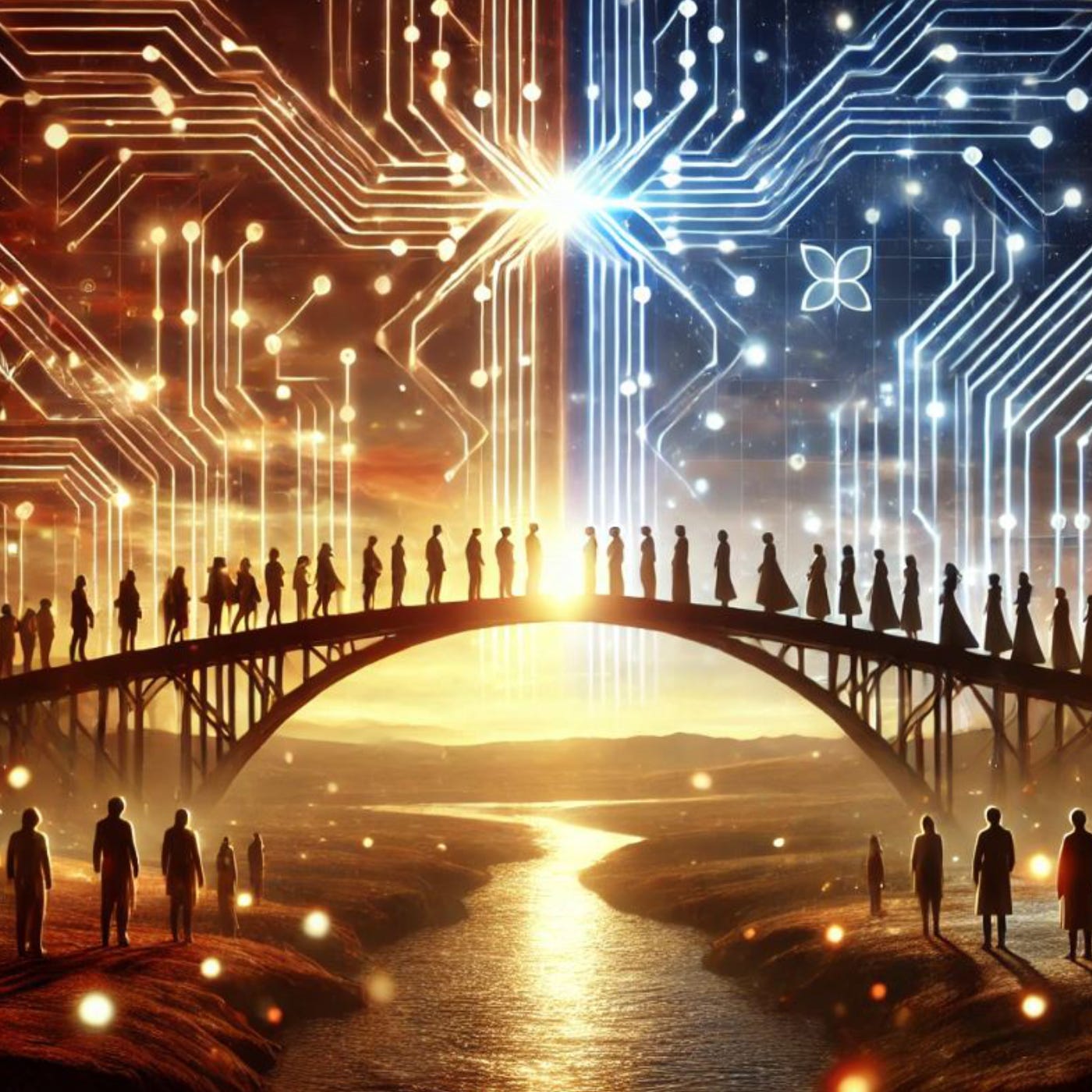
Welcome back to Infinite Threads, where we explore the deep connections that bind us all. I’m Bob, and today, we’re revisiting an important topic—helping everyone, no matter where they come from. There’s a lot of talk about who deserves help, who should be let in, and who should be left behind. But here’s a truth we can’t ignore: the person we turn away today might have been the one to change the world tomorrow. This isn’t just a feel-good idea—it’s reality. Throughout history, refugees and immigrants have gone on to make discoveries that shaped humanity. Let’s talk about why helping others is always the right choice, not just morally, but for the future of us all.
The Refugee Who Gave the World a Revolution in Science
Let’s start with a name everyone knows: Albert Einstein. Before he became one of the greatest physicists in history, Einstein was a refugee. In 1933, as Hitler rose to power, Einstein fled Nazi Germany, knowing that as a Jewish scientist, his life was in danger. He sought asylum in the United States.
Now, imagine if the world had turned him away. No theory of relativity. No advancements in quantum mechanics. No inspiration for generations of scientists.
And it wasn’t just Einstein. Countless scientists, thinkers, and innovators have been refugees, and their contributions have reshaped our world.
Saving Millions—The Refugee Who Created the Polio Vaccine
Then there’s Jonas Salk, the man who developed the first polio vaccine. His parents were Jewish immigrants who fled Eastern Europe’s persecution to find safety in the U.S. Without that chance, millions of children might have suffered from polio for decades longer.
Or take Albert Sabin, another Jewish immigrant from Poland, who created the oral polio vaccine, making it even easier to save lives. When we help refugees, we help humanity.
A Refugee Who Might Actually Cure Cancer
Now, let’s talk about someone working right now on medical breakthroughs. Dr. Huda Zoghbi fled Lebanon’s civil war and came to the U.S. She became a geneticist, and her research led to the discovery of the gene responsible for Rett Syndrome, a severe neurological disorder. Her work in genetics has led to advancements that could one day help cure Alzheimer’s, Parkinson’s, and even cancer.
Imagine if she had been turned away. Imagine if she never had the opportunity to study, to discover, to save lives.
The Human Potential We Never See
For every Einstein or Salk, there are thousands of others whose potential is lost when they’re denied safety. We can’t know who they could have become, what they might have created, or how they might have helped the world.
This is why helping others isn’t about charity—it’s about believing in the future. It’s about recognizing that every person, no matter where they come from, has something to offer.
What If It Were You?
If disaster struck tomorrow, and you had to flee your home, wouldn’t you want someone to open their door to you? Wouldn’t you want the chance to rebuild?
The idea that refugees are a burden is a lie. They are survivors, innovators, and dreamers. They bring new ideas, new perspectives, and new solutions.
Closing Thoughts
If we want a better world, we have to believe in the people who will create it. And we don’t always know who they are yet. They might be a child in a refugee camp, a young scientist looking for a chance, or a doctor who just needs a safe place to work.
The choice is ours: do we close our doors and turn away the next great mind? Or do we choose love, choose connection, and choose to believe that helping one person can change the future for us all?
Until next time, remember—love connects us all, and when we help others, we help ourselves.
Thanks for reading Infinite Threads! Subscribe for free to receive new posts and support my work.