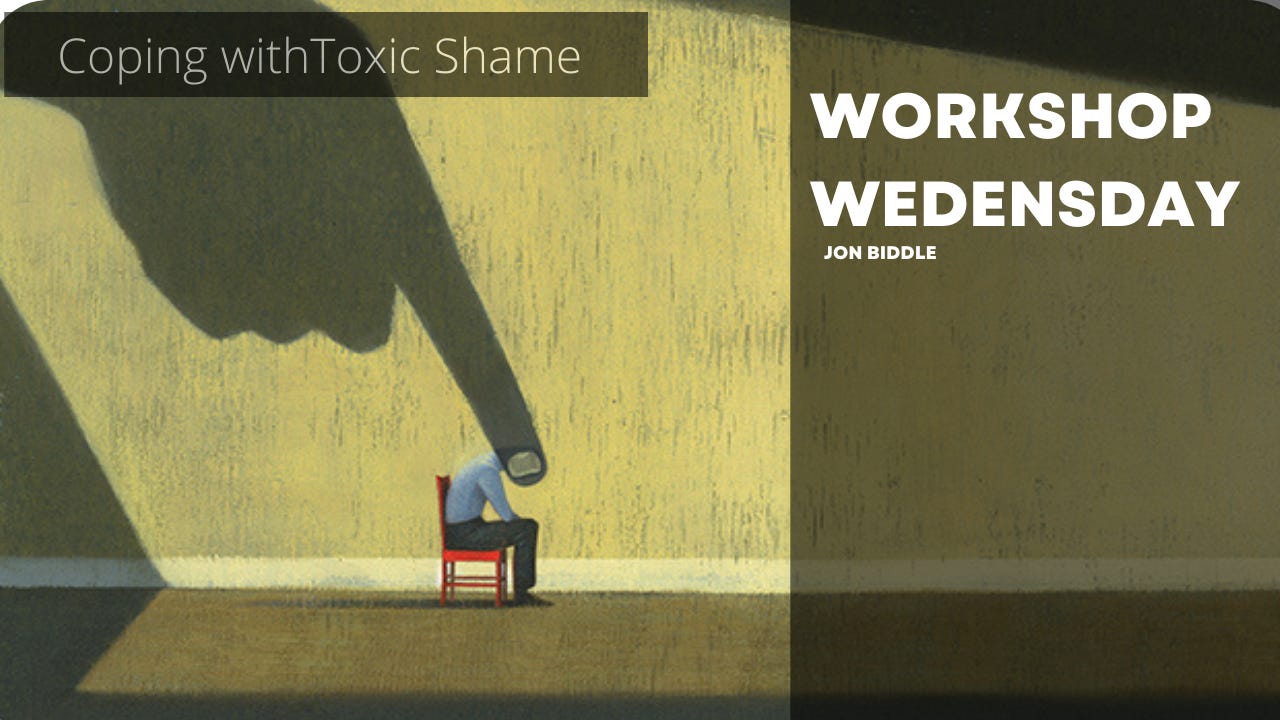
I am no exception to levels of shame. Any conflict, criticism, or anything wrong which may happen through the course of my day can allow a glimmer of shame to curl its gnarled fingers around the doorframe of my inner critic. Shame clings to our thoughts, dragging the inner critic along with it, hijacking anything good which may happen in there. It’s not possible to experience either without the other. Someone should create a law around this, like fundamental laws in physics, and trying to sort this mess out is like getting dog s**t out of a carpet.
When you’re told enough times as a child how s**t you are, the programming in the head is going to believe this. If the abuser is a parent, then this process is quicker, because as children, we trust what our parents say, right? The things they say we take as gospel.
What an incredible level of responsibility each parent has, a responsibility which is also an opportunity. The opportunity to make your child believe anything in life is possible. Sadly, opportunities lost through a cancerous attitude which snuffs the life out of any creative flow is an epidemic and I was no exception.
The abusive parent brings shame into the mind of the child through rejection and contempt. Making the child feel flawed, unliked and meddlesome in the eyes of the abuser. This abuse causing the child to no longer cry out when in need. They’ve learnt from an early age, crying out or challenging the abuser creates more trouble than it’s worth. Better left unsaid, but this creates isolation, further deepening the shame experience, validating the sense of low self-esteem, worthlessness, and a word I use a lot in therapy, an invalidation of life. We can strip away the confidence a child has with one cutting word, one glance, one sweeping gesture, leaving a lifetime of shame, which creates further challenges down the road. The inner critic is augmented, adding to the shame of worthlessness, low self-esteem.
I feel shame for existing. What does my wife see in me? Why do my children love me? Why would anyone want to spend time with me, either professionally or socially? Why am I worth to anything or anyone are the consequences of my abuse? What people see on the outside is an assertive man with his shields up all the time. Grumpy, unapproachable, miserable even. They interweave these traits into the person I had to become in order to protect and preserve myself as the child in the home of an abuser.
My childhood trauma was a lifetime ago; as an adult, I still ebb and flow between states of shame for a whole variety of things. Anything can trigger. Remember, it inextricably linked shame with the inner critic. Which is a paradox. Being late for work by five minutes generates shame. The inner critic doing its very best to run me into the ground while the shame I’m experiencing catastrophizes the punishment for being late. Once at work, no one really cares why you’re late, just happy you made it to work safely and yet, for the twenty-minute commute, you’re psychologically scarred by childhood trauma bringing you back to when you faced a continuous barrage of abuse. Left exhausted with the inner critic still chattering away, making your day even more challenging.
Let’s deconstruct shame. Shame is the basic of human experiences. Deconstruct it further and shame is in its most primitive form, and emotion such as fear, anger, and happiness. On a side-note, with emotions, something I’m going to cover in greater detail soon, how many emotions do you think a human being is capable of? Let that seed plant in your head for a bit because it’s something I’m going to visit again at a later date.
Back to shame. We’re tied to shame in a more psychological context. Shame causes a physiological response, activating the sympathetic nervous system, putting us in a state of fight-or-flight generating one of the four F’s (more of that later.) Stressors in the body cope with this by secreting cortisol into the bloodstream. The cortisol secreted is to help regulate blood pressure, glucose absorption, and reduce inflammatory effects to stress.
Let’s talk about the physiology of cortisol for a second because it’s important to understand the consequences of what stress brings.
Throughout my childhood, being in the fight-or-flight response and high states of anxiety, cortisol is secreted into my bloodstream via the adrenal glands which sit on top of the kidneys. It’s well documented, prolonged exposure to cortisol in children has shown to damage structures of the brain. Every cell in the body has corticoid receptors, allowing us to handle stress. As a species, we’re not genetically designed to handle stress continually, and high levels of cortisol in the body can lead to chronic conditions in adult life. High blood pressure (check), high blood sugar leading to type 2 diabetes (check), weight gain (check), upper body weakness (check). I developed sarcoidosis in 2016, a chronic inflammatory disease which compromised my eyesight. They related the sarcoid to stress with my body just hitting the red button, telling me to stop. I took most of the year out to recover. I had a lucky escape; the disease could have left me permanently blind or fatal. We checked my cortisol with the help of a nutritionist. My cortisol levels left the chart. The number was undocumented. The laboratory required a re-test because they thought the machine had malfunctioned.
It hadn’t. The first test was right.
Other conditions such as osteoporosis and cancers, but I am the wrong age group to tick these corkers off my inventory of chronic and acute conditions.
For me, I was in a constant state of anxiety and fear, hoping to not antagonise my abuser.
My father’s voice would make me squirm. Things had gotten to a point where he didn’t have to speak. His eyes told me he was disappointed and disapproving of me. A contemptuous sneer would etch his face with wide eyed dislike. To the outside world, he was the perfect man, always right, but his dislike of me was our little secret.
Nothing would be good enough. Even buttering my toast would be seen as a failure. Everything which tumbled from his mouth was a critique of how everything I did was useless. All I heard was you’re not a nice person, you’re a failure and at 15, I was told by my father he hated me. I’d had a lifetime of covert passive aggressive abuse with a low threshold for violence levied at me in a camouflaged vernacular, my sub-conscious decoded into a negative inner narrative.
While in this state of fight-or-flight, I would feel worthless, inhuman. I couldn’t even control my bowels at this point. So controlled and fearful and always scared, soiling myself was the easier, less confronting alternative. At 15, all my ducks lined up in a horrific realisation. He really hated me.
But let’s analyse shame further.
We all have it. Not one human being on the planet is unable to feel shame unless you’re a psychopath. They get a free pass on this gravy train of misery.
But shame is something most of us experience. If you think you don’t feel shame, why is not openly speak about it?
The verbalisation of the word shame evokes the sense of shame. You feel it in your heart, your guts bottom out and twist. Emotions run wild, tears well and your mouth becomes dry.
Try verbalising to your colleagues something outside a social norm, something you would find embarrassing. How does this make you feel?
That knot in your stomach, that feeling of self-loathing, that worthlessness which is firing through you is the emotion called shame bringing with it old emotional traumas from your childhood. It’s not about the subject, it’s about what the subject creates inside of you. And if your childhood was challenging like mine, then you’ll know all about how shame makes you feel every day.
Shame disconnects from the reality by something we’ve done or failed to do.
Shame, in its basic terms, is the sense of unworthiness, unlovable and that we’re flawed. Which makes us unworthy of love, affection, and friendship. It illicit’s secrecy in us it doesn’t deserve. It pervades in a state of darkness which thrives inside us, which has no belonging.
Our inner critic is the breeding ground for shame. It wants you to feel alone, desperate, unloved, and pathetic. If you allow yourself to emerge yourself in a shameful toxic spiral, the shame will augment in every cell of your body, causing real time dis-ease.
So how do we counter-act the toxicity shame creates?
The answer is simple.
Empathy and self-love.
If you openly acknowledge the shame, you’re feeling and if you can without compromising why you’re feeling shameful, share this with a kind and empathetic person. The shame breaks up into nothing. The shame exits your conscious and spreads a warm light on forgiveness.
Angrily say NO! to the thoughts rampaging through your mind. Whatever you’re doing, stop and say ‘NO! this behaviour is not acceptable.’ Through a method of thought correction, think of things you have, the people in your life, and how amazing the world in front of you is.
Be grateful and present. There is no past here, there is no future, just you, right here and now, in this solitary moment, and you’re safe. Tell your inner child you’re the adult here and everything is okay. Everything is under control.
What I know, the help of a therapist is critical for you to navigate out of this minefield. Remember, inner critic, toxic shame is all centred around addiction and is continually trying to isolate, separate and destroy you.
It may compel you to eat; you may have already eaten, which has started this inner critic attack. Drink, have sex, or walk into the bookies. These things divert your attention from processing and handling the inner critic. These may be uncomfortable things for you to face and deal with, but avoidance is not the key out of this door.
Someone like us cannot trust our own minds and being on our own with our thoughts can lead to poor decisions based on what the addiction wants us to do, and that is to open the door to which ever addiction you’re latched on to.
You can overcome your inner critic, like understanding a language. It will take time to decode your own inner critic.
For me, I’m not perfect and wouldn’t be churlish to say I have it under control because I don’t. What I have though is an insight with tools to cope with an inner critic attack, which brings shame.
I feel the shame wash over me like the freezing waves from the sea licking at my armpits. Its constant. Even not mowing my front lawn to conform to the street’s aesthetics brough me shame this morning, wanting to eat a sandwich from the garage, ignoring the call to this computer to write this, I wanted to sit and watch Netflix I have had a busy week, right?
Shame evolved during each thought and my constant attention to the present allowed me to triumph against these skirmishes in my head.
Stay Frosty
Jon