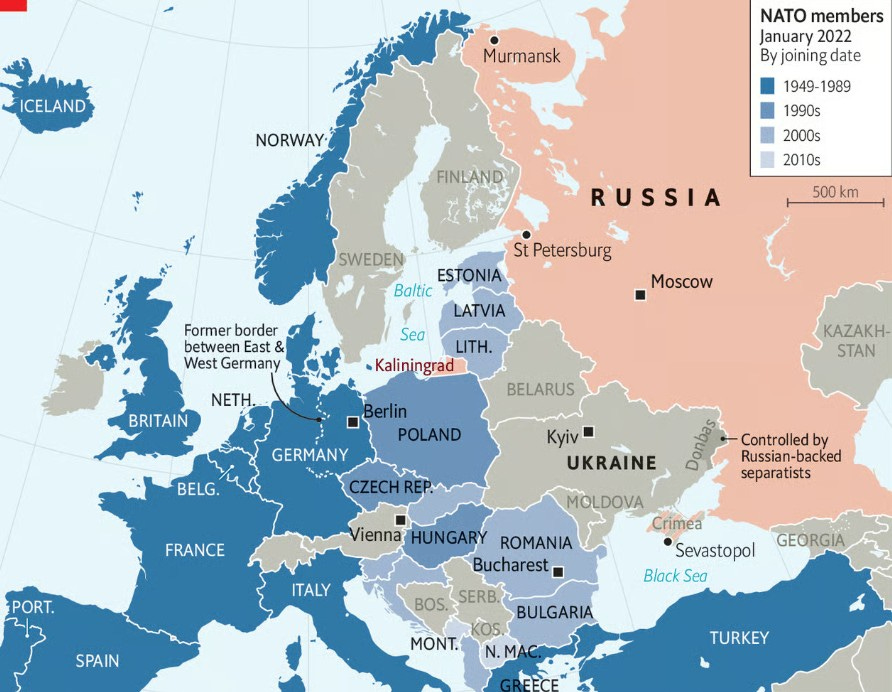
In 2014, Vladimir Putin was helping himself to Crimea, as one does when one has tanks and a complicated relationship with borders. In the summer of that year, the U.S. Army sent my unit to Germany to train with about fifteen other NATO armies.
The idea was simple: shoot, move, and communicate together, as if we were one fighting force. Different languages, different uniforms, same plan. In theory.
The five officers in my artillery battery were issued a single car to share. A tiny, egg-shaped European hatchback, the kind that looks like it comes free with the purchase of a croissant. It was a stick shift.
I figured this would be fine.
At the time, I was a platoon leader for a howitzer platoon: four self-propelled 155-millimeter guns and thirty-six cannon crew members. We called them “gun bunnies,” affectionately. They were young, loud, permanently dirty, and ran on caffeine, nicotine, and a belief that somehow this would all make sense later.
One evening, after training wrapped up, we finished briefing the soldiers on the next day’s plan. All the officers decided to drive over to the PX on Grafenwöhr base.
I grabbed the keys.
“I’m driving, bitch,” I said to the battery XO. We were all lieutenants, but the XO was the most senior lieutenant.
“Greg,” he said carefully, “do you know how to drive stick?”
No, I said. But I am about to learn.
We all piled into the car. I turned it on. Immediately stalled. Turned it on again. Stalled again. The XO began coaching me from the passenger seat with the tone of a man who had already accepted that God was testing him.
“Okay, ease off the clutch. No, not like that. Greg. Greg. You’re killing it.”
The car lurched backward like a drunk mule.
I panicked. Overcorrected. Gunned it.
And backed directly into a massive drainage ditch on the side of the road.
We ended up nose-high, rear end buried in the trench, front wheels dangling uselessly in the air, like a cartoon car realizing too late that the road has ended.
We all got out and just stood there, staring at it.
The XO put his hands on his hips. “Greg,” he said, “you are calling the fucking commander to explain this.”
Before I could respond, eight or ten soldiers appeared out of nowhere.
They were not American.
They were lean. Sinewy. All tendon and quiet competence. They looked like men who could survive indefinitely on bread, cigarettes, and mild disappointment. They did not ask questions. They did not speak. They simply assessed the situation the way wolves assess a problem.
Without being asked, they moved to the back of the car, crouched slightly, and lifted.
In about three seconds, the car was back on the road. Perfectly fine. Not a scratch.
They immediately started walking away, like this was nothing. Like they had just helped an old woman cross the street.
“Thanks, guys!” I yelled.
One of them gave a thumbs-up.
“Hey!” I shouted. “What country are you from?”
“Romania,” one of them said, smiling, as they disappeared into the dark.
I turned to the other U.S. officers and said, sincerely and confidently, “Wow. I did not know Romania was part of NATO.”
Romania, it turns out, was not just some random country that happened to have extremely competent guys lurking in the woods.
Romania joined NATO in 2004, after the Cold War ended and the Soviet Union collapsed. For decades before that, Romania had lived on the wrong side of Europe’s dividing line, under authoritarian rule, inside the Soviet sphere, watching history happen mostly to them.
When the Iron Curtain lifted, Romania did what many Eastern European countries did: it sprinted west.
They joined because survival, when you have spent decades on the wrong side of history’s dividing line, requires paperwork. Treaties. The kind of binding promises that make it harder for the next tank column to pretend you do not exist. It was a way of saying, formally and indelibly, we are done being the buffer zone. We want binding guarantees, shared planning, and allies who show up before things get bad, not after.
And a note to those who side with Putin, citing “NATO expansion”:
This is where the argument collapses.
It assumes that nations were pushed there by Washington rather than choosing it themselves. It denies agency to states that had lived under domination and decided, deliberately, that they did not want to do so again.
NATO did not expand because it was forced outward. It expanded because countries asked to join. They did so openly, repeatedly, and with full knowledge of the risks.
To describe this as “provocation” is to rewrite cause and effect. It is to say that the desire to be left alone is itself an act of aggression. And you are performing a useful service for the Kremlin when you say this so confidently.
That kind of logic has a long history. It is the language of empires explaining why other people’s choices are unacceptable.
And it is dishonest.
Once Romania joined, it took membership seriously. Training. Interoperability. Proving, over and over again, that it belonged.
Which may explain why, years later, a group of Romanian soldiers could quietly lift an American officer’s car out of a ditch.
Lately, when Americans hear “NATO,” they are not thinking about dusty treaties signed in the twentieth century. They are thinking about recent headlines.
In the past few weeks, the United States has been openly threatening tariffs on European NATO allies because Denmark and other countries sent troops to Greenland, an Arctic territory the U.S. president has insisted America must control for security reasons. European leaders rejected that idea outright and rallied behind Denmark’s sovereignty.
Though he later walked this back in remarks at Davos, the president at one point declined to rule out using military force to seize Greenland, a move that would pit the United States directly against a NATO ally.
That dispute prompted war-game exercises with European forces in Greenland and emergency talks in Brussels and Davos. Russia seized on the controversy to claim the alliance was in crisis. The European Union began preparing an Arctic security initiative in response.
At the same time, the Pentagon has reportedly planned to reduce U.S. participation in some NATO advisory groups, a decision that, while gradual, signals a shift in how America engages with alliance planning and military expertise on the continent.
The question, then, is not abstract. It is what NATO is, and what happens if the glue that holds it together starts to crack.
Taking NATO skepticism seriously matters.
The United States spends more on defense than the rest of NATO combined. For decades, many allies under-invested in their own militaries while assuming American protection would remain permanent, unconditional, and essentially free. That created a lopsided arrangement in which U.S. taxpayers carried costs while foreign governments deferred hard choices at home.
There is also a deeper concern. Alliances, once formed, tend to become self-justifying. Missions expand. Commitments harden. What began as a clear Cold War necessity can drift into something automatic, defended more out of habit than strategy. From that perspective, asking whether NATO still serves concrete American interests is not reckless.
Skeptics also point out that Europe is wealthy, technologically advanced, and fully capable of defending itself if it chose to. If nations face real threats, the argument goes, they should meet them with real investment, not moral appeals or historical sentiment. A security guarantee that costs nothing eventually means nothing.
Finally, there is a democratic argument. Americans never voted for permanent, open-ended obligations that could drag the country into conflicts far from home, based on decisions made by governments they did not elect. Questioning those commitments is not isolationism. It is accountability.
From this view, the pressure applied by figures like Donald Trump is not about abandoning allies, but about forcing realism back into a system that drifted toward complacency, and reminding everyone that American power is a choice, not an entitlement.
That argument lands with many Americans because NATO feels abstract. Distant. A European thing. A logo, a summit, a building in Brussels.
This essay does two things.
First, it explains what NATO actually is, in concrete terms.
Second, it explains what quietly changes if it weakens or collapses, in ways that do not show up immediately on cable news, but matter enormously over time.
What NATO Actually Is (and What It Is Not)
NATO was created in 1949, in the aftermath of World War II and at the beginning of the Cold War.
At its core is a single idea: collective defense. Article 5 of the treaty states that an attack on one member is considered an attack on all.
NATO is not a standing army. It does not have divisions waiting for orders from Brussels.
NATO is infrastructure.
It is shared military planning.
Shared command structures.
Shared logistics.
Shared assumptions about who shows up, how fast, and under whose authority.
That means when a crisis occurs, countries are not improvising under pressure. They already know the playbook.
This distinction matters because many people quietly conflate NATO with the United Nations.
The United Nations is a forum. It exists to manage disagreement, pass resolutions, and reflect global opinion.
NATO is a commitment. It exists to deter war by making the response to aggression predictable and overwhelming.
The UN is built around consensus, including among adversaries. NATO is built around trust among allies who have already aligned their interests.
When the United Nations fails to act, that is often frustrating, but rarely surprising. It is designed to include everyone: democracies, autocracies, kleptocracies, countries that jail journalists, countries that sell weapons to both sides of a war, countries that believe corruption is not a bug but a cultural inheritance. Getting all of those actors to agree on decisive action is hard by design.
The UN excels at statements, at strongly worded resolutions, at conferences where delegates denounce atrocities committed by regimes they quietly do business with on the side. It produces language that sounds like action and feels like motion, while carefully avoiding anything that would meaningfully disrupt the interests of the most powerful or least scrupulous members.
This is not because the people at the UN are uniquely cynical. It is because the institution is structured to prevent unilateral force, even when force might stop something awful. The veto exists. Procedural drag exists. The incentive to look busy while doing nothing exists.
So when the UN stalls or deadlocks, or issues a statement that reads like it was written by a committee of lawyers who all desperately want to go home, that is not corruption in the cartoon sense. It is systemic paralysis. A moral traffic jam.
That is why NATO is different. When NATO fails to act, the alliance itself stops making sense. Its credibility depends on the belief that its commitments are real.
Why the United States Built NATO
There is a persistent myth that NATO exists because the United States decided to be generous.
That is not true.
The United States built NATO because it learned, twice in the first half of the twentieth century, that instability in Europe eventually becomes American war.
NATO is a forward-defense system. It keeps threats distant. It prevents small crises from becoming continent-wide wars. It does so at a far lower cost than fighting alone after the fact.
In that sense, NATO is insurance. Not a charity fund for a continent we picture as permanently on vacation, but a system designed to prevent the moment when everyone is standing in the wreckage afterward, blinking at one another, asking who was supposed to stop this from happening.
Like all insurance, its value is easiest to underestimate when nothing is on fire.
Deterrence depends entirely on credibility. An adversary does not need to believe that you want to fight. They only need to believe that you will.
NATO removes ambiguity. It tells potential aggressors that escalation will not remain local or bilateral. It will be collective and punishing.
Once that certainty erodes, behavior changes.
Pressure increases in the gray zones, the places just short of open war. Unmarked drones drift a little too close to airspace. Cyber intrusions shut down ports or power grids for a few hours and then disappear. “Routine exercises” are conducted right up against borders.
Provocations get bolder because nothing immediate happens. Each unanswered move becomes data. Each delayed response is read as permission.
Eventually, miscalculation becomes more likely, not because anyone wants a war, but because enough small, deniable actions pile up that someone guesses wrong.
That is how conflicts start now. There are no declarations, just assumptions. And the most dangerous thing about deterrence failure is that it often looks like calm, until it does not.
What Weakening NATO Actually Changes
Some consequences of NATO dissolving are less visible, but more serious.
First, nuclear proliferation returns. Several NATO countries rely on the alliance’s nuclear umbrella rather than their own weapons. If confidence in that guarantee fades, incentives to pursue independent nuclear capabilities grow. This would happen quietly, technically, and permanently. More nuclear states mean more instability, not less.
Second, Europe re-arms, but in fragments. Without NATO coordination, countries re-arm independently. That produces duplication, mistrust, and competitive defense postures inside Europe itself.
Germany accelerates rearmament. Poland races ahead with heavier forward deployment. France doubles down on strategic autonomy and nuclear independence. Each choice is rational on its own. Together, they create parallel military structures that do not fully talk to each other.
History is clear on this point. When Europe is heavily armed but strategically fragmented, it becomes dangerous.
Third, Russia gains leverage without invading anyone. NATO weakening does not mean tanks rolling west tomorrow. It means energy coercion, political pressure, cyber operations, and the quiet isolation of smaller states. Power shifts without headlines.
Fourth, China draws conclusions far beyond Europe. Alliances are watched. If NATO weakens, the lesson is not restraint. It is that long-term American commitments are negotiable.
Fifth, U.S. credibility erodes in ways budgets do not capture. Every statement, hesitation, and conditional commitment becomes data. Competitors study it. Partners react to it. Once credibility is questioned in one theater, restoring it elsewhere becomes far more costly.
What NATO Really Buys
NATO buys time. It buys distance. It buys predictability.
It keeps worst-case scenarios theoretical rather than real.
The danger of dismantling it is not that catastrophe immediately follows, but that catastrophe no longer has to be prevented.
So, Brandon, there is one remaining question.
Are any of your sons draft-eligible?