If you don’t have advanced MS, you may find the contents of this newsletter upsetting. It is not for everyone. Only read on if you want to know about managing advanced MS.
Question
I am at EDSS 8 and need to get my affairs in order. I cannot do anything really anymore, so is this the beginning of the final stages? I know you won’t sugarcoat the reply, so? I can no longer go to the toilet on my own and need to use the Peristeen system with my partner’s help. My partner uses a hoist to move me to and from bed/chair, etc. I have just had pneumonia, and the doctors said if I had a heart attack, they would not step in on medical grounds, even though I protested. What would you advise?
NOTE: General Substack newsletters and the microsite are free; only Q&A sessions are restricted to paying subscribers. I can’t run and maintain the MS-Selfie microsite, so I must pay people to assist me. If people want to ask medical questions unrelated to the Newsletters or Podcasts, they either need to become paying subscribers or email (ms-selfie@giovannoni.net) to request a complimentary subscription.
Prof G’s response
Thank you for your questions and for being so honest about what you are going through. I get the sense that you are exhausted and anxious. I am sorry you are having to navigate such a heavy burden, especially after battling pneumonia and having such a distressing conversation with your doctors about end-of-life care. These conversations are best conducted well in advance, not during an acute crisis. This is why I urge all of you to complete an advance directive early on in your disease course and make sure your family knows about it and has a copy.
You asked me not to sugarcoat things, so I will give it to you straight. Reaching EDSS 8 is a significant and difficult reality. It represents the advanced stages of physical disability in MS, which is why you are facing the loss of independence, needing the hoist, relying on the Peristeen system and your wife’s support. However, being in this advanced stage of disability does not necessarily mean you are in the final weeks or months of your life. Many people live for years and decades with an EDSS of 8. However, it does mean you are more vulnerable to complications, as evidenced by the flu.
Given that vulnerability, you are right to get your affairs in order. Doing so is not a sign that you are giving up or that the end is near. It is simply about taking back some control, ensuring your exact wishes are legally documented, and giving you and your wife some peace of mind so you don’t have to worry about the administrative side later.
Regarding the doctors telling you they would not step in if you had a heart attack or, by implication, another life-threatening event, I can only imagine how surprising or jarring and angering that was, especially as you protested. In the UK medical system, doctors can legally place a “Do Not Attempt Cardiopulmonary Resuscitation” decision on your file if they clinically believe the severe physical trauma of CPR would not be successful or would cause you more suffering due to your body’s current frailty and only if you and your family consent to it happening. However, your voice still matters. You are entirely within your rights to ask for a second medical opinion regarding this decision, to complete an advanced directive contrary to their advice and to demand a clearer conversation about your ongoing care plan going forward.
Please try to be mindful of yourself. Your feelings and frustrations are valid, but anger will not help. Your neurological team should be there to support you through this. I would also recommend that they refer you to the palliative care team that has access to community services that can help you. For example, you would benefit from some form of counselling.
As you are aware, from a treatment perspective, we don’t have any therapies to stop your disability from worsening or to reverse it. We think treatments such as cladribine may slow the rate of worsening, which is why we are conducting the CHARIOT-MS trial in advanced MS. We also know that comorbidities such as recurrent infections, pressure sores, poor metabolic health, poor sleep hygiene, low mood, etc., worsen MS. This is why you, your GP, and your local MS service need to focus on optimising the small things.
I have looked after many people with advanced MS who have done this, and when the small things are looked after, they often notice an improvement in their quality of life.
I hope this helps.
I now realise the information I have given you is quite superficial. I have therefore produced a longer newsletter that covers topics you and others with more advanced MS may find helpful.
Advanced MS
As you know, the EDSS ranges from 0.0, indicating a normal neurological examination, to 10.0, indicating death due to MS. The transition to an EDSS score of 8.0 represents a watershed in the clinical trajectory. At an EDSS of 8.0, the pwMS is usually restricted to a bed or a chair, or requires assistance in a wheelchair for mobility. While they may be out of bed for much of the day, their independent ambulatory capacity is usually curtailed, unless they have an electronically controlled wheelchair. At EDSS 8.0, pwMS generally retain effective use of their arms, with some preservation of many self-care functions. This clinical profile distinguishes them from pwMS at EDSS 8.5, who are restricted to bed for much of the day with only some effective arm use, and those at EDSS 9.0 or 9.5, who are totally confined to bed and face severe bulbar dysfunction, including problems with communication and swallowing.
Because pwMS at EDSS 8.0 retain upper-extremity function and cognitive awareness, preserving their autonomy is a clinical priority and the reason we launched our #ThinkHand campaign almost a decade ago. We don’t think pwMS who are wheelchair users should be ignored. As part of the #ThinkHand campaign, we have been involved in designing and starting the O’HAND (ocrelizumab in PPMS), CHARIOT-MS (cladribine in advanced MS) and OCTOPUS trials. All these trials use the 9-hole peg test as the primary outcome measure or part of the composite endpoint.
When you lose the use of your legs, your arms and hands function are essential for mobility, and explain why pwMS with advanced MS prioritise upper extremity function over lower limb function.
At this stage of advanced MS, care must focus on supporting daily living and preventing complications (preventive neurology). The philosophy I promote relies heavily on the aggregation of marginal gains—the understanding that meticulous attention to seemingly “small things” yields improvements in the pwMS’s dignity, survival, and psychological well-being. Furthermore, the relationship between the pwMS and their carer(s) becomes a central focus of care. The psychological resilience, physical safety, and emotional well-being of the carer are inextricably linked to pwMS outcomes, necessitating support, respite strategies, and environmental adaptations to mitigate the burden of providing chronic care.
Comorbidities
The management of a wheelchair-bound or bedbound pwMS does not occur in a vacuum. People living with advanced MS exhibit a higher incidence of comorbidities compared to the general population. The most prevalent conditions are high blood pressure, diabetes, heart disease, fibromyalgia, chronic lung disease, and mood disorders such as depression and anxiety.
The presence of these comorbidities has been clinically linked to a faster worsening of disability, reduced overall quality of life, more frequent hospital admissions, and a regrettable shorter lifespan. Clinical studies indicate that pwMS who also suffer from vascular disease tend to require assistance with walking much sooner than those without vascular comorbidities. Therefore, the active management of metabolic syndrome and vascular health should not be peripheral to MS care, but a central part of it.
Because a pwMS with EDSS 8.0 is often entirely sedentary, their risk for developing metabolic syndrome—a constellation of high blood pressure, elevated blood glucose, excess body fat around the waist, and abnormal cholesterol levels—increases due to a forced sedentary lifestyle. Maintaining a good relationship with your general practice or a primary care provider is, therefore, essential as most MS services don’t have the resources and expertise to manage these comorbidities.
Respiratory function
Respiratory complications are recognised as one of the leading causes of death in pwMS, accounting for approximately 50% of all deaths in longitudinal studies. Emergency, unplanned, or non-elective admissions for respiratory crises in pwMS cost an average of £216,000 annually per NHS Clinical Commissioning Group (CCG), with £75,000 attributed to admissions for aspiration pneumonia. Prior to their dissolution, there were 106 CCGs in England; therefore, the cost to NHS England was ~£23M annually for this problem alone.
The decline in respiratory function in MS is typically insidious and begins long before the pwMS reaches an EDSS of 8.0. Pulmonary function is affected even in the early stages of disability, primarily through weakening of core stabiliser muscles. This reduction in core strength translates into impaired pulmonary mechanics, diminished health-related quality of life, and worsening fatigue. However, the transition to a wheelchair-bound or bedbound state precipitates a much sharper decline in respiratory function. This manifests clinically as a weak and ineffective cough. When the expiratory muscles fail to generate sufficient force to clear the airway, and the inspiratory muscles are too weak to provide adequate ventilation, the pwMS becomes susceptible to respiratory failure. This is compounded by upper-airway (glottic) muscle weakness, which results in progressive dysphagia (difficulty swallowing). When a pwMS cannot swallow effectively, the risk of aspiration pneumonia—where food, liquid, or saliva is inhaled into the lower respiratory tract and becomes infected—becomes a daily, and often life-threatening reality. Evaluations of pwMS with an EDSS score of 8.0 or higher, 61% report significant symptoms of respiratory dysfunction, including hypophonia (weak voice), shortness of breath, orthopnea (difficulty breathing while lying down), retained chest secretions, and sleep apnea.
Mitigating this risk requires meticulous, proactive respiratory pathways and daily low-tech interventions. Respiratory muscle training (RMT) has emerged as an effective, non-pharmacological intervention. Systematic evaluations demonstrate that RMT significantly improves maximum inspiratory pressure (MIP) by an average of 4.74 cmH2O and maximum expiratory pressure (MEP) by 8.50 cmH2O, while simultaneously delivering a substantial reduction in systemic fatigue. Integrating simple breathing exercises, such as the 4-7-8 breathing technique, into your daily wellness routine strengthens the diaphragmatic and intercostal musculature, supporting lung capacity.
The 4-7-8 breathing technique is a stress-reducing, rhythmic, and meditative practice that helps calm you, improve sleep, and manage anxiety. Developed by Dr Andrew Weil, it involves inhaling through the nose for 4 seconds, holding for 7 seconds, and exhaling loudly through the mouth for 8 seconds. How to Practice the 4-7-8 technique:
* Prepare: Sit comfortably with a straight back or lie down.
* Position: Place the tip of your tongue against the ridge behind your upper front teeth and keep it there.
* Exhale: Empty your lungs of air completely through your mouth.
* Inhale (4): Close your mouth and inhale quietly through your nose for a count of 4.
* Hold (7): Hold your breath for a count of 7.
* Exhale (8): Exhale completely through your mouth, making a “whoosh” sound (pursed lips) for a count of 8.
* Repeat: Repeat this cycle 4 times.
The long exhale acts as a natural tranquilliser for the nervous system, activating the parasympathetic (”rest and digest”) nervous system. It is effective for falling asleep, managing panic attacks, or reducing daily stress. If you feel lightheaded initially, start with only 4 cycles. With practice, you can increase to 8 cycles. For best results, practice at least twice a day.
Another thing you can do, which is a variation of the 4-7-8 technique, is to stack your lungs. Please see my previous newsletter on this topic.
* Do you know how to stack your lungs? (Oct 25, 2021)
Furthermore, reviewing your medications is important. Many medications routinely prescribed for MS symptom management possess CNS depressant properties that can dangerously slow a pwMS’s breathing. Anti-anxiety medications (such as benzodiazepines), skeletal muscle relaxants used for spasticity, and opioid pain relievers must be used with caution. For a pwMS with a history of breathing issues or swallowing difficulties at EDSS 8.0 or higher, combining these medications is typically contraindicated and requires monitoring.
When your cough strength falls below the threshold required to clear retained secretions, technological intervention becomes necessary. Mechanical insufflation-exsufflation (MI-E) devices, colloquially known as “cough assists,” are helpful for some pwMS. These devices deliver positive pressure to the airway to simulate a deep breath, followed by a rapid, forceful shift to negative pressure to simulate a natural cough, thereby drawing secretions from the lungs. The utilisation of MI-E devices, combined with regular assessments by speech and language therapists (SLTs) for swallowing integrity and dietary modifications, can reduce respiratory complications in pwMS.
Tissue viability
For an individual confined entirely to a bed or wheelchair, preserving skin integrity is a relentless, round-the-clock challenge. The formation of pressure ulcers (also known as pressure injuries, decubitus ulcers, or bedsores) represents a failure of tissue viability, resulting from localised injury to the skin and underlying soft tissue. These injuries invariably occur over bony prominences—such as the ischial tuberosities, sacrum, heels, and greater trochanters—and are driven by the unrelenting forces of direct pressure, friction, and shear. For more detailed information on this, please read my prior newsletter.
* Pressure sores (Feb 23, 2026)
An effective daily skincare routine for a bedbound pwMS must focus on gentle cleansing, barrier protection, and intensive hydration to prevent minor irritations from progressing to full-thickness wounds. Harsh alkaline soaps must be avoided; instead, caregivers should utilise mild, pH-balanced, hypoallergenic, and fragrance-free cleansers. Physical exfoliants and rough washcloths must be avoided, as they can cause micro-tears in the skin, providing entry points for bacteria. The generous application of ceramide-rich or hyaluronic acid-based moisturisers helps repair the skin barrier, preventing the skin from becoming brittle and prone to shearing forces during transfers. By preventing these minor skin irritations, caregivers eliminate sources of infection and pain that can impact a pwMS’s QoL and exacerbate other problems such as spasticity.
Oral hygiene
Oral health is an important part of advanced MS management. For pwMS with EDSS 8.0 or higher, the physical symptoms of the disease—including fatigue, weakness, intention tremor, loss of fine motor coordination, and altered sensation—make standard, independent toothbrushing difficult. Furthermore, MS itself and the pharmacological side effects of many MS medications frequently induce xerostomia (chronic dry mouth). Saliva is the mouth’s defence mechanism; it physically washes away food debris, neutralises plaque acids, and provides remineralising ions to the enamel. The absence of adequate saliva allows decay-causing bacteria to proliferate, leading to rapid and often catastrophic tooth loss and severe periodontal disease. When oral bacterial overgrowth is combined with dysphagia (swallowing difficulties) and a high-calorie, high-sugar diet required to prevent the weight loss common in advanced MS, the risks associated with periodontal disease become dangerous.
Poor oral hygiene in a pwMS with dysphagia creates a direct, pathogenic pathway from the oral cavity to the lungs. The aspiration of bacteria-rich saliva is a primary driver of aspiration pneumonia. Therefore, oral care becomes important. Implementing “small things” in oral care yields significant improvements in safety. The use of electric toothbrushes with built-up, wide, or angled handles, or the simple application of a weighted glove to dampen intention tremor, can help pwMS maintain a degree of autonomy in their oral care. For those suffering from MS-induced trigeminal neuralgia—a condition where the mere friction of brushing can trigger agonising, electric-shock-like facial pain—careful, ultra-soft brushing techniques, avoidance of extreme water temperatures, and timed medication dosing may be necessary to maintain hygiene without inducing pain.
Caregivers must remain vigilant regarding the sugar content of liquid medications and high-calorie nutritional supplements. Substituting sugar-laden medicinal syrups with sugar-free alternatives, utilising mouth-moistening sprays or sugar-free lemon drops to stimulate salivation, and maintaining high ambient humidity in the room are helpful micro-interventions. Regular oral and dental assessments to identify oral thrush (candidiasis) are important, as it typically requires antifungal medications. Upgrading wheelchair accessibility at dental clinics and providing specialised training for dental staff to manage pwMS in wheelchairs are well-described barriers. My personal dentist, for example, is based in an old Victorian building that is not wheelchair-accessible. In the past, I have referred pwMS to our dental school for dental care. The dental school has large, open-plan consulting areas that are wheelchair-accessible.
Wheelchair management
For an individual with an EDSS of 8.0 or above, their wheelchair is more than a mobility device; it becomes their support system for their skeletal and muscular structure. Because the pwMS is non-ambulatory, prolonged sitting places pressure on the ischial tuberosities (the sitting bones of the pelvis). To prevent pressure sores, modern advanced electric-powered indoor/outdoor wheelchairs (EPIOCs) come equipped with dynamic tilt-in-space and recline functions. A tilt-in-space system alters the seat’s orientation relative to the ground while maintaining a fixed seat-to-back angle. Conversely, a recline system opens the seat-to-back angle itself, extending the hip joint. Studies demonstrate that minor tilt adjustments (between 15 and 25 degrees) are effective for managing fatigue, improving visual orientation to the environment, and enhancing the pwMS’s ability to engage in social interactions. Minor angles are insufficient for true pressure relief. To achieve optimal hemodynamic redistribution and significant offloading of pressure from the ischial tuberosities to the broader back surface, a posterior tilt of at least 45 degrees, combined with a recline of 15 to 30 degrees, is required.
Elevating leg rests are also used with recline features to prevent shear forces that could slide the pwMS pelvis forward, thereby completely negating the pressure-relieving benefits. Integrating these advanced seating systems with specialised, pressure-relieving cushions reduces the effects of spasticity, accommodates postural asymmetries, and helps prevent pressure ulcers. Because pwMS with an EDSS of 8.0 generally retain some effective use of their arms and hands, they can exert some control over these positional changes through advanced joystick configurations.
The biomechanics of seating adjustments require precise calibration, which is why you have to be referred to a wheelchair service. Sadly, the NHS only covers relatively basic wheelchairs and those with all the bells and whistles need to be paid for privately.
Hoist systems
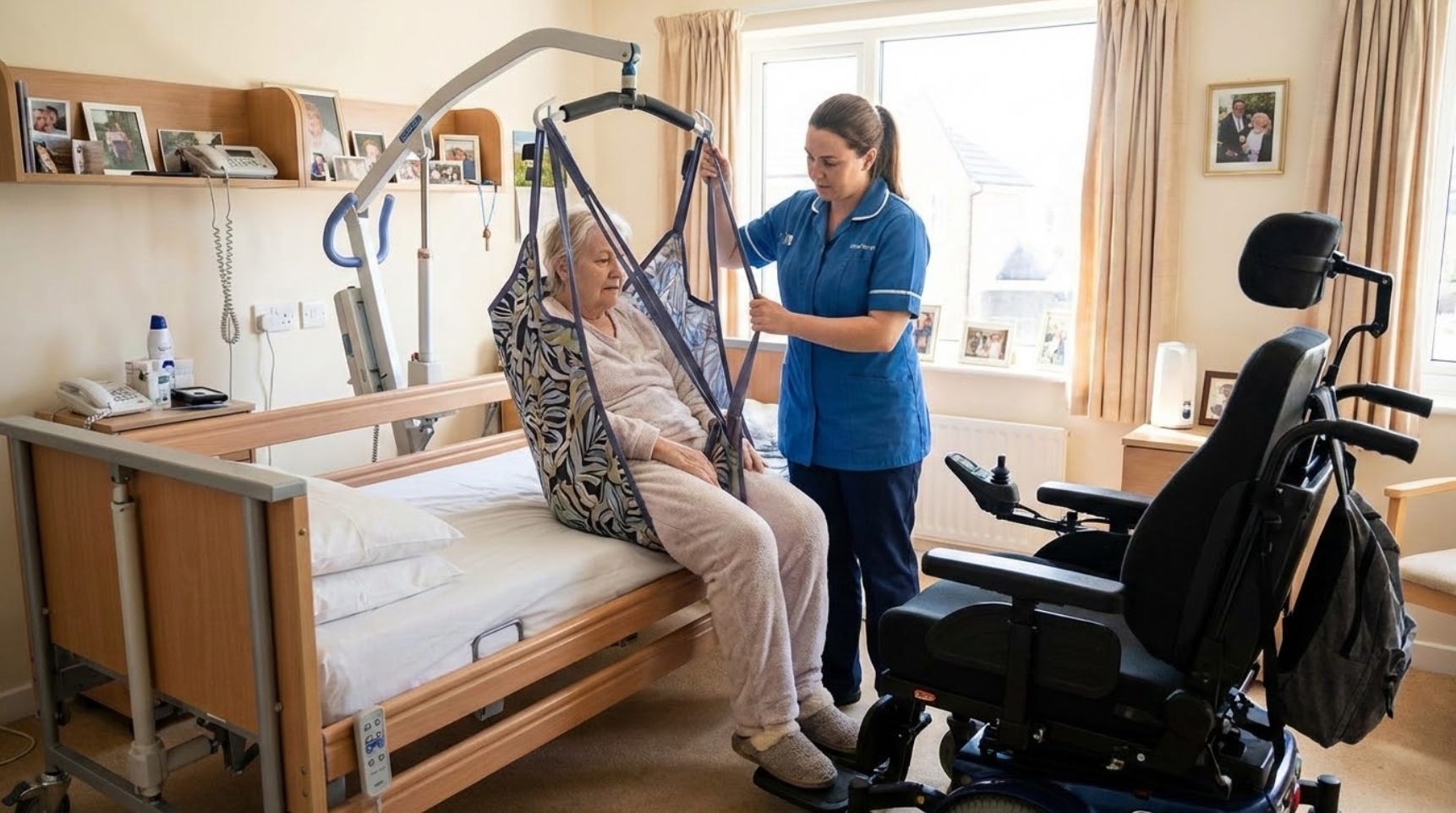
As the disease progresses and the pwMS loses the bilateral lower-extremity strength needed to bear weight during pivot transfers, hoists become a daily, unavoidable necessity. The choice between mobile (floor-based) hoists and overhead ceiling-track hoists affects not only the pwMS’s physical comfort and dignity but also the caregiver’s safety.
Mobile hoists offer versatility across multiple unadapted rooms and are generally more cost-effective as an initial investment, making them common in budget-constrained or temporary care settings. However, their operational demands are significant, with repetitive manual exertion on the caregiver. The carer must physically push, drag, and steer heavy steel equipment across varying floor surfaces, often with the added weight of the pwMS suspended in the sling. Furthermore, mobile hoists require a large spatial footprint, which often restricts their use in standard bedrooms and bathrooms. Manual handling is a leading cause of musculoskeletal injuries among caregivers, accounting for burnout, sick leave, and physical incapacitation.
In comparison, ceiling track hoists represent a superior investment in the long-term quality of life and safety of the pwMS and their carers. Fixed directly to the ceiling’s structural framework, the automated motor unit glides effortlessly along a track, eliminating frictional resistance and physical strain associated with a floor-based steering system.
Smooth, dignified, and precise transfers from the bed to the wheelchair or commode, ceiling hoists reduce the anxiety, physical trauma, and spasticity triggers associated with moving. More importantly, they preserve the carer’s physical health, allowing them to redirect their energy toward companionship and active caregiving. So please think about your caregivers when making a decision about hoists.
Circadian rhythms
pwMS with advanced MS frequently suffer from maladaptive sensory processing disorders, manifesting clinically as either hypersensitivity (a low neurological threshold) or severe hyposensitivity. This means that people with advanced MS may be unable to effectively register or modulate sensory input from their daily environment, regardless of their cognitive status. Consequently, chaotic, loud, or visually harsh environments can induce fatigue, agitation, and an impact behaviour.
Optimising the pwMS’s room may have a profound effect on their overall well-being. Bedbound pwMS are often deprived of natural, dynamic sunlight, leading to circadian rhythm desynchronisation. This may exacerbate existing sleep disorders, increase daytime cognitive fog, and cause behavioural and psychological distress. Tunable, dimmable LED lighting systems that emulate the natural solar cycle can help prevent circadian rhythm desynchronisation. Exposing the pwMS to bright, cool light in the morning helps suppress melatonin and entrain the circadian clock, while transitioning to warm, dim, multi-zoned lighting in the evening promotes sleep and reduces nocturnal awakenings.
Further sensory modulation can include targeted aromatherapy to bypass degraded neural pathways and engage the limbic system directly. Scents such as lavender, chamomile, and vanilla possess validated properties that reduce autonomic arousal and create a calming atmosphere. Integrating nature sounds or soft, familiar music therapy masks jarring household noises, providing comfort and positive distraction. When hyposensitivity dominates the clinical picture, structured tactile stimulation—such as contrast baths, graded textured cloths, therapy putties, or targeted vibration therapy—can improve limb awareness, provide comfort, and reduce fatigue.
Assistive technology
At an EDSS of 8.0, the inability to perform basic fine-motor tasks—such as turning off an overhead light, adjusting a thermostat, locking a door, or changing a television channel—can be challenging and can induce a sense of helplessness and dependency. The integration of Smart Home Technology and Voice-Activated Systems (such as Amazon Alexa, Google Home, and Apple HomePod) serves as a digital prosthesis, bridging the gap between the pwMS’s cognitive intent and their physical inability to perform tasks.
Using environmental control units (ECUs), pwMS can independently manipulate their physical surroundings using only their voice. A simple voice command can activate motorised window blinds, modulate the ambient room temperature, or adjust the articulation of a specialised hospital bed, without necessarily requiring a carer’s presence. This technology fundamentally redefines the concept of independence for the bedbound pwMS.
Advanced systems like the “HomeSmart Assistant” interface seamlessly with home security networks, allowing the pwMS to lock doors, answer the front door remotely, or view external camera feeds. This replaces a sense of physical vulnerability with a restored sense of safety and security. For the caregiver, this means fewer nighttime interruptions for tasks (e.g., turning on a ceiling fan for a heat-intolerant pwMS), thereby preserving sleep for both parties and preventing or reducing caregiver burnout. To overcome the decline in motor speech intelligibility common in MS, these voice-activated devices can be physically modified to sit closer to the person’s head, or their listening duration software can be extended to accommodate slower, more laboured speech patterns.
Alternative communication
As MS advances, some pwMS develop severe dysarthria characterised by progressive muscular incoordination, spasticity, laboured articulation, impaired volume control, and unpredictable articulatory breakdowns. When verbal communication decays, psychological isolation rapidly ensues; the pwMS becomes trapped in an unresponsive body, unable to express complex thoughts, direct their own medical care, or connect emotionally with their family.
For pwMS who retain full cognitive function but lose their motor and speech capabilities, eye-gaze communication devices (such as the Tobii Dynavox I-Series or the Eyegaze Edge) are transformative. These high-tech augmentative and alternative communication (AAC) devices utilise advanced infrared cameras to track the micro-movements of the pwMS’s pupils, allowing them to navigate a Windows-based interface or a bespoke communication grid. By simply fixing their gaze on a digital keyboard letter or a pre-programmed phrase for a fraction of a second, the pwMS can generate synthesised speech.
Because eye-gaze technology bypasses the descending spinal motor pathways entirely and relies on the relatively well-preserved oculomotor nuclei, it requires minimal physical exertion. This compensates for the debilitating fatigue that is typical of people with advanced MS. The calibration process takes mere seconds, and the technology allows individuals with severe motor deficits to stay connected to the world, browse the internet, and maintain their relationships. Restoring the pwMS’s voice is not merely a convenience; it is the cornerstone of preserving psychological dignity, allowing the individual to remain an active participant in their own life rather than a passive recipient of care.
Clothing and thermoregulation
Clothing is deeply intertwined with personal identity, self-expression, and dignity. Yet standard retail apparel can be physically restrictive, immensely frustrating, and potentially hazardous for a pwMS with EDSS 8.0 or above. The seemingly trivial act of changing clothes can consume a pwMS’s entire daily energy reserve and cause pain by triggering severe muscle spasms.
Adaptive clothing reimagines fashion through a lens of functionality and accessibility. Garments utilising hidden magnetic closures or Velcro bypass the need for fine motor dexterity, eliminating the frustration of manipulating small buttons, laces, and zippers. For individuals who spend 15 hours a day seated in a wheelchair, the structural design of trousers is a critical medical issue; traditional rigid seams, rivets, and heavy back pockets create focal pressure points that can cause pressure sores. Adaptive trousers feature a higher-cut back to comfortably accommodate a seated posture, a lower-cut front to prevent fabric bunching and respiratory restriction, and seamless, pocket-free seats to maintain skin integrity. Open-back tops allow for dressing from a seated or prone position without requiring the pwMS to lift their arms above their head or contort their shoulders.
Furthermore, extreme heat intolerance is a hallmark of MS. Slight elevations in core body temperature slow neurological conduction across demyelinated axons, causing an acute, temporary worsening of MS symptoms. The strategic use of specialised cooling garments—such as moisture-wicking bamboo fabrics, phase-change cooling vests, and temperature-regulating neck wraps—keeps pwMS below the threshold for symptom exacerbation. Allowing a pwMS to dress efficiently, comfortably, and stylishly not only prevents physical injury and overheating but also preserves their fundamental self-image and dignity amid progressive physical decline.
Nutrition, exercise, and cognitive therapy
While an EDSS score of 8.0 precludes ambulation, the complete cessation of movement is detrimental to the pwMS’s physiological and psychological health. Disuse atrophy, severe joint contractures, decreased bone density, and worsening spasticity rapidly follow immobility. Physio/pr physical therapy at this advanced stage focuses on passive range-of-motion exercises, targeted stretching protocols, and the use of motorised continuous passive motion (CPM) devices to loosen tight muscles and maintain joint mobility. Even minor upper-body aerobic exercise, such as utilising a modified arm ergometer, promotes cardiovascular fitness, aids in sluggish bowel motility, and stimulates the release of endorphins that combat clinical depression and anxiety.
A tailored diet emphasising lower saturated animal fats, high dietary fibre, and vegetables may help mitigate the risk of comorbid vascular diseases (such as hypertension and diabetes), which accelerate MS worsening and increase mortality. Ensuring adequate hydration and high-fibre intake is an important defence against chronic constipation that plagues bedbound pwMS.
Cognitive behavioural therapy (CBT), mindfulness-based stress reduction (MBSR), and targeted education remain effective at this stage of MS for addressing the grief of lost physical function, managing chronic pain, and restructuring negative thought patterns. Brief, group-based CBT interventions, often delivered via telehealth to overcome mobility barriers, have been shown to significantly reduce symptoms of depression, anxiety, and fatigue, providing the pwMS with critical coping mechanisms.
The caregiver
The comprehensive management of a bedbound or wheelchair-bound pwMS requires a daily effort from family carers, whose reality may be defined by physical labour and emotional exhaustion from a chronic and unrelenting state of hypervigilance. I have seen this scenario play out over and over again in my own clinical practice. The progressive, chronic nature of MS dictates that caregiving is not a short-term acute crisis, but a marathon that typically lasts decades. Caregivers routinely sacrifice their own careers, social networks, and physical health, leading to isolation, high incidences of clinical depression, and musculoskeletal injuries from manual handling. Surveys of MS caregivers reveal that 80% experience severe financial problems due to their caring tasks, 55% struggle to combine care with daily activities, and over 50% suffer a decline in their own physical health.
Resilience in caregivers must be actively cultivated and supported by the healthcare system. Clinical research indicates that higher caregiver resilience is directly associated with a significantly reduced care burden and vastly improved pwMS quality of life. However, sustaining this resilience requires more than mere endurance; it demands implementing daily habits, cognitive-behavioural coping strategies, and structured psychoeducational training. Caregivers must be educated to view self-care—such as maintaining a proper diet, securing uninterrupted sleep, exercising, and utilising stress-reduction techniques like yoga or meditation—not as a selfish luxury, but as necessary to prevent collapse.
The unpredictability of MS symptoms demands that caregivers design structured yet flexible daily routines. Attempting to accomplish too many tasks in a single day inevitably precipitates both fatigue and emotional frustration. Dividing the day into manageable micro-segments with predetermined “empty time slots” prevents task saturation and ensures periods of cognitive rest.
Respite care serves as a safety valve for the caregiver. Respite is restorative and must be utilised proactively, well before the carer reaches exhaustion and burnout. Ideal respite involves regular blocks of time—ideally up to two days per week—where the carer completely disengages from medical duties to pursue personal, joy-inducing activities, rather than simply using the time to catch up on household chores. Many organisations exist to facilitate replacement care, “sitting services,” or temporary residential stays to allow the caregiver these crucial periods of psychological and physical reset.
If you are a person with MS and have a carer, please consider their well-being as well. If you are a carer for someone with MS, I suggest you read ‘The Selfish Pig’s Guide To Caring: How to cope with the emotional and practical aspects of caring for someone’ (by Hugh Marriot, 2009). I have multiple copies that I used to loan to pwMS and their carers. It is full of very useful information for carers.
Navigating the system
The financial burden associated with advanced MS is staggering. The necessity of purchasing specialised equipment (hoists, advanced wheelchairs, AAC devices), funding major home adaptations, and absorbing the loss of dual household incomes drastically erodes the family’s economic stability. In the UK, navigating the bureaucratic labyrinth of health and social care to secure funding is frequently cited as a distinct, secondary source of trauma for families. Caregivers frequently report profound frustration and powerlessness when dealing with local welfare agencies, citing extensive delays in the provision of equipment, humiliating assessment processes, and a general lack of transparent, proactive information about their rights.
Statutory pathways and charitable lifelines do exist, and optimising them is a core component of managing advanced MS. Unpaid carers have a legal right to a formal Carer’s Assessment (administered via their local council in England and Wales, the Health and Social Care Trust in Northern Ireland, or via an Adult Carer Support Plan in Scotland). This assessment evaluates their specific needs and can unlock vital funding for replacement care, stress-reduction therapies, or practical assistance.
To fund critical, high-cost home modifications—such as widening doorways to accommodate an electric wheelchair, installing accessible wet rooms, or mounting essential ceiling track hoists—households can apply for Disabled Facilities Grants (DFGs) through their local council. While these grants are means-tested and may require the family to contribute to costs, they are the primary mechanism for funding structural adaptations. While the national MS Society grants program has closed due to broader financial constraints, localised MS Society branches, home improvement agencies (HIAs), and specific charities like the MS Research and Relief Fund continue to provide micro-grants for specialised equipment, health and wellbeing items, and caregiver breaks. Utilising online resources such as the Mobilise platform or the MS Carers Club UK Facebook group provides caregivers with peer-to-peer information to help them navigate these complex bureaucratic systems.
Advanced MS Champions
Recognising the severe fragmentation of care for pwMS with complex, advanced needs, the MS Trust pioneered the Advanced MS Champions Programme. Serving a function similar to that of “Admiral Nurses” in dementia care or Macmillan Nurses in oncology, an Advanced MS Champion is a highly specialised, dedicated clinical coordinator focused exclusively on pwMS with advanced disease (typically EDSS 7.0 and above).
Historically, pwMS at EDSS 8.0 fall off the radar of standard hospital neurology clinics. The sheer logistical difficulty, pain, and exhaustion involved in transporting a bedbound pwMS to an outpatient clinic appointment mean that they simply stop attending, losing contact with specialist services just when their symptoms become most complex and life-threatening. The Advanced MS Champion actively bridges this gap, operating fluidly across the rigid boundaries of the NHS and local social care systems. Their multifaceted role involves proactive, individualised care planning, complex symptom triage, and the rapid mobilisation of community multidisciplinary teams—including physiotherapists, dietitians, and occupational therapists—bringing the clinic directly into the pwMS’s home. Sadly, as a neurologist, I have made very few home visits for pwMS; in fact, I can count them on one hand. The current NHS secondary care model in neurology does not include home visits.
The financial impact of this specialised Advanced MS Champion role is profound. Pilot data from six initial hospital sites reveals that a single Advanced MS Champion saves an average of 52 hospital admissions and 403 emergency bed days per site annually. This translates to a staggering NHS cost saving of over £465,000 per year per site. By identifying and treating complications—such as urinary tract infections, impending pressure sores, or high-risk aspiration problems—in the community before they rapidly escalate into life-threatening sepsis or pneumonia necessitating emergency hospitalisation, the Advanced MS Champion drastically improves the pwMS’s QoL. Crucially, they also provide an invaluable, easily accessible safety net and point of contact for the exhausted family carer, reducing the psychological burden of managing complex medical conditions in isolation.
Other MS-Selfie newsletters, if you have advanced MS, you will find helpful, as they complement this information, are the following.
* Q&A 103 - Advanced MS - what can be done? (Aug 04, 2025)
* The shrinking world phenomenon (Nov 04, 2025)
* Planning for death (Aug 11, 2025)
* Getting worse (Jul 02, 2021)
Conclusion
The comprehensive management of a person living with MS at an EDSS score of 8.0 or above represents complex and demanding challenges in neuro-palliative and rehabilitative medicine. At this advanced stage, the utility of disease-modifying therapies has, in the past, receded, replaced by a holistic, multidisciplinary approach to managing the myriad physiological, environmental, and psychological consequences of immobility. The clinical reality is that severe disability is not a static endpoint to be accepted, but a dynamic state requiring continuous, proactive, and thoughtful interventions.
The clinical evidence definitively underscores that the pwMS’s quality of life is not preserved through grand, episodic medical gestures, but through the obsessive, daily optimisation of “small things”. For example, it is the precise 45-degree posterior tilt of a specialised wheelchair that relieves pain and discomfort and prevents pressure sores. It is the seamless, pocket-free design of an adaptive trouser that averts the cascade that can lead to a pressure sore. It is the structural installation of a ceiling track hoist that saves a dedicated carer’s spine from permanent injury. It is the deployment of an infrared eye-gaze tracker that returns a lost voice to a trapped mind, and the simple utilisation of an electric, angled toothbrush that guards against aspiration pneumonia.
Ultimately, caring for someone with advanced MS requires an unwavering commitment to human dignity, ensuring that despite physical limitations, the individual remains autonomous, comfortable, and firmly connected to the world around them.
I assume I have left out a lot of the issues relevant to managing someone with advanced MS. If you have any additional questions, please ask or feel free to comment.
Accidental readers
If you have been forwarded this email and are not an MS-Selfie subscriber, please consider subscribing and helping MS-Selfie expand its resources for the broader MS community. MS-Selfie relies on subscriptions to fund its curated MS-Selfie microsite, MS-Selfie books, MS-Selfie Infocards, and other activities that extend beyond the MS-Selfie Substack newsletters.
Subscriptions and donations
MS-Selfie newsletters and access to the MS-Selfie microsite are free. In comparison, off-topic Q&A sessions are restricted to paying subscribers. Subscriptions are being used to run and maintain the MS Selfie microsite and other related activities, as I don’t have time to do this myself. You must be a paying subscriber to ask questions unrelated to the newsletters or podcasts. If you can’t afford to become a paying subscriber, please email a request for a complimentary subscription (ms-selfie@giovannoni.net).
Questions
If you have questions unrelated to the newsletters or podcasts, please email them to ms-selfie@giovannoni.net. Prof. G will try to answer them as quickly as possible.
Important Links
🖋 Medium
General Disclaimer
Please note that the opinions expressed here are those of Professor Giovannoni and do not necessarily reflect the positions of Queen Mary University of London or Barts Health NHS Trust. The advice is intended as general and should not be interpreted as personal clinical advice. If you have any problems, please tell your healthcare professional, who can help you.