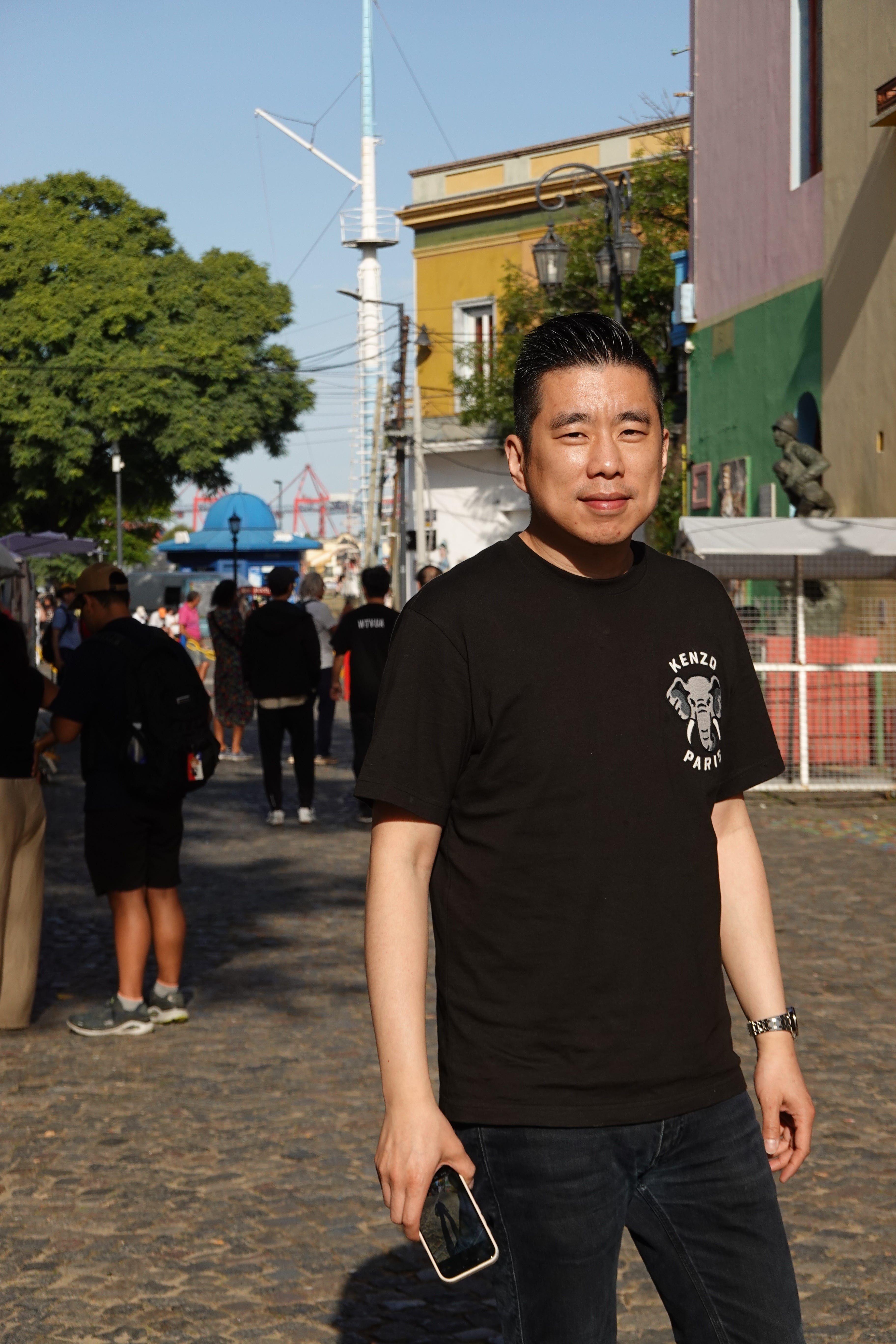
For a touring musician, the rhythm of life is usually dictated by the metronome and the concert schedule. But for pianist Xue Yingjia, a faculty member of the Hong Kong Chinese University (Shenzhen) School of Music, the tempo was suddenly shattered by the opening salvos of a distant war.
What was supposed to be a triumphant journey home from a three-nation tour turned into a 60-hour odyssey across four continents, fueled by adrenaline, “Force Majeure,” and a desperate longing for a shower.
The U-Turn Over the Atlantic
The tour, titled “Light on the Strings,” had been a success. Led by Dean Ye Xiaogang, the ensemble traveled from the winter chill of China to the peak of summer in the Americas, performing contemporary Chinese works in Kansas City, Santo Domingo, and Buenos Aires.
Eager to return for the start of the spring semester, Xue Yingjia booked an early flight on February 27th: an Emirates haul from Buenos Aires to Beijing via Rio, with a stop in Dubai.
“I was half-asleep, about five hours into the flight from Rio,” he recalls. “The captain’s voice came over the intercom. It was solemn. Even before I processed the words, I knew something was wrong.”
The announcement was blunt: Due to regional security concerns—the outbreak of the U.S.-Israel-Iran war—the Middle Eastern airspace was closed. The plane was making a U-turn.
“I looked at the flight map and saw that sharp, graceful arc. We had been so close to the African coast. To me, seeing Africa meant I was halfway home. Instead, I was headed back exactly where I started. Ten hours of flying for absolutely nothing.”
Stranded in Rio
The situation in Rio de Janeiro was a logistical nightmare. Because Brazil had not yet implemented visa-free entry for Chinese citizens, Xue was initially forbidden from deplaning. However, as the scale of the “Force Majeure” became clear, authorities granted a humane exception, stamping passports with special waivers so travelers could seek hotels.
While others in the group chose to trust the airline’s promises of rerouting, Xue felt a surge of restless anxiety.
“In a situation like that, you feel completely helpless. The sheer scale of war’s impact is staggering. Even though we were so far away, the fallout radiated out to us. I didn’t want to wait three days. I just wanted to go home.”
In a frantic 30-minute window, he scoured booking platforms and secured a ticket that avoided the conflict zone entirely: Rio to Paris, then Paris to Shanghai.
The Sound of Home
The detour was grueling. After a 12-hour flight to France and an eight-hour layover in Paris, the exhaustion began to settle into his bones. But the turning point came at the boarding gate for China Eastern Airlines.
“Seeing the ‘PVG’ (Pudong) code at the gate felt like a welcoming embrace,” Xue says. “But it was the flight attendants that did it. Some were from Shanghai. Hearing my home dialect made the psychological distance feel like it had vanished instantly. I knew then that nothing could stop me.”
By the time he touched down in Xiamen, the physical toll of the journey had reached a comedic extreme.
“I told a colleague: Do you realize it’s been 80 hours since I’ve had a shower? I felt like I had left the civilized world behind. The last time I went that long without bathing, I was a small child living in the old Shanghai quarters.”
A Grim Reality
Looking back, the frustration of the “wasted” flight has been replaced by a quiet sense of luck. Had the plane landed in Dubai, Xue might have been stranded near a zone of drone and missile strikes, facing even longer delays and security concerns.
Now back in the classrooms of Shenzhen, the memories of the hot Caribbean sea breeze and the grand architecture of Buenos Aires’ Avenida de Mayo feel a world away. The experience has left him with a sobering perspective on the fragility of our global systems.
“We forget the pain as soon as the wound heals,” he reflects. “But for those few days, ‘Force Majeure’ wasn’t just a legal term on a contract. It was a grim, serious reality. I pray for a world without war—because without it, we can all just find our way home.”