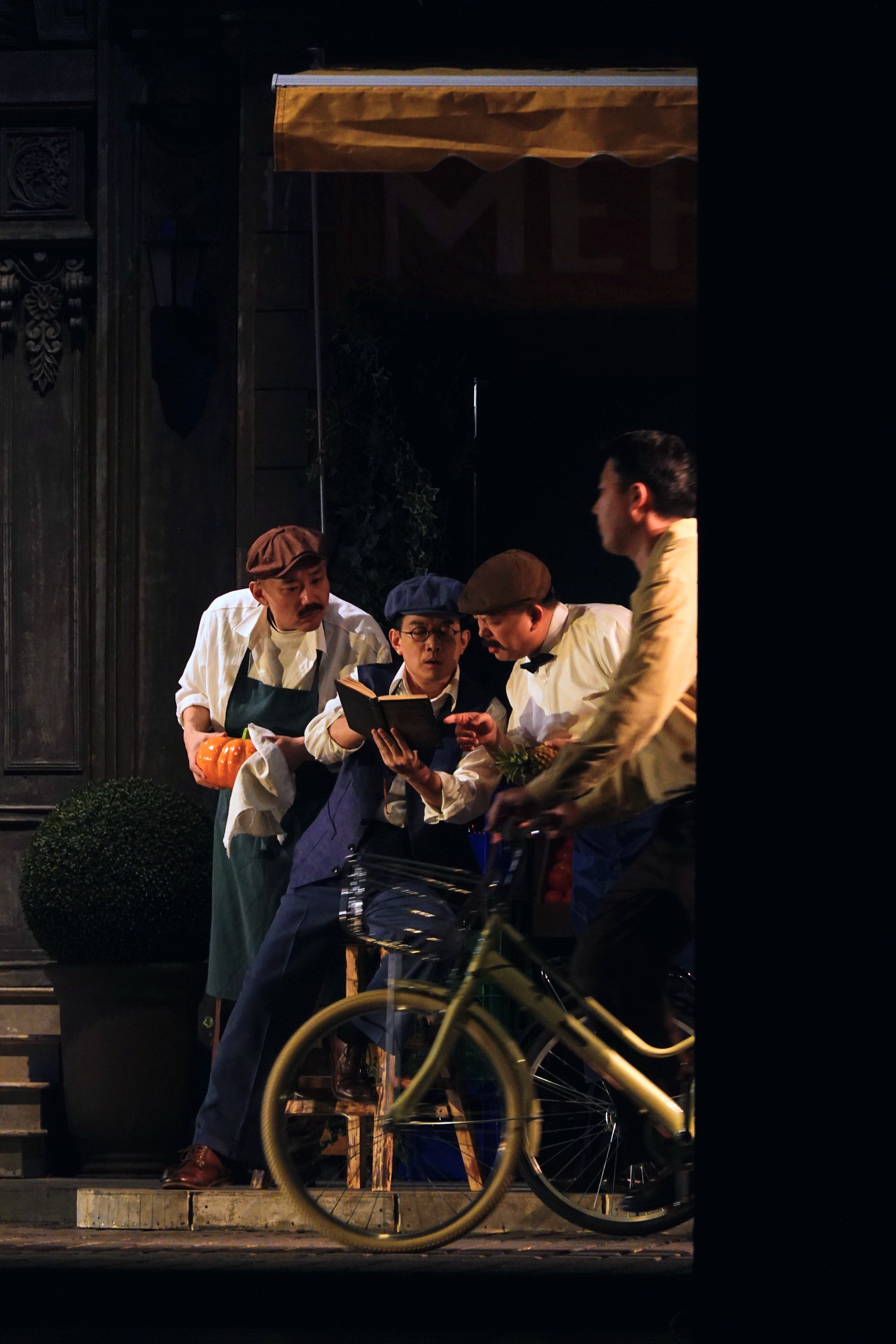
It has been far too long since I last revisited a Gaetano Donizetti opera on a domestic stage—the previous occasion was all the way back at the New National Theatre in Tokyo. Operas representing the very roots and original spirit of Italian bel canto live and die by one quality: stylistic authenticity.
Yesterday afternoon at the Shangyin Opera House, the Shanghai Opera House presented Donizetti’s beloved L’elisir d’amore (The Elixir of Love), led by Italian conductor Paolo Carignani.
As one of the leading bel canto tenors of his generation, seeing Yijie Shi perform a complete Donizetti role live on a Chinese stage is no longer a distant wish. His bright, agile, and ringing timbre remains virtually unrivaled—a rare voice in today’s operatic landscape. That seemingly effortless projection is certainly backed by extraordinary natural gifts, yet it is equally sustained by supreme vocal technique.
Equally impressive in terms of craft was Doctor Dulcamara, who stood out as the highlight of yesterday afternoon’s international cast including Nino Machaidze as Adina. While the voice itself shows signs of age—most noticeably during his duet with Nemorino, where he was nearly covered—he brought this notoriously difficult, portly comic role to vivid life through sheer stagecraft and theatrical command. His subtle micro-expressions and physical comedy were nothing short of a masterclass.
Listening to Yijie Shi shine in Donizetti’s repertoire, however, couldn’t help but remind me that his artistic signature extends far beyond Italian bel canto. Composer Ye Xiaogang’s The Light of Himalaya practically feels tailor-made for Shi’s voice. Over the years, Shi has gone on to anchor the solo tenor roles in several of Ye’s monumental works, including Dufu’s Thatched Cottage, Seven Episodes of Lin’an, Symphony No. 5 “Lu Xun”, and the opera Song of Farewell.
Ye Xiaogang’s deep cultural resonance and romantic lyricism have propelled Shi’s stellar trajectory, while Shi’s pure, luminous singing illuminates the unadorned sincerity at the heart of Ye’s music. Their collaboration is a true meeting of minds—an artistic and personal synergy in which each elevates the other.
Now that we can hear Yijie Shi triumph in Donizetti right here in Shanghai, might we hope to see him bring his signature homegrown repertoire to the stage of the upcoming Grand Opera?
Audiences everywhere rave about the iconic final trio of Richard Strauss’s Der Rosenkavalier, yet how many know that the closing trio of Song of Farewell is brimming with that same intoxicating blend of fantasy and trepidation? Ultimately, China’s stages must be saved for Chinese works.