Every major music competition carries an open secret: the live broadcast shows you the performance, but it never shows you the deliberation. What happens in the jury room — how scores are tallied, what gets argued over, which compromises get struck before a name is announced — has long been the part of the process competitions guard most closely.
Jurors sign NDA, media are barred from the room, and even competition officials have historically had no right of entry. The result is an industry built, in part, on rumor: stories of jurors trading favors for their own students, of heated arguments settled by horse-trading rather than merit, of results decided well before the final note is played.
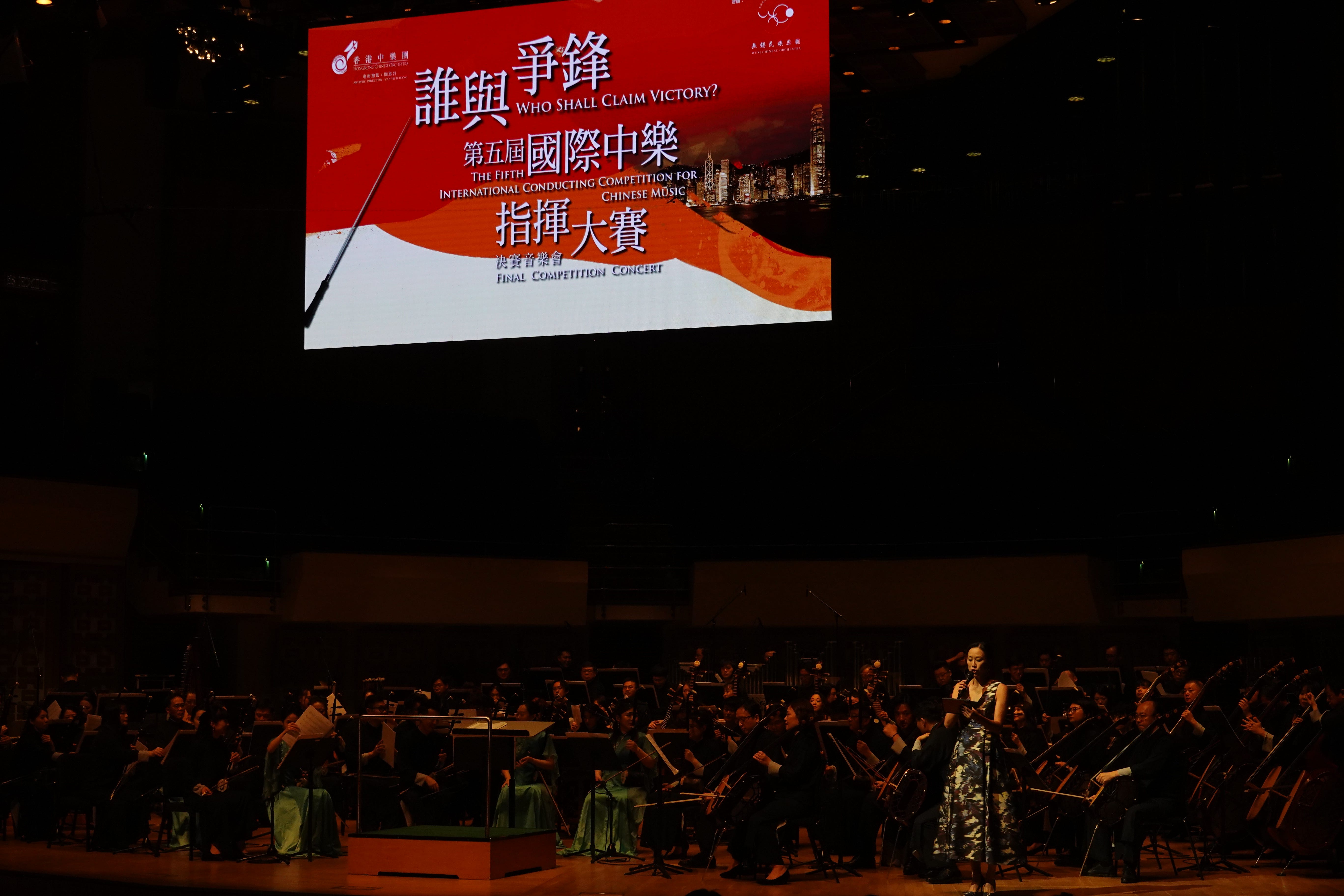
Last week, at the 5th International Conducting Competition for Chinese Music in Hong Kong, that veil lifted — at least partially, and at least for the five observers.
Invited by the Hong Kong Chinese Orchestra to serve as an observer for the competition’s final round, I was granted rare access to the jury room itself from June 25 to 28, present throughout the scoring, tabulation, public disclosure and sign-off process. The NDA still stands — the documents and any discussion inside the room remain undisclosed — but the more striking revelation was procedural: there was barely any discussion to report. Scores were submitted, results were calculated, and the room moved from entry to confirmed outcome in roughly ten minutes. No theatrics, no backroom haggling, nothing eventful or even newsworthy — just numbers doing the talking.
It’s a sharp contrast to the picture painted by veteran piano pedagogue Vladimir Viardo, who once described the rules of a music contest during the 2023 Tchaikovsky Competition in blunter terms: the real first round isn’t the preliminary heats, it’s the jury’s initial selections; the real final isn’t the final concert, it’s the jury’s closing discussion. That kind of opacity is precisely what fuels suspicion in classical music’s competition circuit — when the truth is hidden, speculation fills the vacuum.
What Hong Kong demonstrated this week was the alternative: a transparent, efficient, almost anticlimactic jury process that the correspondent called unmatched among competitions of its kind, and one other contests would do well to emulate.
The transparency mattered because the result it produced was worth getting right. This was the competition’s founding mission from the start.
Looking back over a decade, Hong Kong Chinese Orchestra leadership had identified a real gap in the field: Chinese orchestras had made strong creative and technical progress — including in instrument reform — but there was a serious shortage of skilled conductors specializing in Chinese music, and no international programmes existed to showcase that talent.
The orchestra responded by launching the world’s first International Conducting Competition for Chinese Music in 2011, building on the conducting masterclasses it had already been running. Since then, the competition has been held four times — in 2011, 2014, 2017 and 2019/24 — in partnership with institutions including the Xi’an Conservatory of Music and the Taiwan National Chinese Orchestra, drawing more than 200 entrants from around the world over the years.
This year’s edition produced a clear, decisive winner. Conducting the Hong Kong Chinese Orchestra in Liu Yuan’s The Zen ofAutumn in the Mountains and a wind-and-percussion arrangement of the Shanxi folk piece The Grand Victory by Zhang Shiye at the final on June 28th, Chen Yu-Chia swept the competition — taking the Champion title along with awards for Best Interpretation of a Hong Kong Work, Most Popular with the Orchestra Members, and Most Popular with the Media. Four trophies, a rare clean sweep, and a result that matched the title of the very piece he conducted: Grand Victory.
Second and third place went to Zhang Yang and Chu Che-Min respectively, with all three top finishers hailing from Taiwan. The final-round jury included Bian Zushan (chair), Chew Hee Chiat, Chen Xieyang, Sun Peng and Liu Sha — four of them from mainland China — alongside a separate panel of media observers.
What made this year notable wasn’t just who won. It was that, for once, an outside observer could say with confidence the process behind the result was exactly what it appeared to be.