My Predictions Thus Far
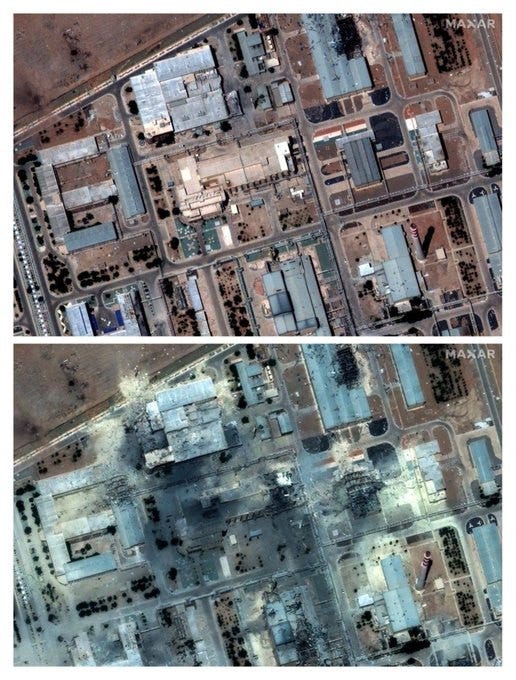
The events of the past 12 days were not surprising to me. I previously predicted that Iran would use economic asymmetry to its advantage, that Israeli and American strikes would fail strategically, and that Iran’s operational planning would prove superior. The forecast that re-armament costs would heavily favor Iran while its retaliation would maximize costs for its enemies has also been borne out, such as Israel running out of Arrow 2/3 Air Defense missiles. I predicted the resilience of hardened sites like Fordow. Isfahan survived its Tomahawk attacks, while Natanz was cratered out by two GBU-57s, however. In hindsight, the US should have used GBU-57s on Isfahan and just skipped Fordow. I have a crazy theory that the enriched uranium is inside Fordow, but nothing to prove it, just a counter-intuitive hunch. What if the trucks lined up at Fordow three days ago were delivering uranium and not evacuating gear, or both? We will never know because the Iranians scheduled the operation between satellite photo windows.
Now, we must address the ultimate strategic question of “regime change.” This analysis will explain why military pressure from the United States, Israel, or any other external power will not succeed in toppling the Iranian government. To understand why, we must look past the conflict itself and into the complex internal dynamic between the country’s authoritarian rulers and its determined pro-democracy movements.
My scorecard to date:Iran would use economic asymmetries to their advantage ✓Israeli or American strikes would fail to achieve strategic objectives ✓Iran would demonstrate superior operational planning ✓The cost-exchange ratios of re-armaments would favor Iran massively ✓Iran would retaliate in ways that impose maximum cost on the US and Israel ✓Fordow site would survive any type of attack, conventional or nuclear ✓Iranian nuclear program and fissile material intact ✓Leadership degraded but subordinates ready ✓
Trump’s and Netanyahu’s cards:Fordow is gone ❌Iranian nuclear and missile capability is gone ❌We didn’t really want regime change this time ❌Mission Accomplished, Peace Established ❌
You decide who is more close to reality, myself or Trump & Netanyahu.
Why Military Pressure Backfires
The ongoing Iran-Israel conflict that erupted on June 13, 2025, represents a textbook case of how military intervention can undermine the very democratic objectives it claims to support¹. Current Israeli strikes have killed at least 400 Iranian civilians while potentially strengthening the authoritarian regime through predictable rally-around-the-flag effects—a pattern that mirrors decades of failed Western government change attempts². The contradiction between stated democratization goals and military methods has created what Iranian civil society activists describe as an impossible choice between foreign intervention and domestic authoritarianism.
The broader strategic failure extends beyond immediate tactical miscalculations to encompass a fundamental misunderstanding of how external military pressure affects domestic political dynamics in authoritarian states³. Historical evidence from Iraq, Afghanistan, Libya, and Iran’s own experience during the Iran-Iraq War demonstrates that military intervention typically strengthens rather than weakens authoritarian governments, while simultaneously delegitimizing the authentic democratic movements that could represent genuine alternatives to the current system⁴. Let us recall, 20 years of invading and overthrowing Afghanistan got the US to replace the Taliban with…the Taliban.
Military Intervention Undermines Democratic Movements
Iranian Islamic culture has shifted dramatically since the 2022 killing of Mahsa Amini assumedly by The Guidance Patrol, the religious morality police of Iran. She was arrested for not wearing a hijab and died in a hospital. That sparked “Women, Life, Freedom”, which is not just a movement but a vocal revolutionary battle cry for growing Persian liberal society. Although hijabs are legally required in Iran still, the levels of non-compliance make it unenforceable and reformist president Masoud Pezeshkian has promised to pull back Guidance Patrol activity. Even the Ayatollah Khameni himself has preached that men must share house chores with their wives. Somewhat reminiscent of when Saudi Arabia very slowly allowed women to get driver licenses.
CAPTION: Poll of Iranians on women wearing hijabs
The current military campaign has placed Iran’s genuine democratic opposition in an untenable position, forcing them to choose between national solidarity and continued resistance to the government⁵. Iranian civil society activists report that even serious opponents of the Islamic Republic are now “standing by this government to repel Israel’s aggression,” according to Tehran-based analyst Alireza Taghavinia⁶. This rally-around-the-flag effect was precisely what strengthened Iran’s theocratic system during the Iran-Iraq War from 1980-1988, when external aggression united Iranians behind a revolutionary government that was initially vulnerable to domestic opposition⁷.
The pro-democracy Woman, Life, Freedom movement—which emerged from Kurdish regions and represents the most significant domestic challenge to the authority in decades—now finds itself caught between supporting national defense and maintaining anti-government activism⁸. Research from the Center for Human Rights in Iran documents how the movement had successfully normalized civil disobedience against compulsory veiling laws and created “irreversible social resistance” among younger Iranians⁹. However, external military pressure has complicated this organic resistance by making opposition activists appear as potential foreign agents.
The strategic error is particularly acute given that polling by GAMAAN consistently shows 80% of Iranians oppose the current system¹⁰, creating unprecedented conditions for domestic political change. Yet military intervention risks squandering this historic opportunity by triggering nationalist responses that override anti-government sentiment. As Iranian-American defense analyst Hossein Arian notes, “the people of Iran are aware and don’t need a guardian abroad”¹¹.
Caption: Young, liberal, and non-hijab compliant Iranian woman calls for the Mullahs to build nuclear bombs and close the Strait of Hormuz
Backing Unpopular Proxies, Killing Supporters of Democracy
The contradiction between Western support for Crown Prince in exile Reza Pahlavi, son of The Shah who was removed in 1979 and the military campaign’s civilian casualties exemplifies the strategic confusion in current policy¹². While GAMAAN surveys show Pahlavi has 32-40% support within Iran for transitional leadership, his alignment with Israeli military actions and maximum pressure policies potentially undermines his domestic credibility¹³. Iranian activists, including Reza Khandan (husband of imprisoned Nobel laureate Nasrin Sotoudeh), have criticized Pahlavi as “opportunistic” and “disconnected” from Iranians inside the country¹⁴.
Meanwhile, the current strikes have reportedly killed nuclear scientists, military officials, and civilians who could represent part of Iran’s technocratic class—the very educated professionals who might support democratic transition¹⁵. Intelligence reports suggest that Iran’s counter-Mossad unit was itself compromised, with 20 agents working for Israel, indicating significant penetration of Iran’s security apparatus¹⁶. Yet rather than exploiting these intelligence victories for targeted operations against authority leadership, the broad military campaign has generated civilian casualties that include 54 women and children among the 400+ killed, according to Iran’s Health Ministry¹⁷.
The civilian casualty pattern recalls the fundamental problem with exile politics: external military action often eliminates the middle-class professionals and civil society leaders who could represent democratic alternatives, while leaving authoritarian power structures intact¹⁸. This mirrors historical failures in Iraq, where disbanding institutions created power vacuums filled by extremist groups rather than democratic forces¹⁹.
Rally-Around-the-Flag Strengthens Authoritarianism
Academic research consistently demonstrates that external military pressure typically strengthens rather than weakens authoritarian governments in the short term²⁰. Alexander Downes’ comprehensive study of 120 foreign-imposed government changes found that these operations “seldom achieve their intended goals” and often produce opposite effects, including increased likelihood of civil war and reduced prospects for democratization²¹.
The current Iran conflict exhibits classic rally-around-the-flag dynamics identified by political scientist John Mueller, where populations unite behind governments during external crises regardless of their domestic grievances²². Even Arab nations that typically oppose Iran—including Saudi Arabia and the UAE—have condemned the Israeli strikes, with Crown Prince Mohammad bin Salman expressing solidarity with Iran²³. This regional response demonstrates how military action can transform Iran from a regional pariah into a victim of aggression.
Iran’s experience during the 1980-1988 war with Iraq provides the historical template: external aggression from Iraq (backed by the U.S., Saudi Arabia, and Kuwait) united Iranians behind a revolutionary government that had been struggling with internal opposition²⁴. The war enabled the Islamic Republic to consolidate power, purge opposition groups, and establish the narrative of “Sacred Defense” that continues to legitimize theocratic rule today²⁵.
Intelligence assessments suggest Iran’s leadership is “in survival mode,” which former CIA officials warn could make the government more dangerous rather than compliant²⁶. The combination of external pressure and internal paranoia often leads authoritarian governments to crack down harder on domestic opposition while mobilizing nationalist sentiment against foreign threats²⁷.
USA Historical Patterns of Government Overthrow Failures
The current Iran strategy follows a familiar pattern of failed Western interventions that prioritize military solutions over understanding local political dynamics²⁸. Academic studies by Lindsey O’Rourke found that U.S. covert government change attempts during the Cold War failed more than 60% of the time²⁹, while Jonathan Monten’s research shows that military interventions rarely produce stable democratic transitions³⁰.
The Iraq precedent is particularly relevant: despite successfully removing Saddam Hussein, the 2003 invasion created a power vacuum that strengthened Iran’s regional influence and produced decades of instability³¹. Libya’s 2011 intervention similarly removed Gaddafi but left the country fragmented among competing militias³². Afghanistan’s 20-year occupation ended with Taliban victory despite massive resource investments³³. In each case, military success failed to translate into political transformation because external force cannot create the domestic legitimacy necessary for stable governance.
Iran’s 1953 CIA coup provides the most direct historical parallel³⁴. Operation Ajax successfully overthrew democratically elected Prime Minister Mohammad Mossadegh but installed an unpopular Shah whose rule ultimately collapsed in the 1979 Islamic Revolution³⁵. The coup created enduring anti-American sentiment that continues to shape Iranian strategic thinking, demonstrating how successful military operations can produce long-term strategic failures³⁶.
Current expert studies suggest similar dynamics are emerging. Carnegie Endowment scholars argue the U.S. has “missed a critical turning point in Iran’s international orientation” by over-relying on coercive measures³⁷, while regional experts warn that military pressure may “exacerbate existing circumstances for fragile communities across the region”³⁸.
Sanctions, External Pressures Also Backfire
Foreign policy establishments increasingly question the strategic coherence of current approaches³⁹. Brookings Institution analysts argue the strategy is “too heavily reliant on economic sanctions, a tool whose efficacy progressively declines,” while lacking viable diplomatic endpoints⁴⁰. The Council on Foreign Relations describes a “cycle as unsurprising as it is ineffective” where harsh measures fail to produce the expected concessions⁴¹.
Academic research reveals fundamental contradictions between democratization goals and military methods⁴². University of Guilan studies show that external pressure has “compelled the state to further securitize and amplify its repressive capacity,” undermining rather than supporting democratization processes⁴³. Australian National University’s Ali Fathollah-Nejad notes that “progressive Iranians often find themselves between the rock of US imperialism and militarism and the hard place of Iran’s authoritarian system”⁴⁴.
Former intelligence officials warn that while military pressure has tactical benefits, it may harden Iranian resolve rather than produce compliance⁴⁵. RAND Corporation analyst Raphael Cohen argues that strikes “could alter Iran’s strategic calculus and prompt it to pursue nuclear weapons despite the associated risks,” suggesting that military pressure may accelerate rather than prevent nuclear proliferation⁴⁶.
The intelligence community assessment indicates that higher-ranked Iranian officials are becoming increasingly secretive and paranoid, suggesting that external pressure is strengthening hardline elements within the government while weakening moderate voices who might support diplomatic solutions⁴⁷.
Conclusion: Strategic Failure Despite Tactical Success
The current military campaign against Iran demonstrates tactical proficiency but strategic incoherence⁴⁸. While Israeli strikes have degraded Iranian nuclear infrastructure and eliminated high ranking personnel, these tactical victories may prove counterproductive to stated objectives of democratization and regional stability⁴⁹. The combination of civilian casualties, rally-around-the-flag effects, and delegitimization of authentic opposition movements threatens to strengthen the very authoritarian system the intervention claims to weaken⁵⁰.
The historical record shows that external military pressure on authoritarian governments typically produces short-term nationalist solidarity that benefits targeted governments while undermining domestic democratic movements⁵¹. Iran’s experience during the Iran-Iraq War, combined with more recent examples from Iraq, Libya, and Afghanistan, suggests that military solutions to political problems rarely achieve their intended outcomes and often create worse strategic environments⁵².
The fundamental strategic error lies in assuming that military pressure can substitute for the patient work of supporting indigenous democratic movements and creating conditions for internal political change⁵³. As Iranian opposition research shows, 80% of Iranians already oppose the current system⁵⁴—creating unprecedented opportunities for democratic transition that military intervention risks squandering through predictable nationalist reactions.
Rather than accelerating democratic change, current military pressure appears to be recreating the conditions that originally brought the Islamic Republic to power: external threats that unite diverse Iranian populations behind an otherwise unpopular government, while eliminating the educated professionals and civil society leaders who could represent democratic alternatives⁵⁵.
Footnotes
¹ June 2025 Israeli strikes on Iran - Wikipediahttps://en.wikipedia.org/wiki/June_2025_Israeli_strikes_on_Iran
² Rally ‘round the flag effect - Wikipediahttps://en.wikipedia.org/wiki/Rally_'round_the_flag_effect
³ Confrontation With Iran - Council on Foreign Relationshttps://www.cfr.org/global-conflict-tracker/conflict/confrontation-between-united-states-and-iran
⁴ Afghanistan, Iraq, Syria, Libya, and Yemen - Center for Strategic and International Studieshttps://www.csis.org/analysis/afghanistan-iraq-syria-libya-and-yemen
⁵ Why Israel’s attacks are backfiring as Iranians rally around the flag - Middle East Eyehttps://www.middleeasteye.net/opinion/israel-attacks-are-backfiring-iranians-rally-around-flag-why
⁶ New polling highlights Iranians’ views on Iran’s foreign policy and regional role - Middle East Institutehttps://mei.edu/publications/new-polling-highlights-iranians-views-irans-foreign-policy-and-regional-role
⁷ Iran-Iraq War - Britannicahttps://www.britannica.com/event/Iran-Iraq-War
⁸ Woman, Life, Freedom movement - Wikipediahttps://en.wikipedia.org/wiki/Woman,_Life,_Freedom_movement
⁹ A Quiet Revolution Continues in Iran Two Years After the Woman Life Freedom Uprising - Center for Human Rights in Iranhttps://iranhumanrights.org/2024/09/a-quiet-revolution-continues-in-iran-two-years-after-the-woman-life-freedom-uprising/
¹⁰ Opinion Survey Reveals Overwhelming Majority Rejecting Iran’s Government - Iran Internationalhttps://www.iranintl.com/en/202302036145
¹¹ Is Military Intervention In Iran A Viable Path To Government Change? - Radio Free Europe/Radio Libertyhttps://www.rferl.org/a/iran-israel-regime-change-war-military-trump-protest/33448817.html
¹² Reza Pahlavi, Crown Prince of Iran - Wikipediahttps://en.wikipedia.org/wiki/Reza_Pahlavi,_Crown_Prince_of_Iran
¹³ Reza Pahlavi, Exiled Iranian Royal With Pro-Israel Leanings, Signals Desire To Return - TimelineDailyhttps://timelinedaily.com/west-asia/reza-pahlavi-exiled-iranian-royal-with-pro-israel-leanings-signals-desire-to-return
¹⁴ Amid Ongoing Iran Protests, Congress Boosts Cultish MEK Exile Group - The Intercepthttps://theintercept.com/2023/02/11/iran-protests-mek-congress-maryam-rajavi/
¹⁵ Who was Mohammad Bagheri, chief of Iran’s military killed by Israel? - Al Jazeerahttps://www.aljazeera.com/features/2025/6/13/who-was-mohammad-bagheri-chief-of-irans-military-killed-by-israel
¹⁶ Head of Iranian unit countering Mossad was Israeli agent, says ex-president Ahmadinejad - The Times of Israelhttps://www.timesofisrael.com/head-of-iranian-unit-countering-mossad-was-israeli-agent-says-ex-president-ahmadinejad/
¹⁷ Iran strikes back at Israel with missiles over Jerusalem, Tel Aviv - Reutershttps://www.reuters.com/world/middle-east/israel-says-it-strikes-iran-amid-nuclear-tensions-2025-06-13/
¹⁸ Catastrophic Success: Why Foreign-Imposed Government Change Goes Wrong - Cornell University Presshttps://www.amazon.com/Catastrophic-Success-Foreign-Imposed-Cornell-Security/dp/1501761145
¹⁹ Timeline: The Iraq War - Council on Foreign Relationshttps://www.cfr.org/timeline/iraq-war
²⁰ Government change - Wikipediahttps://en.wikipedia.org/wiki/Regime_change
²¹ Catastrophic Success - De Gruyterhttps://www.degruyter.com/document/doi/10.1515/9781501761164/html
²² Rally ‘round the flag effect - Wikipediahttps://en.wikipedia.org/wiki/Rally_'round_the_flag_effect
²³ Arab World Reacts to Israel’s Strikes on Iran - Newsweekhttps://www.newsweek.com/arab-world-reacts-israels-strikes-iran-2084948
²⁴ Iran-Iraq War - Britannicahttps://www.britannica.com/event/Iran-Iraq-War
²⁵ The Islamic Revolutionary Guard Corps (IRGC) - Council on Foreign Relationshttps://www.cfr.org/backgrounder/irans-revolutionary-guards
²⁶ Israel strikes Iran. What happens next? - Brookings Institutionhttps://www.brookings.edu/articles/israel-strikes-iran-what-happens-next/
²⁷ How Iran Is Calculating Its War With Israel - Middle East Council on Global Affairshttps://mecouncil.org/blog_posts/how-iran-is-calculating-its-war-with-israel/
²⁸ U.S.-backed government change has a checkered past — Iran may be no different - NBC Newshttps://www.nbcnews.com/world/iran/iran-trump-israel-regime-change-tehran-khamenei-iraq-afghanistan-bush-rcna213427
²⁹ The Strategic Logic of Covert Government Change - Taylor & Francishttps://www.tandfonline.com/doi/abs/10.1080/09636412.2020.1693620
³⁰ Academics Say U.S. Interventions to Force Government Change Often Fail - Washington Diplomathttps://washdiplomat.com/academics-say-u-s-interventions-to-force-regime-change-often-fail/
³¹ After Iraq: How the U.S. Failed to Fully Learn the Lessons of a Disastrous Intervention - International Crisis Grouphttps://www.crisisgroup.org/united-states-iraq/after-iraq-how-us-failed-fully-learn-lessons-disastrous-intervention
³² 2011 military intervention in Libya - Wikipediahttps://en.wikipedia.org/wiki/2011_military_intervention_in_Libya
³³ Easier to Get into War Than to Get Out: The Case of Afghanistan - Belfer Centerhttps://www.belfercenter.org/publication/easier-get-war-get-out-case-afghanistan
³⁴ Iran–United States relations - Wikipediahttps://en.wikipedia.org/wiki/Iran%E2%80%93United_States_relations
³⁵ 1953 Iranian coup d’état - Wikipediahttps://en.wikipedia.org/wiki/1953_Iranian_coup_d'%C3%A9tat
³⁶ CIA‑assisted coup overthrows government of Iran - History.comhttps://www.history.com/this-day-in-history/cia-assisted-coup-overthrows-government-of-iran
³⁷ Israel’s and Iran’s Military Adventurism Has Put the Middle East in an Alarmingly Dangerous Situation - Carnegie Endowment for International Peacehttps://carnegieendowment.org/emissary/2025/06/israel-iran-war-regional-stability-military-adventurism-proxies?lang=en
³⁸ Addressing Iran’s evolving threats to US interests - Brookings Institutionhttps://www.brookings.edu/articles/addressing-irans-evolving-threats-to-us-interests/
³⁹ The Self-Limiting Success of Iran Sanctions - Brookings Institutionhttps://www.brookings.edu/articles/the-self-limiting-success-of-iran-sanctions/
⁴⁰ The Self-Limiting Success of Iran Sanctions - Brookings Institutionhttps://www.brookings.edu/articles/the-self-limiting-success-of-iran-sanctions/
⁴¹ Confrontation With Iran - Council on Foreign Relationshttps://www.cfr.org/global-conflict-tracker/conflict/confrontation-between-united-states-and-iran
⁴² Trajectory of Democracy in Iran from 2009 to 2022 - Taylor & Francishttps://www.tandfonline.com/doi/full/10.1080/17419166.2025.2449654?af=R
⁴³ Trajectory of Democracy in Iran from 2009 to 2022 - Taylor & Francishttps://www.tandfonline.com/doi/full/10.1080/17419166.2025.2449654?af=R
⁴⁴ Rethinking US Policy Toward Iran: A Forum - MERIPhttps://merip.org/2020/06/rethinking-us-policy-toward-iran-a-forum-2/
⁴⁵ The Israel-Iran Conflict: Q&A with RAND Experts - RAND Corporationhttps://www.rand.org/pubs/commentary/2025/06/the-israel-iran-conflict-qa-with-rand-experts.html
⁴⁶ The Israel-Iran Conflict: Q&A with RAND Experts - RAND Corporationhttps://www.rand.org/pubs/commentary/2025/06/the-israel-iran-conflict-qa-with-rand-experts.html
⁴⁷ Israel strikes Iran. What happens next? - Brookings Institutionhttps://www.brookings.edu/articles/israel-strikes-iran-what-happens-next/
⁴⁸ Israel strikes Iran. What happens next? - Brookings Institutionhttps://www.brookings.edu/articles/israel-strikes-iran-what-happens-next/
⁴⁹ By fusing intelligence and special operations, Israel’s strikes on Iran are a lesson in strategic surprise - Atlantic Councilhttps://www.atlanticcouncil.org/blogs/new-atlanticist/by-fusing-intelligence-and-special-operations-israels-strikes-on-iran-are-a-lesson-in-strategic-surprise/
⁵⁰ Why Israel’s attacks are backfiring as Iranians rally around the flag - Middle East Eyehttps://www.middleeasteye.net/opinion/israel-attacks-are-backfiring-iranians-rally-around-flag-why
⁵¹ Catastrophic Success: Why Foreign-Imposed Government Change Goes Wrong - Cornell University Presshttps://www.amazon.com/Catastrophic-Success-Foreign-Imposed-Cornell-Security/dp/1501761145
⁵² Afghanistan, Iraq, Syria, Libya, and Yemen - Center for Strategic and International Studieshttps://www.csis.org/analysis/afghanistan-iraq-syria-libya-and-yemen
⁵³ U.S.-backed government change has a checkered past — Iran may be no different - NBC Newshttps://www.nbcnews.com/world/iran/iran-trump-israel-regime-change-tehran-khamenei-iraq-afghanistan-bush-rcna213427
⁵⁴ Opinion Survey Reveals Overwhelming Majority Rejecting Iran’s Government - Iran Internationalhttps://www.iranintl.com/en/202302036145
⁵⁵ The CIA’s Iran coup: Why Trump may fear government change in Tehran - Ynet Newshttps://www.ynetnews.com/article/b19zrtwnlgd-the-flag effects, and delegitimization of authentic opposition movements threatens to strengthen the very authoritarian system the intervention claims to weaken**.