July 1, 2025
Sorry, but it seems like you either hate or love Zohran Mamdani and either makes you a de-facto racist. No one seems to evaluate on the merits anymore, and no one has updated what the definition of political merit is since FDR and guess what everyone from that time period is dead. We are literally living in a withered away political culture, buried with everyone who lived during World War II. Love him, you are probably a jew hater. Hate him, well you are also a jew hater, but you are deeply islamophobic to boot, and a homophobic for good measure. Love him, you want free everything and government nanny state. Hate him, you are thinking he will bankrupt NYC overnight and 9/11 part two happens. (I will disprove this later, bankrupcy, not 9/11.) What if there was another way to analyze not just Mamdani, but the public, political establishment, and media responses to this admittedly handsome, well spoken, and very NYC’ish young millennial? Although I have never written op-ed before, let me entertain you, and possibly get you thinking outside your head.
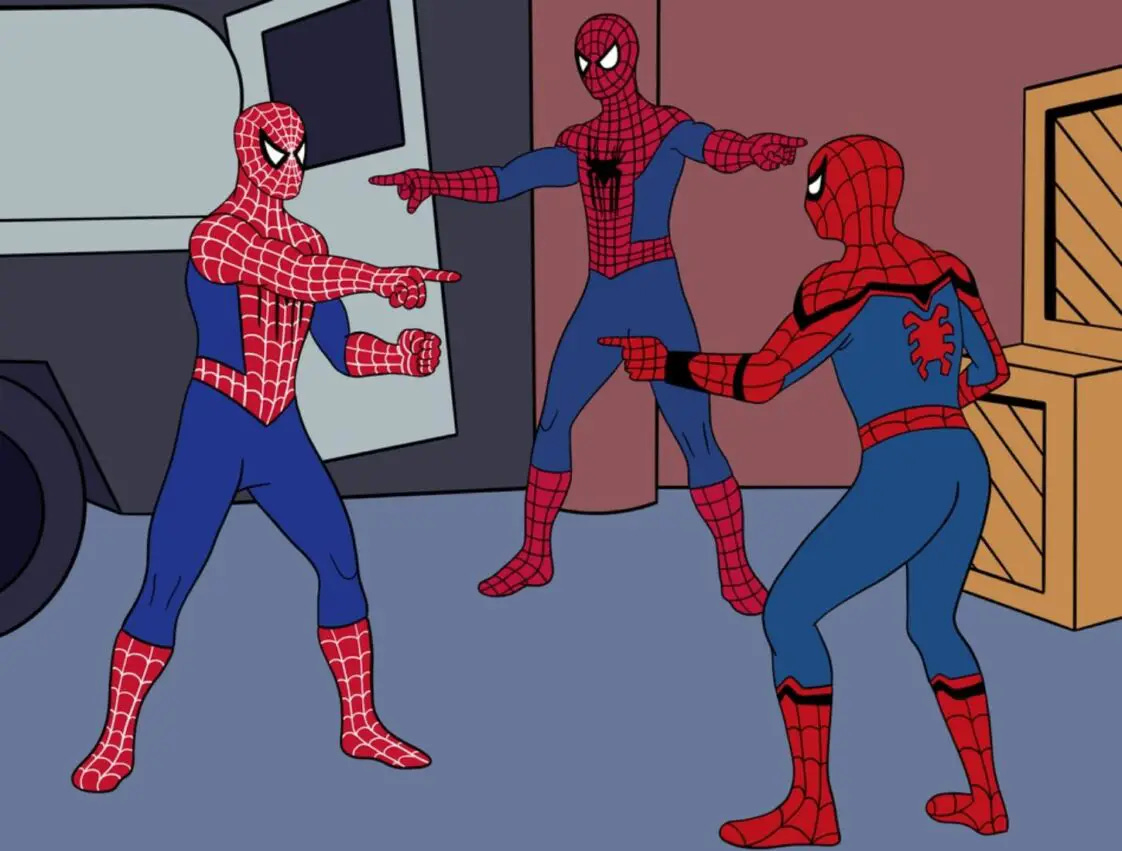
CAPTION: “Liberal calling Mamdani anti-Semitic" and "Conservative calling Mamdani anti-Semitic"
Mamdami Needs No Introduction, But
Zohran Mamdani is omnipresent these days, on CNN, on Telegram, on X, making him either a genuine phenomenon or some twisted plot of controlled opposition by the Democratic party, maybe ISIS, who knows. Is he a new manufactured political personality, like Alexandria Ocasio-Cortez, who literally got the congress seat out of 10,000 applicants to a Justice Democratic casting call? Or is he going to destroy NYC, like the city government did in the 1970’s under Republican then turned Democrat mayor John Lindsay (1966–1973). It would be ironic, because conservatives like to forget Lindsay and his Democratic successor maimed the city with overspending, leading to white flight, then banker takeover, then austerity, and then eventually Donald Trump and others made the city a playground for the rich ever since. Despite his relative wealth, and his parent’s even greater wealth of $2 to $10 million, Zohran Mamdani rents an apartment in Astoria, but owns undeveloped property in Uganda. This is the black mirror of what polar opposite Michael Bloomberg used to portray, who was unabashed about his wealth, yet made a daily show of riding the subway to work, after being chauffeured from UES to the subway station in a black government issue Chevy Suburban SUV. Mamdani, the 33-year-old assembly member hasn’t really been making new rounds at sweltering community centers preferring to sweat it out with a trans flag at the annual Pride March, having been catapulted daily to national news cycles. He doesn’t need to visit health centers and synagogues anymore, he’s making CNN and NYT headlines daily. He is making promises that would have seemed fantastical just a decade ago: free buses, city-owned grocery stores, a $30 minimum wage. Is he living is his own head nearly rent-free as an inexperienced lawmaker sipping White Claw on his couch in Astoria with a Che Guervara tee shirt, or does he truly have the interests covered of constructions workers, home health aides, and recent immigrants? If so, what about police officers and first responders? Note that I say interests covered. It’s one thing to be concerned, another to actually fix big complicated problems. Especially at his age.
What strikes me isn’t just the audacity of Mamdani’s platform, but the ferocity of the national reaction it has provoked. When was the last time a New York City mayoral race commanded headlines from coast to coast? When did local politics become a referendum on the soul of American democracy? The answer reveals something vibing about our political moment: Zohran Mamdani has become an unwitting litmus test for a system that has lost its capacity to imagine genuine alternatives.
The son of Indian Shia and “Post-Colonial” academic Mahmood Mamdani and international filmmaker Mira Nair, this wealthy Democratic Socialist represents something our political establishment cannot easily categorize or dismiss, despite being easy to analyze if you read on. He is neither the familiar progressive archetype, like Bernie or AOC, nor the comfortable ethnic candidate like Eric Adams none of whom poses any threat whatsoever to existing power structures. Instead, Mamdani embodies a dangerous idea: that politics should actually start looking back at even discussing about working people, not Israel, something literally no politicians has represented for decades. Yet, ideas do not solve problems. People do. Supposedly. So basically, Mamdani to me is a theory. He talks. To me that is not threatening. I’ll believe he’s a threat when ISIS is running over the Brooklyn Bridge.
Spoiler Alert, Mamdani Will Win It All and It Does Not Matter
Zohran Mamdani’s most ambitious policy proposals face significant legal and political constraints at both the state and federal levels. Many of these initiatives, including new or higher municipal taxes, require approval from the New York State Legislature, where Governor Kathy Hochul and other Albany leaders have already voiced skepticism or outright opposition. Even if Mamdani were to secure citywide support, state lawmakers could block or dilute his agenda, as seen in recent moves to increase oversight and limit mayoral power in response to controversial policies. On top of this, federal funding is a critical lifeline for New York City’s budget, and President Trump has publicly threatened to withhold federal support if Mamdani pursues policies the administration opposes, warning of “strict financial measures” and “severe financial repercussions” for noncompliance. These overlapping layers of state and federal authority mean that, while Mamdani can set a bold vision, the practical implementation of his “pipe dream” policies will be sharply limited by political realities and legal guardrails outside City Hall’s direct control. So yes, Mamdami doesn’t really matter. In the end, he might be able to get free buses I predict. It would only add $1 billion of budget debt, not a big deal for NYC.
Liberals and Conservatives Aren’t a Thing Anymore
The hysteria surrounding Mamdani’s candidacy exposes a deeper pathology in American politics—the complete failure of both conservative and liberal establishments to offer meaningful solutions to the crises facing ordinary Americans. Conservatives retreat into fantasies about a golden age that never existed, while liberals chase utopian futures that never materialize. Between these poles lies a vast wasteland where pragmatic governance might flourish, if anyone possessed the courage to inhabit it. Where does the eschaton lie?
Consider the conservative response to Mamdani’s rise. Rather than engage with his policy proposals, critics resort to tired rhetoric about “communist threats”, “anti-semitism”, and the specter of white flight, fleeing businesses and unrecoverable economic collapse. This reaction reveals the intellectual moribundity of modern conservatism, which has abandoned any pretense of actual governance in favor of perpetual grievance politics. Where are the conservative alternatives to Mamdani’s housing proposals? Where is the right-wing vision for addressing New York’s affordability crisis?
These talking points have become so rote and mundane because conservatism has devolved into a nostalgic exercise in myth-making. It’s not exactly a recent event, conservatism by its nature, is founded on a belief in a glorious past, sometimes the bloodier it was, the better. The “good old days” these politicians invoke, when New York was supposedly more prosperous and orderly, conveniently forget the 1970’s austerity measures, 24/7 red light district sex shows in Times Square, rampant squatting, cars abandoned en masse under the BQE, every subway car covered in graffiti, redlining in housing, police brutality such as Haitian man Abner Louima who was raped by officers with a plunger handle in 1997, Giulani and Trump were the heros of 9/11, systematic exclusion of entire communities from economic opportunity. This selective memory isn’t just historically dishonest; it’s political nihilism, offering no solutions to contemporary problems beyond a return to arrangements that were unjust and unsustainable. But I don’t think anyone can argue gentrification as a whole is bad, it beats the ghettos. Conservatives can’t really take credit for it however. It’s usually the LGBTIA+’s that are the tip of the spear of gentrification in large cities.
CAPTION: Cars that were stripped for parts and lefted abandoned under the FDR Drive and the Manhattan Bridge in 1986. Photo by Graham Macindoe
CAPTION: Subway graffiti 1970’s
CAPTION: View of the World Trade Center under construction from Duane Street.
But liberals deserve equal criticism, sometimes even more for their own forms of unsubstantiated and undelivered progressive thinking. What’s worse? Thinking the past was perfect, or your personal model of the future is the utopia? They both have their arrogant $5.7-7.9, but personally, thinking you know what’s best for everyone else risks being slightly more offensive. What’s past is technically dead and shouldn’t matter to a progressive, because, well, you have the superpower to change the future, no?
The progressive establishment that initially dismissed Mamdani as too radical, too communist, and too anti-semitic, literally the same rhetoric as conservatives save the Muslim terrorist slant, has been forced to confront the popularity of his supposedly “unrealistic” proposals. Universal childcare, free public transit, municipal grocery stores—these aren’t truly unobtainable fantasies but practical policies sometimes implemented successfully in cities around the world. Free buses are not uncommon actually. The liberal resistance to such measures reveals their own capture by financial interests and their acceptance of artificial constraints on public imagination and ultimately their own greed as “public servants”. Many of the oldest lawmakers in our national congress are Democrats, going on half-centuries of “service”. Insider trading, cough. Diane Feinstein literally died in office at age 90. What are their accomplishments besides presiding over American decline, even decrying American values at times and then calmly signing on with Republicans annually on extreme debts and deficits never seen in history while Ray Dalio and others panic about the US about going third world but no one actually cares because Blackrock, Palantir make zillions and the truth is the USD backed by our military. Petrodollar or we bomb you out of existence. It’s that simple.
Both sides simply revolve around the same timepiece wound and driven by gears of internal and external corruption. Where any politician stands, left or right by definition, simply depends on the time of day. Since the 1970’s, five decades worse and worse fiscal and political management explains both hyper-polarization and why Mamdani’s campaign has generated such intense national attention. He represents the possibility of politics breaking free from the false binary that has dominated American discourse for nearly a lifetime. His success would demarcate that voters are hungry for genuine alternatives to the managed decline offered by technocratic neoliberalism and the reactionary fantasies peddled by contemporary conservatism, itself a wan reflection of the heights of the original neoconservativism. This is echoed not just in NYC, but all over the planet with Milei in Argentina, Meloni in Italy, Orban’s Hungary, probably unfairly convicted Le Pen in France, Geert Wilders in Netherlands, Calin Georgescu and George Simion who were both literally jailed, banned, and ultimately stolen from in the Romanian presidencial election. Whether you believe that depends if you are pro-EU, a largely unelected body of goverment which tells other goverments what to do, or if you believe Putin once again, interferred with yet another international election. Either the pattern with Putin is that he is always doing election interference or he is always accused of it, and then by committee relieved of it after, false alert. Both? Who knows. By the way it is telling that Mamdani is very liberal and all other other international politicians I mentioned are right wing. So the new populism, it doesn’t have a political left or right wing label. It is simply a global vomitting of established political narratives, parties, policies, control, and corruption.
If you believe I am exaggerating about corruption, let us compare Tammany Hall in the 1860’s and 1870’s versus today. The recent New York City Housing Authority bribery scandal — resulting in federal charges against 70 employees and more than 60 convictions, has exposed a level of corruption in New York City government not seen since the days of Boss Tweed’s Tammany Hall. In the late 19th century, NYC’s political machine, led by Boss Tweed, wielded immense power through bribery, graft, and the manipulation of city contracts, siphoning off vast sums from public coffers. Today, similar patterns have re-emerged within NYCHA, where staffers regularly demanded cash bribes from contractors in exchange for no-bid work, pocketing millions over the past decade. Despite the existence of the Department of Investigation, established as a direct response to Tammany-era abuses, its effectiveness has been undermined by years of budget cuts and staff reductions, even as corruption complaints have surged to levels not seen in nearly a century. Eric Adams is currently indicted on multiple corruption charges himself, and although Tammany Hall represents billions in stolen money versus tens of millions today, untold billions are paid more surrepticiously mostly in unneeded contracts, kickbacks, permits and so on.
There Is This Thing Called Thinking
The tragedy of American urban politics lies not in its extremism but in its lack of creative pragmatism. Note that the rural areas are by and large, “quiet and mostly peaceful” while looting, rampages and the National Guard seem to be fixures of city life these days. the We are trapped between two equally inadequate visions: austerity that masquerades as fiscal responsibility and spending that ignores economic reality. Neither approach addresses the fundamental question of how to build sustainable, equitable cities in the 21st century.
New York’s history offers sobering lessons about the costs of this false choice. The austerity measures imposed during the city’s 1970s fiscal crisis didn’t restore financial stability. They accelerated white flight, hollowed dozens of entire neighborhoods. Yes! There was a time when parts of Manhattan looked like Gaza or Ukraine today, except with cars intact – and created the conditions for decades of disinvestment and inequality till today. The bankers and corporate executives who took control of city finances during that period weren’t fiscal conservatives; they were wealth extractors who used “fiscal responsibility” as cover for transferring public resources to private interests.
Yet the progressive alternative too often amounts to wishful thinking disconnected from the practical constraints of municipal finance. Grand promises about transformative change flounder on the realities of entrenched bureaucracy, limited revenue sources, and the complex interdependencies of urban systems. The result is a cycle of raised expectations and dashed hopes that breeds PTSD levels of cynicism and political disengagement.
What’s missing is a pragmatic center that combines genuine compassion with rigorous analysis of what actually works. This would mean policies like targeted housing investments with clear funding mechanisms, cost breakdowns, efficiency reforms that reduce waste without cutting essential services, and tax policies that close loopholes before creating new levies. It would mean acknowledging trade-offs honestly while maintaining ambitious goals for social progress.
But this kind of politics requires something our system actively discourages: long-term thinking, coalition-building across interest groups, and the patience to implement incremental reforms that accumulate into meaningful change. Primary elections reward ideological purity over practical effectiveness. Media coverage prioritizes conflict over governance. Interest groups, such as AIPAC demand unquestionable fealty rather than thoughtful compromise. Despite the overwhelmingly diverse population of NYC, ethnic and religion divisions will always persist, when it comes to money and power.
You Don’t Know How Bad It Gets
Perhaps the most damning aspect of the reaction to Mamdani’s candidacy is how it reveals the extent to which our political class has internalized the logic of managed decline. Proposals that would have been considered moderate reforms in the New Deal era are now dismissed as political suicide. The shift reflects not just changing political coalitions but a deep-seeded corruption of political will for personal gain plus the sheer inability to envision genuine alternatives to current arrangements. Incompetence or corruption or both? On both sides of the aisle.
So while this oxidizes differently across the political spectrum but produces the same result: paralysis in the face of mounting crises. Both approaches assume, but never mention, that fundamental change is impossible and that politics is merely about managing competing interests within fixed parameters.
The truth, as Mamdani’s rise demonstrates, is that these parameters are not fixed at all. They are habituate and maintained by networks of interest that benefit from the current system’s dysfunction. Real estate developers profit from artificial housing scarcity. Financial institutions benefit from public debt and privatization schemes. Business and political consultants and media figures thrive on perpetual conflict and crisis.
Breaking free from these constraints requires more than good intentions or policy expertise. It demands the kind of political wherewithall that threatens established interests and challenges comfortable assumptions about what is possible. Mamdani possesses this quality, if he is truly not a puppet or not one yet — which explains both his rapid rise and the intensity of opposition he faces. By the way term limits should just be called “anti-puppetering”.
Why This Local Race Matters
The attention focused on New York’s mayoral race reflects its significance for American politics more broadly which is probably why journalists are drawn like fruitflies. They can smell but cannot see. Me? I’m not a journalist. I’m an analyst who writes better than 99% of them, thanks for subscribing. Unbeknownst to most journalists, cities have become laboratories for policy innovation as federal and state governments remain paralyzed by partisan gridlock. What happens in New York, America’s largest and most diverse city, shapes national conversations about everything from housing policy to police reform.
Mamdani’s candidacy tests whether American voters are ready for millenial politicians who don’t dye their hair and have non-ironic beards, but also who challenge fundamental assumptions about economic organization and public investment. His platform represents a semi-coherent alternative to both market fundamentalism and technocratic incrementalism. He’s still beholden to very old in the tooth Marxist and Socialist ideology, but what are the alternatives? Andrew Cuomo? The governor who killed hundreds in nursing homes during COVID? The man is a such a creature of establishment his ideology nor policy can be deduced except he renamed the Tappen Zee after his dad, also a govenor. No his main policy piece was to visit Israel, like all of the other defeated mayoral candidates. Even with all of Mamdani’s brainwashed socialist thinking, Municipal grocery stores and free public transit aren’t just policy proposals; they’re statements about the proper role of government and the possibility of collective solutions to shared problems.
The national Republican response, including threats from Donald Trump to cut federal funding—reveals how seriously conservative elites take this challenge. They understand that successful implementation of Mamdani’s agenda would undermine narratives about government incompetence and the necessity of private solutions to public problems. A New York City that provides high-quality public services while maintaining economic dynamism would be a powerful counterargument to decades of conservative ideology. I would argue that this is a healthy combative relationship. Politicians should be our bread and circus, not the other way around.
Democratic establishment resistance is more subtle but equally revealing. The party’s financial backers and institutional leaders worry that Mamdani’s success would embolden similar candidates elsewhere, threatening the comfortable arrangements that have made progressive politics compatible with elite interests. The specter of Bernie Sanders and The Squad writ large haunts their calculations.
But the most significant aspect of Mamdani’s national profile may be what it reveals about changing voter expectations. The coalition that powered his primary victory — young people, immigrants, working families — represents the emerging Democratic majority like it or not. These voters haven’t internalized the constraints that shape elite political thinking. They expect government to solve problems rather than manage them.
Revolution-lite
Ultimately, Zohran Mamdani’s candidacy poses a fundamental question about American democracy: Can our political system accommodate genuine alternatives to elite consensus, or has it become so captured by established interests that meaningful change is impossible?
The answer matters far beyond New York City’s boundaries. If American cities, the economic engines of our modern economy and home to increasingly diverse populations, cannot experiment with new approaches to persistent problems, then our democracy faces a legitimacy crisis that no amount of procedural reform can address.
The stakes are higher than any single election. At issue is whether politics can remain a meaningful arena for addressing collective challenges or whether it will devolve into pure spectacle, distraction from the real decisions made in corporate boardrooms and elite institutions.
Mamdani’s campaign, spoiler alert, he will probably win it all, has already demonstrated that alternatives exist to the managed decrepitude offered by our current political establishment. The question now is whether American voters possess the imagination to embrace them, or have we all been completely brainwashed by FOX, CNN and MSNBC and whether our institutions can adapt to accommodate genuine democracy rather than its simulation.
The test is not just of one candidate or one city, but of the American experiment itself. In Queens community centers and Brooklyn union halls, in conversations conducted in dozens of languages, ordinary people are discovering that they need not accept the artificial constraints that have defined American politics for a generation. In some way, Mamdami is a harbinger of a will to shape our politics long after the votes are counted.
That may be the most threatening possibility of all, not that Zohran Mamdani will become mayor of New York, but that his example might inspire others to believe that politics can actually change their lives, despite his fundamentally flawed ideologies. In a system built on the premise that such change is impossible, that belief alone represents a minor revolution.
THANK YOU FOR READING AND PLEASE SUBSCRIBE. CONGRATS TO ME FOR NOT USING THE WORDS STATUS QUO IN THIS ARTICLE.