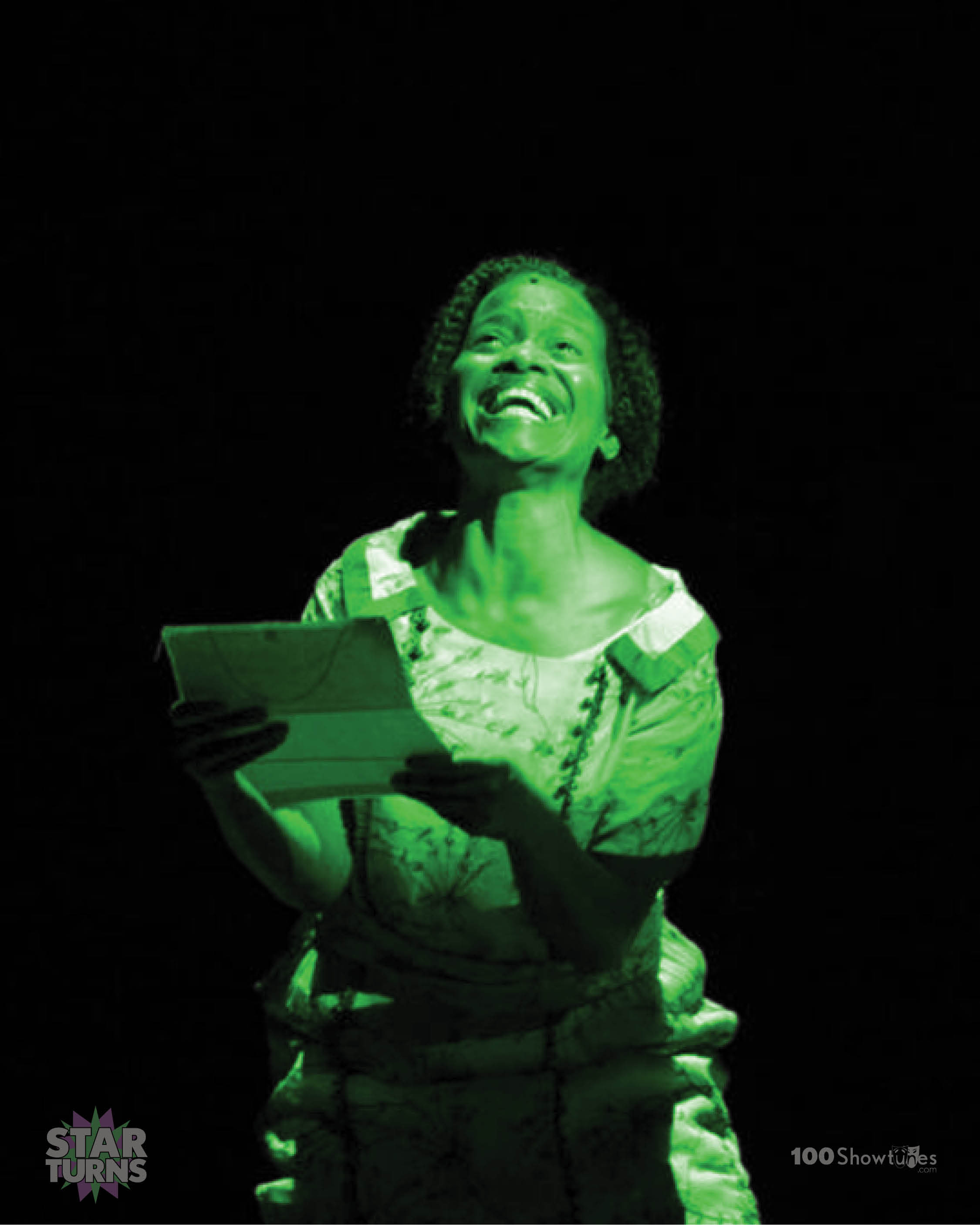
December 2005. You’re at an early performance of the new musical The Color Purple produced by, among others, Oprah Winfrey (who was Oscar nominated for her work in the film version). The score—by three legendary pop-writers who had never really collaborated together or written a musical before—blends jazz, blues, ragtime, folk, and contemporary music. The musical opens with an overture (when’s the last time you heard a new musical do that?) before introducing Celie, a young woman, pregnant for the second time with her father’s child, playing a clapping game with her sister Nettie. With the aid of a recurring trio of church ladies to help with exposition, we follow Celie from age 14 to 60, all played by one actress, LaChanze. After being forced to give up both of her father’s children, she’s married off to an abusive widower, Mister, who isolates Celie and prevents Nettie from contacting her. Celie finds strength in her relationships with two women. Sofia, married to Mister’s son from his previous marriage, inspires Celie with her independence and sense of self-worth, refusing to tolerate abuse from anyone, even when it means a jail sentence. (This is the role Oprah played in the movie). Shug Avery is a jazz singer and longtime mistress to Mister. When Shug becomes ill, and Celie nurses her back to health, Shug responds love and support, calling Celie “too beautiful for words.” Celie eventually leaves Mister to live with Shug and opens a successful tailoring business. When Shug leaves Celie for one last fling with a young musician in her band, Celie looks back on her life and realizes that, despite the loss and pain, she’s had a life full of love and, for the first time, genuinely directs that love towards herself. (“I’m Here”)
Catch up with all the songs to date!