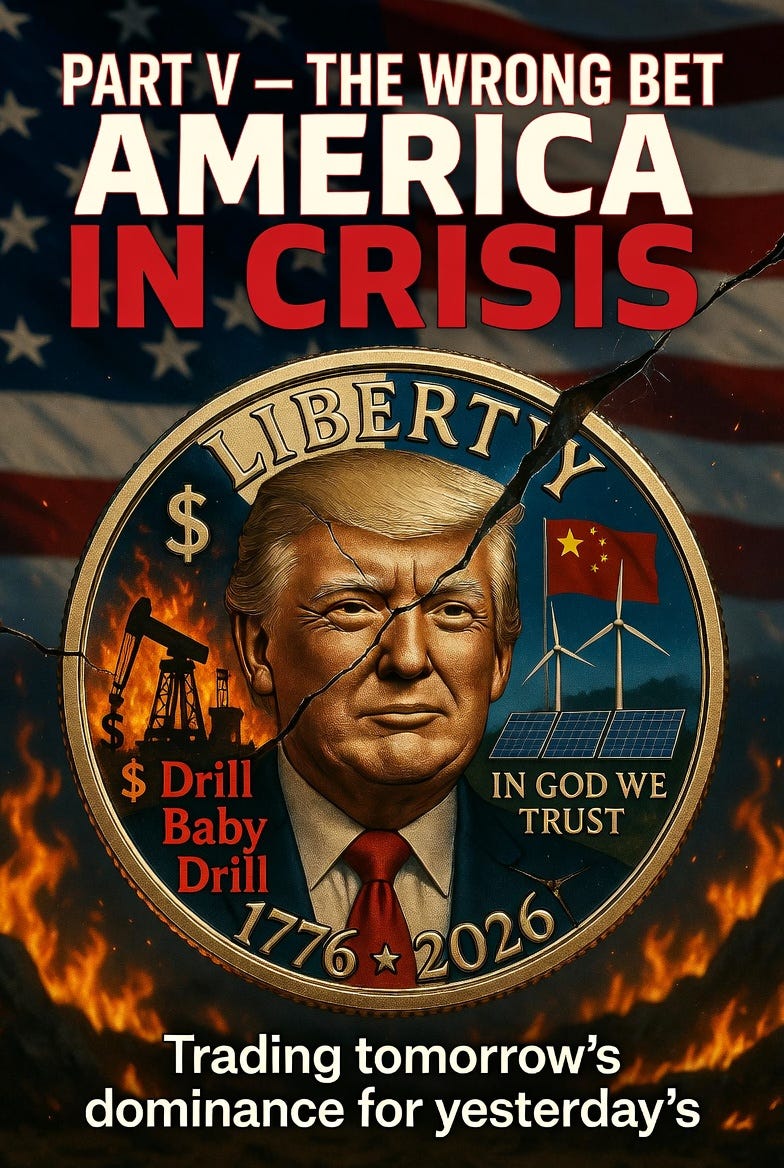
The energy bet, traced from where it actually started — not a policy judgment but a purchase, made at a Mar-a-Lago dinner and promised from a stage. Part Five follows the money in and the money back out: at least seventy-five million from the oil and gas industry, and roughly eighteen billion in tax breaks returned in one legislative package. Then the audit a builder would run — what a hundred-and-fifty-year petroleum strategy actually buys over its full term, the chaos it exports, and the future it forfeits. Because while America was sold the past, the rest of the world started buying the future. Australia now runs a rooftop-solar surplus so large it gives power away at midday — and when the Iran war choked the Strait of Hormuz and its fuel suppliers capped their exports, Australia's answer wasn't to drill. It was to race further off imported oil, the same shift Europe is making for the same reason. Even Texas, the oil state, is now the nation's biggest solar and wind producer, because there it pays. And the market has already voted: in year one of "drill baby drill," oil fell and clean energy climbed. There are always choices.